A Bigger City With More Secrets in the Walls
I watched Zootopia 2 with the memory of the first film still very clear: a bright animal metropolis, a bunny cop with impossible ambition, a fox with a lifetime of practiced cynicism, and a mystery that slowly exposed the city’s hidden prejudices. A sequel to that kind of story has a difficult job. It cannot simply show more districts, more animal puns, and more fast chases. It has to prove that Zootopia still has something uncomfortable and meaningful to reveal about itself.
What I liked about this second chapter is that it understands the city was never finished. Zootopia presented itself as a place where anyone could be anything, but that slogan was always more hopeful than complete. Zootopia 2 expands that idea by asking who was missing from the city’s promise in the first place. The arrival of Gary De’Snake opens a new layer of history, fear, and exclusion, making the sequel feel less like a decorative return trip and more like another investigation into the stories a society tells about itself.
Judy Hopps Is Still Running Faster Than Her Doubts
Judy remains one of Disney’s most appealing modern heroines because her optimism is never completely effortless. She wants to do good so badly that she can sometimes confuse determination with certainty. I like that Zootopia 2 does not let her become a flawless officer simply because she already solved one major case. She is still learning how to listen, how to trust her partner, and how to slow down when the truth is more complicated than her first instinct.
Ginnifer Goodwin’s voice performance keeps Judy bright without making her sugary. There is urgency in her energy, a constant sense that she is trying to prove she belongs in the ZPD and in the larger city she once admired from afar. In this sequel, that need to prove herself becomes especially interesting because the case around Gary asks her to question what the city has chosen not to see. Judy’s best quality is her belief in fairness, but the film shows that fairness requires more than enthusiasm. It requires humility.
Nick Wilde Makes Partnership Feel Messy and Alive
Nick is still the perfect counterweight to Judy. Jason Bateman’s dry delivery gives him a relaxed wit that hides a sharper emotional intelligence. I enjoy Nick because he notices social tension faster than he admits. He knows what it feels like to be judged before speaking, so he reads the city’s masks carefully. That makes him especially valuable in a sequel about another group pushed outside Zootopia’s official comfort zone.
What works best is that Nick and Judy’s partnership is not treated as magically solved. They care about each other, trust each other, and annoy each other. That is exactly what makes them feel alive. A badge does not erase their different instincts. Judy charges forward because she believes the world can be fixed. Nick hesitates because he knows how often the world protects its own lies. Their friction gives the investigation emotional rhythm instead of letting it become only a trail of clues.
Gary De’Snake Gives the Sequel Its Freshest Pulse
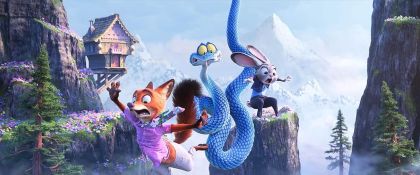
Gary De’Snake is the most important new character because he changes the texture of the world. A snake in Zootopia immediately raises questions. Why does his presence feel so disruptive? Why are reptiles treated as strange in a city that claims to include everyone? What history has been buried beneath the mammal-centered version of the metropolis? I liked that Gary is not only a plot device. He brings vulnerability, danger, humor, and sadness into the story at once.
Ke Huy Quan gives Gary a nervous, sincere quality that makes him more sympathetic than the city’s reaction to him. He is pursued and misunderstood, but he is also connected to a family history that reframes the mystery. I found him compelling because he exposes how easily fear can become policy, and how easily a city can call itself inclusive while quietly drawing a border around who counts. Gary makes Zootopia feel larger, but also more morally complicated.
The Reptile Question Expands the World in a Smart Way
The first Zootopia focused on predator and prey tension, which gave the city a clear social metaphor. Zootopia 2 widens that lens by exploring reptiles and their absence from the urban imagination. I liked this choice because it avoids simply repeating the same conflict. Instead of replaying the old prejudice structure with different animals, the sequel asks how a society creates its own normal.
The idea that certain species have been excluded, erased, or turned into rumors gives the story more depth. It suggests that Zootopia’s harmony may have been built partly through selective memory. That is a strong theme for a sequel, because it lets the world grow without abandoning what made it meaningful. The film is still funny and colorful, but underneath the jokes is a serious question: who gets invited into the future, and who is told they were never part of the story?
The City Looks Even More Layered Than Before
The aesthetics of Zootopia 2 are one of its biggest pleasures. The city still has the clever design logic that made the first film so satisfying: spaces built around animal scale, climate, behavior, and social function. I love when animation uses environment as worldbuilding rather than wallpaper, and Zootopia remains one of Disney’s best examples of that approach.
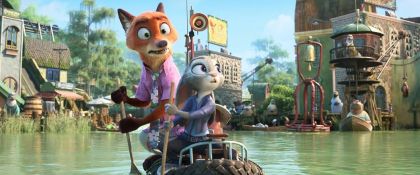
This sequel benefits from moving into new corners of the metropolis. Marsh Market and other unfamiliar spaces give the city a less polished, more textured feeling. I liked seeing areas that do not seem built only for postcard beauty. Zootopia feels richer when it includes cramped places, strange subcultures, old money, hidden routes, and species-specific communities with their own rules. The film’s visual imagination helps the mystery feel architectural. The city itself becomes a clue.
The Lynxley Family Adds Old Power to a Modern City
The Lynxley family brings a useful new kind of pressure. Zootopia has always had institutions: the police, city hall, media, transportation systems, and public spectacle. The Lynxleys add the feeling of old influence, inherited reputation, and money that prefers not to be questioned. I found that element effective because every city has layers of power that do not always appear on official maps.
Milton Lynxley, as a patriarch figure, gives the story a more aristocratic tension. The family’s presence suggests that prejudice is not only carried by ordinary fear. It can also be protected by prestige, property, and carefully managed history. That makes the case more interesting for Judy and Nick. They are not only chasing a suspect. They are walking into a social structure designed to keep certain truths difficult to reach.
Nibbles Maplestick Brings Conspiracy Energy With Comic Bite
Nibbles Maplestick adds one of the sequel’s funniest new flavors. A beaver podcast host and conspiracy-minded figure could easily have become a one-note gag, but I enjoyed how the character fits the film’s mystery structure. In a city full of official stories, someone obsessed with hidden explanations can be ridiculous and occasionally useful at the same time.
Fortune Feimster’s performance gives Nibbles a broad comic energy that helps the movie loosen up between heavier revelations. I liked how the character turns suspicion into personality. The humor comes from intensity, but the story also uses her to show that truth can sometimes survive in strange corners before respectable institutions are ready to admit it. In Zootopia, even the oddest voices may be reacting to something real.
The Buddy-Cop Rhythm Still Works
At its heart, Zootopia 2 is still a buddy-cop mystery, and that structure remains one of the franchise’s best tools. Judy and Nick are funny together because they process the world differently. She believes a door should open if you knock hard enough. He assumes there is probably a scam behind it, a trap under it, or a loophole beside it. Their partnership turns every clue into a conversation.
I liked that the sequel tests them emotionally rather than only professionally. Partnership is not only about solving a case. It is about admitting fear, frustration, and uncertainty before those feelings become mistakes. The film’s focus on emotional honesty gives their dynamic a more mature edge. Judy and Nick are better together, but being better together still requires work.
The Humor Remains Fast, Animal-Specific, and Surprisingly Sharp
The comedy in Zootopia 2 works best when it grows from the animal world rather than from generic jokes. I enjoyed the species-based details, background gags, city signs, scale jokes, bureaucratic absurdities, and quick visual references that make the metropolis feel alive. The first film was packed with this kind of humor, and the sequel keeps that density.
What I appreciate is that many jokes also support the worldbuilding. A funny district name, a species-specific habit, or a tiny visual gag can reveal how the city functions. The comedy is not only decoration. It teaches me how animals live together, misunderstand each other, design around each other, and stereotype each other. That is why the humor has more staying power than simple noise. It keeps pointing back to the city’s social logic.
Chief Bogo Still Makes Authority Funny and Firm
Chief Bogo remains a strong supporting presence because his seriousness anchors the ZPD scenes. Idris Elba’s voice gives him authority, impatience, and dry comic weight. I like how Bogo functions as both obstacle and stabilizer. He often doubts Judy and Nick’s methods, but he also represents the practical responsibility of policing a city where one wrong move can become a public crisis.
In this sequel, his role also helps show how institutions react under pressure. The ZPD wants order, but order is not the same as truth. Judy and Nick often move faster than the system wants them to, especially when the case becomes politically uncomfortable. Bogo’s presence makes that tension visible. He is not simply there to shout. He embodies the difficulty of doing the right thing inside an institution that fears embarrassment.
Gazelle Keeps the City’s Pop Soul Alive
Gazelle’s return gives Zootopia 2 a connection to the city’s public emotional life. Shakira’s character has always represented more than celebrity. She is a symbol of Zootopia’s ideal self: glamorous, diverse, musical, and hopeful. I liked seeing that pop-star energy return because the city needs both politics and culture to feel complete.
Music in Zootopia works as civic mood. A song can express the version of the city people want to believe in, even when the plot reveals that reality is messier. Gazelle’s presence reminds me that Zootopia is built not only from neighborhoods and laws, but from shared images of belonging. The sequel becomes more interesting when that hopeful image is tested by the treatment of characters like Gary.
The Animation Feels Technically Rich Without Losing Clarity
The animation is polished, detailed, and full of species-specific movement. I liked how Judy’s quick, springy motion still contrasts with Nick’s looser, smoother body language. Gary’s movement adds another challenge because a snake occupies space differently from mammals. His presence changes how scenes are staged, how danger is perceived, and how other characters physically react.
The city’s visual complexity is impressive, but the film usually remains readable. That matters because Zootopia can become visually crowded very quickly. Different species, scales, vehicles, climates, clothing styles, and architectural systems all share the frame. The sequel succeeds when it lets that richness feel organized rather than overwhelming. The best scenes make me want to pause just to inspect background details.
The Mystery Works Because It Questions the City Itself
The central case involving Gary works because it is not only about catching someone. It is about understanding why the city is so ready to believe certain things about him. That is a crucial distinction. A weaker sequel might have used Gary only as a chase target. This film makes the chase reveal Zootopia’s assumptions.
I liked how Judy and Nick’s investigation gradually becomes a moral investigation too. They have to ask who benefits from Gary being blamed, why reptiles are treated as outsiders, and what version of history powerful figures want preserved. The mystery structure gives the film momentum, but the social questions give it weight. Zootopia is most interesting when the case reveals something uncomfortable about the city’s ideals.
The Partnership Therapy Idea Adds a Funny Modern Layer
One of the sequel’s cleverer touches is the attention to Judy and Nick’s partnership growth. The idea that their professional bond needs emotional maintenance feels funny because they are cops in a fast-moving animal mystery, but it also makes sense. Their differences are charming until pressure turns them into blind spots.
Dr. Fuzzby, the quokka psychotherapist, adds a playful way to bring emotional language into the story. I liked this because the film’s message about teamwork could have been stated too plainly. Instead, the therapy angle gives the characters room to be awkward, defensive, and unexpectedly honest. It turns relationship maintenance into comedy while still taking the need for communication seriously.
The New Districts Make Zootopia Feel Less Perfect
Expanding the city is one of the smartest things the sequel does. New districts and communities help Zootopia feel less like a finished theme park and more like a living metropolis with uneven histories. I liked seeing places that challenge the clean image of the city. A believable metropolis should have polished centers, neglected corners, fashionable zones, strange markets, hidden archives, and neighborhoods shaped by species the mainstream does not fully understand.
This visual expansion supports the story’s theme. If the first film asked whether predators and prey could share one city honestly, the sequel asks what happens when the city’s definition of “everyone” was too narrow from the start. The new settings are not just scenery. They are evidence that Zootopia contains more stories than its official slogan can hold.
The Emotional Core Is Trust Under Pressure
What kept me invested was not only the mystery, but the way the case pressures Judy and Nick’s trust. They have different instincts, different wounds, and different relationships to authority. Judy’s optimism can make her bold, but it can also make her impatient. Nick’s skepticism can make him perceptive, but it can also make him guarded. The sequel understands that both traits are strengths until they become too rigid.
I liked watching them learn that partnership is not the absence of disagreement. It is the ability to disagree without abandoning each other. Their best scenes are not only the clever ones. They are the moments when one of them has to admit uncertainty, apologize, or trust the other’s read of a situation. That emotional layer gives the sequel warmth beneath the chase mechanics.
The Film’s Best Idea Is Inclusion With Memory
Zootopia 2 is most compelling when it suggests that inclusion cannot exist without historical honesty. A city can celebrate diversity in public while still hiding the fact that some groups were pushed out, misrepresented, or never invited in. Gary’s story brings that issue into focus. His presence makes Zootopia confront not only present fear, but old decisions that shaped the city’s present.
I found that idea strong because it deepens the franchise’s original message. The first film showed how prejudice can distort perception. The sequel shows how institutions and families can preserve distortion across time. That makes the story feel more mature. The problem is not only a few biased individuals. It is a city that has to examine what it inherited and what it chose to forget.
Why Judy and Nick Still Make the City Worth Revisiting
Judy and Nick remain the reason Zootopia 2 has emotional life. The city is dazzling, the new species are fun, and Gary adds an important fresh angle, but the heart of the franchise is still the partnership between a rabbit who believes in the promise of the system and a fox who knows how often promises fail. Their friendship makes the social themes feel personal.
I enjoyed the sequel most when it let them be funny, tense, flawed, and loyal at the same time. They are not perfect symbols of progress. They are working animals trying to solve a case inside a city that is still learning how to tell the truth about itself. That makes Zootopia worth returning to. It is not a perfect utopia. It is a beautifully designed argument, full of jokes, traffic, secrets, music, fear, ambition, and the stubborn hope that a better city can still be built if someone is brave enough to follow the trail where it actually leads.