A Darker Semester With Sharper Teeth
I watched Wednesday 2 with the feeling that Nevermore Academy had become less like a strange school and more like a pressure chamber built around Wednesday Addams herself. The first season introduced her as a brilliant, emotionally sealed outsider who could turn every conversation into a verbal autopsy. This second season places her in a more complicated position: she is no longer just the gloomy new girl solving a mystery from the margins. She is known, watched, admired, feared, and expected to perform her own legend.
That shift gives the season a stronger sense of discomfort. Wednesday does not want celebrity, yet she cannot escape the attention created by her earlier actions. I liked that the show understands how uncomfortable visibility is for a character who treats privacy as a survival strategy. She may enjoy being intimidating, but being interpreted by everyone around her is another matter. In Wednesday 2, the mystery is not only about external danger. It is also about what happens when a girl who refuses emotional dependence has to confront the possibility that someone she cares about may be in real danger.
Wednesday Addams Is Still the Coldest Person in the Warmest Frame
Jenna Ortega remains the reason the series works. Her Wednesday is precise, controlled, dry, and physically disciplined in a way that makes even silence feel like dialogue. I like how she can make a tiny eye movement feel more expressive than another character’s entire speech. In season 2, that restraint becomes even more interesting because Wednesday is under heavier emotional pressure.
What I enjoy most is that the show does not turn her into a softer character too quickly. Wednesday can care, but she hates the evidence of caring. She can feel fear, but she would rather classify it as an intellectual inconvenience. Her vision involving Enid gives the season an emotional engine because it forces Wednesday to confront attachment in the least comfortable way possible. She wants to solve the future like a case file, but the fear underneath that mission keeps slipping through the cracks.
Enid Makes Color Feel Like Emotional Bravery
Enid Sinclair remains the perfect counterweight to Wednesday. Emma Myers gives her warmth, brightness, insecurity, and loyalty without making her feel shallow. I like how Enid’s colorful aesthetic is not simply decoration. It reflects a character who allows herself to want connection openly. In a world full of secrets, curses, outcasts, and old family damage, Enid’s emotional directness feels almost radical.
Season 2 makes their friendship more intense because Wednesday’s vision places Enid at the center of dread. That changes the way I see their dynamic. Enid is not only the cheerful roommate softening Wednesday’s edges. She becomes the person whose possible loss exposes how much Wednesday has changed. The season works best when it lets their bond remain strange: not sentimental in a normal way, not easy, not balanced, but undeniably important.
Nevermore Academy Feels Less Safe Than Ever
Nevermore has always looked like a school designed by someone who believed adolescence needed more gargoyles, secrets, and suspicious corridors. In Wednesday 2, the academy feels more haunted by its own reputation. I liked how the setting becomes both familiar and unstable. The stone walls, gothic windows, dorm rooms, courtyards, and hidden corners still have their theatrical charm, but there is a stronger sense that the institution is hiding more than it teaches.
The arrival of Principal Barry Dort adds a new kind of authority to the school. Steve Buscemi brings an offbeat presence that suits Nevermore’s atmosphere, making the administration feel eccentric but not harmless. A new principal in this world is never just a staff change. It means a new agenda, new tensions, and new rules for Wednesday to distrust. That keeps the school from feeling static after the first season’s mysteries.
The Addams Family Takes Up More Space
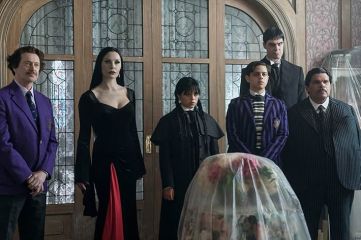
One of the season’s best choices is expanding the role of the Addams family. Morticia, Gomez, Pugsley, Grandmama, and Uncle Fester all add texture to Wednesday’s world. I like that the series understands Wednesday is not strange in isolation. She comes from a family where darkness is domestic, affection is dramatic, and danger can feel like a family heirloom.
Catherine Zeta-Jones gives Morticia a polished, magnetic authority that makes her relationship with Wednesday especially interesting. Their conflict is not simply mother against daughter. It is legacy against independence. Wednesday wants to define herself without being swallowed by her mother’s shadow, while Morticia understands parts of the supernatural world that Wednesday is still learning to navigate. That tension gives the season emotional history beyond the school walls.
Pugsley Adds a New Kind of Addams Awkwardness
Pugsley’s larger presence at Nevermore gives the season a useful change in family dynamics. Isaac Ordonez plays him with a softer, more anxious energy than Wednesday, which makes his placement in the academy feel different. He is an Addams, yes, but he does not carry Wednesday’s icy certainty. I liked how his presence forces Wednesday into an older-sibling role she would never voluntarily describe as protective.
That relationship gives the show a small but important emotional lever. Wednesday may mock Pugsley, judge him, and pretend his problems are beneath her attention, yet family loyalty is built into her more deeply than she likes to admit. His presence at Nevermore also makes the Addams legacy feel less abstract. The family is not only represented by Wednesday’s reputation. It is arriving in the hallways, causing problems, and complicating her carefully managed solitude.
Thing Remains the Show’s Most Expressive Hand
Thing continues to be one of the most charming parts of the series. I love how much personality the show gets from a hand. Through movement, pauses, finger taps, gestures, and timing, Thing can express worry, sarcasm, loyalty, panic, and affection. He often feels like the only companion capable of challenging Wednesday without needing long speeches.
In season 2, Thing’s role still matters because he represents a form of intimacy Wednesday accepts more easily than human vulnerability. She can depend on him while pretending dependence is merely strategic. That makes their scenes both funny and revealing. Thing is not only a gothic accessory. He is a witness to Wednesday’s emotional contradictions.
The Horror Leans More Confidently Into the Macabre
Wednesday 2 feels more comfortable with horror than the first season. The atmosphere is darker, the visions are more disturbing, and the supernatural mystery carries a heavier sense of consequence. I appreciated that shift because Wednesday Addams should not live in a world that feels too clean. Her humor needs shadows around it. Her intelligence needs threats strange enough to challenge her.
The show still balances horror with comedy, but the darker elements feel more central this time. Wednesday’s psychic visions, hidden family secrets, and the danger surrounding Enid all give the season a stronger gothic pulse. I liked when the horror came from emotional dread rather than only visual shock. The most unsettling idea is not simply that something dangerous is coming. It is that Wednesday may not be able to prevent it through intellect alone.
The Mystery Works Best When It Becomes Personal
The central mystery of Wednesday 2 is most engaging when it forces Wednesday to care despite herself. A purely external case would still suit her detective personality, but the season gains weight because the clues connect to Enid, the Addams family, and Nevermore’s deeper history. I like when Wednesday’s investigation stops being an intellectual game and becomes a test of loyalty.
Her detective style remains entertaining: cold observation, ruthless questioning, suspicion of everyone, and a total lack of interest in making people comfortable. But this season adds a complication. Wednesday’s usual distance is harder to maintain when the possible outcome involves someone close to her. That friction gives the mystery more emotional bite. She can analyze patterns, but she cannot fully analyze away fear.
The Aesthetics Are Gothic With a More Expensive Pulse
The visual style of Wednesday 2 feels richer and more confident. Nevermore’s dark academic look remains central, but the season expands into more elaborate locations, costumes, and set pieces. I especially liked the way the show uses black, gray, deep purple, candlelight, old wood, stone, mist, and sharp costume silhouettes to keep the gothic mood consistent.
The Venetian-inspired gothic gala in Part 2 stands out as one of the season’s most elaborate visual statements, with the costumes drawing on historical and gothic influences. Vogue reported that costume designers Mark Sutherland and Colleen Atwood crafted nearly 1,000 garments for that sequence, which helps explain why it feels so visually dense and theatrical.
Costumes Shape Character Before Dialogue Does
Costume design has always been essential to Wednesday, and season 2 leans into that strength. Wednesday’s wardrobe remains structured, monochrome, and severe, turning her body into a visual refusal of softness. I like how her clothes influence her posture and presence. She looks disciplined even when the world around her becomes chaotic.
Enid’s wardrobe, by contrast, still brings color, texture, and emotional openness. Morticia’s elegance feels almost ceremonial, while Gomez carries romantic eccentricity. The new characters also arrive with visual identities that help place them inside Nevermore’s strange social ecosystem. In this series, clothing is not only style. It is psychology, family history, social signaling, and defense.
Lady Gaga’s Presence Fits the Show’s Theatrical Instinct
Lady Gaga’s appearance as Rosaline Rotwood fits naturally into the show’s taste for gothic celebrity and heightened mystery. I liked the idea of a guest presence who feels slightly larger than ordinary school drama. Wednesday is a series that thrives on characters who seem to have stepped out of old portraits, cursed libraries, or rumors that somehow learned to walk.
Her role adds another layer to the season’s sense that Nevermore’s past is not finished with its students. The school is not merely a place where young outcasts study. It is a storage room for old power, strange reputations, and unfinished stories. A character like Rosaline Rotwood suits that atmosphere because she feels connected to the show’s interest in mystery as performance.
Tyler’s Return Keeps the First Season’s Damage Alive
Tyler’s presence in season 2 is important because it prevents the earlier story from being neatly sealed away. Hunter Doohan’s character carries emotional and supernatural damage that still affects Wednesday’s world. I liked that the show does not pretend the first season’s betrayals can disappear just because a new mystery arrives.
For Wednesday, Tyler represents a rare failure of judgment. She trusted the wrong person, or at least misread the full shape of him, and that matters for someone whose identity depends on superior perception. His return keeps that wound active. It also reminds me that Wednesday’s detective brilliance is not absolute. She can be fooled when emotion enters the equation, which makes her more interesting.
The Humor Is Still Dry Enough to Leave Marks
The comedy in Wednesday 2 works best when it comes from Wednesday’s refusal to participate in normal emotional rituals. She can turn comfort into insult, kindness into suspicion, and a casual school conversation into something that sounds like a threat carved into marble. I enjoy that dry rhythm because Ortega delivers it with such precision.
The supporting characters help vary the humor. Enid brings warmth and social panic. Pugsley adds awkward family energy. Fester brings chaos. Gomez and Morticia turn parental affection into gothic theater. The show’s comedy remains distinctive because it does not ask Wednesday to become cheerful. It lets the world bend around her darkness while still finding ways to make that darkness funny.
The Addams Family Chemistry Feels Richer This Time
Season 2 benefits from having more Addams family material because the family’s emotional language is one of the show’s best tools. Gomez and Morticia are affectionate in a way that would seem alarming in any other household. Fester brings strange enthusiasm. Grandmama adds generational weirdness. Pugsley brings sibling contrast. Wednesday stands among them as both a true Addams and someone determined not to be fully defined by them.
I liked how the family scenes reveal that Wednesday’s emotional restraint is not the absence of love. It is a particular Addams style of love: sharp, private, loyal, and allergic to ordinary sentiment. The more the season shows her family, the clearer it becomes that Wednesday’s darkness is inherited, but her moral choices are still her own.
The Season Understands Fame as a New Curse
One of the more interesting ideas in Wednesday 2 is Wednesday’s discomfort with being seen as a hero. After the events of the first season, she returns to Nevermore with a reputation, admirers, and unwanted attention. I liked this because fame is a perfect punishment for her. She enjoys being feared on her own terms, but admiration creates a different kind of exposure.
The season uses that attention to test her self-control. Wednesday does not want to be inspirational, approachable, or publicly digestible. Yet the school and its students keep projecting meaning onto her. That makes her position more complicated. She wanted truth, not celebrity. She wanted solitude, not fans. Her new status becomes another mystery she cannot solve by simply glaring at it.
Enid and Wednesday Remain the Emotional Axis
For me, the strongest relationship in the series is still Wednesday and Enid. Their friendship works because it should not work on paper. One is emotionally bright, socially open, and color-coded like a sunrise through glitter. The other is severe, suspicious, and allergic to vulnerability. Yet they make each other more complete without becoming less themselves.
Season 2 intensifies that bond by placing Enid’s future at risk. Wednesday’s reaction is not sentimental in a typical way, but that makes it more meaningful. She investigates, obsesses, and acts because care has entered her system like a contaminant she cannot remove. I found that deeply fitting. Wednesday may never say affection in a warm voice, but she can turn loyalty into a full investigation.
The Pacing Feels Like a Puzzle Box With Extra Locks
The season’s split structure gives it a different rhythm. Part 1 builds pressure, reintroduces the school, expands the family presence, and sets up the danger around Enid. Part 2 pushes the revelations into more elaborate gothic spectacle and emotional consequence. I liked the way the mystery layers school politics, visions, old secrets, and new characters, even when the plot occasionally becomes crowded.
Wednesday is a show that thrives on density. It likes secret rooms, coded histories, suspicious adults, rival students, supernatural rules, and family mythology all moving at once. Season 2 sometimes stacks those pieces heavily, but the mood holds because Wednesday herself remains such a strong center. Her perspective turns clutter into investigation.
The Best Scenes Let Wednesday Almost Feel
My favorite scenes are the ones where Wednesday nearly reveals emotion and then immediately tries to bury the evidence. A pause after a vision, a flicker of worry over Enid, a tense exchange with Morticia, a moment of irritation that hides fear—these are the scenes where the character feels most alive. The show understands that Wednesday’s emotional development should be microscopic, not explosive.
That restraint is essential. If Wednesday suddenly became openly affectionate, the character would lose her edge. The pleasure is in watching her resist change while changing anyway. Season 2 is strongest when it respects that slow movement. She does not become warm. She becomes more aware of what she is unwilling to lose.
Nevermore’s New Faces Keep the School Unstable
The new cast additions help Nevermore feel less settled after the first season’s upheaval. Steve Buscemi’s Principal Dort changes the authority structure. Billie Piper’s Isadora Capri adds a new faculty presence. Joanna Lumley’s Grandmama brings Addams family history into sharper focus. Thandiwe Newton’s Dr. Rachael Fairburn adds another adult figure tied to psychological and supernatural tension.
I liked that these additions make the school feel newly unpredictable. A second season can become too comfortable if it only revisits old dynamics. Wednesday 2 avoids that by introducing people who shift the atmosphere around Wednesday. Each new figure seems to carry a secret, an agenda, or at least the kind of unsettling calm that makes Nevermore feel properly unsafe.
The Season’s Strongest Idea Is Attachment as Horror
What makes Wednesday 2 compelling is the way it turns attachment into a source of dread. For most characters, caring is normal. For Wednesday, caring is a structural weakness she would rather deny. The season understands that and uses Enid’s possible fate to create a very specific kind of horror: not the fear of personal harm, but the fear of needing someone enough that losing them would change you.
That idea suits Wednesday perfectly. Her mind can handle corpses, clues, monsters, visions, and ancient secrets. What unsettles her is dependence. The show’s darker second season works because it does not only add scarier images. It finds the emotional place where Wednesday Addams is least protected and quietly points a lantern at it.