
A Marvel Family Finally Gets a Home That Feels Like Theirs
I watched The Fantastic Four: First Steps with the sense that Marvel’s first family needed something different from the usual superhero reintroduction. The film makes a smart choice by not treating the team as strangers slowly learning how to stand beside one another. Reed, Sue, Ben, and Johnny already have history, public identity, fame, frustration, habits, and emotional shorthand. That gives the movie a warmer starting point. It feels less like a team being assembled and more like a family being tested.
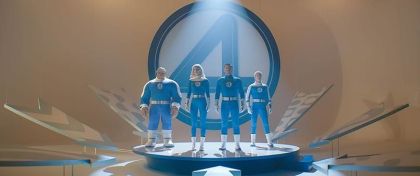
What I liked most is the retro-futuristic world around them. The movie does not try to squeeze the Fantastic Four into a grim modern superhero texture. It gives them a bright, strange, 1960s-inspired universe full of curved technology, space-age optimism, public fascination, sleek interiors, and cosmic anxiety hiding behind clean design. That visual choice matters because the Fantastic Four have always belonged to a world of invention, wonder, and slightly impossible science. Here, the setting finally feels like part of their personality.
Reed Richards Thinks Faster Than He Can Feel
Pedro Pascal’s Reed Richards gives the film a thoughtful, burdened center. I liked that his intelligence does not feel like simple genius decoration. It feels like both gift and problem. Reed can stretch his body, but emotionally he often seems stretched even thinner, pulled between scientific responsibility, family love, public pressure, and the terrifying knowledge that some problems may be too large for any mind to solve neatly.
What makes Reed interesting is that he is not cold because he lacks care. He is distant because care makes everything more urgent. He wants to calculate the right answer before emotion can make the wrong one impossible to avoid. That becomes especially powerful when the threat of Galactus arrives. Reed is used to solving the impossible, but cosmic hunger is not a normal equation. The film works when it lets him confront the limits of intellect without taking away the dignity of his mind.
Sue Storm Is the Film’s Quiet Power Source
Vanessa Kirby’s Sue Storm is one of the strongest parts of the movie. I liked how she brings calm authority to scenes that could easily be dominated by Reed’s science or Johnny’s fire. Sue’s power is invisibility and force fields, but the performance makes her emotionally visible in every room. She is the stabilizer, the strategist, the public face, the protector, and the person most aware of what this family costs.
The motherhood element gives Sue’s role extra weight. She is not only defending Earth as a superhero. She is protecting a future that has become personal and immediate. That makes her strength feel different from standard spectacle. When Sue uses her powers, I felt the defensive nature of them clearly. She creates barriers, shields, space, and safety. Her abilities are visual expressions of care under pressure.
Ben Grimm Gives the Movie Its Bruised Heart
Ebon Moss-Bachrach’s Ben Grimm brings a grounded sadness and warmth that I found essential. The Thing can easily become only the rocky strongman of the team, but this version reminds me that Ben’s body is also a permanent reminder of transformation. He is powerful, recognizable, and beloved by the public, yet he still carries the private ache of being changed in a way he did not choose.
I liked that Ben’s humor feels protective. He jokes because he has learned how to live with discomfort without making everyone else carry it for him. His relationship with Reed matters because friendship and resentment live close together there. Reed’s brilliance helped create the family’s powers, but Ben lives most visibly with the consequence. That tension gives their bond emotional texture. Ben loves this family, but love does not erase every hurt.
Johnny Storm Brings Flame, Ego, and Needed Youthful Chaos
Joseph Quinn’s Johnny Storm adds the film’s most restless energy. I enjoyed how he gives Johnny charm without making him only a reckless show-off. Johnny wants attention, yes, but he also wants to matter. His confidence sometimes feels like a performance designed to hide how badly he needs approval from the people closest to him.
The Human Torch powers fit that personality perfectly. Johnny burns bright, moves fast, reacts loudly, and often turns danger into spectacle. But the film works best when it lets him mature without removing his spark. He does not need to become solemn to become meaningful. He needs to learn when heat helps and when it only makes the room harder to breathe. His growth gives the family dynamic a lively comic edge with real emotional stakes underneath.
The Retro-Futuristic Aesthetic Is the Movie’s Secret Weapon
The visual world of The Fantastic Four: First Steps is one of its biggest pleasures. I loved the combination of 1960s design, optimistic technology, space-race imagination, and comic-book boldness. The Baxter Building, the Fantasticar, the costumes, screens, machines, city spaces, and public broadcasts all feel like they belong to a future imagined from the past. That gives the movie a distinct identity inside the superhero landscape.
This aesthetic does more than look stylish. It captures the spirit of the Fantastic Four as explorers. Their world believes in progress, invention, space travel, celebrity science, and the possibility that tomorrow might be beautiful. That makes Galactus feel even more terrifying. He does not only threaten lives. He threatens a whole vision of the future. The brighter the world looks, the more dramatic it becomes when cosmic darkness appears at the edge of it.
Galactus Feels Like a Disaster With a Face
Ralph Ineson’s Galactus gives the film a threat that feels larger than ordinary villainy. I liked that Galactus is not treated as a standard enemy with petty motives. He is closer to a cosmic event, a force of appetite and scale that makes human arguments suddenly seem tiny. The danger works because it feels almost impossible to negotiate with hunger that exists on a planetary level.
What makes Galactus effective is the way his arrival changes the emotional math. The Fantastic Four are not simply trying to defeat someone stronger. They are trying to respond to a being whose existence makes Earth feel fragile. That gives the movie a different kind of tension from many superhero stories. The threat is not only physical. It is existential. It asks how a family built on discovery faces something discovery cannot soften.
Silver Surfer Brings Beauty, Mystery, and Sadness
Julia Garner’s Silver Surfer gives the story a haunting visual and emotional presence. I liked how the character feels graceful and distant, as if she belongs to a colder, older rhythm than the heroes around her. The silver design and movement create a striking contrast with the warm retro colors of Earth. She looks beautiful, but that beauty is tied to warning.
The Silver Surfer works because she is not only a messenger of doom. She carries ambiguity. Her role suggests obedience, burden, and perhaps regret. That makes her more compelling than a simple herald figure. When she appears, the movie gains a strange melancholy. She seems connected to Galactus, but not fully swallowed by him. That tension gives her scenes an elegant sadness.
The Family Dynamic Matters More Than the Powers
The Fantastic Four are most interesting when their powers feel like extensions of family roles. Reed stretches because he is always reaching beyond the present. Sue shields because she protects what others overlook. Johnny ignites because he needs motion, attention, and release. Ben endures because he has been transformed into visible resilience. I liked how the movie lets those abilities reflect personality rather than existing only for action.
The team’s arguments are just as important as their heroic poses. They interrupt each other, worry about each other, tease each other, and carry old emotional debts. That makes them feel different from a typical superhero squad. They are not coworkers with matching uniforms. They are a family whose love is sometimes inconvenient, loud, and difficult to organize. That is where the film finds its best warmth.
The Baxter Building Feels Like a Home and a Symbol
The Baxter Building is more than a headquarters. It feels like a public monument, a laboratory, a family home, and a symbol of the team’s relationship with the world. I liked how the film uses it as a place where science, domestic life, fame, and pressure all overlap. Reed’s work is there. Sue’s responsibilities are there. Johnny’s public identity is there. Ben’s sense of belonging is there, even when he may not admit how much he needs it.
The building also shows how exposed the Fantastic Four are. They are not hidden heroes working from a secret cave. They are public figures living above a city that watches them with fascination and expectation. That makes their family life unusual. Their home is intimate and iconic at the same time. The film uses that contradiction well.
H.E.R.B.I.E. Adds Small Robotic Warmth
H.E.R.B.I.E. gives the movie a playful touch that fits the retro-futuristic tone. I liked the robot because it adds domestic sci-fi charm without overwhelming the story. In another film, a little robot assistant could feel like a toy inserted for easy cuteness, but here H.E.R.B.I.E. belongs naturally to the family’s world of invention.
The character also helps make Reed’s science feel lived in. The technology around the Fantastic Four is not only weapons, portals, and machines for solving cosmic problems. It is also part of the household. H.E.R.B.I.E. turns the Baxter Building into a place where the future has chores, personality, and small inconveniences. That detail makes the world feel more complete.
The Film Understands Public Heroism as Pressure
One thing I appreciated is how the movie treats the Fantastic Four as public heroes from the beginning. They are admired, recognized, and treated almost like celebrity scientists. That creates a different pressure than secret identity storytelling. Their failures cannot stay private. Their decisions are watched. Their family becomes part of the public imagination.
This fits the Fantastic Four beautifully. They are explorers and icons, not shadow figures. But fame also makes their fear more complicated. When Galactus threatens Earth, the world looks to them not only for action but for reassurance. I liked how the film shows that being beloved can become its own burden. The public wants hope, but the family has to face the truth before they can offer it.
The Score Gives the Adventure a Grand Old-School Lift
Michael Giacchino’s music helps shape the movie’s sense of scale and wonder. I liked how the score supports the retro adventure tone without making it feel like parody. The music has room for heroic brass, cosmic awe, emotional warmth, and moments of playful movement. It feels connected to the idea of discovery.
The Fantastic Four need music that sounds like looking upward. The score often gives them that. It makes laboratories feel adventurous, flight feel elegant, and cosmic danger feel immense. The best musical moments do not only announce heroism. They remind me that this family’s story begins with curiosity. Before they are fighters, they are explorers.
The Action Works Best When It Feels Inventive
The action scenes are most enjoyable when they use the team’s powers together in creative ways. I liked seeing Reed’s flexibility, Sue’s shields, Johnny’s fire, and Ben’s strength combine into solutions rather than separate displays. The Fantastic Four should fight like people who know each other’s rhythms. The movie understands that when it lets them move as a unit.
There is also pleasure in seeing action shaped by the retro-futuristic technology around them. The Fantasticar, scientific equipment, space environments, and cosmic effects give the set pieces a different flavor from street-level superhero fights. The strongest sequences feel like problem-solving under pressure. That suits this team. They should win through trust, invention, and timing as much as force.
The Parenthood Thread Gives the Stakes a Softer Center
The presence of Reed and Sue’s child gives the story a more intimate emotional center. A planet-sized threat is already enormous, but the film becomes more affecting when the future is represented by a baby inside the family. I liked that contrast. The story moves between cosmic scale and nursery-level vulnerability, which is exactly the kind of tension the Fantastic Four can carry well.
This thread changes how I read Reed and Sue’s choices. They are not only protecting Earth in an abstract heroic way. They are protecting the possibility that their child can grow up in a world not devoured by fear. That makes the film’s title feel meaningful. First steps are not only about the team entering the Marvel universe. They are also about childhood, family growth, and the terrifying tenderness of beginning again.
The Thing’s Body Makes the Film’s Theme Visible
Ben’s rocky form is one of the most visually direct expressions of the movie’s deeper idea: transformation brings wonder and loss together. I liked how the film treats him with humor and affection, but does not entirely erase the sadness of his condition. He is not ashamed in every scene, yet the weight of his changed body remains present.
That matters because the Fantastic Four are not simply lucky people who gained abilities. Their powers altered their lives permanently. Johnny may enjoy his flame, Reed may study his stretch, Sue may master her fields, but Ben’s change is impossible to hide. His body makes the cost of exploration visible. That gives him a special emotional place inside the family.
Johnny and Ben Bring the Best Brotherly Friction
The dynamic between Johnny and Ben adds some of the movie’s most enjoyable humor. Their teasing has the rhythm of people who annoy each other because affection has made them bold. I liked how their banter gives the family warmth without needing sentimental speeches. Johnny pushes. Ben grumbles. Both understand that this is part of how they communicate.
Their friction also helps balance the larger cosmic seriousness. A movie about Galactus could easily become heavy, but Johnny and Ben keep the family texture alive. Their jokes remind me that this team does not stop being a household just because the universe is in danger. They still have habits, grudges, inside jokes, and emotional shortcuts.
The Film’s Best Idea Is Optimism Under Cosmic Threat
The Fantastic Four: First Steps works because it places optimism under pressure. The world of the film believes in invention, progress, design, celebrity science, and the thrill of tomorrow. Then Galactus arrives as the ultimate interruption. What happens when a future-facing world sees the end coming?
I found that question more compelling than a simple origin story. The team’s heroism is not only about punching back against danger. It is about preserving the belief that discovery is still worth pursuing after discovery reveals something terrifying. That makes the film feel true to the Fantastic Four. Their adventures should always contain both wonder and risk. They go farther than others, and sometimes they find beauty. Sometimes they find hunger.
The Movie Feels Like a Doorway Into a Stranger Marvel Universe
As part of the larger Marvel world, First Steps feels refreshing because it does not look or move exactly like the usual MCU setting. Its alternate retro future gives it a self-contained flavor. I liked that separation. It allows the Fantastic Four to arrive with their own visual grammar, their own emotional priorities, and their own sense of history.
This makes the movie feel less like another chapter in a crowded timeline and more like the opening of a bright new room. The family can eventually connect to larger Marvel events, but the film’s strength is that it first establishes who they are together. Reed, Sue, Ben, and Johnny need to matter as a family before they matter as crossover pieces. First Steps seems to understand that order.
The Best Scenes Let Wonder and Fear Share the Frame
My favorite moments are the ones where the film allows wonder and fear to exist at once. A beautiful piece of technology can become a tool for survival. A cosmic image can be gorgeous and horrifying. A public celebration can turn into collective dread. A family moment can sit beside planetary danger. That mixture is the Fantastic Four’s natural territory.
The movie is most alive when it remembers that science fiction adventure should feel emotionally double-sided. Space is thrilling because it is unknown. Invention is exciting because it can fail. Family is comforting because it can be threatened. The Fantastic Four stand at the meeting point of all these feelings, looking toward the impossible with love, fear, intelligence, and the stubborn belief that someone has to take the next step.
The First Family Finally Feels Like the Main Experiment
What stayed with me most is that the real experiment in The Fantastic Four: First Steps is not cosmic travel, new technology, or the science behind their powers. It is whether four changed people can remain a family while carrying the expectations of an entire world. That question gives the film its strongest emotional shape.
I liked watching the movie build its heroism from domestic texture: arguments, protection, teasing, worry, public pressure, private fear, and shared history. The cosmic scale matters, but the family bond matters more. Reed can calculate, Sue can shield, Johnny can burn bright, and Ben can endure, yet none of them feels complete alone. Their first steps into this new Marvel space work because the film understands that the Fantastic Four are not powerful because they are flawless. They are powerful because they keep choosing each other while the universe asks for everything.