A Fairy Tale That Walks In With Mud on Its Boots
I have always liked Shrek because it begins by doing something wonderfully rude to the fairy-tale tradition. It opens a storybook, lets me expect elegance, romance, castles, and polished destiny, then immediately tears through that expectation with swamp humor, sarcasm, and a green ogre who wants nothing more than to be left alone. That first tonal shift still feels fresh because the film does not simply mock fairy tales from the outside. It understands their rules well enough to twist them with purpose.
What makes Shrek work for me is that its parody has an emotional center. The film is full of jokes about princesses, quests, magical creatures, royal vanity, and heroic clichés, but underneath the comedy is a story about being judged before anyone knows you. Shrek is treated as a monster because of how he looks, so he chooses isolation before the world can reject him again. That makes the swamp more than a funny location. It is a defense system. He says he wants privacy, but the film gradually shows that privacy and loneliness are not always the same thing.
The Swamp Feels Like Freedom and a Fortress
Shrek’s swamp is one of the most memorable homes in animation because it expresses his personality immediately. It is messy, earthy, private, and proudly unrefined. I like how the film makes it feel comfortable to him even while everyone else would find it unpleasant. The mud, handmade signs, strange meals, and rough textures all tell me that Shrek has built a life where he does not have to perform for anyone.
The swamp also gives the story its emotional map. At first, it represents independence. Shrek can eat what he wants, bathe in mud, shout at trespassers, and live by his own rules. But once the fairy-tale creatures arrive, the swamp becomes a contested space. His private world is invaded, and he is pushed into a quest not because he wants glory, but because he wants his walls back. That motivation is funny, yet it is also revealing. Shrek thinks getting rid of everyone will restore peace, but the journey slowly proves that the real disturbance is inside him.
Shrek Is Most Interesting When He Pretends Not to Care
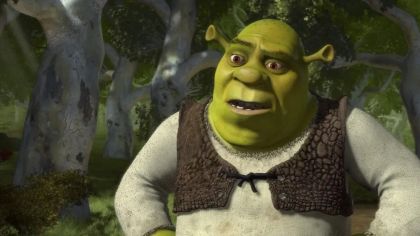
Shrek is a great main character because he performs indifference with such force. He acts as if other people’s opinions mean nothing to him, but the performance itself tells another story. He has heard fear, disgust, and rejection for so long that he has turned bitterness into armor. I find him compelling because his rudeness is not random. It is protective.
Mike Myers gives Shrek a voice full of dry humor, irritation, pride, and hidden softness. I like how the character can switch from sarcasm to vulnerability almost before he notices it himself. The famous onion comparison works because it is both a joke and a confession. Shrek wants someone to understand that he has layers, but he is also terrified of letting anyone close enough to see them. That contradiction gives the film more emotional depth than a simple ogre comedy would have had.
Donkey Turns Noise Into Loyalty
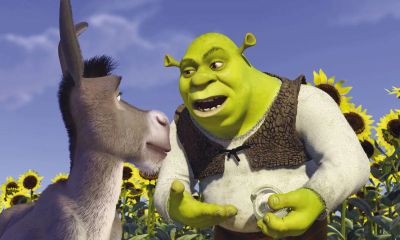
Donkey could have been unbearable if the performance had been less warm, but Eddie Murphy gives him such speed, optimism, and emotional persistence that he becomes essential. I enjoy Donkey because he refuses to accept Shrek’s self-protective silence as the final answer. He talks too much, asks too many questions, misunderstands danger, and pushes into personal space with magnificent confidence.
What makes Donkey more than comic relief is his loyalty. He is annoying, yes, but he is also brave in a social way. He keeps offering friendship to someone who keeps rejecting it. That matters because Shrek needs a character who does not respond to him with fear. Donkey sees the ogre, registers the danger, and then decides to stay anyway. His chatter becomes a kind of emotional pressure. He forces Shrek into conversation, and conversation is the first crack in Shrek’s isolation.
Fiona Rewrites the Princess Role From the Inside
Princess Fiona is one of the film’s smartest characters because she begins as a fairy-tale expectation and slowly becomes a person. At first, she performs the role she has been taught: she waits in a tower, expects a noble rescue, and imagines romance arriving in a very specific shape. I liked how the movie lets her be both funny and sincere in that performance. Fiona is not foolish for believing in the story she was given. She has been trapped inside it for years.
Her real strength appears when the performance slips. Fiona is capable, impatient, physically skilled, funny, and far less delicate than the image of a perfect princess suggests. Cameron Diaz gives her a bright confidence that makes the character feel active even before her secret is revealed. The twist works because it does not come from nowhere. Fiona has been divided from the start between what she is supposed to be and what she actually is.
Lord Farquaad Is Tiny Vanity Made Royal
Lord Farquaad is one of the funniest villains in DreamWorks animation because he is built from insecurity disguised as authority. He wants a perfect kingdom, a perfect image, and a perfect royal story, but everything about him feels artificial. I like how the film uses him to mock power that depends on appearances. He is obsessed with order, status, and fairy-tale legitimacy, yet he has no real warmth or courage behind the ceremony.
Farquaad’s kingdom, Duloc, reflects him perfectly. It is clean, controlled, symmetrical, and deeply creepy in its forced cheer. The welcome-song machinery, uniform spaces, and polished surfaces make Duloc feel like a theme park designed by someone terrified of disorder. That contrast with Shrek’s swamp is brilliant. Shrek’s home is ugly but honest. Duloc is pretty but hollow. The film makes the difference clear without needing to explain it too heavily.
The Aesthetics Mix Gross-Out Texture With Storybook Beauty
Visually, Shrek has a distinctive charm because it refuses to stay in one mode. The swamp is full of mud, moss, rough wood, insects, smoke, and ugly little details. The castle and fairy-tale spaces bring more familiar fantasy imagery: towers, banners, dragon-guarded rooms, moonlit roads, and dramatic landscapes. I like how the film lets both styles exist together without smoothing out the clash.
That clash is part of the point. Shrek is a movie about the gap between appearance and truth, so its visual world keeps asking what beauty is supposed to mean. The polished places are not always good, and the ugly places are not always bad. The dragon’s castle is frightening but also lonely. The swamp is disgusting to outsiders but peaceful to Shrek. Fiona’s royal image hides a private fear. The aesthetics are not only decorative. They carry the film’s central argument.
The Humor Still Feels Sharp Because It Has Targets
Shrek is packed with jokes, but the humor lasts because it usually knows what it is aiming at. It mocks fairy-tale formulas, celebrity culture, theme-park cleanliness, heroic vanity, and the idea that romance has to look one specific way. I enjoy how fast the jokes move, from verbal sarcasm to visual gags to pop-song needle drops. The film has a mischievous rhythm that makes it feel slightly rebellious even now.
Some of the comedy is broad and physical, but the best jokes come from turning familiar stories upside down. A princess is not helpless. A monster has feelings. A noble lord is pathetic. A talking donkey becomes the most emotionally honest person in the room. The film gets laughs by reversing expectations, but those reversals also build character. The jokes are not just decorations placed on top of the plot. They are how the movie explains its worldview.
The Soundtrack Gives the Film Its Pop-Culture Swagger
The soundtrack is a major part of Shrek’s identity. Instead of using only traditional fantasy music, the film brings in pop songs that make the story feel cheeky, modern, and self-aware. I like that choice because it gives the movie a playful distance from the fairy-tale world. The songs tell me immediately that this is not a solemn legend. It is a story that knows it is crashing a party.
At the same time, the music does more than make jokes. Certain songs help shape mood, loneliness, confidence, and emotional release. The contrast between medieval imagery and modern music creates a distinctive tone. It lets the film be sentimental without becoming too polished. Shrek can be tender, but it never wants to seem precious. The soundtrack helps maintain that balance.
The Dragon Turns a Monster Scene Into a Romance
The dragon sequence is one of the film’s cleverest reversals. At first, the dragon appears to be exactly the kind of obstacle a fairy-tale quest requires. She guards the princess, breathes fire, and threatens the heroes inside a dramatic castle. But then the film changes the rhythm by giving her attraction, personality, and comic timing. Suddenly the monster is not only a monster. She is another character with feelings no one expected.
I like this twist because it mirrors the rest of the story. Shrek is feared because of what he is. Fiona hides because of what she becomes. Donkey is dismissed because he talks too much. Dragon is introduced as danger, then revealed as lonely and affectionate. Again and again, the movie asks me to look past the first label. That gives even the comic side plots thematic purpose.
The Romance Works Because Both Characters Hide
The relationship between Shrek and Fiona is stronger than a typical parody romance because both characters are protecting themselves. Shrek hides behind ugliness he has decided to own before anyone can use it against him. Fiona hides behind beauty and royal manners because she believes her other form makes her unworthy. Their connection grows because each sees something in the other that challenges those defenses.
I like that their romance begins with irritation. They argue, judge each other, misunderstand each other, and slowly relax into honesty. The best moments between them are not grand declarations. They are small recognitions: shared humor, physical ease, a moment of unexpected skill, a conversation by the fire, a look that lasts a little too long. The film makes attraction feel like the discovery of someone who understands the part of you that the world usually mishandles.
The Fairy-Tale Creatures Make Exile Funny and Sad
The displaced fairy-tale creatures are hilarious as a crowd, but their situation has a sharp edge. They have been removed from the kingdom because they do not fit Farquaad’s idea of perfection. That makes the film’s opening conflict more meaningful. Shrek is not the only outsider. The entire story is filled with characters pushed aside because they are inconvenient to someone else’s clean design.
I enjoy how the movie uses familiar figures in unfamiliar conditions. The Three Little Pigs, Pinocchio, the Big Bad Wolf, and others become part of a refugee-like comic crowd, which is strange, funny, and pointed. Their presence turns fairy-tale nostalgia into social satire. The magical world is not automatically kind. It has prejudice, bureaucracy, and image control. That gives Shrek’s rude humor more bite than it first appears to have.
The Animation Has Aged, But the Character Work Holds
The animation belongs to its era, and some textures now look less smooth than modern CGI. But I think the character work still holds because the designs are so clear. Shrek’s heavy body, Fiona’s posture, Donkey’s expressive face, and Farquaad’s exaggerated proportions all communicate personality immediately. The film does not need perfect realism because its visual comedy depends on strong shapes and readable movement.
I also like the tactile quality of the world. Even when the technology shows its age, the environments feel specific. Mud, stone, wood, armor, fabric, and fire all contribute to the film’s rough fairy-tale texture. Shrek was never meant to look like a delicate painting. It was meant to feel like a storybook that got dragged through a swamp and came out laughing.
The Message Lands Because It Refuses Pretty Perfection
The emotional core of Shrek is simple, but it works because the movie commits to it fully. Being loved should not require becoming prettier, quieter, more royal, or easier for others to accept. That idea appears through Shrek, Fiona, Donkey, Dragon, and even the exiled fairy-tale creatures. Everyone is dealing with some version of rejection, mislabeling, or forced performance.
What I appreciate is that Fiona’s transformation does not lead her toward conventional beauty as a reward. The film makes a braver choice by allowing love to confirm the form she feared. That moment still matters. It tells me that acceptance is not about being restored to what society expected. It is about being seen clearly and wanted anyway. For a comedy full of burps, mud, sarcasm, and fairy-tale jokes, that is a surprisingly tender idea.
Why Shrek’s Rudeness Still Feels Warm
Shrek remains enjoyable because its irreverence has feeling behind it. The film makes fun of fairy tales, but it does not reject wonder. It laughs at romance, then builds a real one. It mocks heroes, then lets an ogre become heroic in his own reluctant way. It fills the screen with rude jokes, but underneath them is a sincere defense of people who have been told they are too strange to belong.
I find that combination hard to replace. Shrek is sarcastic without being empty, sentimental without being polished, and silly without being shallow. Its humor opens the door, but its emotional honesty keeps the story alive. The film’s best trick is that it convinces me a swamp can be romantic, an ogre can be vulnerable, a princess can be more interesting after the fairy tale breaks, and a talking donkey can be exactly the friend a lonely monster needed all along.