A Nature Lesson Disguised as a Creature Adventure
I watch Wild Kratts as one of those children’s shows that knows exactly how to turn curiosity into momentum. It does not begin with a classroom tone, even though it teaches constantly. It begins with excitement: an animal, a strange ability, a question, and the feeling that the natural world is full of secrets waiting to be tested. That is the show’s main strength. It makes biology feel like exploration rather than homework.
What I like most is how the series treats animals as fascinating because of what they can do, not only because they look cute or dangerous. A gecko’s feet, a cheetah’s speed, a squid’s camouflage, a beaver’s engineering, or a falcon’s eyesight can become the center of an entire story. The show understands that children often connect to science through powers, movement, and surprise. Instead of saying, “Here is a fact,” Wild Kratts asks, “What would it feel like to have that creature power?” That question opens the door.
Chris and Martin Make Science Feel Like Play
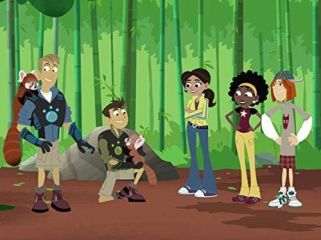
Chris and Martin Kratt are the heart of the show because they bring real enthusiasm into every episode. I enjoy the contrast between their personalities. Chris often feels more careful, analytical, and focused, while Martin brings a looser, more excitable energy. That difference creates a useful rhythm. One brother studies the details, the other dives into the wonder, and together they make animal behavior feel both understandable and thrilling.
The live-action openings and endings help the series feel connected to real wildlife. I like that the show does not stay entirely inside animation. Seeing the brothers with real animals reminds me that the animated adventure is rooted in actual biology. The transition from live action to animation also works well for young viewers. It says, in effect, “Now that we have seen the real creature, let us imagine its abilities from the inside.”
The Creature Power Suits Are the Perfect Educational Hook
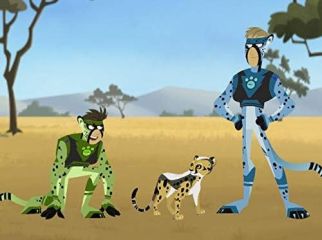
The Creature Power Suits are one of the smartest ideas in the series. They turn animal adaptations into something visual, active, and easy to remember. Instead of only explaining how a creature survives, the show lets Chris and Martin activate that ability and use it inside a story. I can see why this works so well for children. A scientific concept becomes a suit, a move, a color, a transformation, and a problem-solving tool.
I like how the suits make learning feel physical. A child watching an episode about kangaroos, ants, sharks, or owls does not only hear facts. They see how a body works in a habitat. They see why a trait matters. The power is never random; it is tied to survival. That connection is important. The show teaches that animals are not magical because the story says so. They are extraordinary because evolution has shaped them for specific lives.
Aviva Turns Invention Into Teamwork
Aviva is one of the most important characters because she gives the show its engineering brain. She designs, builds, fixes, and improves the technology that allows the team to explore creature powers. I like that her intelligence is practical and creative. She does not only explain science; she turns it into tools.
Her role also gives the series a strong STEM dimension. Through Aviva, children see that curiosity can become invention. An animal trait can inspire a machine. A problem can be solved through design. A failed attempt can be adjusted rather than abandoned. That makes her more than a supporting character. She represents the bridge between biology and engineering, showing that learning about nature can inspire human creativity without replacing respect for the animal itself.
Koki and Jimmy Z Keep the Crew Functioning
Koki adds technical confidence and communication to the team. I like that she often feels like the person keeping the mission connected, informed, and organized. While Chris and Martin are out in the field, Koki helps track data, manage systems, and solve problems from the Tortuga. Her presence makes the crew feel like a real team rather than two adventurers with gadgets.
Jimmy Z brings a more relaxed and comic energy. He is not always the most intense member of the group, but that gives him a useful place in the show’s rhythm. His reactions make the missions feel lighter, especially when the science becomes detailed or the danger increases. Together, Koki and Jimmy help widen the team dynamic. Wild Kratts is not only about bold exploration. It is also about support, communication, and different kinds of contribution.
The Tortuga Is a Flying Classroom With Personality
The Tortuga is one of my favorite parts of the show’s design. It works as a headquarters, vehicle, lab, shelter, and symbol of the team’s mission. I like that it feels playful but functional. Its turtle-inspired shape connects it visually to the animal world, while its technology allows the crew to move from habitat to habitat without losing the sense of a shared home base.
As a setting, the Tortuga gives the show structure. The team can start there, plan there, argue there, invent there, and return there after a mission. For young viewers, that repeatable space creates comfort. No matter whether the episode explores a rainforest, desert, ocean, savanna, cave, mountain, or backyard ecosystem, the Tortuga remains the familiar center. It makes the world feel huge without making the show feel scattered.
The Villains Make Conservation Easy to Understand
The villains in Wild Kratts are broad, but they serve a clear educational purpose. Donita Donata, Zach Varmitech, Gourmand, and other antagonists often represent different forms of disrespect toward animals: vanity, greed, exploitation, carelessness, or selfish curiosity. I like that children can quickly understand why these behaviors are wrong. The villains do not value animals as living beings with roles in ecosystems. They see them as objects, products, trophies, or obstacles.
This makes the conservation message direct without becoming too heavy. The show does not need to deliver long speeches about environmental ethics every time. It shows the difference between observing animals and using them badly. Chris, Martin, and the team learn from creatures, while the villains try to control or profit from them. That contrast gives each adventure a moral shape that young viewers can follow.
The Animation Is Bright, Clear, and Built for Learning
The visual style of Wild Kratts is clean and colorful, which helps the educational content land. Animals are stylized enough to fit the animated world, but their key traits remain recognizable. I appreciate that clarity. A child needs to notice the long tongue, strong claws, webbed feet, wingspan, shell, tail, eyes, or camouflage pattern that the episode is teaching about.
The environments are also readable. Forests, wetlands, reefs, deserts, grasslands, polar regions, and urban spaces each have their own visual identity. The show does not overwhelm the screen with unnecessary detail. It uses enough background information to establish habitat, then keeps attention on behavior. That is a smart educational choice. In Wild Kratts, aesthetics are not just decoration. They help organize knowledge.
The Creature Facts Stick Because They Are Used in the Plot
One of the reasons the series works so well is that animal facts are not treated as separate trivia. They become part of the story’s solution. If an episode teaches about a creature’s defense, speed, senses, social behavior, or hunting method, that trait usually matters later. I like that structure because it makes the information memorable.
For example, when the team learns how an animal escapes danger, finds food, builds shelter, or communicates, the episode often places the characters in a situation where that knowledge becomes necessary. The fact becomes action. That is stronger than simply listing information. Children remember ideas better when they see why those ideas matter. Wild Kratts understands that learning sticks when it has narrative purpose.
The Show Respects Animals Without Making Them Too Human
I appreciate that Wild Kratts gives animals personality while still trying to preserve their natural behavior. The brothers often name individual animals, which helps young viewers bond with them, but the show usually keeps the focus on species traits and ecological roles. That balance matters. It makes animals emotionally accessible without turning them entirely into human-like characters.
The series is strongest when it shows that animals are interesting on their own terms. A predator is not evil. A prey animal is not weak. A strange-looking creature is not a joke. Each species has abilities shaped by its environment. That perspective encourages respect. The show teaches children to ask, “How does this animal live?” instead of only asking whether the animal is cute, scary, or useful to humans.
The Humor Keeps the Science Light
The comedy in Wild Kratts is gentle, fast, and character-driven. Martin’s excitement, Chris’s carefulness, Jimmy’s relaxed reactions, Aviva’s impatience with technical chaos, and villain mishaps all keep the tone lively. I like that the humor rarely works against the educational purpose. It gives children a reason to stay engaged while still keeping the animal focus clear.
The show also uses playful exaggeration well. A creature ability can be shown in a dramatic way without losing its scientific basis. The brothers can make mistakes, get surprised, or overcommit to a mission, and the comedy becomes part of learning. That makes the series feel less like a lecture and more like a shared adventure where discovery includes trial, error, and laughter.
The Pacing Is Built for Curiosity
Each episode has a reliable rhythm: meet an animal, identify a creature power, encounter a problem, explore the behavior, face a challenge, and use knowledge to resolve the mission. I find that structure effective because it gives young viewers a clear path. They know the adventure will move forward, but the animal facts keep changing.
The pacing is especially good for children who like both stories and information. The show does not pause too long in explanation, but it also does not rush past the science. It gives facts in small, usable pieces. Then it repeats them through action, dialogue, and visual demonstration. That repetition is not a flaw. For the target audience, it is one of the reasons the lessons remain understandable.
The Main Message Is Wonder With Responsibility
The emotional center of Wild Kratts is the idea that wonder should lead to care. The team is excited by animal abilities, but that excitement usually turns into protection. I like that the show does not frame nature only as entertainment. It frames nature as something alive, interconnected, and worth defending.
This is where the series becomes more than animal trivia. It teaches children that curiosity has consequences. When you learn how amazing a creature is, you may also feel responsible for its habitat, safety, and future. That is a valuable message. Wild Kratts gives young viewers the thrill of imagining animal powers while also reminding them that real animals do not exist for humans to use however they want.
The Kratt Brothers’ Real Background Gives the Show Trust
Knowing that Chris and Martin Kratt have spent decades making wildlife education for children gives the series extra credibility for me. Their work did not start with Wild Kratts; it grew from a longer career of animal-focused programming, including earlier shows such as Kratts’ Creatures and Zoboomafoo. That history matters because their enthusiasm feels earned rather than manufactured.
I can feel that continuity in the show’s tone. Wild Kratts is energetic and highly animated, but its core is still the same basic promise: animals are amazing, and children deserve to learn about them with excitement. The Kratts bring the confidence of people who have been inviting kids into nature for a long time. That makes the educational mission feel sincere.
The Best Episodes Make Small Creatures Feel Enormous
One of my favorite things about Wild Kratts is that it does not only focus on famous animals. Big cats, wolves, sharks, and elephants are naturally exciting, but the show also gives attention to insects, amphibians, reptiles, birds, small mammals, and less glamorous species. I enjoy when an episode makes a tiny creature feel like the most fascinating thing in the world.
That approach expands a child’s sense of wonder. Nature is not only impressive when it is large or dramatic. A tiny insect can have incredible strength. A small bird can navigate impossible distances. A little frog can survive through amazing adaptations. By treating these creatures as worthy of adventure, the show helps children see that the natural world is full of stories at every scale.
The Series Works Because It Makes Knowledge Feel Active
Wild Kratts succeeds because it understands that children often learn best when knowledge moves. The show turns facts into running, climbing, swimming, gliding, hiding, building, tracking, and problem-solving. I like that active quality. It encourages viewers to see science as something connected to motion and observation.
The series also makes outdoor curiosity feel accessible. A child may not be able to travel to every habitat in the show, but they can still look more closely at birds, bugs, tracks, plants, pets, and local wildlife. That is one of the most useful effects of the series. It can make the world outside feel more alive. After watching Wild Kratts, even a backyard can seem like a place where creature powers are waiting to be noticed.