A Friendship Turns Into a Legend With Bruises
I watched Wicked: For Good with the feeling that the first film had left Oz glittering but unstable, as if every song, classroom rivalry, and political whisper had been moving toward a harder emotional reckoning. This second chapter feels darker because the characters are no longer discovering who they might become. They are living with the consequences of choices that have already begun to define them. Elphaba is no longer only the misunderstood student with impossible power. Glinda is no longer only the sparkling girl learning that popularity cannot protect her from moral compromise. Oz itself feels less like a magical country and more like a stage where every public story is carefully managed.
What I found most compelling is that Wicked: For Good understands reputation as a kind of prison. Elphaba is branded as wicked because the people in power need a villain. Glinda is elevated as good because the same system needs a smiling symbol. Neither label is honest enough to hold the person underneath. That tension gives the film its emotional charge. The story is not only about magic, romance, politics, or destiny. It is about two women watching the world turn their friendship into propaganda.
Elphaba Carries Power Like a Wound and a Calling
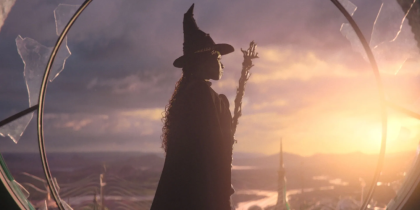
Cynthia Erivo’s Elphaba remains the center of the film’s emotional gravity. I liked how she plays Elphaba as someone who has become stronger, but not simpler. Her voice has immense force, yet her face often carries exhaustion, hurt, and disbelief at how quickly truth can be rewritten. Elphaba’s power is spectacular, but the film never lets me forget that power has made her a target.
What makes her so moving is that she refuses to let the public version of herself become the only version. Oz calls her dangerous, but she continues to act from conscience. She knows the Wizard’s rule depends on fear, spectacle, and control, yet fighting him means becoming more isolated. I felt the loneliness in that choice. Elphaba is not heroic because she is always certain. She is heroic because she continues after certainty becomes painful.
Glinda’s Smile Becomes Her Most Complicated Costume
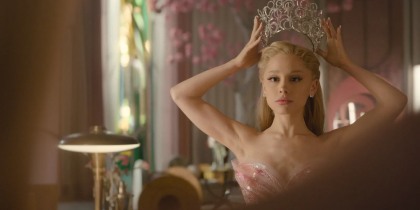
Ariana Grande’s Glinda fascinated me because this part of the story asks the character to live inside a beautiful lie. Glinda has influence, admiration, costumes, ceremony, and public affection, but the film gradually shows how suffocating that can become. Her brightness is no longer only comic sparkle. It becomes a mask that keeps her useful to the people controlling Oz.
I liked how the performance lets Glinda be funny, vain, sincere, frightened, and morally conflicted at once. She wants to do good, but she also wants to be loved. She wants to help Elphaba, but she is trapped by the machinery that praises her. That contradiction gives the character real ache. Glinda’s tragedy is not that she lacks a heart. It is that she has one, and she keeps discovering how costly it is to use it publicly.
Oz Looks More Beautiful When It Feels Less Innocent
The aesthetics of Wicked: For Good are lush, theatrical, and richly detailed, but I found the beauty more uneasy this time. The first film had the thrill of arrival: Shiz, Emerald City glamour, new friendships, and the seductive promise of Oz. Here, that same visual richness feels more political. Green light, shining halls, grand costumes, and public ceremonies no longer look purely magical. They look like tools of power.
I enjoyed how the film lets visual beauty become suspicious. The Emerald City can dazzle while hiding corruption. Glinda’s gowns can sparkle while trapping her in an image. Elphaba’s darker spaces can seem frightening to the public while carrying more truth than the official palaces. That reversal gives the film’s design emotional purpose. Oz is not less beautiful because it is dishonest. It is more disturbing because its dishonesty is so beautifully staged.
The Wizard Is Charming Because He Knows Charm Works
Jeff Goldblum’s Wizard brings a slippery kind of danger. He is not frightening because he seems physically imposing. He is frightening because he understands performance. He knows how to sound reasonable, how to look disappointed instead of cruel, and how to make manipulation feel like leadership. I liked that this version of the Wizard feels almost casual in his moral decay.
The Wizard’s power comes from narrative control. He does not need to be the strongest magical figure in Oz if he can decide what everyone believes about magic. Elphaba threatens him because she exposes the emptiness behind the curtain. Glinda helps him because her image makes the system look kind. That dynamic makes him more interesting than a simple tyrant. He is a showman who built a government out of illusion.
Madame Morrible Turns Language Into a Weapon
Michelle Yeoh’s Madame Morrible gives the film a colder, more polished form of menace. I found her especially effective because she understands the official language of respectability. She does not need to shout. She can redirect a room with a sentence. She can make cruelty sound like order, loyalty, or civic necessity.
Morrible’s role matters because she shows how systems protect themselves through elegant phrasing. Elphaba becomes a threat not only because of what she can do, but because Morrible knows how to describe her as one. Glinda becomes valuable not only because of who she is, but because Morrible knows how to package her for public consumption. I liked how the film makes words feel almost as dangerous as spells.
Fiyero Adds Romance With Real Moral Pressure
Jonathan Bailey’s Fiyero gives the romantic side of the story a sharper emotional pull. He is charming, physical, and warm, but the film asks him to become more than a handsome distraction. I liked that his feelings for Elphaba are tied to a growing awareness of what Oz has become. Romance here is not only private longing. It becomes a political and moral choice.
The triangle between Elphaba, Glinda, and Fiyero works because no one escapes cleanly. Glinda’s love is tangled with status and expectation. Elphaba’s love is tangled with danger and exile. Fiyero’s loyalty forces him away from comfort. The film treats desire as something that reveals character under pressure. Who someone loves matters, but what they are willing to risk for that love matters more.
The Songs Feel Heavier Because the Characters Have Changed
The music in Wicked: For Good carries a different emotional weight from the first chapter. The earlier songs often had the energy of discovery, rivalry, ambition, and possibility. Here, the songs feel more like reckoning. I listened to them as expressions of consequence. Characters are not only singing what they want. They are singing what they have lost, what they have chosen, and what they cannot undo.
The title song has special power because it brings Elphaba and Glinda’s relationship into focus. Their friendship has changed both of them permanently, even when the world tries to place them on opposite sides of a moral poster. I liked how the musical moments allow emotion to expand beyond ordinary dialogue. In Oz, where public language is often corrupted, singing becomes the place where truth can still break through.
The Animal Rights Thread Gives the Fantasy Its Conscience
One of the strongest parts of the Wicked story is its treatment of Animals as a persecuted group inside Oz. Wicked: For Good continues to make that issue central to Elphaba’s moral identity. She is not rebelling for style or personal drama. She is responding to a society that is stripping living beings of voice, dignity, and personhood.
I liked that this theme keeps the fantasy grounded in ethical urgency. The talking Animals are not only worldbuilding details. They reveal what Oz is willing to sacrifice in order to maintain control. Dr. Dillamond’s presence and the broader silencing of Animals make Elphaba’s defiance feel necessary rather than impulsive. The story’s magic matters most when it exposes injustice that ordinary citizens are encouraged not to see.
Dorothy’s Shadow Changes the Shape of the Story
Dorothy’s arrival gives the film a fascinating tension because the audience already knows another version of Oz. Wicked: For Good has to move alongside that familiar tale while keeping Elphaba and Glinda at the center. I enjoyed the way Dorothy functions almost like a myth entering from the edge of the frame. She is important, but this is not truly her story.
That choice makes the film more interesting. Events I thought I understood from another angle become stranger and sadder when seen through Elphaba’s life. The yellow brick road is no longer only a route of wonder. It becomes part of a larger misunderstanding. The famous labels of Wicked Witch and Good Witch begin to feel less like truths and more like roles assigned by a story that left too much out.
The Friendship Between Elphaba and Glinda Is the Real Spell
The emotional center of the film is still the bond between Elphaba and Glinda. I liked that their relationship is not reduced to simple sisterhood, rivalry, or regret. It contains all of those things and more. They admire each other, wound each other, misunderstand each other, and change each other. Their friendship is powerful precisely because it does not remain innocent.
What moved me most is how the film shows love surviving inside separation. Elphaba and Glinda stand on different sides of public history, but privately they know the truth of what they meant to each other. That private truth becomes almost sacred. Oz may turn them into symbols, but symbols cannot hold the full complexity of a friendship that made both women braver and more broken.
The Costumes Tell the Story Before the Characters Do
The costume design is one of the film’s most expressive tools. Glinda’s gowns are dazzling, controlled, and public-facing, often making her look like a living announcement. Elphaba’s clothing carries a different force: darker, sharper, less interested in pleasing the eye of Oz. I liked how the contrast communicates their positions before either character speaks.
The costumes also show how identity becomes performance. Glinda is dressed to reassure. Elphaba is styled by the world as a warning, even when her choices come from compassion. The film’s visual language keeps asking who gets to define beauty, goodness, and danger. In a story so concerned with image, fabric and silhouette become part of the argument.
The Pacing Feels More Somber Than the First Chapter
Wicked: For Good moves with a darker, more reflective rhythm. I felt the difference from the first film. There is less schoolyard discovery and more emotional aftermath. The pacing sometimes feels unhurried, especially as the film works to connect personal choices with the larger Oz mythology. That slower quality may not feel as immediately buoyant, but it suits the material.
I liked the moments where the film allows silence, hesitation, and regret to sit between characters. This is a story about consequences, so it needs space for those consequences to land. Not every scene needs to rush toward spectacle. The film is strongest when it lets Elphaba and Glinda look at each other with the knowledge that both of them have crossed lines they cannot simply uncross.
The Flying Scenes Carry Freedom and Isolation Together
Elphaba’s flight remains one of the story’s defining images, and in this second chapter it feels more complicated than triumph. I liked that flying is both liberation and exile. When Elphaba rises above Oz, she becomes visually powerful, but she also becomes more alone. The sky gives her freedom that the ground refuses, yet it separates her from the human intimacy she still wants.
That dual meaning makes the image powerful. Elphaba’s broom is not only an icon. It is a symbol of what happens when a woman refuses the role written for her. She gains height, movement, and mythic force, but the world below responds by turning her into a warning story. The film understands the sadness inside that grandeur.
The Film Works Best When It Trusts Moral Complexity
What I appreciated most about Wicked: For Good is that it does not make goodness look simple. Glinda is called good, but goodness becomes a challenge she has to grow into. Elphaba is called wicked, but the label hides her courage. The Wizard appears respectable, but respectability becomes a cover. Oz is beautiful, but beauty becomes a screen for injustice.
This moral complexity is the reason the story still feels alive. It does not ask me to reject fairy tales; it asks me to distrust the version told by the person holding the microphone. The film’s best scenes are the ones that expose how public stories are made. Who gets celebrated? Who gets feared? Who gets erased? Who gets remembered as a villain because the truth would embarrass the powerful?
The Final Movement Feels Like History Being Written Wrong
As the story moves toward the familiar shape of Oz mythology, I felt a growing sadness because I knew public memory would not be fair. Wicked: For Good is not only about what happens to Elphaba and Glinda. It is about how what happens to them gets retold. That makes the ending stretch of the film feel less like a simple resolution and more like the birth of a false legend.
I found that idea deeply effective. Elphaba and Glinda both become larger than themselves, but neither is fully seen by the world that names them. One becomes wicked. One becomes good. The labels are clean because history often prefers clean labels. The private truth is messier, richer, and more painful. That private truth lives in their songs, their choices, and the way each carries the other forward even after Oz has decided what story it wants to believe.