A Green Girl Steps Into a World That Already Misread Her
I watched Wicked with the feeling that I was entering Oz from the wrong side of the curtain, which is exactly what makes the film so compelling. Instead of treating the familiar land as a simple place of wonder, it turns Oz into a society built on image, rumor, privilege, and carefully managed stories. The movie does not ask me to forget what I know about witches, yellow roads, emerald glamour, or flying monkeys. It asks me to question who taught me to understand those images in the first place.
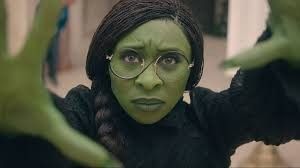
What pulled me in most was Elphaba’s position as someone judged before she speaks. Her green skin is not only a visual trait. It becomes the way the world decides what she must be. People stare, whisper, recoil, or reduce her to a problem. That gives the film its emotional spine. Wicked is not only about magic or destiny. It is about the violence of first impressions, the hunger to belong, and the painful moment when a person realizes that being accepted by a corrupt system may be worse than being rejected by it.
Elphaba Makes Difference Feel Heavy and Magnificent
Cynthia Erivo’s Elphaba is the center of the movie’s emotional gravity. I liked how she plays the character with guarded stillness at first, as if Elphaba has learned to keep her feelings tightly folded because the world cannot be trusted with them. Her power is enormous, but her early scenes are full of restraint. She is used to being watched, but not truly seen.
What makes Elphaba so moving is that she is not written as a flawless outcast. She is angry, defensive, sharp, compassionate, lonely, and deeply principled. Her difference has made her suspicious of easy kindness, but it has not erased her ability to care. I found her most powerful when she begins to understand that her magic is not the thing that makes her dangerous to Oz. Her refusal to lie is. That realization turns her from a misunderstood student into a moral force.
Glinda Turns Sparkle Into a Survival Strategy
Ariana Grande’s Glinda brings the film its brightest comic rhythm, but the character is more interesting than her glitter suggests. At first, Glinda seems to live entirely inside performance. She knows how to charm a room, how to arrange her face, how to make popularity look effortless, and how to turn attention into social currency. I enjoyed how funny she is, especially when her confidence has no real reason to be as large as it is.
Yet the film gradually shows that Glinda’s sparkle is not empty. It is a strategy. She has learned the rules of Oz very well, and those rules reward beauty, smoothness, and public likability. Her friendship with Elphaba becomes fascinating because Elphaba disrupts those rules simply by existing honestly. Glinda does not transform instantly into a better person, and that makes her arc more believable. She has to learn that goodness cannot be the same as being adored.
Shiz University Is Pretty, Polished, and Quietly Cruel
Shiz gives the film a wonderful setting for social pressure. On the surface, it looks like a magical academic dream: grand buildings, bright uniforms, formal traditions, and students moving through elegant spaces with the certainty of people who believe the world was built for them. I liked how the film uses that beauty to create discomfort. Shiz is gorgeous, but it is not gentle.
The school becomes a small version of Oz itself. Status matters. Appearances matter. People decide quickly who belongs and who does not. Elphaba enters this world already marked as wrong, while Glinda glides through it with social fluency. Their shared room becomes more than a comic setup. It is a collision between two survival methods: Elphaba’s guarded honesty and Glinda’s polished performance.
The Friendship Begins With Friction, Which Makes It Matter
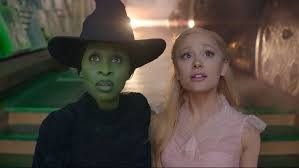
The bond between Elphaba and Glinda works because it is not instant sweetness. They irritate each other, judge each other, misunderstand each other, and expose each other’s weaknesses. I liked that the film lets their early relationship be genuinely uncomfortable. Their friendship becomes valuable because it has to fight through pride, jealousy, embarrassment, and social expectation.
What moved me most is how each woman gives the other something she lacks. Glinda helps Elphaba experience public warmth, however imperfectly. Elphaba forces Glinda to look beyond applause and ask what kind of person she wants to be when nobody is clapping. Their friendship is not simple support. It is disruption. They change each other because neither can remain entirely safe inside the role she had been playing before.
The Music Gives Private Feelings a Public Shape
The songs are essential because Wicked is a story about emotions too large to remain spoken. I felt that especially in the way musical numbers turn inner conflict into public spectacle. A classroom tension can become a comic performance. A private wound can become a soaring declaration. A moment of choice can expand until it feels like the whole sky is listening.
What I liked is that the music does not only decorate the story. It reveals what characters cannot fully admit in ordinary dialogue. Elphaba’s songs carry longing, rage, and conviction. Glinda’s songs carry vanity, charm, confusion, and growing sincerity. Together, their voices give the film its emotional architecture. The songs make Oz feel theatrical, but they also make the characters feel exposed.
Defying Gravity Feels Like a Breaking Point, Not Just a Showstopper
Defying Gravity is the film’s major emotional release, and it works because the story earns it. By the time Elphaba rises, the moment is not only about spectacle. It is about refusal. She refuses the Wizard’s lie, refuses Madame Morrible’s narrative, refuses the comfort of being approved by people who would use her power, and refuses to shrink herself into a shape Oz can tolerate.
I loved how the number turns isolation into flight. Elphaba is not suddenly safe when she chooses freedom. In many ways, she becomes more vulnerable. But she also becomes fully herself in a way she had not been allowed to be before. That contradiction gives the scene its force. The flight is thrilling because it is costly. She gains the sky, but loses the illusion that Oz will ever be fair to her willingly.
Madame Morrible Makes Respectability Feel Dangerous
Madame Morrible is unsettling because she knows how to make control sound refined. Michelle Yeoh gives her a calm authority that fits the character perfectly. She does not need to seem openly cruel at first. She can praise, guide, flatter, and redirect with elegance. That makes her more frightening than a louder villain would be.
I found her most effective as a figure of institutional power. She recognizes Elphaba’s talent, but she does not truly honor it. She wants to manage it. Morrible understands that gifted outsiders can be useful if they are brought under control. Her danger lies in the way she turns mentorship into possession. She speaks the language of opportunity, but her real interest is obedience.
The Wizard Is Smaller Than the Myth Around Him
The Wizard works as a figure because he represents the gap between image and truth. Oz treats him as magnificent, wise, and almost untouchable. When the story gets closer, he becomes something much more ordinary: charming, evasive, insecure, and dependent on illusion. I liked that contrast. The Wizard’s power comes less from greatness than from people agreeing to believe in his greatness.
Jeff Goldblum’s presence gives the character an odd warmth that makes him more slippery. He can seem friendly while standing inside a system that harms others. That is what makes him dangerous. He is not only a man behind a curtain. He is a man who benefits from everyone else needing the curtain to remain closed. Elphaba’s threat is that she sees the machinery and refuses to admire it.
The Animals Give the Story Its Moral Nerve
The treatment of talking Animals gives Wicked its sharpest political layer. Dr. Dillamond’s storyline is painful because it shows injustice entering public life gradually, through rules, language, silence, and classroom discomfort. I liked that the film does not make this theme abstract. It gives the issue a face, a voice, and a teacher who is being pushed out of dignity in front of students who are still deciding what kind of adults they will become.
This thread matters because it clarifies Elphaba’s conscience. She is not rebellious for aesthetic reasons. She reacts because she sees cruelty being normalized. The Animals are being stripped of speech, status, and personhood, while Oz continues to perform its own greatness. That hypocrisy becomes impossible for Elphaba to ignore. Her magic may make her powerful, but her empathy gives her direction.
Fiyero Adds Charm With a Restless Undercurrent
Fiyero enters with easy confidence, and at first he seems to belong to the lighter side of the film: handsome, careless, adored, and allergic to seriousness. I liked how Jonathan Bailey gives him charm without making him feel empty. His relaxed manner has a faint sadness underneath, as if he has decided that not caring is easier than being disappointed by anything deeper.
His connection with Elphaba works because she sees through the performance in a way others do not. Glinda fits the social fantasy around him, while Elphaba unsettles it. That creates a more interesting romantic tension than simple attraction. Fiyero is drawn toward the person who makes pretending harder. His presence complicates the friendship between the two women, but he also helps reveal how much each character is changing.
The Costumes Tell a Story of Image and Armor
The costume design is one of the film’s most expressive tools. Glinda’s wardrobe is full of brightness, softness, volume, and sparkle, making her look like the physical embodiment of approval. Elphaba’s clothing is darker, sharper, and more guarded, creating a silhouette that reflects both self-protection and growing power. I liked how the costumes make their social positions visible before either character explains them.
What makes the design interesting is that beauty itself becomes complicated. Glinda’s gorgeous clothes help her succeed, but they also trap her inside expectations. Elphaba’s darker look is treated by others as suspicious, yet it gradually becomes a source of strength. The film understands that clothing in Oz is never just clothing. It is status, performance, defense, and public storytelling.
Oz Looks Dazzling Enough to Hide Its Rot
The aesthetics of Oz are lush, colorful, and theatrical. The Emerald City in particular feels designed to overwhelm the senses with green light, polished surfaces, moving parts, and musical spectacle. I enjoyed the visual richness, but what made it work for me was the unease underneath. The beauty is not innocent. It is part of the system’s charm.
That is the film’s smartest visual idea. Oz can be beautiful and corrupt at the same time. The grandeur does not cancel the injustice. In fact, the grandeur helps hide it. Shiz, the palace spaces, the city crowds, and the ceremonial displays all contribute to a society that loves appearances. Elphaba’s journey becomes a movement from being impressed by Oz to understanding how much of it is performance.
The Humor Keeps the Story From Becoming Too Heavy
Wicked deals with prejudice, manipulation, propaganda, and moral courage, but it remains funny because Glinda’s comic energy constantly punctures the tension. I liked the way her vanity, social instincts, and dramatic self-importance create humor without making her shallow beyond repair. She is ridiculous, but she is also emotionally available in surprising moments.
The comedy matters because it makes the darker turns more effective. If the film were solemn from the beginning, Elphaba’s awakening might feel predictable. Instead, the early humor lets me enjoy the social world before the story reveals how cruel that world can become. The laughter does not weaken the politics. It makes the betrayal sharper when sparkle gives way to control.
The Choreography Makes Society Look Organized Around Performance
The choreography is not only there to energize the songs. It helps show how Oz functions. Students move in groups, crowds form patterns, and public spaces seem arranged around display. I liked how movement becomes a social language. Everyone is performing something: popularity, elegance, obedience, rebellion, desire, or innocence.
That makes Elphaba’s physical presence more striking. She often seems out of rhythm with the world around her, not because she lacks grace, but because she refuses to move only as expected. Glinda, by contrast, understands the choreography of society instinctively. Watching those two bodies share space tells the story visually. One has mastered the dance. The other is learning when to stop dancing for approval.
The Film Understands Popularity as Power
One of the most interesting parts of Wicked is its treatment of popularity. Glinda’s social skill is funny, but it is also powerful. She can redirect attention, soften judgment, influence a room, and make people want to agree with her. The film does not dismiss that as trivial. It understands that likability can open doors that talent alone cannot.
Elphaba has power of a different kind, but she lacks social protection. That contrast gives the story real bite. Glinda can survive inside Oz because she knows how to be accepted. Elphaba can challenge Oz because she has never been fully accepted by it. Neither position is simple. Popularity gives Glinda safety, but it also tempts her toward compromise. Rejection gives Elphaba pain, but it also leaves her less invested in preserving the lie.
The Pacing Lets the Relationship Breathe
The film takes its time with Elphaba and Glinda, and I appreciated that. Their relationship needs space to move from hostility to fascination, from reluctant closeness to real affection, and from affection to painful separation. If the story rushed that progression, the final emotional break would not land. The pacing allows small changes to matter.
I liked the quieter moments as much as the grand musical ones: glances in their room, shifts in tone after embarrassment, moments when one woman unexpectedly protects the other, and the gradual softening of judgment. These details make the friendship feel earned. Wicked is often remembered for big songs and iconic images, but its emotional force depends on the slow construction of trust between two people trained to misunderstand each other.
The Magic Works Best When It Reveals Character
Elphaba’s magic is visually exciting, but I found it most meaningful when it reveals emotion. Her power often erupts when she feels protective, angry, frightened, or overwhelmed. That makes the magic feel connected to her inner life rather than only to spectacle. She does not use power like a polished performer at first. It comes out of her before she fully understands it.
This gives her abilities a dangerous tenderness. Elphaba’s magic is tied to empathy, especially when she sees someone vulnerable or mistreated. Oz wants to turn that ability into a tool. Elphaba wants to understand what responsibility comes with it. That difference defines the conflict. Magic by itself is not the moral question. The moral question is who gets to decide what power is for.
The Story Reclaims the Witch From the Label
What I find most satisfying about Wicked is how it takes the word “witch” and pulls it apart. In Oz, the label becomes a weapon. It is used to simplify Elphaba, frighten the public, and turn dissent into danger. The film shows how quickly a society can rename someone when their truth becomes inconvenient.
Elphaba’s tragedy is not that she becomes wicked. It is that the world discovers how useful it is to call her that. This makes the story feel painfully relevant without needing to step outside its fantasy frame. Rumor, spectacle, fear, and authority work together to create a public image. Elphaba cannot easily defeat that image because it gives Oz a story people can understand. That is the real horror beneath the beauty.
The Final Lift Carries Wonder, Anger, and Grief Together
By the time the film reaches its final movement, the emotional threads have tightened around Elphaba and Glinda in different ways. Elphaba sees the truth of Oz and chooses exile over complicity. Glinda sees enough to be shaken, but not enough to give up the safety of her role completely. I found that split more painful than a simple betrayal because both positions are emotionally understandable.
The final lift into the sky feels powerful because it is not pure victory. Elphaba rises because the ground has become impossible. She becomes iconic at the exact moment she becomes hunted, misunderstood, and alone. Glinda remains below, glittering and devastated, caught between admiration and fear. That image stayed with me because it captures the heart of Wicked: two women transformed by each other, separated by a world that knows how to turn truth into theater.