
A Classic Adventure That Still Feels Dangerous
Tomb Raider I-III Remastered Starring Lara Croft feels like opening a time capsule and finding that the traps inside still work. These are not modern action adventures wearing old costumes. They are classic Tomb Raider games with sharper visuals, improved presentation, and a renewed chance to experience Lara Croft’s earliest journeys without losing the strange, tense rhythm that made them memorable in the first place.
What struck me first is how different these games feel from many current adventure titles. They are slower, more deliberate, and much less eager to guide me by the hand. Every ledge, switch, corridor, animal encounter, hidden room, and underwater passage asks me to pay attention. I cannot simply rush forward and expect the game to smooth everything out. Tomb Raider I-III Remastered rewards patience, spatial awareness, and a willingness to think like an explorer rather than a tourist.
This collection is valuable because it preserves that older design philosophy while making it more approachable visually. The remastered graphics give the environments more clarity, but the core structure remains proudly old-school. For me, that is the main appeal. It does not erase what made the original trilogy distinctive. It lets those qualities breathe again on modern platforms.
Lara Croft Feels Iconic Because She Is Not Overexplained
Lara Croft remains the center of the entire experience, and what I appreciate most is how confidently these games present her. She is athletic, composed, curious, stylish, and dangerous without needing endless dialogue to explain who she is. Her personality comes through in movement, locations, confidence, and the sheer absurdity of the places she is willing to enter alone.
In these early adventures, Lara feels more like a mythic adventurer than a heavily scripted character study. That may feel minimalist by modern standards, but it gives her a strong presence. She does not constantly comment on every object or tell me what to do next. The silence around her makes the tombs feel larger and stranger.
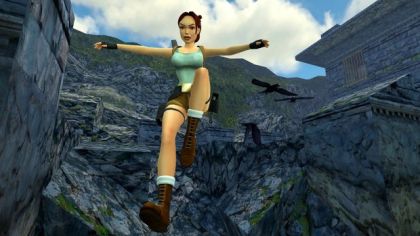
I also like that the remaster keeps her classic identity intact. The visual updates make her model cleaner, but the collection still respects the original silhouette, animations, and attitude. Lara’s elegance comes from her precision. Whether she is climbing, swimming, jumping, or carefully lining up a difficult leap, she feels like a character built around control and risk.
The Remastered Visuals Make Ancient Spaces Easier to Read
The updated visuals are one of the biggest reasons to download and play Tomb Raider I-III Remastered Starring Lara Croft today. The original games had strong atmosphere, but time has not been equally kind to every texture, character model, or environmental detail. The remaster improves clarity while preserving the geometry and structure of the classic levels.
I enjoyed switching between the updated and original visual modes because it helped me appreciate how much art direction was already present in the older versions. The remastered look adds cleaner surfaces, improved lighting, sharper objects, and more readable spaces, but the underlying design was always doing a lot of work. Temples, caves, ruins, mansions, industrial areas, and strange hidden places still have a strong sense of identity.
The best visual improvement is readability. In a game where noticing ledges, climbable areas, switches, and dangerous spaces matters, clearer visuals make exploration feel less muddy. The remaster does not turn the trilogy into a modern cinematic game, and that is a good thing. It keeps the atmosphere, but makes the adventure easier on the eyes.
Movement Is the Heart of the Game
Tomb Raider I-III Remastered is built around movement more than constant action. Lara’s jumps, grabs, rolls, climbs, swims, and sidesteps are the real language of the game. Every room is a physical puzzle, and success often depends on understanding exactly how far she can jump, where she can land, and how much space she needs to line up a move.
This can feel unusual if you are used to modern games with magnetic ledges and forgiving traversal. Classic Tomb Raider expects commitment. A jump must be measured. A mistake matters. A high platform is not just scenery. It is a question: can I reach it, and if so, from where?
I found that this made successful exploration more satisfying. When I solved a room, it felt like I had actually understood the space. The game did not simply pull Lara to the correct ledge. I had to earn the route through observation and timing. That older style can be demanding, but it gives the trilogy a strong sense of identity.
Modern Controls Help, but Classic Design Still Rules
The remaster includes modern control options, which can make the games more accessible for players who do not want the original tank-style movement. This is a smart addition because it lets more people install the collection and try it without immediately fighting decades-old control expectations.
That said, the level design was originally built around classic movement. Even with modern controls, the spaces still demand careful alignment, measured jumps, and deliberate positioning. I found that the updated controls help with comfort, but they do not turn the games into modern automated platformers. The classic structure remains underneath.
For some players, that will be refreshing. For others, it may feel stiff. I personally enjoyed the discipline of it once I adjusted. The game asks me to slow down and respect the geometry. That is a very different kind of adventure pacing, and it is part of why the collection feels so distinct.
Level Design That Refuses to Treat Me Like a Passenger
The levels in Tomb Raider I-III Remastered are not afraid to be confusing. They twist, loop, hide switches, place keys in unexpected areas, and make the player remember spaces. I often had to stop and think about how one room connected to another. That creates a stronger sense of exploration than simply following a glowing marker.
What I like most is that the games make architecture feel meaningful. A tall chamber, a flooded tunnel, a locked gate, a hidden alcove, or a suspicious platform can all become part of the puzzle. The environment is not just decoration. It is the main challenge.
This design can also be frustrating. There are moments where I wandered longer than expected because I missed a switch or misunderstood a route. But that frustration is tied to the same quality that makes the games rewarding. Tomb Raider expects attention, and when I give it attention, the world feels more real.
Puzzles That Feel Physical Instead of Abstract
The puzzles in these games are often built from space, timing, and observation. I am not only solving riddles in menus. I am moving through rooms, pulling switches, relocating objects, opening doors, draining water, raising platforms, and figuring out how the structure works. This gives the puzzles a physical quality that still feels satisfying.
I especially enjoy how puzzle solving and traversal blend together. A room may look impossible at first, but after studying ledges, slopes, water levels, and openings, a path slowly appears. That moment of recognition is one of the best feelings in classic Tomb Raider.
The remastered visuals help here as well because environmental details are easier to parse. Still, the game rarely hands over answers directly. Players who enjoy being guided constantly may find that challenging. Players who enjoy discovery will likely appreciate the freedom.
Combat Is Secondary, but It Adds Pressure
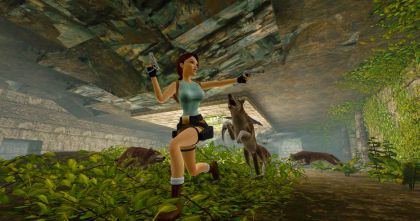
Combat in Tomb Raider I-III Remastered is not the deepest part of the collection, but it adds danger and rhythm to exploration. Wild animals, human enemies, and other threats interrupt the quiet process of puzzle solving. The result is a game that can shift from careful movement to sudden panic quickly.
I do not think the combat is the main reason to play these games today. The aiming and encounter design reflect their era, and some fights can feel simple compared with modern action games. But the danger still matters because it changes how I move through spaces. A room is not only a puzzle. It may also become a place where I need to react under pressure.
The best encounters are the ones that support the atmosphere. A hidden animal in a dark space, a sudden ambush in a ruin, or a dangerous enemy guarding a key area can make the environment feel less safe. The combat works best as tension, not as the whole point.
The Three Games Show Different Sides of Classic Tomb Raider
Having the first three games in one remastered package gives the collection real value. The original Tomb Raider has the purest sense of archaeological mystery. It feels lonely, strange, and focused. Tomb Raider II expands the scale, adds more action, and moves through a wider range of locations. Tomb Raider III becomes more experimental, sometimes brilliant and sometimes more demanding than comfortable.
I liked seeing how the formula evolved across the trilogy. The first game is probably the cleanest introduction to the classic style. The second has more variety and a stronger pace for players who want broader adventure. The third is ambitious, but it can also be the most uneven because it pushes the design in harsher directions.
As a collection, this progression is fascinating. It shows how Tomb Raider became bigger, stranger, and more complicated within only a few releases. For fans of game history, that alone makes the remaster worth attention.
Download, Install, and Play Across Platforms
Players looking to download Tomb Raider I-III Remastered Starring Lara Croft should use official platforms. This collection is available across supported modern systems, and the safest way to install it is through trusted digital storefronts or official console stores. That gives players the best chance of receiving updates, stable files, and the intended remastered experience.
This is a premium collection rather than a random free browser game, so anyone searching for a free install should be careful. Unofficial pages promising full access may be unsafe, incomplete, or misleading. The proper version matters here because the remaster includes visual modes, control options, and quality-of-life features that imitation pages will not provide correctly.
Before installing, I would check the supported platforms, available editions, storage requirements, and preferred control setup. The game plays well as a preserved classic, but it is still built from older design foundations. Knowing that before download helps set the right expectations.
Unblocked Versions Are Not the Real Experience
Searches for Tomb Raider I-III Remastered unblocked may appear because classic titles often attract browser shortcuts and imitation pages. I would avoid those. This remastered trilogy is not designed as an unblocked web game. It needs proper platform support, saved progress, control settings, updated visuals, and full game files.
An unblocked version would likely be incomplete, unreliable, or unrelated to the real collection. It may also create safety risks through questionable download prompts. For a game based on precise movement and long exploration, stability matters a lot.
If I wanted to play Tomb Raider I-III Remastered properly, I would use official platforms only. This collection is about preserving a classic experience, and unofficial shortcuts do not respect that experience.
Cheats and Mods Can Be Fun, but They Need Context
Tomb Raider has a long history with cheats, secrets, and player experimentation, so it is natural that people search for cheats and mods connected to this remaster. I understand the appeal. Some players may want alternate outfits, visual changes, easier access to levels, or nostalgic tricks from the older era.
Still, I think the games are most rewarding when played with patience. The satisfaction comes from learning rooms, finding secrets, and improving movement. If cheats remove all challenge immediately, the level design loses much of its purpose.
Mods may be interesting on platforms where they are supported by the community, especially for visual tweaks or fan additions. But unofficial files always require caution. They may affect stability, saved data, or updates. For most players, the official install is the safest and cleanest way to play.
Why the Collection Still Matters
Tomb Raider I-III Remastered matters because it shows a different era of adventure design. These games are not built around constant dialogue, cinematic handholding, or automatic movement. They are about spaces, routes, danger, and the player’s ability to interpret a level. That makes them feel refreshing even when they also feel old-fashioned.
I appreciate that the remaster does not apologize for the original structure. It improves presentation and access, but it still lets the games be themselves. The result is not a total remake. It is a restoration with respect for what made classic Tomb Raider special.
For players who never experienced the original trilogy, this collection is a chance to understand why Lara Croft became such an important gaming icon. For returning players, it is a cleaner way to revisit familiar tombs and see how much of the old magic still works.
Where the Collection Can Feel Dated
The main limitation is that these are still old games at their core. Some level layouts can feel punishing, some combat encounters feel basic, and some puzzles may be less clear than modern players expect. The remaster improves comfort, but it does not completely modernize the design.
Movement can also take time to adjust to, even with modern controls. Classic Tomb Raider depends on deliberate spacing and platforming rules. Players expecting highly fluid modern traversal may need patience.
The third game in particular may test some players with harsher design choices. It is ambitious, but not always smooth. Still, that unevenness is part of the historical texture of the collection.
Who Should Play Tomb Raider I-III Remastered Starring Lara Croft
Tomb Raider I-III Remastered Starring Lara Croft is a strong choice for players who enjoy exploration, puzzle-focused level design, classic adventure games, and historical gaming collections. It is especially appealing if you want a game that trusts you to observe and think rather than constantly directing your next move.
I would recommend it to returning fans, players curious about Lara Croft’s origins, and anyone who enjoys deliberate platforming. The collection may not feel as smooth as modern action adventures, but it offers something many modern games avoid: true spatial challenge.
Players who need fast pacing, constant checkpoints, or heavy cinematic guidance may find it demanding. But for those willing to meet the trilogy on its own terms, the remaster offers a rich and atmospheric look at one of gaming’s most important adventure series.