A Bright Cape in a Very Suspicious World
I watched Superman 2025 with the feeling that the character needed more than another origin story. Superman is so familiar that a film can easily become trapped between nostalgia and reinvention. James Gunn’s version makes a smart choice by entering Clark Kent’s life after he has already become Superman. That gives the movie room to focus less on how he got the suit and more on what it means to wear it when the world is already arguing about him.
What I liked most is that the film treats kindness as a difficult position rather than an easy personality trait. This Superman is powerful, but he is also questioned, criticized, watched, and politically misunderstood. His goodness is not presented as naive decoration. It is something he has to defend in public, in private, and in the middle of conflicts where every action can be twisted. That gives the film a modern pulse while still protecting the old-fashioned sincerity that makes Superman worth caring about.
David Corenswet Makes Clark Feel Open Rather Than Distant
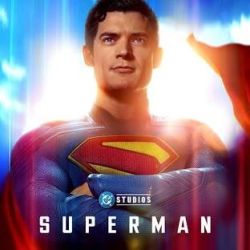
David Corenswet’s Superman works for me because he gives the character warmth before grandeur. He looks the part, but more importantly, he carries a kind of emotional transparency. I felt that this Superman wants to be understood, not worshiped. He is not cold, unreachable, or trapped in permanent mythic posing. He seems like someone trying to do the right thing while knowing that the right thing may still create consequences he cannot fully control.
As Clark Kent, that openness becomes even more important. The film does not treat Clark only as a disguise. I liked seeing the awkwardness, softness, and uncertainty inside him. He is an alien raised by humans, a reporter in a loud newsroom, a hero under global pressure, and a person still trying to reconcile heritage with upbringing. That tension gives the performance its best texture. Corenswet makes Superman noble without making him stiff, and vulnerable without making him seem small.
Lois Lane Brings the Film Its Sharpest Human Intelligence
Rachel Brosnahan’s Lois Lane gives the movie speed, focus, and journalistic bite. I liked that she is not written as someone waiting to be impressed by Superman. She is already formidable. Her curiosity is active, her skepticism is useful, and her relationship with Clark has the charge of two people who care about truth in different but overlapping ways.
Lois matters because she challenges Superman without rejecting his goodness. She asks difficult questions, and the film is better for it. In a story about public trust, media narratives, and power, Lois cannot simply be a romantic figure standing at the edge of the frame. She has to be someone who understands how stories are built, distorted, sold, and corrected. Her presence makes the movie feel smarter because she keeps pulling Superman’s ideals into practical reality.
Lex Luthor Turns Resentment Into Strategy
Nicholas Hoult’s Lex Luthor gives the film a colder, more intellectual threat. I saw his Lex as a man who cannot tolerate a being whose goodness makes his own smallness visible. He does not only hate Superman’s strength. He hates what Superman represents: admiration that cannot be bought, moral authority that does not come from wealth, and public affection that Lex cannot fully control.
What I found effective is how Lex weaponizes perception. He understands that in a suspicious world, even a rescue can be reframed as interference. Even compassion can be called arrogance. Even a hero can be made to look like a problem if enough fear is arranged around him. That makes Lex feel contemporary without losing his classic identity. He is still brilliant, vain, and obsessive, but his greatest weapon is narrative control.
Krypto Adds Chaos, Loyalty, and Comic Heart
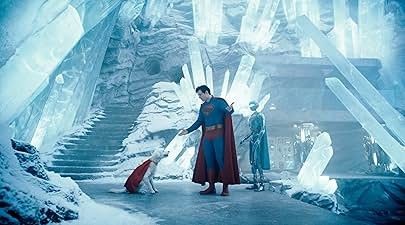
Krypto could have been a risky addition, but I found him surprisingly important. A superpowered dog can easily become only a cute distraction, yet here he helps reveal Superman’s softer domestic side. Krypto makes Clark feel less like a symbol and more like a person with routines, affection, frustration, and an animal companion who does not care about public debate.
I liked that Krypto brings both comedy and emotional warmth. His presence makes the film lighter without making it weaker. In a story with global consequences and ideological conflict, a loyal dog gives the audience a direct emotional line. Krypto does not need political context to understand Clark. He loves him. That simplicity becomes refreshing in a movie where everyone else seems eager to analyze, judge, or manipulate Superman’s actions.
The Daily Planet Feels Like a Living Workplace
The Daily Planet scenes give the movie some of its best grounded energy. I liked seeing Clark inside a newsroom full of deadlines, opinions, personalities, and competing instincts. The paper is not only a famous location from the mythology. It becomes a space where truth has to be argued into shape before it can reach the public.
Perry White, Jimmy Olsen, and the wider newsroom help connect Superman’s world to ordinary civic life. That matters because this version of the character is not only saving people from physical danger. He exists in a world where information itself is contested. The Daily Planet gives the story a human mechanism for asking what people believe, why they believe it, and who benefits when fear replaces facts.
The Aesthetics Bring Color Back to the Myth
Visually, Superman 2025 has a brighter, comic-book quality than many recent superhero films. I appreciated that. The suit, the skies, the city, the Fortress elements, and the larger DC world all feel designed to bring wonder back into the frame. The movie is not embarrassed by color, capes, symbols, or strange supporting heroes. It lets superhero imagery feel bold again.
The film’s aesthetics are strongest when they balance brightness with texture. Metropolis feels modern, busy, and media-saturated, while Superman himself brings a visual note of clarity. His blue and red are not only costume choices. They stand out against the anxiety around him. The image of Superman in this world matters because he looks almost too sincere for the environment he occupies, and that contrast is exactly the point.
The Wider Hero World Feels Already in Motion
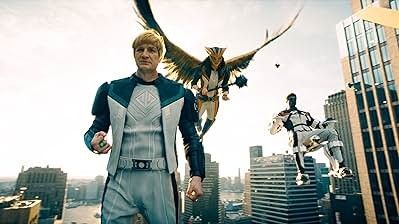
One of the more interesting choices is that the film does not introduce a completely empty superhero universe. Other heroes already exist, and Superman has to operate in a world where costumed power is not brand new. Mister Terrific, Guy Gardner, Hawkgirl, and Metamorpho give the story a busier DC texture, making the world feel established rather than newly awakened.
I liked this approach because it avoids the slow assembly-line feeling of some shared-universe storytelling. The movie trusts me to enter a world midstream. These heroes have different attitudes, methods, and levels of polish, which makes Superman’s moral identity stand out more clearly. He is not unique only because he can fly. He is unique because of the way he chooses to use power.
Metropolis Looks Like a City That Needs Hope but Distrusts It
Metropolis is essential to the film’s emotional logic. It cannot be only a shining city that cheers whenever Superman appears. In this version, it feels like a place full of admiration, anxiety, news cycles, public argument, and uncertainty. I liked that tension. The city needs him, but it is also capable of doubting him quickly.
That makes Superman’s relationship with the public more fragile. He is not simply accepted as a permanent guardian. He has to live with the fact that saving people does not automatically make everyone trust him. This adds weight to the heroism. A rescue can be physically easy for him and socially complicated afterward. That gap gives the film its modern dramatic engine.
The Action Works Best When It Reveals Character
The action in Superman 2025 has scale, but I found it most engaging when it expressed personality. Superman’s movement should feel different from other heroes because he is not only powerful. He is careful. He is aware that every punch, landing, and decision can affect people around him. The movie works when it shows him managing strength with restraint.
The best action moments are not only about impact or speed. They are about choices. Does Superman save one person or pursue the larger threat? Does he act before the world understands why? Does he absorb anger because responding too forcefully would confirm someone else’s fear? Those questions make the set pieces more interesting than simple spectacle. The character is visible in how he moves.
The Humor Feels Like James Gunn Without Overpowering Superman
The humor has James Gunn’s fingerprints: quick exchanges, odd character beats, strange creatures, awkward pauses, and emotional sincerity under comic timing. I liked that the film uses humor to humanize the world rather than mock Superman himself. That distinction matters. Superman can exist inside a funny movie, but he should not become the joke.
Krypto, the newsroom, Guy Gardner’s personality, and moments of social discomfort all add levity. The comedy helps the film breathe, especially when the story becomes heavier around public distrust and Lex’s schemes. For me, the humor works because it makes the world feel alive. People say strange things under pressure. Heroes can be awkward. A serious mission can still include ridiculous complications.
The Romance Feels Like a Clash of Ideals and Intimacy
The relationship between Clark and Lois is one of the film’s most important emotional threads. I liked that it does not depend only on attraction. It depends on trust, truth, and the difficulty of loving someone whose public role affects the entire world. Lois cannot separate Clark from Superman as easily as he might wish, and that creates meaningful tension.
Their scenes work best when they feel like conversations between equals. Lois questions him because she respects truth. Clark listens because he respects her. Their romance has warmth, but also pressure. Loving Superman means living close to danger, secrecy, and public consequence. Loving Lois means accepting that she will never stop asking the question that matters. That makes their connection feel alive.
The Film Reclaims Sincerity as a Superpower
What I found most refreshing is that Superman 2025 does not seem ashamed of sincerity. The film knows that modern audiences can be suspicious of pure goodness, so it makes that suspicion part of the story. Superman’s kindness becomes controversial because the world around him is trained to look for hidden motives. That is exactly why his sincerity matters.
The movie asks whether goodness can survive in a cynical environment without becoming defensive or hollow. I liked that question. Superman is not interesting because he never struggles. He is interesting because he struggles and still chooses compassion. In this version, his greatest power is not heat vision, flight, or strength. It is the refusal to let fear decide his ethics.
The Kryptonian Heritage Feels Like Weight, Not Decoration
Clark’s alien heritage gives the film a deeper identity conflict. He is not simply a man with powers. He carries the memory of a lost world while being shaped by human parents, human values, and human attachments. I liked how the film frames that tension as ongoing rather than solved. Clark does not choose between Krypton and Earth once and finish the matter forever. He lives between them.
This makes his heroism more emotionally complicated. He is protecting a world that sometimes distrusts him, while carrying a legacy from a world he never fully knew. His symbol becomes a bridge between origins. The movie uses that duality to make Superman feel less like an untouchable god and more like someone constantly translating himself between two homes.
Lex and Superman Represent Two Kinds of Power
The conflict between Superman and Lex works because it is ideological. Superman has power that frightens people, but he uses it with restraint and care. Lex has human power: money, intellect, influence, technology, and public manipulation. He uses those tools to dominate the story around Superman. That contrast gives the film its sharpest structure.
I liked how the movie makes Lex dangerous without needing him to physically match Superman in the usual way. His threat is strategic. He understands systems, resentment, and fear. Superman can stop a falling object, but stopping a lie is harder. That makes the battle feel modern. Strength can save a body. Truth has to save trust.
The Supporting Heroes Make Superman Look More Specific
Mister Terrific, Hawkgirl, Guy Gardner, and Metamorpho are not only there to tease a larger franchise. They help define Superman by contrast. Each hero brings a different attitude toward power, professionalism, violence, identity, or public service. I liked how this wider group makes Superman’s gentleness stand out.
In many superhero films, the lead character seems heroic because everyone else is ordinary. Here, Superman stands among other extraordinary figures, so the film has to show what makes him different beyond ability. His difference is moral clarity. He does not always have perfect answers, but he has a consistent instinct toward protection. That becomes more visible when placed beside heroes who approach problems in rougher or more pragmatic ways.
The Film’s Best Image Is Hope Under Examination
Superman 2025 is most compelling when it places hope under pressure. The cape, the symbol, the rescue, the smile, and the public ideal are all still here, but the film asks what happens when each of those things is questioned. Can hope remain convincing after being mocked? Can compassion survive propaganda? Can a hero keep helping when help is misread as control?
Those questions give the movie its strongest emotional charge. I did not need Superman to be darker to feel relevant. I needed the world around him to be complicated enough that his light had to work harder. The film understands that. It does not make him innocent by ignoring cynicism. It makes him admirable by letting him stand inside cynicism without being remade by it.
A Reboot That Begins With a Moral Argument
As a new starting point for the DC Universe, Superman 2025 feels less interested in explaining every piece of mythology and more interested in setting a moral tone. That choice worked for me. The film says that this universe can contain bright heroes, strange creatures, messy politics, newsroom ethics, alien heritage, public fear, and genuine kindness all at once.
I found the movie strongest when it trusts Superman as a character rather than treating him as a problem to solve. He does not need to become cynical to be modern. He needs to be tested by a modern world and remain recognizably himself. David Corenswet’s version gives me a Superman who can be gentle, awkward, brave, uncertain, and impossibly strong within the same story. That combination makes the reboot feel alive, not because it reinvents the character completely, but because it remembers that hope is most powerful when it has every reason to be exhausted and chooses to rise anyway.