A Small Town With a Monster Under Its Skin
I have always found Stranger Things compelling because it begins with a very simple fear: a child disappears, and the adults do not understand the shape of the danger. From that starting point, the series opens into government secrets, psychic powers, alternate dimensions, friendship, grief, monsters, and a town that keeps trying to return to normal even after normal has clearly been torn open. Hawkins, Indiana looks ordinary at first, but the show slowly teaches me to distrust every quiet road, basement, laboratory hallway, and flickering light.
What makes the series work for me is not only the supernatural mystery. It is the way the supernatural danger exposes ordinary emotional needs. The kids want friendship and safety. Joyce wants her son back. Hopper wants a reason to keep going. Eleven wants a home and an identity beyond what was done to her. The Upside Down may be the great nightmare, but the human wounds are what give the story weight. Stranger Things is at its best when the monster is frightening because it presses on something already fragile.
Hawkins Feels Like Nostalgia With Mold Beneath the Wallpaper
The aesthetics of Stranger Things are one of its strongest signatures. The 1980s setting is full of bikes, arcades, walkie-talkies, wood-paneled rooms, school hallways, malls, movie posters, basement campaigns, and synth-heavy atmosphere. I enjoy that texture because it gives the series a tactile identity. Hawkins feels like a place made from memory, but the show is smart enough to make that memory uneasy.
The town is warm and familiar on the surface, yet something is always wrong underneath. A family living room can become a place of dread when lights begin to behave strangely. A school can become a battlefield of social anxiety before any creature appears. A mall can look bright and commercial while hiding something darker in its lower levels. The show uses nostalgia as an invitation, then slowly stains it with fear. That contrast gives Hawkins its strange power.
Eleven Carries the Show’s Deepest Loneliness
Eleven is the character who gives Stranger Things its most haunting emotional thread. Millie Bobby Brown plays her with a mixture of silence, intensity, confusion, and longing that makes her feel both powerful and deeply vulnerable. I like that Eleven’s abilities are never treated as simple wish fulfillment. Her power comes attached to trauma, isolation, and a childhood shaped by control.
What moves me most about Eleven is her search for ordinary life. She wants waffles, friendship, school, language, family, romance, and the right to decide who she is. Those desires make her extraordinary abilities feel more painful. She can move objects with her mind, but she cannot easily move past what was taken from her. The series becomes most affecting when it lets Eleven be more than a weapon. She is a girl trying to become a person in a world that keeps turning her into a solution.
Mike, Dustin, Lucas, and Will Make Friendship Feel Like Survival
The original group of boys gives the series its emotional foundation. Mike, Dustin, Lucas, and Will are not only kids caught in a supernatural plot. They are friends whose shared language of games, jokes, loyalty, and fear helps them face things adults barely understand. I like how the show uses their friendship as a form of intelligence. They solve problems together because they know how to imagine impossible rules.
Will’s disappearance gives the first season its heartbreak, but his presence across the series remains important because he carries the aftereffects of the Upside Down in a deeply personal way. Mike often acts from loyalty and emotion. Dustin brings curiosity, humor, and surprising confidence. Lucas adds skepticism, courage, and a sharper awareness of social reality. Together, they make the story feel grounded. The world may be cracking, but their bond gives the series a human map.
Joyce Byers Turns Panic Into Maternal Force
Joyce is one of my favorite characters because the show allows her to look frantic while also being right. Winona Ryder gives her a raw, nervous energy that fits a mother whom everyone doubts because the truth sounds impossible. I found her first-season arc especially powerful because it captures the loneliness of knowing something is wrong when the world keeps asking for reasonable evidence.
Joyce’s strength is not calmness. Her strength is refusal. She refuses to accept easy explanations. She refuses to let people dismiss her fear. She refuses to abandon the possibility that Will is still reachable. That kind of love can look chaotic from the outside, but the series treats it with respect. In Hawkins, where official systems often hide the truth, Joyce’s emotional certainty becomes a form of resistance.
Hopper Gives the Story Its Bruised Heart
Jim Hopper begins as a tired small-town police chief with grief packed into every gesture. I like him because he feels worn down before the supernatural plot even begins. His sadness gives him weight, and his gradual connection with Eleven gives the series one of its most moving relationships. He is not a perfect guardian, but he is a man learning how to care again after loss.
Hopper’s scenes often balance toughness with emotional damage. He can be gruff, impatient, and reckless, but beneath that is a protective instinct that becomes stronger as the series develops. His bond with Eleven works because both characters are trying to build a family from broken pieces. They do not always communicate well, and that makes the relationship more believable. Love between damaged people is not always graceful, but it can still be real.
The Upside Down Is Horror as a Mirror World
The Upside Down is an effective horror concept because it is not a distant alien planet. It is Hawkins turned inside out. Streets, houses, schools, and forests become familiar shapes covered in decay, spores, vines, darkness, and silence. I find that more disturbing than a completely unknown world. The horror comes from seeing home transformed into something hostile.
The design of the Upside Down gives the series its strongest visual metaphor. It suggests that darkness is not separate from ordinary life; it is layered beneath it. The same places where children play, families argue, and teenagers fall in love can have a shadow version waiting below. That idea makes the setting feel psychologically rich. Hawkins is not only haunted by monsters. It is haunted by everything it refuses to see.
The Creatures Work Because They Grow With the Story
The monsters in Stranger Things are effective because they evolve alongside the series. The Demogorgon begins as a terrifying physical threat: fast, strange, and barely understood. Later seasons expand the mythology with larger forces, hive minds, possession, and more personal forms of evil. I liked how the show gradually moves from creature horror to a wider supernatural system.
Vecna adds a different kind of menace because he brings psychology into the horror. He does not only attack bodies. He exploits guilt, trauma, and isolation. That makes his threat feel more intimate. The best horror in Stranger Things often comes from the idea that personal pain can become a doorway. The monsters are frightening, but they become more memorable when they connect to what characters already fear inside themselves.
The Teen Characters Give the Series Its Best Social Texture
Nancy, Jonathan, Steve, Robin, Eddie, and the older teen group add a different rhythm from the younger kids. Their stories bring romance, insecurity, ambition, class tension, popularity, rebellion, and the messy process of becoming adult enough to make dangerous choices. I like how the series lets the teen characters grow beyond their first impressions.
Steve Harrington is the clearest example. He begins as a familiar arrogant popular boy, then gradually becomes one of the show’s most lovable figures. His friendship with Dustin gives the series some of its best humor and warmth. Robin adds sharp awkwardness and emotional intelligence. Nancy becomes more determined and investigative as the story expands. These characters make Hawkins feel socially layered, not only supernaturally threatened.
The Music Makes Fear Feel Electric
The synth score is essential to the identity of Stranger Things. It gives the series a pulse that feels both retro and eerie. I like how the music can make a quiet hallway feel charged before anything appears. The sound does not simply support the horror; it defines the atmosphere. A low electronic pattern can make Hawkins feel as if it is humming with hidden danger.
The use of popular songs also gives the series emotional specificity. Music becomes memory, mood, and sometimes even survival. When a song is tied to a character’s inner life, it does more than decorate a scene. It becomes a lifeline. That is one of the reasons the show’s musical choices became so culturally memorable. Stranger Things understands that sound can make fear personal and nostalgia immediate.
The Dungeons and Dragons Language Gives Chaos a Shape
I enjoy how the kids use Dungeons and Dragons to understand the impossible. Their game vocabulary gives them a framework for monsters, dimensions, powers, and strategy. This could have felt like a simple reference, but the show uses it as a meaningful part of their friendship and intelligence. They face the unknown by naming it through the stories they already love.
That choice also captures something true about childhood imagination. Kids often process fear through games, myths, and invented rules. In Stranger Things, that imagination becomes practical. The boys may not have official authority, but they have pattern recognition, shared language, and the confidence to think beyond what adults consider reasonable. Their fantasy knowledge becomes a tool for survival.
The Government Lab Adds Cold Human Horror
The Hawkins Lab storyline gives the series a colder kind of fear. The supernatural creatures are frightening, but the lab reminds me that human institutions can be just as disturbing. Experiments, secrecy, surveillance, and the treatment of children as tools all add moral darkness to the story. Eleven’s past is painful because it was shaped by people who justified cruelty as research.
I like that the show does not rely only on monsters from another dimension. It also asks what humans will do when power, fear, and ambition combine. The lab scenes often feel sterile and controlled, which makes them a sharp contrast to the warm messiness of the kids’ homes and friendships. In a series full of strange creatures, some of the most unsettling rooms are the cleanest ones.
The Coming-of-Age Story Keeps Expanding
Stranger Things is a horror series, but it is also a coming-of-age story. I think that is why it connects so strongly. The characters grow through danger, but they also grow through crushes, arguments, changing friendships, family conflict, and the painful awareness that childhood cannot stay still. The supernatural plot exaggerates those changes, but the emotions remain recognizable.
I like how the show lets friendships strain as the kids get older. They do not remain frozen in basement innocence. Interests shift. Relationships form. Social pressures increase. Some characters want normal teenage lives, while others are pulled back into the darkness. That tension gives the later seasons emotional realism. Growing up can feel like losing access to the simple version of a group that once seemed permanent.
The Aesthetic of the 1980s Is More Than Decoration
The 1980s references are everywhere, but the best ones do more than trigger recognition. The bikes, malls, horror posters, arcade machines, music, clothing, and movie influences create a world where children have more physical freedom and danger feels less instantly traceable. The lack of modern technology helps the suspense. Characters must search, wait, call, bike, hide, and physically show up.
I also like how the series borrows from 1980s cinema without becoming only imitation. I can feel the influence of adventure films, horror classics, conspiracy thrillers, and teen dramas, but Stranger Things combines them into its own emotional machine. Nostalgia opens the door, but character keeps me inside. Without the relationships, the references would be empty decoration.
The Female Characters Carry Different Forms of Strength
One of the things I appreciate is the range of female characters. Eleven’s strength is supernatural but also emotional. Joyce’s strength is maternal refusal. Nancy’s strength grows through investigation and moral focus. Max brings sarcasm, grief, and guarded vulnerability. Robin adds anxious intelligence and quick humor. These characters are not strong in identical ways, which makes the series more interesting.
Max’s arc is especially affecting because she carries pain behind a defensive attitude. Her story shows how grief and depression can isolate a person even inside a friend group. The series handles her emotional state with more sensitivity than I expected from a supernatural adventure. It makes her inner struggle part of the horror without reducing her to it. That gives her scenes real force.
The Humor Keeps the Darkness From Taking Over
Stranger Things can be frightening, but it is also very funny. I like that the humor comes from character dynamics rather than random jokes. Dustin’s confidence, Steve’s reluctant babysitter energy, Robin’s nervous honesty, Hopper’s gruff reactions, and the kids’ group arguments all give the series warmth. The humor makes the friendships feel lived in.
This balance matters because the show could become too heavy without moments of levity. The characters face loss, danger, and terrifying forces, but they still tease each other, make bad plans, misunderstand romance, and argue about nerdy details. That mixture feels human. People do not stop being funny just because life becomes frightening. Sometimes humor is exactly how they stay steady.
The Final Stakes Feel Personal Because the Show Built a Family
By the later seasons, the scale becomes much larger, but I still care most because the show has built emotional history. Hawkins matters because I know the people inside it. The kids’ basements, Joyce’s house, the school, the arcade, the mall, the police station, and the woods all carry memories from earlier seasons. The town becomes a container for everything these characters have survived together.
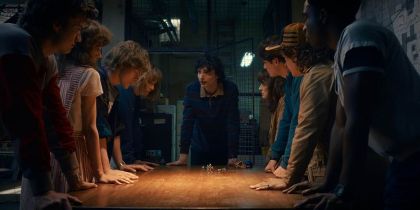
That accumulated history gives the final conflict more weight. The fight against the Upside Down is not only about saving the world in abstract terms. It is about protecting friendships, families, homes, and the fragile possibility of ordinary life. Stranger Things earns its bigger scale when it remembers those small attachments. The fate of Hawkins matters because a group of kids once sat around a table there, rolling dice, telling stories, and not yet knowing that monsters could be real.
The Series Works Because It Treats Friendship as Power
The core of Stranger Things has always been friendship. Psychic abilities, monsters, portals, and government conspiracies give the plot momentum, but the emotional force comes from people refusing to face the darkness alone. I like that the series returns to this idea again and again. The characters survive because they share information, argue honestly, forgive each other imperfectly, and keep coming back when someone is missing or afraid.
That is why the show’s best moments are often not the biggest effects shots. They are reunions, apologies, group plans, desperate phone calls, hands held in fear, and characters choosing each other when isolation would be easier. The Upside Down represents separation, decay, and hidden corruption. The answer the series offers is connection. Not clean, perfect connection, but stubborn, messy, loyal connection that keeps reaching across darkness.