
A Multiverse That Feels Hand-Drawn by Emotion
I watched Spider-Man: Across the Spider-Verse expecting visual invention, sharp humor, and the kind of kinetic energy the first film made feel almost impossible to repeat. What I did not expect was how much heavier and more personal this sequel would feel. It is not just bigger because there are more Spider-people, more worlds, and more action. It is bigger because Miles Morales is forced to confront what heroism costs when everyone around him insists that pain is part of the job.
The film pulled me in immediately because it treats animation as a living language. Every universe has its own rhythm, texture, color, and emotional temperature. Nothing feels visually neutral. A room can look anxious. A skyline can feel lonely. A fight can move like graffiti, comic panels, music, memory, and panic all layered together. I liked that the movie never uses the multiverse as empty decoration. Each style reflects a character’s inner life, turning the entire film into a shifting emotional canvas.
Miles Morales Carries Youth, Pressure, and Defiance
Miles remains one of the most compelling modern superhero characters because he is powerful without feeling emotionally finished. He is still young, still learning, still trying to balance school, family, identity, friendship, and impossible responsibility. I liked how the film lets him be confident and uncertain at the same time. He has grown since the first movie, but growth has not made his life simpler.
What makes Miles so engaging here is his refusal to accept a version of heroism that erases personal choice. He respects the Spider-Man legacy, but he does not want to become a copy of someone else’s tragedy. That tension gives the story its sharpest emotional edge. Miles is not only fighting enemies. He is fighting the idea that his path has already been written. His courage comes from insisting that love, family, and hope are not weaknesses to be sacrificed for a formula.
Gwen Stacy Opens the Film With a Broken Rhythm
Gwen’s opening section is one of my favorite parts of the movie because it feels like a separate emotional album before the main story expands. Her world is painted in bleeding colors, shifting backgrounds, and musical melancholy. I loved how her scenes look unstable in a beautiful way, as if the environment is responding directly to what she cannot say.
Gwen’s relationship with her father gives the film a painful starting point. She is isolated by her secret, hurt by misunderstanding, and trapped between wanting honesty and fearing rejection. That makes her more than Miles’ distant friend or romantic possibility. She has her own wound, her own guilt, and her own need to belong somewhere. When she joins the wider Spider society, I understand why it tempts her. It offers community at the exact moment her own world feels emotionally unsafe.
The Spot Evolves From Joke to Threat
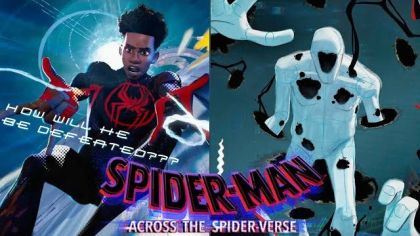
The Spot begins as a strange, almost pathetic villain, and I liked how the film uses that first impression against me. At first, he seems like comic relief with awkward powers and a bruised ego. His body looks unfinished, marked by holes that make him both funny and unsettling. But as the story continues, he becomes more dangerous because his resentment deepens alongside his control.
What makes him effective is that he reflects a consequence Miles did not fully understand. He is not random chaos entering the story from nowhere. He is tied to earlier events, which makes his anger feel personal. The film turns him into a reminder that heroic moments can create unseen damage. His visual design also becomes more frightening as his power grows. The white emptiness of his body and the black portals across him make him look like a character being swallowed by his own obsession.
Spider-Punk Makes Rebellion Look Effortless
Hobie Brown, also known as Spider-Punk, brings a completely different spark to the movie. I enjoyed him instantly because his animation style refuses to sit still. He looks like a collage of punk posters, cutouts, ink, photocopied texture, and restless attitude. Even when he stands near other Spider-people, he seems to exist by his own rules.
What I liked most is that Hobie is not only visually cool. He understands systems of control faster than almost anyone else in the story. He jokes, provokes, and seems casual, but he is paying attention. His rebellious energy has purpose. He sees that the Spider society’s rules may be dressed up as responsibility, but they can still become a cage. His presence gives Miles a different model of heroism: one based on distrust of authority, loyalty to friends, and the refusal to obey just because a room full of powerful people says the same thing.
Miguel O’Hara Turns Order Into a Burden
Miguel O’Hara is one of the sequel’s most fascinating figures because he is not a simple villain. He is intense, wounded, disciplined, and terrifyingly certain. I saw him as someone crushed by the need to make the multiverse understandable. He believes in rules because he has seen what happens when reality breaks. That makes him sympathetic in theory and frightening in practice.
His conflict with Miles works because both characters are acting from pain and love, but they reach opposite conclusions. Miguel believes sacrifice is necessary to protect the larger structure. Miles believes people are not equations to be accepted without resistance. I liked how the movie refuses to make this debate easy. Miguel has reasons for his fear, but his certainty turns cruel when it leaves no room for Miles’ humanity.
The Spider Society Is Amazing and Uncomfortable
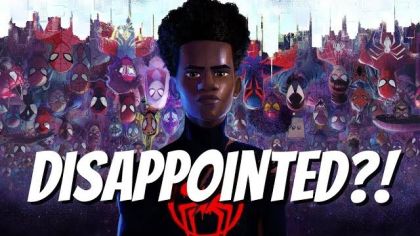
The Spider Society is a visual feast. I loved seeing the endless variations of Spider-people, from dramatic heroes to absurd background designs that flash by with perfect comic timing. The headquarters feels like a fan dream at first: a place where every version of the myth can gather, compare stories, and work together. It is funny, crowded, and full of details that reward attention.
Yet the more time I spent there, the more uncomfortable it became. The society looks like belonging, but it functions through strict belief. Everyone shares a similar wound, and that shared pain has become doctrine. The film uses this brilliantly. A community built around the same heroic identity can still become narrow. Miles enters hoping for understanding and discovers expectation instead. That shift gives the middle of the movie real tension.
The Animation Feels Like Cinema Breaking Its Own Rules
The aesthetics of Across the Spider-Verse are astonishing because they never settle into one safe style. The film mixes comic-book panels, painterly backgrounds, sketch lines, digital glitches, graffiti textures, halftone dots, ink bursts, and wild color shifts. I felt as if every scene was asking what animation could do next, then answering with something stranger.
What impressed me most is that the visual experimentation stays emotionally readable. The film is busy, but not empty. Gwen’s world feels wounded and fluid. Mumbattan is warm, crowded, vertical, and full of motion. Miguel’s spaces feel cold, technological, and severe. Miles’ Brooklyn carries texture, music, family warmth, and urban life. Each place has a visual personality that tells me how to feel before the dialogue explains anything.
The Action Has Rhythm Instead of Simple Motion
The action scenes are not only fast; they are musical. I liked how movement follows rhythm, perspective, and character emotion. Miles swings differently from Gwen. Gwen moves differently from Hobie. Miguel moves with a heavier, more aggressive force. The differences matter because the film treats movement as identity.
The chase through the Spider Society is especially effective because it combines comedy, suspense, visual overload, and emotional urgency. Miles is running from people who should understand him. That makes the scene more than spectacle. Every leap, web, turn, and escape attempt carries the feeling of a young person refusing to be trapped by a story adults have already approved. The action becomes character argument in motion.
Family Gives the Multiverse Its Heartbeat
For all its scale, the film stays grounded through Miles’ parents. Rio and Jefferson Morales are not background figures. They are the emotional reason Miles’ choices matter. I liked how their scenes bring warmth, humor, tension, and cultural specificity into a movie that could otherwise drift too far into cosmic abstraction.
Miles’ relationship with his parents feels beautifully human. He wants independence, but he also wants their trust. He hides part of himself, yet he hates the distance that secrecy creates. Rio’s talk with him before he leaves is one of the film’s most touching moments because it understands parental love as both protection and release. She cannot follow him into every world, but her words travel with him.
The Humor Keeps the Scale From Becoming Too Heavy
The film is emotionally intense, but it remains very funny. I liked how the humor comes from character, visual surprise, and the absurdity of Spider-Man variations. A dramatic scene can suddenly make room for a background gag, a strange costume, a dry line, or a perfectly timed reaction. That flexibility keeps the movie alive.
Peter B. Parker and Mayday bring a warmer comic rhythm. His exhausted dad energy and her chaotic baby charm add sweetness to the Spider Society scenes. The jokes do not erase the tension. They make the world feel larger and more lived in. The film understands that humor is part of the Spider-Man identity. The mask may hide fear, but the joke helps the hero keep moving.
The Soundtrack Gives Miles His Own Pulse
The music is essential to the film’s identity. The soundtrack and score create a pulse that feels tied to Miles’ movement, city, and emotions. I liked how the music blends atmosphere with momentum. It can make a scene feel cool, lonely, urgent, or overwhelming without stealing focus from the characters.
Sound is also used as texture. The film feels like it has layers of rhythm: footsteps, web movement, city noise, portals opening, voices overlapping, and musical beats pushing the scene forward. That layered sound helps the multiverse feel alive rather than merely visual. The movie is not only something I watch. It feels like something moving around me.
The Theme of Canon Events Gives the Story Its Sharpest Question
The idea of canon events is the film’s most provocative concept. It asks whether Spider-Man stories require suffering to be legitimate. I found that question fascinating because it challenges decades of superhero storytelling. The film is not simply saying tradition is wrong. It is asking what happens when tradition becomes a prison.
Miguel and the Spider Society believe certain losses must happen because they hold reality together. Miles rejects the idea that he has to stand aside when someone he loves is in danger. That conflict gives the movie moral urgency. It is not only about saving the multiverse. It is about whether a young hero has the right to challenge inherited pain. I found that much more compelling than a simple battle between good and evil.
Every Version of Spider-Man Reflects a Different Wound
One of the reasons the film feels so rich is that each Spider-person carries a different variation of the same myth. Some are funny, some tragic, some absurd, some stylish, some exhausted, some noble, and some deeply strange. Together, they show how flexible the Spider-Man idea can be. The mask can belong to many bodies, cultures, worlds, and artistic styles.
But the movie also shows the danger of treating similarity as sameness. Miles shares the Spider-Man role, but his life is not identical to everyone else’s. His background, family, world, and choices matter. I liked that the film celebrates the multiverse while defending individuality inside it. The message is not only that anyone can wear the mask. It is that wearing the mask should not erase who someone already is.
The Cliffhanger Feels Like a Door Left Open Mid-Sprint
The ending lands with tension because it refuses to resolve the emotional collision too neatly. Miles reaches a place that looks familiar but is deeply wrong, and the film lets that realization stretch into dread. I liked the boldness of stopping at a point where everything is still moving. It makes the sequel feel like the middle chapter of a larger emotional argument rather than a self-contained loop.
What matters is that the cliffhanger does not feel empty. It grows from Miles’ choices, Gwen’s guilt, Miguel’s control, the Spot’s rise, and the multiverse’s instability. By the time the story pauses, the characters are not where they started. Miles has claimed his right to resist. Gwen has begun to choose repair over obedience. The Spider Society’s certainty has cracked. The next step feels necessary because the film has pushed every major relationship into motion.
Why the Film Feels So Alive Frame by Frame
Across the Spider-Verse feels alive because every part of it seems to have been built with intention. The colors are emotional. The linework is expressive. The jokes have rhythm. The action has character. The family scenes have warmth. The multiverse has spectacle, but it also has rules, danger, and philosophical weight. I felt the film constantly expanding without losing sight of Miles’ heart.
What stays with me most is the way the movie challenges the story it belongs to. It loves Spider-Man mythology enough to question it. It celebrates the mask while defending the person underneath. It shows hundreds of Spider-people, then insists that Miles Morales is not replaceable, not accidental, and not required to obey a tragic pattern just because others accepted it. The result is a sequel that feels visually wild, emotionally direct, and deeply committed to the idea that heroism can mean refusing the script everyone else calls destiny.