A Faster, Darker Sequel With a Shadow in the Frame
I watched Sonic the Hedgehog 3 expecting speed, jokes, rings, portals, and the familiar blue blur of a franchise that has become more confident with each entry. What surprised me was how much heavier this chapter feels compared with the earlier films. The comedy is still loud, Sonic is still playful, and Jim Carrey is still allowed to turn Robotnik into a full-body cartoon performance, but the arrival of Shadow changes the emotional weather. The movie suddenly has grief, revenge, memory, and moral confusion running beside the usual action.
That contrast is what made the film more interesting to me. Sonic has always worked best on screen when his attitude is light but his need for family is sincere. In this third film, that sincerity is tested by a character who looks like a darker reflection of him. Shadow is not only another fast hedgehog. He is what Sonic might have become if his pain had been left alone too long. That idea gives the sequel a sharper edge and helps it feel like more than another round of colorful chaos.
Sonic Still Runs on Heart Before Speed
Ben Schwartz continues to make Sonic feel bright, impulsive, and emotionally open. I like that this version of Sonic is not only a joke machine. He talks fast, reacts quickly, and often uses humor as his first response, but underneath that energy is a character who deeply values connection. His family with Tom and Maddie remains the emotional base that keeps him from becoming only a superhero mascot.
In Sonic the Hedgehog 3, I found Sonic most compelling when his confidence begins to wobble. Shadow forces him to confront anger, loss, and the temptation to answer pain with pain. Sonic is powerful, but the movie reminds me that his real strength is not only speed. It is the ability to choose trust after fear, loyalty after hurt, and mercy after being pushed toward rage. That gives his arc a more mature feeling without removing the playful personality that makes him fun.
Shadow Gives the Movie Its Sharpest Mood
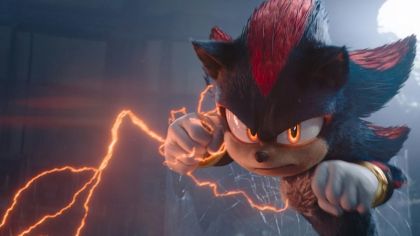
Shadow is the biggest reason this sequel feels different. Keanu Reeves gives him a low, controlled intensity that fits the character’s design and backstory. Shadow does not bounce through scenes the way Sonic does. He carries stillness, suspicion, and a sense of emotional damage that makes him feel dangerous even before he moves.
I liked that Shadow is not written as a simple opposite. He is darker, colder, and more severe, but the film gives him a wound at the center. His connection to Maria makes his anger understandable, even when his choices become frightening. That emotional grounding matters. Without it, Shadow would only be a cool design with red streaks and dramatic poses. With it, he becomes a tragic figure whose power is tied to memory he cannot release.
Tails and Knuckles Make Team Sonic Feel Complete
Tails and Knuckles add balance to Sonic’s energy. Tails brings intelligence, loyalty, and gentle nervousness. I like how he often feels like the emotional and technical support of the group, the one who can build, scan, explain, and still look slightly overwhelmed by the scale of the situation. He gives the team softness without seeming weak.
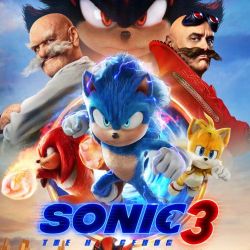
Knuckles, voiced by Idris Elba, continues to be wonderfully literal and intense. His seriousness creates comedy because he treats ordinary moments with warrior-level gravity. At the same time, he adds real physical power to the group. Together, Sonic, Tails, and Knuckles feel more like a proper team here than in the earlier films. Their different personalities create a rhythm: Sonic improvises, Tails thinks, Knuckles commits fully. That trio dynamic gives the action scenes more personality.
Robotnik Doubles the Madness
Jim Carrey’s return gives the movie its wildest comic energy. Playing both Ivo Robotnik and Gerald Robotnik, he turns the villain side of the story into a strange family performance full of ego, resentment, neediness, and theatrical exaggeration. I found it chaotic, but intentionally so. The Robotnik material feels like the film opening a separate door into pure cartoon absurdity.
What makes it work is that Robotnik has always been ridiculous and lonely at the same time. His intelligence is enormous, but his emotional world is small, wounded, and hungry for admiration. The addition of Gerald gives that loneliness a new shape. Suddenly, Ivo is not only a villain with machines and mustaches. He is someone responding to family recognition in the most unstable way possible. The comedy is big, but there is a strange sadness under the performance.
The Action Feels Built Around Speed With More Weight
The action in Sonic the Hedgehog 3 is faster and more intense than in the earlier entries. I liked that the film uses Shadow to change the rhythm of movement. Sonic’s speed usually feels playful and elastic, but Shadow’s speed feels sharper, heavier, and more controlled. When they clash, the screen has a different kind of energy. It is not only a race. It feels like two emotional philosophies colliding at impossible velocity.
The set pieces work best when geography remains readable. The movie moves through city spaces, military facilities, high-tech environments, and large-scale science-fiction imagery, but the strongest action moments are the ones that keep character at the center. Sonic moves like someone who reacts from feeling. Shadow moves like someone who has turned feeling into discipline. That distinction makes their confrontations more memorable.
The Aesthetics Mix Game Color With Sci-Fi Darkness
Visually, the movie keeps the bright, glossy style of the franchise while adding a darker palette around Shadow’s story. Sonic’s blue, Tails’ orange, and Knuckles’ red still bring video-game clarity to the frame, but Shadow introduces black, red, metallic gray, and harsher lighting. I liked how this color contrast makes him feel like an intrusion into Sonic’s more cheerful world.
The film also leans further into science-fiction spectacle. Labs, weapons, energy effects, space-related stakes, and high-tech systems give the sequel a bigger scale. At times, the visual busyness can become a lot, especially when Robotnik technology fills the screen, but the character designs remain readable. Sonic, Shadow, Tails, and Knuckles all have silhouettes that stand out clearly, which helps the movie avoid becoming only digital noise.
Family Is Still the Franchise’s Secret Engine
Even with Shadow and the larger stakes, the emotional core of the Sonic movies remains family. Sonic’s relationship with Tom and Maddie matters because it shows what saved him from isolation. He was also a lonely outsider once, but he found people who gave him a home. That history becomes crucial when he faces Shadow, who carries a very different experience of attachment and loss.
I liked how the movie uses family as both comfort and danger. For Sonic, family gives him balance. For Robotnik, family becomes a source of ego and instability. For Shadow, family memory becomes the center of his pain. The film keeps returning to the same question through different characters: what does love turn into when it is protected, lost, twisted, or remembered too late?
Shadow’s Backstory Brings Real Melancholy
The material around Maria gives the film its most emotional dimension. I appreciated that the movie allows Shadow’s past to feel tender before it becomes tragic. His relationship with Maria explains why he is not merely angry at the world. He is attached to one memory so strongly that he cannot imagine a future beyond it.
This part of the story gives the sequel a surprisingly dramatic tone. It also makes Shadow a strong contrast to Sonic. Sonic’s grief and fear are softened by community. Shadow’s are sharpened by isolation. Watching those two characters move toward each other gives the movie its best emotional tension. They are similar enough to understand each other, but different enough to become dangerous to one another.
The Humor Works Best When It Comes From Character
The comedy in Sonic the Hedgehog 3 is energetic and sometimes very broad. I preferred the jokes that came from character rather than random interruption. Knuckles misunderstanding normal life, Sonic hiding nerves behind chatter, Tails reacting with earnest concern, and Robotnik performing villainy like theater all feel connected to who these characters are.
Some comic moments move so quickly that they barely have time to breathe, but the franchise has always lived at a fast pace. The key is whether the jokes interrupt the emotion or release pressure from it. When the humor grows from the team dynamic, it works well. When it competes with Shadow’s darker material, the tonal shift can feel abrupt, though not enough to break the film’s momentum.
The Human Characters Keep the World Grounded
Tom and Maddie remain important because they keep Sonic connected to ordinary life. James Marsden and Tika Sumpter bring warmth to scenes that could otherwise be swallowed by CGI spectacle. I like that they are not superpowered, but they still matter. They represent the home Sonic chooses to protect, and that gives his heroism a personal reason.
Director Rockwell and the G.U.N. material add more institutional pressure to the plot. The government side of the story makes sense in a world where alien-powered characters keep changing global security assumptions. I found those elements most useful when they created tension around trust. Sonic and his friends are heroes, but they are also beings with enormous power. The film uses that discomfort to make the world feel slightly larger.
The Pacing Rarely Slows Down
The movie moves quickly, sometimes almost too quickly. There are jokes, action scenes, emotional flashbacks, Robotnik chaos, team moments, and Shadow confrontations packed tightly together. I enjoyed the momentum, but I also felt that a few scenes could have used more quiet space. Shadow’s emotional material is strong enough to support longer pauses.
Still, the fast pacing fits the Sonic brand. This franchise is built on movement, and the third film embraces that identity fully. The best stretches are the ones where speed does not erase feeling. When Sonic’s quick reactions, Shadow’s controlled movement, and Robotnik’s frantic performance all collide, the movie feels lively in a way that matches its game origins while still working as a film.
The Game Roots Feel More Confident Than Ever
Sonic the Hedgehog 3 feels more comfortable with its video-game heritage than the first film did. It no longer seems nervous about bringing in characters, lore, and heightened concepts from the games. Shadow’s arrival opens the door to a more dramatic mythology, while Tails and Knuckles continue to make the world feel closer to the Sonic universe fans recognize.
I liked that confidence. The movie does not need to apologize for being strange anymore. It has talking alien animals, ring portals, super speed, mad science, family comedy, and military tension all happening at once. Earlier, that mixture might have seemed unstable. By this third entry, the franchise has built enough trust that the bigger game elements feel earned rather than forced.
The Music and Sound Give Shadow Extra Gravity
The sound design helps separate Sonic and Shadow. Sonic’s movement has brightness and rush, while Shadow often arrives with heavier sonic weight. I liked that difference because it makes their powers feel distinct. Speed is not the same emotional language for both characters. Sonic’s speed feels like freedom. Shadow’s speed feels like purpose under pressure.
The score supports that contrast by giving the film both playful adventure energy and darker dramatic texture. The music is most effective when it leans into Shadow’s melancholy without turning the movie grim all the time. Sonic still needs excitement and fun around him, but Shadow needs atmosphere. The film’s soundscape understands that and gives their scenes different moods.
The Best Conflict Is Sonic Facing a Version of Himself
What makes Sonic the Hedgehog 3 engaging is not only that Shadow is powerful. It is that Shadow challenges Sonic emotionally. Sonic cannot solve him by being faster or louder. He has to understand what pain can do to someone who loses trust in the world. That makes the conflict more personal than a simple hero-versus-villain setup.
I liked seeing Sonic forced to grow in that direction. His optimism is not treated as naive decoration. It becomes a choice he has to defend. Shadow has reasons to reject hope, and Sonic has to show why hope still matters without pretending pain is easy to overcome. That gives the movie its strongest emotional idea. Speed may define both characters visually, but the real difference between them is what they do after loss.
A Third Chapter With More Bite Than I Expected
Sonic the Hedgehog 3 works best for me when it lets Shadow darken the franchise without draining its fun. The film still has jokes, big expressions, colorful action, and Robotnik madness, but it also has a more serious emotional question at its center. Can a character built from pain become more than that pain? Can Sonic protect his own heart when anger becomes tempting? Can a family-friendly adventure carry grief without losing its sense of play?
The answer, for most of the movie, is yes. I found this sequel more emotionally ambitious than I expected, even when it remains fast, noisy, and proudly cartoonish. Sonic is still Sonic: impulsive, funny, loyal, and quick to leap before fully thinking. But Shadow brings out a deeper side of him. Their contrast gives the film a stronger pulse, turning a video-game sequel into a story about memory, revenge, friendship, and the difficult choice to keep running toward connection instead of away from it.