
Sonic Superstars is the kind of game that immediately made me check my own expectations at the door. I went in expecting a nostalgic side-scrolling Sonic adventure with polished modern visuals, but I did not expect it to feel quite so playful in the hands. This is not just a tribute to the old 2D Sonic formula. It is a bright, energetic platformer that tries to keep the speed, personality, and spring-loaded chaos of classic Sonic while giving the presentation a full modern makeover.
What stood out to me first was the confidence of its tone. Sonic Superstars does not act like it needs to explain why Sonic still works in 2D. It simply starts moving. The stages are colorful, the characters are expressive, and the game has that familiar sense of forward momentum where one good jump can send you racing through loops, ramps, bumpers, platforms, and secret paths before you fully process where you are going. When it clicks, it feels like arcade platforming with a sugar rush.
A Classic Sonic Shape With a Cleaner Modern Surface
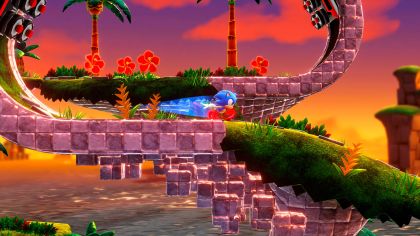
The strongest part of Sonic Superstars is how clearly it understands the appeal of classic Sonic level design. The stages are not just straight tracks where speed does all the work. They are layered playgrounds filled with upper routes, lower paths, hidden rings, springs, enemies, moving platforms, and small detours that reward repeated play. I rarely felt like I had seen everything in a zone after one run.
That layered structure gives the game its replay value. My first pass through a level was usually messy and reactive. I would miss a jump, bounce into a lower route, recover, grab some rings, and continue. On later attempts, I started noticing cleaner lines and better opportunities. Sonic Superstars is much more enjoyable when I treat each stage as a space to learn rather than a simple race to the finish.
The modern 3D visuals give the game a fresh look while keeping the core action on a side-scrolling plane. This matters because the clarity of movement is essential. Sonic needs readable platforms, clear hazards, and a sense of speed that does not bury the player in visual clutter. Most of the time, Sonic Superstars gets that balance right. The world looks lively without making the action impossible to follow.
Visual Style That Feels Bright, Smooth, and Toy-Like
Sonic Superstars has a glossy, animated look that gives familiar ideas a new texture. The environments feel like colorful dioramas built for motion. Plants, water, mechanical objects, sandy paths, icy surfaces, and glowing effects all carry a polished finish. The game does not aim for gritty realism, and that is the right choice. Sonic works best when the world feels bold, playful, and slightly impossible.
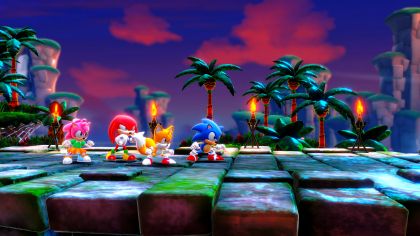
I especially liked the way character animations give each hero a bit of charm. Sonic has his usual confident energy, Tails feels light and cheerful, Knuckles looks sturdy and direct, while Amy brings a playful style that fits her moveset well. The animations are not just decorative. They help each character feel distinct during play, which becomes important when choosing who to use for a stage.
The stages often look cheerful at first glance, but many of them hide tricky layouts under that friendly surface. That contrast is part of the fun. Sonic Superstars can look like a breezy cartoon platformer, yet it still asks for timing, patience, and route awareness. The bright aesthetic invites casual players in, while the level structure gives returning fans something to study.
How It Feels to Play Across Different Characters
One thing I appreciated is that Sonic Superstars gives multiple playable characters without making them feel like identical skins. Sonic is the natural choice for players who want the most traditional sense of speed. Tails can fly for short stretches, which makes exploration easier and helps with recovery. Knuckles can climb and glide, giving him a more deliberate rhythm. Amy has her own movement flavor and attack style, making her feel accessible without losing personality.
This variety changes how I approach the same level. A path that feels risky with Sonic may feel easier with Tails. A vertical section that interrupts momentum with one character may become more natural with Knuckles. That gives the game a good reason to replay stages, especially for players who enjoy finding alternate routes and collectibles.
The controls generally feel responsive, though Sonic physics will always have a particular rhythm that some players need time to settle into. Momentum matters. If I tried to force every movement like a slower precision platformer, the game felt less graceful. When I leaned into the flow, used slopes properly, and accepted that some routes are meant to be discovered through motion, the experience became much more satisfying.
Emerald Powers Add a Strange but Useful Twist
The Chaos Emerald powers are one of Sonic Superstars’ biggest new ideas. Instead of being only a traditional collectible goal, the emeralds offer abilities that can affect exploration and encounters. These powers add a different layer to the game, giving the player extra tools without replacing the core platforming.
I liked them most when they helped me reach new areas or recover from a mistake. Some powers feel more useful than others, but the system adds texture to the usual Sonic formula. It gives stages a bit more flexibility and makes collecting emeralds feel more connected to regular play.
At the same time, I do not think every new ability lands with equal impact. Some feel naturally woven into the level design, while others seem more situational. Still, I prefer the game taking this kind of risk over simply recreating older Sonic mechanics without change. Sonic Superstars is at its best when it respects the classic foundation but still adds its own odd ideas.
Stage Design Built for Speed, Mistakes, and Second Chances
Sonic Superstars understands that Sonic levels should have rhythm. Good stages let me move fast, mess up, recover, and keep going. They rarely depend on one perfect route. Instead, they create a sense of improvisation. I might start on a high path, fall into a lower route, find a hidden spring, then launch back into a better position. That kind of movement keeps the game from feeling rigid.
The best zones combine spectacle with readability. They let Sonic move quickly while still giving the player enough information to react. When the game hits that balance, it feels excellent. I found myself replaying stages not because I had to, but because I wanted a cleaner run. I wanted to find the route I missed, grab more rings, or test a different character.
There are moments where the pacing becomes uneven, especially during certain boss encounters or gimmick-heavy sections. Sonic games have always walked a thin line between thrilling speed and sudden interruptions. Sonic Superstars mostly stays on the right side of that line, but not every sequence feels equally smooth.
Boss Encounters and Their Uneven Energy
The boss fights are one of the more divisive parts of the experience for me. Some are lively and visually fun, giving the game a strong Saturday-morning-cartoon energy. Others feel a bit too stretched out, especially when the pattern is clear but the waiting time between safe chances feels longer than necessary.
I do like that the bosses often use stage themes and character animation well. They feel connected to the world rather than dropped in from somewhere else. The problem is that Sonic’s best moments usually come from motion, speed, and flow, while some boss battles slow that rhythm down. When a fight asks me to wait too often, the energy dips.
Still, the encounters add variety, and they help each zone feel more complete. They are not enough to weaken the overall game for me, but they are the part I would most want adjusted for sharper pacing.
Co-Op Play and the Chaos of Shared Movement
Sonic Superstars includes local co-op, and I have mixed feelings about it. On paper, multiplayer Sonic sounds like a perfect idea: colorful characters, fast stages, shared laughs, and quick action. In practice, the speed of Sonic level design can make co-op feel chaotic. Players may move at different rhythms, and the screen has to keep up with a game built around momentum.
That does not mean co-op is bad. It can be genuinely fun with the right mindset. I enjoyed it most when treating it as casual, messy entertainment rather than a precise platforming challenge. If everyone expects perfect coordination, frustration can appear quickly. If everyone accepts that the experience will be noisy and unpredictable, it becomes much easier to enjoy.
For families or groups looking for a bright game to play together, this mode adds value. For solo players who want clean speedrunning-style routes, single-player remains the stronger way to experience Sonic Superstars.
Download, Install, and Available Platforms
Sonic Superstars is available across several major platforms, which makes it easier for different players to access. Before you download or install the game, it is worth checking which version best fits your setup. The game is suited to consoles and PC, and the choice may depend on whether you prefer handheld play, TV play, or desktop performance.
I would recommend using official platform stores when looking to download Sonic Superstars. That is the safest way to install the game, receive updates, and avoid unreliable files. Since availability, pricing, and editions can vary by region and platform, checking your preferred store directly is the most practical approach.
Sonic Superstars is not usually positioned like a free mobile arcade game, so players searching for a free version should be careful. A legitimate purchase or official subscription access, where available, is the better route. If a site promises a full free install outside official platforms, I would avoid it and choose a trusted source instead.
Unblocked Searches, Cheats, and Mods
Because Sonic is such a popular name, search terms like Sonic Superstars unblocked, cheats, and mods are common. I understand the curiosity, especially from players who want browser access, shortcuts, altered visuals, or fan-made changes. Still, Sonic Superstars is designed as a premium platform game, so the best experience comes through official platforms rather than unofficial unblocked pages.
Cheats can reduce the challenge that makes the stages satisfying. Sonic Superstars is built around learning routes, improving timing, collecting rings, and exploring alternate paths. If every obstacle is bypassed instantly, the sense of progress becomes weaker. I found the game more rewarding when I played within its intended structure.
Mods are a different topic because they can sometimes extend a game’s life on PC, especially through visual adjustments or fan-made tweaks. However, unofficial mods always require caution. Players should understand the risks, avoid suspicious downloads, and remember that modified files may affect stability. For most players, the official version offers the cleanest and safest way to play.
What the Game Does Especially Well
- It brings classic side-scrolling Sonic design into a bright modern visual style;
- Multiple characters make replaying stages more interesting;
- The level layouts reward exploration, speed, and route learning;
- Emerald powers add new tools without replacing core platforming;
- The presentation feels colorful, polished, and full of personality;
- Short stages make it easy to play in focused sessions;
- The game works well for both nostalgic fans and newer players;
- Official platforms make it simple to download and install safely;
Where Sonic Superstars Feels Less Consistent
My biggest issue with Sonic Superstars is that its pacing is not always as smooth as its best stages suggest. Some boss battles take longer than they need to. A few gimmicks interrupt the flow rather than enhancing it. Sonic is at his best when movement feels natural, so any section that slows things down too much stands out.
The co-op mode can also feel unstable depending on the players involved. It is fun as a casual shared experience, but it does not always match the precision and speed of solo play. This is not a dealbreaker, but players expecting seamless multiplayer platforming may need to adjust their expectations.
I also think the game’s modern look may divide some longtime fans. Personally, I enjoyed the clean 3D presentation, but players who strongly prefer pixel-art Sonic may find the style less charming than the older classics. The gameplay foundation is still rooted in 2D Sonic, but the visual personality is clearly modern.
Who Should Play Sonic Superstars
Sonic Superstars is easy to recommend to players who enjoy colorful platformers, fast movement, hidden routes, and character-based replay value. It works particularly well for fans of classic Sonic who want something familiar but not identical. The game respects the old formula without feeling like a museum piece.
New players can also enjoy it, especially if they are looking for a platformer that is more energetic than slow and methodical. The game does not require deep Sonic knowledge to understand, though returning fans will naturally notice more references, rhythms, and design traditions.
Players who value exploration inside compact stages may get more from Sonic Superstars than those who simply hold forward and hope for spectacle. The best parts are found by replaying, experimenting with characters, and learning how each zone is built.
How It Compares to the Sonic Legacy
Sonic Superstars does not replace the classics, and I do not think it is trying to. Instead, it sits beside them as a modern interpretation of what 2D Sonic can feel like with current presentation and new mechanical ideas. It has the speed, loops, rings, springs, and route variety that define the series, but it also brings smoother visuals and extra abilities into the mix.
Compared with the most beloved older entries, Sonic Superstars can feel less sharp in a few areas, especially boss pacing. Compared with many modern platformers, though, it has a distinct identity. There are not many games that move quite like Sonic when the level design is working well.
What I enjoyed most is that Sonic Superstars reminded me how unusual this series still is. It is not just about running fast. It is about momentum, recovery, risk, and the joy of finding a route that makes the whole stage feel like it suddenly opened up for you.
My Time With Sonic Superstars in Actual Play
During my time with Sonic Superstars, I kept noticing how much my enjoyment depended on my willingness to replay. A first attempt through a zone could feel chaotic, but a second attempt often felt smoother. A third attempt might reveal a better route, a hidden area, or a smarter use of a character ability. That is where the game becomes more than a colorful rush.
I liked switching characters when a stage felt awkward. Tails made some exploration easier. Knuckles gave vertical sections a different flavor. Amy felt friendly and expressive. Sonic remained my favorite when I wanted the purest sense of speed. This character variety helped the game avoid feeling flat across repeated sessions.
Sonic Superstars is a lively platformer with a strong sense of color, motion, and personality. It has uneven moments, but its best stages capture the feeling that made 2D Sonic exciting in the first place: the sensation that a level is not just something to complete, but something to learn, bend, and eventually race through with style.