A Sea Monster Story With a Very Human Teenage Pulse
I watched Ruby Gillman, Teenage Kraken expecting a bright animated adventure about a girl discovering a secret identity, and that is exactly what the film offers on the surface. But what made it more appealing to me was the way it connects giant ocean mythology to a very ordinary adolescent fear: the fear of standing out too much. Ruby is not only hiding that she comes from a family of krakens. She is trying to survive high school, friendships, crushes, family rules, and the constant embarrassment of being seen too clearly.
The movie works best when it treats Ruby’s difference as both magical and painfully normal. She feels awkward in her body, uncertain about her place in the world, and overwhelmed by expectations she did not ask for. The fantasy gives those feelings scale. Instead of only blushing in a hallway or stumbling through a conversation, Ruby can become something huge, ancient, and powerful. I liked that contrast. The film takes the emotional size of teenage insecurity and gives it tentacles, glowing eyes, ocean depth, and royal pressure.
Ruby Is Lovable Because She Is So Bad at Being Smooth
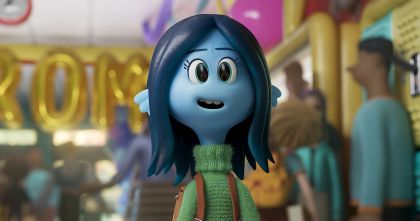
Ruby is a strong main character because she is not effortlessly cool. She is nervous, intelligent, kind, and deeply uncomfortable with attention. I found her easy to root for because she tries so hard to be normal in a world that keeps reminding her she is not. Her awkwardness is not a decorative trait. It shapes how she talks, moves, and makes decisions.
What I liked most about Ruby is that her anxiety feels specific. She is not simply shy. She is carrying family secrecy, social pressure, and the fear that her true self will make people reject her. That makes her high school life feel more intense than the usual animated teen setup. Every ordinary situation has extra risk. A party, a swim, a conversation with a crush, or a clash with her mother can become connected to a truth she has been told to hide.
The Gillman Family Feels Loving and Overprotective
Ruby’s family gives the film its emotional foundation. Her mother, Agatha, is warm, capable, and clearly devoted to protecting her daughter, but her protection also creates tension. I liked that the movie does not make Agatha’s rules feel completely random. She has history, fear, and reasons for wanting Ruby away from the ocean. The problem is that love turns restrictive when it is built only around avoiding danger.
That parent-child conflict feels recognizable. Agatha wants safety. Ruby wants truth. Both desires make sense, and that is why the conflict has weight. Ruby’s father and brother add more everyday family texture, giving the household a lived-in comic rhythm. The family is not cold or cruel. It is affectionate, busy, strange, and full of secrets that have become too large to manage. I appreciated that the story lets family love be real while still showing that love can become a cage when honesty is missing.
Grandmamah Brings Royal Drama to the Ocean
Grandmamah is one of the film’s most entertaining characters because she arrives with enormous confidence and mythic authority. She represents the part of Ruby’s heritage that has been hidden from her: ancient power, underwater royalty, family duty, and a much larger world than high school ever suggested. I liked the theatrical energy she brings. She makes the ocean feel like a kingdom with history, politics, and pride.
Her relationship with Ruby is interesting because she offers the opposite of Agatha’s caution. Where Agatha says stay small and safe, Grandmamah says rise into who you are. That message is exciting, but it also carries pressure. Ruby is not only being invited to accept herself. She is being asked to inherit expectations. I liked that tension because self-discovery is rarely as simple as finding out you are special. Sometimes being special means everyone suddenly wants something from you.
Chelsea Turns Popularity Into a Glittering Warning Sign
Chelsea is a clever foil for Ruby because she represents everything Ruby thinks she lacks: confidence, glamour, social ease, and a sense of effortless belonging. I understood why Ruby is drawn to her. Chelsea seems like the kind of person who can enter any room and immediately become the center of it. For someone like Ruby, that confidence looks almost supernatural even before the fantasy reveals deeper layers.
What I enjoyed is how the movie uses Chelsea to explore the danger of trusting appearances too quickly. She is bright, charming, and stylish, but the film gradually makes that polish feel less innocent. Her presence shows how teenage admiration can become risky when someone seems to offer instant acceptance. Ruby wants a friend who understands her difference. Chelsea appears to be that person, which makes the eventual tension more personal.
The Ocean World Is the Film’s Best Visual Playground
The aesthetics of Ruby Gillman, Teenage Kraken are strongest when the story moves underwater. The ocean scenes give the film color, motion, and scale. I liked the glowing blues, purples, pinks, and greens that make the underwater world feel both magical and slightly mysterious. The design leans into softness and fluidity, which contrasts nicely with Ruby’s tense life on land.
The underwater kingdom gives the movie room to breathe visually. Creatures, structures, light patterns, and wide ocean spaces make Ruby’s heritage feel exciting rather than frightening. I enjoyed how the film uses scale. Ruby can feel painfully awkward in a school hallway, but in the ocean, her size becomes majestic. That visual shift supports the story’s emotional idea: the part of herself she fears may be the part that allows her to move freely.
The Land Scenes Capture Teen Embarrassment Well
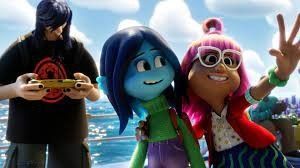
On land, the movie has a bright coastal-town look that suits its tone. The school, streets, beach, and family spaces are colorful and approachable. I liked how the land world feels smaller and more socially pressurized than the ocean. Ruby is surrounded by people, but she still feels trapped inside herself. Every public moment can turn into embarrassment.
The film captures that teenage sense that everyone is watching, even when they are not. Ruby’s body language tells the story before the plot does. She hunches, hesitates, overthinks, and tries to make herself less noticeable. That makes the land scenes emotionally useful. They show why the ocean matters. It is not just a fantasy setting. It is a space where Ruby’s body and identity are no longer mistakes to hide.
The Animation Finds Comedy in Stretchy Movement
The character animation is playful and elastic, especially with Ruby. Her long limbs, nervous gestures, and sudden transformations create a lot of physical comedy. I liked how her body seems to express feelings before she can organize them into words. When she is embarrassed, anxious, or excited, the animation exaggerates those states in a way that feels connected to teenage experience.
The kraken forms are also visually fun because they allow the film to shift from awkward comedy to mythic scale. Ruby can be small in her own mind and enormous in reality, and the animation uses that contradiction well. The best physical moments are the ones where she is still emotionally a nervous teen even while appearing as something legendary. That mismatch gives the movie its comic charm.
The Humor Works Best When It Comes From Social Panic
The comedy in Ruby Gillman, Teenage Kraken is light and fast, but I found it most effective when it comes from Ruby’s social panic. Her attempts to act casual are funny because they are so obviously effortful. She wants to say the right thing, move the right way, and seem normal, but her emotions keep getting ahead of her.
The family humor also works because everyone has a different relationship to secrecy. Agatha tries to manage it with rules. Ruby tries to avoid it until she cannot. Grandmamah treats it as absurd that such power would be hidden. That contrast gives the movie a lively rhythm. The funniest scenes are not only about strange creatures or exaggerated reactions. They are about people trying to control a truth that keeps surfacing.
The Main Theme Is Self-Acceptance With Complications
The film’s central theme is self-acceptance, but I appreciated that it connects acceptance to family history and responsibility. Ruby does not simply discover that she is secretly impressive and instantly become confident. She has to deal with fear, deception, inheritance, and the fact that different people define her identity for their own reasons.
This makes her journey more textured than a basic “be yourself” message. Being herself means challenging her mother’s silence, questioning Chelsea’s influence, listening to Grandmamah without being swallowed by royal expectation, and deciding what kind of kraken she wants to be. I liked that the film gives Ruby more than one pressure source. Teen identity is often shaped by parents, friends, peers, myths, and private desire all at once.
The Villain Conflict Reflects Old Stories and New Choices
The conflict between krakens and mermaids gives the movie its larger mythology. I liked the idea that Ruby has inherited a story about who is dangerous, who is noble, and what her family is supposed to defend. Those inherited stories shape how characters behave before Ruby has the chance to judge the truth for herself.
That gives the plot a useful emotional mirror. Ruby is not only deciding whether to accept her kraken identity. She is deciding what to do with the old conflicts attached to it. The film suggests that identity is not just personal style or inner confidence. It also involves history. Ruby has to learn where she comes from without letting the past write every choice for her.
The Friendship Story Adds Spark and Betrayal
Ruby’s need for friendship gives the movie one of its most relatable threads. She wants to be seen by someone outside her family. She wants a person who understands her without making her feel like a problem. That desire makes her connection with Chelsea exciting at first. It feels like Ruby has finally found someone who can meet her in the strange space between land and sea.
What makes the friendship arc work is that Ruby’s longing makes her vulnerable. She wants acceptance so badly that she may overlook warning signs. That felt honest to me. Teen friendships can be intense because they often carry the hope of reinvention. Someone new can seem to offer a better version of life. The movie uses that emotional truth to make the fantasy conflict feel more personal.
The Voice Performances Give the Characters Bright Personality
The voice work helps define the film’s emotional tone. Ruby needs to sound smart, nervous, sincere, and overwhelmed, and her performance gives her that mix. I liked how her voice often carries the feeling of someone thinking three steps ahead and still tripping over the first one. That makes her easy to like.
Agatha’s voice brings protective warmth with an edge of anxiety, while Grandmamah adds grand theatrical confidence. Chelsea’s performance has the right kind of sparkle, making her seem inviting before the story darkens her role. Together, the voices give the movie a lively emotional range. No one feels too muted for this bright, strange world.
The Film’s Best Idea Is That Awkwardness Can Be Power
What stayed with me most is how Ruby’s awkwardness gradually becomes connected to her strength. At the start, she sees her difference as something to manage, shrink, and hide. The story pushes her toward the realization that the parts of herself she finds embarrassing may also be the parts that make her capable of protecting others.
I liked this because the movie does not make confidence look instant or effortless. Ruby does not become a completely different person by accepting her identity. She remains nervous, kind, thoughtful, and emotionally reactive. The difference is that she stops treating those traits as reasons to disappear. That makes her transformation feel more meaningful. She does not have to become smooth to become strong.
Why the Teenage Kraken Concept Works
The reason Ruby Gillman, Teenage Kraken works for me is that the fantasy metaphor is clear and charming. Adolescence can make a person feel monstrous, too large, too visible, too emotional, and too strange for ordinary spaces. Turning that feeling into a kraken identity is a smart animated idea. It gives emotional awkwardness a mythic body.
The film is at its best when it remembers that Ruby’s biggest adventure is not only under the sea. It is inside the question of whether she can stop apologizing for existing differently. The ocean battles, glowing powers, family secrets, and mermaid rivalry all matter because they circle the same fear: that being fully seen might cost her the life she wants. Watching Ruby step into that visibility gives the movie its bright, nervous, and heartfelt energy.