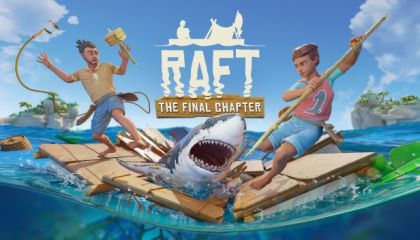
An Ocean Survival Game Where One Small Platform Becomes a Floating Home
Raft begins with one of the clearest survival ideas possible: I am alone on the ocean, standing on a tiny wooden platform, and almost everything useful is drifting just out of reach. That first image is simple, but it works beautifully. There is water everywhere, but safety is limited to a few planks. There are supplies nearby, but I need to catch them. There is freedom in every direction, but also the constant feeling that the sea does not care whether I survive.
What makes Raft so satisfying is the way it turns small progress into real comfort. At first, I am grabbing debris with a hook, worrying about food, filtering water, and repairing damage. Later, that same weak platform can become a multi-floor floating base with storage, crafting stations, farms, navigation tools, engines, decorations, and enough personality to feel like home. The transformation is the main pleasure of the game.
For players looking to download, install, and play a survival crafting game across supported platforms, Raft offers a relaxed but tense experience. It is not only about fighting danger. It is about building stability in a world that constantly moves beneath your feet.
The Hook Makes Every Piece of Debris Feel Important
The first tool in Raft is humble, but it defines the entire early game. Throwing the hook into the water to pull in wood, plastic, leaves, barrels, and other floating materials is simple, readable, and surprisingly addictive. Every passing item feels useful because the raft is so small and every upgrade needs resources.
I like how the ocean becomes a moving resource stream. Instead of mining rocks or chopping trees in a static map, I am watching the current, judging distance, timing throws, and deciding what matters most. A barrel might contain several useful materials, but missing nearby planks could delay expansion. That constant prioritizing gives the early game a strong rhythm.
The hook also creates a nice sense of vulnerability. I am not powerful. I am fishing survival out of the ocean one piece at a time. That makes the first bigger platform, first purifier, first grill, and first storage box feel genuinely earned.
Building the Raft Is the Real Story
Raft does have exploration and progression, but the most personal story is the raft itself. Every player builds differently. Some create practical floating machines with clean storage and efficient layouts. Others build cozy homes, strange towers, messy platforms, or decorative sea castles that look completely unreasonable but somehow float anyway.
I enjoy survival games where the base grows with my habits. In Raft, I can see my decisions in the structure. The cooking area goes where I always stand. Storage expands where I keep dropping items. Nets appear along the edges because I got tired of missing debris. The raft becomes a record of how I learned to survive.
This is one of the game’s strongest features. Progress is visible. I do not only unlock better numbers. I physically expand the space I live on. A tiny square becomes a home, then a workshop, then a vehicle, then a complete ocean base.
Survival Feels Manageable but Constant
Raft is not the harshest survival game, but it keeps enough pressure to stay engaging. Hunger and thirst need regular attention, and the early game can become stressful if I neglect them. Clean water and cooked food are not glamorous goals, but they are essential ones.
I like how these needs gradually become easier to manage. Early on, I scramble for basic supplies. Later, better purifiers, grills, crop plots, fishing, and storage make survival feel smoother. That progression is satisfying because it turns panic into routine. I feel like I have earned comfort through planning.
The game works best when survival systems create background pressure without overwhelming the joy of building. Raft usually finds that balance. I am rarely free from responsibility, but I still have room to explore, decorate, and experiment.
The Shark Keeps the Ocean From Feeling Too Peaceful
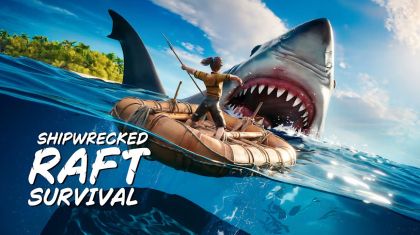
The shark is one of the most recognizable parts of Raft. It patrols around the platform, damages foundations, threatens players in the water, and constantly reminds me that the ocean is not just a pretty blue background. Even when I am focused on crafting, I know it is nearby.
I appreciate how the shark creates tension without turning the entire game into nonstop action. It interrupts. It pressures. It punishes careless swimming. It makes repairs and defenses important. But it does not completely take over the experience. The main focus remains survival and building.
That said, the shark can become repetitive over long sessions. Its presence is effective early, but experienced players may see it more as a maintenance task than a true fear. Still, as a simple force that keeps the raft from feeling perfectly safe, it does its job well.
Islands Turn the Journey Into More Than Drifting
Reaching islands is where Raft opens up. The ocean may be endless, but islands give me reasons to leave the platform, gather different resources, explore vertical spaces, find animals, collect seeds, and search for materials that do not float by in the current. Each island feels like an opportunity and a risk.
I like the change in pacing. On the raft, I am maintaining systems and collecting debris. On islands, I am exploring, climbing, diving, and planning what to carry back. This prevents the game from becoming only a floating base simulator.
Larger story locations add even more structure. They give direction to the journey, introduce environmental puzzles, and make the world feel more mysterious. Raft is at its best when the raft itself feels like the vehicle between discoveries, not the entire game.
Crafting Progression Feels Natural
The crafting system in Raft works because most upgrades solve problems I already understand. I want more room, so I build foundations. I want easier collection, so I build nets. I need better food and water systems, so I craft improved equipment. I want to travel with more control, so I work toward sails, anchors, navigation tools, and engines.
This kind of progression feels good because the motivation is clear. I am not crafting random items just because a menu says so. I am improving my daily life on the raft. Every new tool makes the ocean a little less threatening and the base a little more capable.
Research also gives the game a satisfying learning curve. Finding new materials and unlocking recipes creates a steady sense of discovery. It encourages exploration without making the player feel completely lost.
Co-Op Makes the Ocean Funnier and More Efficient
Raft is enjoyable solo, but co-op gives it a different personality. With friends, tasks can be divided naturally. One player gathers debris, another cooks, another expands the raft, another explores islands, and someone inevitably falls into the water at the worst possible moment. The game becomes more social and more chaotic.
I like how co-op makes progress faster without removing tension. A group can collect resources more efficiently, but it can also consume food faster, argue over design choices, and create messy raft layouts that no responsible engineer would approve. That is part of the fun.
The best co-op sessions feel like a shared project. Everyone contributes to the floating home, and every upgrade belongs to the group. When the raft finally looks impressive, it feels like a team achievement rather than a simple structure.
Download, Install, and Play Across Supported Platforms
Players looking to download Raft should use official platforms. The safest way to install the game is through trusted digital storefronts connected to supported platforms. This helps protect save data, updates, multiplayer access, and the correct game files.
Before installing, I would check platform availability, system requirements, storage needs, multiplayer support, controller options, and current edition details. Since Raft includes building, exploration, progression, and co-op systems, stable performance and proper saving matter a lot.
Players searching for a free version should be careful. Raft is a premium survival game, so random pages promising a full free install may be unsafe, incomplete, or misleading. If any official promotion, trial, or special access option appears, it should be confirmed through trusted sources only.
Unblocked Versions Do Not Capture the Full Raft Experience
Searches for Raft unblocked are common because the basic concept sounds perfect for quick browser play. Floating on the ocean, gathering debris, and building a platform seems simple enough. But the full game depends on saving, crafting progression, island exploration, story locations, multiplayer systems, and proper updates.
An unblocked version may be a simplified imitation or an outdated copy that does not include the real depth of Raft. It may also have poor controls, missing features, unsafe prompts, or unstable saving. For a survival game where long-term progress matters, that is a serious problem.
I would avoid unblocked shortcuts and play through official platforms. Raft is much better when the raft can grow over many sessions without worrying about lost progress or incomplete systems.
Cheats and Mods Can Be Fun, but They Change the Mood
Raft attracts plenty of searches for cheats and mods because players may want unlimited resources, easier survival, custom building options, visual changes, or quality-of-life improvements. I understand the appeal. Building a dream raft can take time, and some players may want to experiment freely.
Cheats can be useful for creative testing, but they can reduce the satisfaction of a normal survival run. The early struggle is important because it makes later comfort meaningful. If every material is available instantly, the emotional arc from tiny platform to floating home becomes weaker.
Mods may add value for experienced players, especially if they improve building, interface, decoration, or replay variety. Still, unofficial files should be handled carefully because they may affect stability, saved data, multiplayer compatibility, or updates. For a first playthrough, I would recommend the official install without shortcuts.
Why Raft Feels Relaxing Even When It Is Dangerous
One of the most interesting things about Raft is that it can feel relaxing and stressful at the same time. The ocean, drifting debris, gentle building loop, and slow expansion create a calm rhythm. But hunger, thirst, the shark, storms, and resource shortages keep me alert.
This balance gives the game a unique mood. I can spend time decorating, organizing storage, planting crops, and watching the horizon, then suddenly rush to repair damage or prepare for an island stop. The shifts are not too extreme, which makes the game easy to return to after a break.
Raft succeeds because it makes survival feel cozy without removing danger entirely. The raft becomes safe because I made it safe, and that difference matters.
Where Raft Can Feel Repetitive
The biggest weakness of Raft is repetition during long sessions. Gathering debris, managing food and water, repairing damage, and waiting between discoveries can start to feel familiar. The game improves as more systems unlock, but the early loop may feel slow for players who want constant action.
The shark can also become more annoying than frightening after many hours. Once I understand how to manage it, the attacks may feel like routine interruptions. Some players may enjoy that pressure, while others may wish for more varied ocean threats.
Raft is also not the best choice for players who dislike crafting or base building. The floating home is the heart of the game. If building and organizing do not appeal to you, the experience may not fully click.
Who Should Play Raft
Raft is a strong fit for players who enjoy survival crafting, base building, co-op exploration, ocean settings, and gradual progression. It is especially appealing if you like games where a small starting point slowly becomes a personalized home.
I would recommend it to players who enjoy gathering resources, improving systems, decorating bases, exploring islands, and playing with friends. It works well for both relaxed sessions and longer cooperative adventures.
Players who want fast combat, deep realism, or constant dramatic events may not connect with it as strongly. But for anyone who wants to build a life on the ocean one plank at a time, Raft offers a charming and satisfying survival journey.