A Toy Factory Horror Game Where Childhood Nostalgia Turns Hostile
Poppy Playtime is one of those horror games that understands how unsettling a cheerful place can become when it is empty. The idea of exploring an abandoned toy factory already feels strange because toys are supposed to be friendly, colorful, and comforting. But inside Playtime Co., bright mascots, old posters, factory machines, and children’s branding become part of the tension. The game takes something playful and makes it feel deeply wrong.
What makes Poppy Playtime appealing is its mix of mascot horror, environmental puzzles, chase tension, and mystery. I am not only walking through dark corridors waiting for scares. I am exploring a factory, solving mechanical puzzles, using special grab-hand tools, reading the environment, and trying to understand what happened inside a company that clearly hid more than broken toys.
For players looking to download, install, and play a modern horror puzzle game across supported platforms, Poppy Playtime offers a strong atmosphere, memorable characters, and a chapter-based structure that keeps the story moving. It is spooky, colorful, tense, and especially effective if you enjoy horror built around abandoned places and cheerful mascots with terrible secrets.
The Factory Setting Does Most of the Scaring
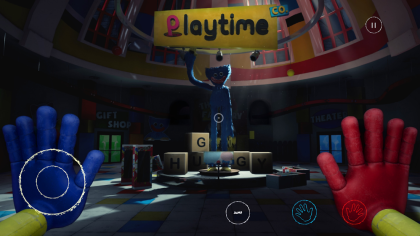
Playtime Co. is the real center of Poppy Playtime. The factory is not just a background for monsters. It is a character of its own, filled with old machinery, employee spaces, testing areas, posters, vents, storage rooms, and toy displays. Every area suggests that something cheerful was once manufactured here, and that something went very badly.
I like how the environment uses contrast. Bright colors and friendly branding sit next to silence, decay, and danger. A smiling poster can feel more unsettling than a dark wall because it reminds me what the place pretended to be. That contrast is one of the strongest parts of the game’s identity.
The factory also supports exploration naturally. I want to know what each area was used for, why certain doors are locked, where machines lead, and what the company was hiding. The horror works because curiosity keeps pulling me forward.
Huggy Wuggy Became Iconic for a Reason
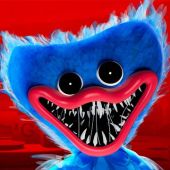
Huggy Wuggy is one of the most recognizable mascot horror characters because the design is simple, readable, and deeply uncomfortable. The character looks like a toy at first glance, but the proportions, movement, and stillness make it feel wrong. A giant smiling figure standing in a factory lobby is already enough to create tension before anything happens.
I enjoy how Poppy Playtime uses presence. The game does not need constant action to make Huggy Wuggy frightening. Sometimes the character is scary because I know it is nearby, or because I saw it in one place and later it is gone. That kind of environmental suspense is very effective.
The best mascot horror designs work because they are easy to remember. Huggy Wuggy has that quality. The bright color, huge smile, long limbs, and toy-store friendliness all combine into something that is instantly marketable and instantly unsettling.
The GrabPack Gives Puzzles a Strong Identity
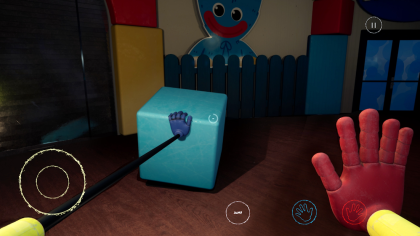
The GrabPack is one of Poppy Playtime’s smartest mechanics because it gives the player a specific way to interact with the factory. Instead of only pressing buttons or collecting keys, I use extendable hands to grab objects, connect circuits, pull levers, swing across gaps, and solve machinery-based puzzles.
I like when a horror game gives puzzles a physical tool. The GrabPack makes interactions feel more active. Reaching across a room, wrapping around posts, or connecting power routes makes the environment feel like a mechanical playground, even when the atmosphere is tense.
The tool also fits the toy-factory theme perfectly. It feels strange, colorful, useful, and slightly unsafe. That makes it more memorable than a generic flashlight or keycard system.
Puzzles Keep the Player Moving With Purpose
Poppy Playtime works best when puzzles create a reason to explore. A locked door, inactive machine, missing component, or power route gives the player a clear short-term goal. Instead of wandering aimlessly, I am trying to restore systems and unlock new parts of the factory.
I enjoy how the puzzles are usually approachable but still satisfying. The game is not trying to be an extremely difficult logic test. It wants the player to interact with spaces, understand machinery, and stay nervous while doing it. That balance fits the horror tone well.
The strongest puzzle moments happen when the player feels exposed. Solving a task is simple enough, but the environment makes me wonder whether I am alone. That tension turns ordinary mechanical work into something much more stressful.
Chase Sequences Create the Biggest Panic
Poppy Playtime is especially memorable when it shifts from slow exploration to sudden movement. A chase sequence changes the entire mood. The player is no longer calmly solving puzzles. Now I am running, reacting, turning corners, reading the path quickly, and hoping I do not make one wrong movement.
I like how these moments use the factory layout. Vents, conveyor paths, corridors, machinery, and narrow routes become part of the fear. The environment that once looked like a puzzle space becomes an escape route, and that transformation is exciting.
The best chase scenes are intense because they are understandable. I know I need to move forward, but the speed and pressure make simple navigation feel difficult. Poppy Playtime uses this well to create strong reaction moments.
The Chapter Format Helps the Mystery Grow
Poppy Playtime uses a chapter-based structure, and that format works well for this kind of horror. Each chapter can introduce new areas, characters, mechanics, and pieces of the larger mystery. It gives the game a serial feeling, almost like exploring one dangerous section of the factory at a time.
I enjoy how chapters allow the story to expand without revealing everything immediately. The factory has room for more mascots, more experiments, more company secrets, and more questions about what happened. That slow reveal keeps players discussing theories and waiting for new content.
The chapter format also makes the game easier to approach. Instead of one massive campaign, players can experience focused horror sections with their own highlights. That structure suits the online conversation around the game very well.
The Toy Designs Make the Horror More Memorable
Poppy Playtime stands out because its horror is built around toy branding. Characters like Poppy, Huggy Wuggy, Mommy Long Legs, and other Playtime Co. creations feel designed to be cute and marketable, which makes their darker side more disturbing. The game understands that a toy can be frightening when it moves in a way it should not.
I like how the character designs feel connected to a fictional company. They are not random creatures placed in a building. They are products, mascots, experiments, and symbols of something larger. That gives the horror a stronger identity.
This also explains why the game became popular beyond players alone. The characters are visually strong, easy to recognize, and perfect for fan art, videos, theories, and reactions. Good mascot horror needs designs people remember, and Poppy Playtime has several.
Download, Install, and Play Across Supported Platforms
Players looking to download Poppy Playtime should use official platforms. The safest way to install the game is through trusted PC storefronts, console stores, mobile app stores, or official platform pages connected to supported devices. This protects updates, saved progress, purchases, chapter access, performance, and the correct version of the game.
Before installing, I would check supported platforms, chapter availability, storage requirements, controller or touch support, graphics settings, language options, age rating, and current update details. Since Poppy Playtime may vary by platform and chapter release, checking the exact version matters.
Players searching for a free version should be careful. Some demos, promotions, or platform-specific options may exist depending on availability, but random pages promising a full free install may be unsafe, incomplete, or misleading. Official access is the best way to avoid fake copies.
Unblocked Versions Are Usually Unsafe or Incomplete
Searches for Poppy Playtime unblocked are common because the game is popular with younger players and horror fans who want quick access. I would avoid random unblocked pages. Poppy Playtime depends on proper audio, lighting, animation, puzzles, chapter files, saving, and stable performance. A browser shortcut usually cannot provide the real experience.
An unblocked version may be a simple imitation, an outdated copy, a broken fan page, or an unsafe site filled with intrusive ads and fake buttons. It may not include the real factory, complete puzzles, proper chase sequences, or official chapters.
I would use official platforms instead. Poppy Playtime is an atmosphere-driven horror game, and atmosphere depends on the complete version working correctly.
Cheats and Mods Can Be Interesting but Risky
Poppy Playtime naturally attracts searches for cheats and mods because players may want unlocked chapters, easier chases, custom characters, visual changes, fan maps, or new ways to explore the factory. I understand the curiosity because the game has a strong fan community and a mystery-driven world.
Cheats can reduce the impact of a first playthrough. The game is tense because puzzles, timing, and uncertainty matter. If every danger is removed or every chapter is skipped, the atmosphere becomes weaker. The best first experience is usually the intended version.
Mods can be fun after finishing official content, especially for visual experiments or fan-made scenarios, but unofficial files should be handled carefully. They may affect stability, saved data, updates, purchases, or device safety. For most players, the official install is the safest starting point.
Where Poppy Playtime Can Feel Limited
The biggest limitation of Poppy Playtime is that its experience depends heavily on chapter length and pacing. Some players may want longer sections, deeper puzzles, or more exploration in each release. A strong chapter can feel exciting, but a short one may leave players wanting more.
The game can also rely on familiar mascot-horror ideas. Abandoned company, creepy toys, hidden experiments, chase scenes, and lore fragments are effective, but players who have seen many similar horror games may notice the formula.
Another issue is audience confusion. The characters are colorful and toy-like, which can attract younger viewers, but the game is still horror. Parents should check age ratings and content before allowing children to play or watch.
Why Poppy Playtime Became So Popular
Poppy Playtime became popular because it has a strong hook, clear visual identity, and characters people remember instantly. The abandoned toy factory is easy to understand, the GrabPack gives the gameplay a unique tool, and the mascots create strong reaction moments.
I like that the game encourages theory discussion. Notes, tapes, environmental details, hidden company history, and strange character behavior all make players ask questions. Horror games often last longer online when fans have mysteries to analyze, and Poppy Playtime uses that well.
The game also works because it is easy to watch. A tense hallway, a sudden chase, or a giant mascot moving through the factory creates clear, shareable moments. That helped it become a major name in modern indie horror.
Who Should Play Poppy Playtime
Poppy Playtime is a strong fit for players who enjoy mascot horror, abandoned locations, puzzle exploration, chase scenes, lore mysteries, and colorful horror design. It is especially appealing if you like games where a friendly-looking setting slowly becomes more threatening.
I would recommend it to horror fans who enjoy atmosphere and mystery more than constant combat. It also works well for players who like chapter-based storytelling and discussing theories between releases.
Players who want very long campaigns, complex survival systems, or realistic horror may not connect with it as strongly. But for anyone who wants a spooky toy-factory adventure with memorable mascots and clever puzzle tools, Poppy Playtime remains one of the most recognizable horror games in its category.