A Bright Rescue World Built for Small Viewers
I watch Paw Patrol as a show that understands its audience with unusual clarity. It is not trying to be complicated, ironic, or layered in the way many family titles are. Its strength comes from directness. A problem appears, Ryder gathers the pups, each character uses a specific skill, and the rescue becomes a cheerful lesson in teamwork, bravery, and practical thinking. That simple structure is exactly why the series works so well for young children.
What I find interesting is how the show turns responsibility into something playful. Adventure Bay is not a realistic town, and it does not need to be. It is a colorful world where every problem can be solved through cooperation, vehicles, tools, and a positive attitude. The formula may be predictable for adults, but for children, that predictability creates comfort. They know help is coming. They know each pup has a role. They know a scary situation will become manageable. That sense of safety is one of the franchise’s biggest appeals.
Ryder Gives the Team a Calm Center
Ryder is the human leader of the Paw Patrol, and I think his main function is stability. He rarely panics, rarely overcomplicates a situation, and always seems ready with a plan. For young viewers, that calmness matters. He turns emergencies into steps. He listens, assigns roles, and helps the pups understand what needs to happen next.
I like that Ryder is not presented as a distant authority figure. He is friendly, encouraging, and deeply connected to the team. His leadership style is simple but effective: identify the problem, choose the right helpers, trust their abilities, and celebrate their effort. That makes him a useful figure for children learning how groups work. He shows that leadership is not only about giving instructions. It is about helping everyone use their strengths.
Chase Brings Order and Confidence
Chase is one of the most recognizable pups because he represents discipline, focus, and public service. As the police pup, he often brings structure to chaotic moments. I see him as the character who makes rules feel helpful rather than boring. He is careful, organized, and usually ready to take charge when a situation requires control.
What I like about Chase is that his seriousness still feels child-friendly. He is not stiff in a harsh way. He is eager, loyal, and proud of doing his job well. His vehicle, uniform, and catchphrases help young viewers understand his role immediately. In a show built around quick recognition, that clarity is valuable. Children can see Chase and instantly know what kind of help he brings.
Marshall Turns Clumsiness Into Warmth
Marshall is the pup who often brings the biggest physical comedy. As the firefighter and medic, he has a heroic role, yet his clumsy entrances and excited energy make him feel approachable. I enjoy that contrast. He can be silly and still useful. He can trip, tumble, or overreact, then still show up when someone needs help.
That is an important message for children. Paw Patrol does not suggest that a character must be perfectly smooth to be valuable. Marshall’s mistakes do not erase his courage or kindness. His warmth makes him one of the most emotionally accessible pups. He shows that being a little messy does not mean being incapable. Sometimes enthusiasm and heart matter just as much as perfect coordination.
Skye Adds Flight, Speed, and Sparkle
Skye brings a sense of lightness to the team, both literally and emotionally. Her aviation role gives the show vertical movement, wider views, and a feeling of quick rescue from above. I like how her pink design, goggles, helicopter, and confident voice make her instantly distinct. She is cheerful, capable, and often the pup who can reach places others cannot.
What works about Skye is that her sweetness never cancels her competence. She is stylish and upbeat, but she is also brave and skilled. For young viewers, that combination matters. The show lets a character be cute, energetic, and effective at the same time. Skye’s scenes often make the rescue world feel larger because she can rise above the ground-level problem and see the bigger picture.
Rocky, Rubble, and Zuma Expand the Team’s Practical Skills
Rocky is the recycling and repair pup, and I appreciate how his role introduces resourcefulness. He often solves problems by reusing materials, fixing objects, or thinking creatively about tools. That gives the show a small but useful environmental message. Children see that broken or leftover things can become helpful when someone looks at them with imagination.
Rubble adds construction energy. His bulldozer, helmet, and cheerful toughness make him the pup for digging, lifting, building, and clearing paths. Zuma brings water rescue, which opens another whole category of adventures around boats, beaches, rivers, and sea situations. Together, these pups make the team feel complete. Each one teaches that different skills matter in different circumstances, and no single character can handle every job alone.
The Aesthetics Are Clean, Colorful, and Easy to Read
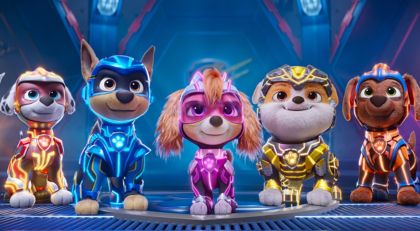
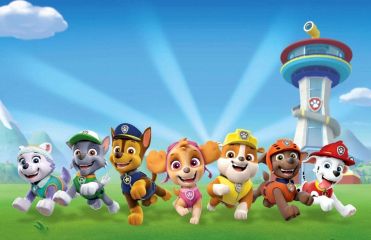
The visual style of Paw Patrol is designed for clarity. Colors are bright, shapes are smooth, and each character has a strong visual identity. I think that is one of the reasons the franchise works so well with younger audiences. A child can recognize Chase by blue, Marshall by red, Skye by pink, Rocky by green, Rubble by yellow, and Zuma by orange. The design language is simple, but very effective.
Adventure Bay itself has the same accessible quality. It is sunny, open, and full of locations that can quickly become rescue scenarios: beaches, mountains, roads, farms, parks, docks, and town spaces. The world is not overloaded with visual detail. It gives children enough information to understand the problem without distracting them from the characters. That simplicity helps the story move quickly and keeps the focus on action and teamwork.
The Vehicles Make Every Pup Feel Like a Specialist
The vehicles are a major part of Paw Patrol’s appeal. Each pup has a vehicle that matches their role, and that makes the rescue missions feel structured. I like how the show uses vehicles as extensions of personality. Chase’s police cruiser, Marshall’s fire truck, Skye’s helicopter, Rubble’s construction vehicle, Rocky’s recycling truck, and Zuma’s hovercraft all tell children what each pup can do before the action even begins.
This also gives the series a strong toy-like quality, which is clearly part of its success. The vehicles are not only transportation. They are symbols of function. They make the pups feel prepared, equipped, and special. For children, that is exciting because it turns helping into an adventure with tools, buttons, ramps, suits, and movement. The rescue process becomes visually satisfying from the moment the pups roll out.
The Formula Feels Repetitive in a Useful Way
From an adult perspective, Paw Patrol can feel very repetitive. A problem appears, the team is called, the pups receive assignments, the mission unfolds, and the rescue ends with encouragement. But I do not see that repetition as a flaw for its core audience. For young children, repetition builds confidence. It helps them predict what will happen and understand cause and effect.
The formula also creates emotional safety. Even when the situation seems tense, the structure promises that the team will respond. Nobody is left alone with a problem for long. Help is organized, friendly, and reliable. That is a comforting idea for preschool viewers. The world of Paw Patrol may include mishaps and risky moments, but it is fundamentally a world where care arrives quickly.
The Humor Stays Gentle and Physical
The humor in Paw Patrol is soft, simple, and usually built around movement, surprise, or character habits. Marshall’s clumsy moments, Chickaletta’s random appearances, Mayor Humdinger’s schemes, and the pups’ playful reactions all create comedy without making the world feel mean. I like that gentleness. The show is not trying to embarrass its characters harshly or create sharp sarcasm.
This style suits the audience. Very young children often respond well to clear physical comedy and repeated character patterns. They enjoy knowing that Marshall might tumble in, or that a silly animal might complicate the mission. The jokes are not complex, but they serve the tone. They keep the rescue stories light and prevent the emergencies from feeling too intense.
The Main Message Is Teamwork Without Long Speeches
Paw Patrol teaches teamwork in a very direct way. Each pup has a skill, and each mission requires the right combination of those skills. I like that the show demonstrates cooperation through action instead of turning every episode into a lecture. Children see the team communicate, divide tasks, solve problems, and support each other.
The message is easy to understand: different abilities matter. Chase cannot do everything. Skye cannot do everything. Rubble, Rocky, Zuma, Marshall, and the others each have moments when their specific strengths become essential. That gives the show a healthy group dynamic. It tells children that being useful does not mean being good at every job. It means bringing your own skill when the team needs it.
Mayor Humdinger Adds Mischief Without Darkening the Mood
Mayor Humdinger works as a recurring troublemaker because he creates problems without making the show feel too heavy. He is selfish, dramatic, and often ridiculous, especially with his Kitten Catastrophe Crew. I find him useful because he gives the pups a source of conflict that remains safely comic. He causes trouble, but the tone stays playful.
His presence also lets the show explore consequences in a simple way. Humdinger’s plans usually backfire because he acts from pride or impatience. The pups succeed because they cooperate and think clearly. That contrast is easy for children to read. The show does not need complicated moral arguments. It presents selfishness as messy and teamwork as effective.
The Franchise Works Because It Knows Its Purpose
What I respect about Paw Patrol is that it understands what it is. It is not trying to impress adults with hidden satire or complex character arcs. It is built for children who enjoy animals, vehicles, teamwork, uniforms, rescue missions, and reassuring repetition. The franchise’s confidence comes from that focus.
Its functionality as children’s entertainment is strong because episodes are easy to follow, characters are visually distinct, and conflicts are resolved with clarity. The show gives young viewers a world where problems can be solved through kindness, courage, and practical roles. That may be simple, but simple does not mean careless. For preschool storytelling, clarity is often the point.
The Emotional Appeal Is Safety Through Action
The reason Paw Patrol connects with children is not only that the pups are cute. It is that they make help visible. A siren, a vehicle, a uniform, a badge, and a familiar catchphrase all signal that someone is ready to respond. For a young viewer, that can be deeply reassuring. The world may have accidents, confusion, lost animals, broken bridges, or runaway balloons, but the team will come.
I find that emotional structure surprisingly important. Paw Patrol turns rescue into a ritual of care. The pups do not mock fear. They respond to it. They do not wait for problems to become impossible. They organize, arrive, and help. In a children’s show, that kind of dependable optimism has real value. It gives children a cheerful model of courage that is less about being fearless and more about showing up when someone needs you.