A Stylish Battle Royale Where Blades, Movement, and Timing Matter More Than Bullets
NARAKA: BLADEPOINT is the kind of battle royale that immediately feels different because it does not build its identity around long-range shooting alone. It is fast, physical, vertical, and focused on close combat. Instead of only hiding behind cover and waiting for the perfect shot, I am grappling across rooftops, clashing weapons, dodging attacks, using hero abilities, reading enemy movement, and trying to survive fights that can change direction in seconds.
What makes NARAKA: BLADEPOINT interesting is the blend of martial arts action and competitive survival. It has the shrinking-map tension of a battle royale, but the actual combat feels closer to an action game. Weapons have rhythm, timing matters, movement is expressive, and a confident opponent can turn a small mistake into a complete disaster. The result is stylish, intense, and much more personal than many games in the genre.
For players looking to download, install, and play a free-to-play melee-focused battle royale across supported platforms, NARAKA: BLADEPOINT offers a strong mix of skill, spectacle, hero choice, weapon mastery, and dramatic duels. It is not the easiest game to learn, but that difficulty is a major part of its appeal.
The First Match Feels Fast, Flashy, and Slightly Terrifying
NARAKA: BLADEPOINT makes a strong first impression because movement is immediate and stylish. The grapple system lets me cross gaps, chase enemies, escape danger, climb structures, and turn the map into a vertical playground. This alone gives the game a different rhythm from slower battle royale titles.
I like how quickly fights can become intense. One moment I am looting quietly, and the next I hear movement nearby, see a player closing the distance, and have to decide whether to fight, retreat, or use the environment. Because close combat is so important, encounters feel direct and personal.
The first matches can also be confusing. There are weapons, combos, counters, hero abilities, armor, healing items, movement tech, and map systems to understand. New players may lose quickly without knowing exactly why. But once the basics start to click, the game becomes much more satisfying.
Melee Combat Is the Main Attraction
The core appeal of NARAKA: BLADEPOINT is melee combat. Swords, blades, spears, greatswords, staffs, and other weapons are not just cosmetic choices. They change range, rhythm, attack speed, pressure, and how I approach a fight. Learning a weapon feels like learning a small language.
I enjoy how combat rewards timing rather than random button pressing. Light attacks, charged attacks, counters, dodges, focus moves, and combos all interact. A player who only swings wildly becomes predictable. A better player watches for patterns, baits reactions, and chooses the right moment to commit.
The best fights feel like duels. Both players circle, test each other, trade pressure, use abilities, and wait for an opening. When the system works well, victory feels earned because it came from reading the opponent rather than simply having better equipment.
The Grappling Hook Changes Everything
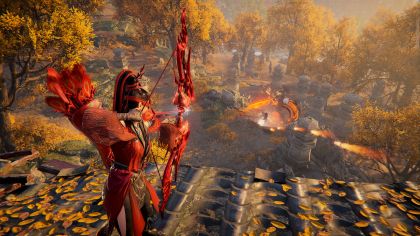
The grappling hook is one of NARAKA: BLADEPOINT’s defining features. It makes the game faster, more vertical, and more aggressive. I can use it to chase a fleeing enemy, reach high ground, escape a bad fight, reposition during chaos, or surprise someone who thought they were safe.
I like how the grapple reduces empty downtime. Movement across the map feels active because I am constantly looking for surfaces, routes, and opportunities. A rooftop, tree, cliff, or building is not just scenery. It is part of the movement system.
The grapple also changes combat psychology. Running away is harder when someone can hook toward me. Holding high ground is less secure when enemies can reach it quickly. Every encounter becomes more dynamic because distance can disappear very fast.
Heroes Add Personality and Tactical Choices
NARAKA: BLADEPOINT uses heroes with different abilities, and that gives the game more variety than a pure weapon-based arena. Each hero can shape how I survive, engage, support teammates, escape, or control a fight. Choosing a hero is not only about style. It affects strategy.
I enjoy how hero abilities create memorable moments. A well-timed escape, crowd-control move, transformation, heal, or offensive ability can completely change a fight. This adds another layer beyond weapon skill, especially in team modes where abilities can combine in useful ways.
The challenge is learning matchups. Knowing my own hero is only the beginning. I also need to understand what enemy heroes can do, when their strongest abilities are available, and how to avoid being caught by something I should have expected.
The Battle Royale Format Creates Constant Pressure
NARAKA: BLADEPOINT still uses the familiar battle royale structure: drop into a map, gather gear, improve equipment, avoid danger zones, fight other players, and try to be the last survivor or last team standing. This structure gives every match a clear arc.
I like how the early game feels different from the late game. At the start, I am searching for weapons, armor, healing, and useful items. In the middle, I am choosing fights and rotating through the map. Near the end, space becomes tighter, mistakes become more costly, and every duel feels heavier.
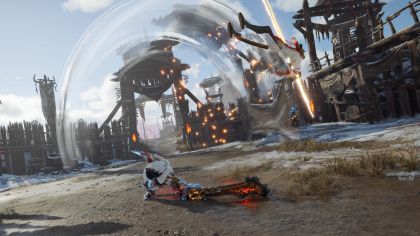
The format works well with melee combat because final circles can become chaotic and dramatic. Players clash at close range, abilities overlap, and movement becomes desperate. It can be messy, but it is rarely boring.
Solo and Team Modes Feel Very Different
Solo play in NARAKA: BLADEPOINT is intense because every mistake belongs to me. I choose when to fight, when to retreat, and how to manage resources. Duels feel personal, and winning a one-on-one encounter can be extremely satisfying.
Team modes change the experience completely. Coordination becomes more important. One player can start pressure, another can support, and another can finish a weakened enemy. Revives, ability combinations, positioning, and focus fire all matter. A good team feels powerful because the game rewards coordinated aggression.
I enjoy both styles for different reasons. Solo play tests individual skill and patience. Team play creates bigger battles and more dramatic saves. Players who enjoy communicating with friends may get the most long-term value from squads.
Visual Style Gives Every Fight a Dramatic Look
NARAKA: BLADEPOINT has a strong visual identity built around martial arts fantasy, detailed costumes, dramatic weapons, colorful effects, and atmospheric maps. The game often looks like a competitive action scene from a stylish fantasy film.
I like how cosmetics and character design support the game’s appeal. Heroes look distinct, weapons have personality, and outfits allow players to express style. In a game where close combat puts characters directly in front of each other, visual identity matters.
The effects can sometimes become busy during large fights, especially when multiple abilities and weapon attacks happen at once. Still, the overall presentation gives the game a premium, dramatic feel that helps it stand apart from more grounded battle royale titles.
Download, Install, and Play Across Supported Platforms
Players looking to download NARAKA: BLADEPOINT should use official platforms. The safest way to install the game is through trusted PC storefronts, console stores, or official platform pages connected to supported devices. This protects updates, account access, online matchmaking, purchases, anti-cheat systems, and the correct version of the game.
Since NARAKA: BLADEPOINT is known as a free-to-play title, players can usually start without buying a traditional premium game, depending on platform and region availability. Before installing, I would check supported platforms, system requirements, storage space, controller support, update size, network stability, and account settings.
Players should avoid random download pages promising special clients, free cosmetics, unlocked heroes, or shortcut installers. Official access is the safest way to play and protect your account.
Unblocked Versions Cannot Offer the Real NARAKA Experience
Searches for NARAKA: BLADEPOINT unblocked may appear because popular online games often attract shortcut pages. This game does not fit that format. It depends on a full client, official servers, matchmaking, advanced combat systems, hero data, cosmetics, anti-cheat tools, updates, and stable online performance.
An unblocked version would not be the real game. It may be a simple imitation, an unsafe page, or a misleading download using the title for attention. It cannot provide proper melee combat, official progression, ranked modes, hero abilities, cross-platform features, or real battle royale matches.
I would avoid unblocked shortcuts completely and use official platforms instead. NARAKA: BLADEPOINT is a competitive online game, and account safety matters too much to risk on unknown pages.
Cheats and Mods Can Hurt the Competitive Balance
NARAKA: BLADEPOINT naturally attracts searches for cheats and mods because players may want easier wins, unlocked cosmetics, aim assistance for ranged weapons, movement advantages, custom visuals, or altered files. This is especially risky in a competitive multiplayer game.
Cheats can ruin the experience for everyone. NARAKA works because timing, movement, awareness, and combat skill matter. If a player uses unfair tools, the duel-based structure loses trust quickly. Winning should come from better decisions and cleaner execution, not dishonest shortcuts.
Mods may also create problems if they interfere with official files, updates, anti-cheat systems, or account rules. Cosmetic curiosity is understandable, but unofficial tools can create stability, security, and account safety concerns. For most players, the official client is the best and safest way to play.
Where NARAKA: BLADEPOINT Can Feel Difficult
The biggest barrier in NARAKA: BLADEPOINT is the learning curve. New players need to understand movement, melee timing, weapon matchups, hero abilities, item use, map routes, and battle royale decision-making. That is a lot to absorb at once.
Combat can also feel punishing. A stronger player may pressure so effectively that a beginner barely understands what went wrong. This can be discouraging, especially in a game where close combat makes mistakes feel immediate and personal.
Another challenge is visual complexity. During large team fights, effects and movement can become difficult to read. Experienced players learn to process the chaos, but beginners may feel overwhelmed until they understand common abilities and weapon patterns.
Why NARAKA: BLADEPOINT Stands Out
NARAKA: BLADEPOINT stands out because it offers a battle royale experience built around movement and melee skill rather than only shooting accuracy. That difference gives it a unique place in the genre. It feels more physical, more stylish, and more duel-focused than many competitors.
I like that the game rewards practice in visible ways. Better movement means better escapes. Better timing means better counters. Better map knowledge means smarter rotations. Better hero knowledge means stronger decisions. Improvement is difficult, but it feels real.
The game also has strong spectator appeal. Fast grapples, dramatic clashes, last-second counters, and chaotic final fights are exciting to watch. Even when a match is stressful, it rarely feels visually dull.
Who Should Play NARAKA: BLADEPOINT
NARAKA: BLADEPOINT is a strong fit for players who enjoy competitive multiplayer, battle royale tension, martial arts fantasy, melee combat, hero abilities, movement systems, and skill-based duels. It is especially appealing if you want something faster and more physical than a standard shooter-focused battle royale.
I would recommend it to players who enjoy learning deep combat systems and do not mind losing while improving. It works well for both solo players and friend groups, though team modes become much better with communication.
Players who want slow tactical shooting, simple controls, or relaxed casual matches may not connect with it as strongly. But for anyone who wants stylish action, high mobility, and intense close-range competition, NARAKA: BLADEPOINT offers a distinctive and rewarding experience.