
A Legend Begins Before the Roar
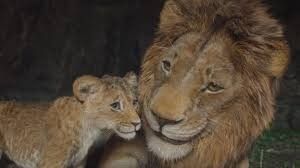
I watched Mufasa: The Lion King with a different kind of curiosity than I bring to most Disney origin stories. Mufasa already exists in my memory as a figure of dignity, wisdom, and almost mythic calm. He is the father on the cliff, the voice of responsibility, the king whose absence shapes everything that follows. Because of that, giving him a childhood is risky. A legend can lose mystery when explained too neatly. Still, this film finds its most interesting moments when it treats Mufasa not as a finished icon, but as a frightened young outsider learning how to survive before he ever learns how to lead.
What I liked most is that the movie does not begin with royal certainty. Mufasa is not born into the identity everyone later associates with him. He is separated, displaced, and forced to build himself through instinct, loyalty, grief, and observation. That gives the story an emotional path that feels different from a simple royal inheritance tale. The film asks what makes a king if bloodline is not enough, and that question gives the familiar world of The Lion King a more searching quality.
The Savanna Looks Vast Enough to Swallow a Cub
The visual world is one of the film’s most immediate strengths. The landscapes stretch wide, golden, wet, dry, shadowed, and bright in ways that make the journey feel physically large. I liked how the film uses nature not only as scenery, but as pressure. Rivers, plains, caves, storms, cliffs, and open grasslands all seem to test the characters. The world is beautiful, but it is never soft.
The photorealistic style gives the animals weight and texture. Fur catches light, paws touch dust, water glimmers, and distance feels real. Sometimes that realism can limit expressiveness, especially when characters need to sing or show heightened emotion, but the environments often compensate with scale. I felt most drawn in when the camera allowed the land itself to carry feeling. A small cub against a huge horizon tells me more about loneliness than a long speech could.
Mufasa Is Most Interesting as an Outsider
Aaron Pierre’s Mufasa has warmth and steadiness, but the character works best for me before he becomes too sure of himself. Young Mufasa is not protected by status. He has to notice, adapt, listen, and prove himself in a world that does not automatically make room for him. That outsider position gives him humility, and it helps explain the leader he eventually becomes.
I liked that his strength grows from empathy as much as courage. He is not only physically capable. He pays attention to others. He understands fear because he has lived inside it. He understands exile because he has been separated from home. That makes his later nobility feel earned rather than decorative. The film suggests that Mufasa becomes great not because destiny hands him a crown, but because hardship teaches him how much belonging matters.
Taka Gives the Story Its Sharpest Emotional Tension
Taka is the character who makes the film more than a straightforward hero’s journey. Knowing where his story will eventually lead adds tension to every moment of affection between him and Mufasa. I found that dynamic compelling because the movie lets their bond begin with real warmth. Taka is not introduced only as a future shadow. He is lonely in his own way, eager for connection, and shaped by expectations he did not choose.
Kelvin Harrison Jr. gives Taka a mixture of charm, insecurity, and buried resentment. That combination matters. The tragedy of the character is not that he begins as pure bitterness. It is that he begins as someone who wants love, recognition, and importance, then slowly becomes twisted by comparison. His relationship with Mufasa is painful because brotherhood and rivalry grow from the same soil. The film is strongest when it shows how affection can curdle when one person feels permanently second.
Sarabi Brings Intelligence and Independent Grace
Sarabi gives the journey a sharper emotional and moral balance. I appreciated that she is not treated only as a future queen or romantic figure. She has judgment, presence, and her own way of reading danger. Her strength is quieter than some of the larger personalities around her, but it is steady. She watches, evaluates, and chooses carefully.
Tiffany Boone’s performance gives Sarabi a calm confidence that contrasts well with Mufasa’s searching nature and Taka’s need for recognition. I liked how her presence complicates the emotional triangle without reducing her to a prize. She represents a kind of clarity that both young lions respond to differently. Around her, Mufasa’s integrity becomes more visible, while Taka’s insecurity becomes harder to hide.
Rafiki Turns Memory Into Storytelling
The film’s frame through Rafiki gives the story a mythic quality. I liked the idea of the past being carried through voice, memory, and lesson rather than presented as plain information. Rafiki has always felt like a keeper of meanings, and here that role becomes central. He is not just telling what happened. He is shaping the way a new generation understands where it comes from.
This storytelling frame also connects Kiara to Mufasa’s past, which gives the film a bridge between eras. The story is not only about explaining a famous king. It is about inheritance: what children hear, what families remember, and how legends become part of identity. I found that idea more interesting than a simple flashback device. Memory in this world is active. It guides the living, but it can also simplify complicated lives into symbols.
Timon and Pumbaa Add Comic Air to a Heavy Tale
Timon and Pumbaa bring the most familiar comic rhythm, and I had mixed but mostly warm feelings about their presence. On one hand, the story of Mufasa’s early life carries grief, exile, rivalry, and danger, so the humor sometimes feels like it is arriving from a different movie. On the other hand, their interruptions help prevent the film from becoming too solemn for too long.
I liked them most when their comedy felt like commentary from listeners rather than forced disruption. Their personalities are built around puncturing grandeur, and a story about the making of a legend can use that. They remind me that myth can become too polished if nobody laughs at it. Their jokes do not always land with equal force, but they give the frame story a lighter texture and help younger viewers stay connected to the emotional journey.
Kiros Makes the Journey Feel Hunted
Kiros gives the film its external danger, and Mads Mikkelsen’s voice brings a cold authority to him. I saw Kiros as less emotionally layered than Mufasa or Taka, but he serves a clear purpose. He turns the journey into something urgent. The characters are not only searching for safety or destiny; they are being pursued by a force that believes power should belong to the strongest and most ruthless.
What I found useful about Kiros is how he reflects one possible vision of leadership. He leads through fear, possession, and dominance. That makes him a contrast to the kind of leader Mufasa is becoming. The conflict is not only physical. It is philosophical. The film asks whether leadership is about taking space or making space, about control or protection, about being obeyed or being trusted.
The Music Has to Live Under a Long Shadow
The musical side of Mufasa: The Lion King faces a difficult task because the earlier Lion King songs are already deeply embedded in popular memory. I listened to the new music with that awareness. The songs have moments of energy and emotion, especially when they support travel, longing, or identity, but they are also working under the weight of comparison.
What I appreciated is that the music tries to serve this particular story rather than simply recreate the older feeling. The songs are tied to movement, discovery, and the shaping of destiny. Some numbers feel more memorable than others, but the musical approach gives the film a needed sense of rhythm. In a story built on migration, pursuit, and transformation, music helps turn distance into emotion.
The Aesthetics Are Majestic, Though Sometimes Too Restrained
The film’s photorealistic aesthetic is impressive, especially in landscapes and creature movement. I admired the technical detail: the light across fur, the dust in the air, the way bodies move through grass, and the sense of weather pressing against the animals. The world often feels tactile and grand.
At the same time, realism creates a challenge for emotional expression. Lions do not naturally emote like hand-drawn characters, and sometimes the faces feel restrained during moments that want operatic feeling. I noticed this most during musical or intensely emotional scenes. Still, the film often uses framing, voice acting, movement, and environment to compensate. When a character cannot show everything in the face, the landscape and sound often carry the emotion instead.
The Brother Story Gives the Film Its Bite
The most engaging part of the movie for me is the relationship between Mufasa and Taka. Their bond begins with rescue, gratitude, curiosity, and the hope of shared belonging. But because the audience knows Taka’s future identity, every warm scene carries a quiet ache. I found myself watching for the first signs of fracture: a glance, a hesitation, a moment where admiration becomes comparison.
This is where the movie has real dramatic value. It explores how resentment can grow inside intimacy. Taka does not become wounded because Mufasa is cruel to him. He becomes wounded because Mufasa’s goodness, courage, and natural authority make him feel smaller. That is a more painful idea. The film suggests that jealousy is not always born from hatred. Sometimes it is born from loving someone whose light makes your own insecurity impossible to ignore.
The Story Reframes Kingship as Choice
One of the ideas I liked most is that Mufasa’s greatness is separated from bloodline. He is not important because he was handed legitimacy at birth. He becomes important through choices: whom he protects, how he responds to fear, whether he chooses loyalty over pride, and whether he listens when others would command. That makes his legend feel more democratic, in a way. Leadership is not treated as a possession. It is treated as responsibility earned through action.
This reframing gives the film its emotional purpose. Mufasa’s later place in the Circle of Life becomes more meaningful when I see that he once had no secure place at all. He learns belonging before he offers it. He learns loss before he teaches wisdom. He learns vulnerability before he becomes a symbol of strength. That progression makes the origin story feel less unnecessary than it might have seemed from the outside.
The Best Scenes Let Silence Do the Work
My favorite moments are not always the loudest ones. I liked the scenes where young Mufasa observes the world, where Taka watches him with admiration mixed with unease, where Sarabi measures what kind of lion stands before her, and where the land itself seems to pause around the characters. These quieter moments give the film space to breathe.
Barry Jenkins’ direction is most visible in that sensitivity to feeling between lines. The story is still a Disney prequel with songs, comic relief, and large-scale danger, but there are times when it becomes more intimate. A look between brothers can carry more tension than a chase. A memory told to a child can feel heavier than a dramatic speech. The film’s strongest emotional language often appears when it trusts stillness.
A Familiar World With a More Complicated Past
Mufasa: The Lion King works best for me as a story about how legends are built from messy beginnings. Mufasa is remembered as noble, but the film shows him as displaced before he is revered. Taka is remembered through bitterness, but the film shows him as someone who once wanted connection. Sarabi, Rafiki, and the others help turn the journey into a wider story about found family, identity, and the painful distance between who someone is and who history says they became.
I found the film most rewarding when it complicated the old mythology rather than simply decorating it. The beauty of the savanna, the technical ambition, and the familiar Lion King atmosphere all matter, but the emotional pull comes from watching two young lions stand at the same beginning and slowly move toward very different futures. Mufasa becomes a king by learning how to protect belonging. Taka begins as a brother and slowly discovers how unbearable it can feel to live beside someone the world chooses more easily.