
A Gentle Classroom That Fits Inside a Screen
I watched the Ms Rachel YouTube channel with the expectation that it would be another colorful children’s space full of songs, smiles, and simple lessons. What I found was more intentional than that. The channel has a clear educational personality: slow speech, warm repetition, big facial expressions, direct eye contact, movement, songs, and small prompts that invite children to respond. It feels less like passive background noise and more like a carefully paced mini-classroom for babies, toddlers, and preschool learners.
What makes the channel stand out to me is the way Ms Rachel speaks to young children as if every small response matters. She pauses after questions. She repeats words with patience. She celebrates tiny attempts. She uses songs not only to entertain, but to organize learning. The result is simple on the surface, yet purposeful underneath. I can see why so many caregivers turn to it when they want screen time that feels softer, warmer, and more developmentally aware than random cartoons.
Ms Rachel Feels Like the Center of a Calm Learning Routine
Ms Rachel’s presence is the strongest feature of the channel. She has a bright, encouraging style that can seem exaggerated to adults at first, but it makes sense for the audience. Young children need clarity, repetition, and expressive cues. Her wide smiles, musical voice, and deliberate pacing create a predictable rhythm that toddlers can follow.
I like that she does not rush through material. A word can be repeated several times. A gesture can be shown slowly. A song can return in different forms. That repetition gives children time to process what they hear and see. It also gives caregivers a model for how to speak, sing, and play with children away from the screen. The channel works best when it becomes a bridge into real interaction rather than a replacement for it.
The Educational Style Is Built Around Participation
One thing I noticed quickly is that Ms Rachel often talks as if the child is in the room with her. She asks questions, waits, responds warmly, and invites imitation. That interactive style is important because very young viewers are not only watching a story unfold. They are practicing sounds, gestures, attention, and simple social routines.
The channel often focuses on first words, nursery rhymes, animal sounds, colors, numbers, phonics, social skills, and everyday concepts. I like how these topics are presented through small, memorable pieces rather than long explanations. A toddler does not need an abstract lesson about language development. A toddler needs a clear word, a face saying it, a reason to repeat it, and a happy response when they try. Ms Rachel’s format understands that.
The Visual Aesthetic Is Simple, Bright, and Purposeful
The channel’s aesthetics are not flashy in the way many children’s videos are. The backgrounds are usually clean, the colors are friendly, and the focus stays on faces, gestures, toys, puppets, and learning objects. I appreciate that restraint. For toddlers, too much visual chaos can make it harder to focus on language. Ms Rachel’s videos often keep the important element clear: a word, an object, a movement, or a face.
The visual style also feels personal rather than industrial. It does not look like a giant fictional world designed only to hold attention. It feels closer to a playroom, music class, or early learning session. That handmade warmth is part of the appeal. The channel’s softness makes it easier to understand why parents may feel comfortable with it, especially compared with louder content that seems designed only for endless scrolling.
The Songs Make Learning Feel Familiar
Music is one of the channel’s strongest tools. Songs create structure, and young children respond well to structure they can predict. When a melody returns, the child knows what might happen next. That predictability can make participation easier. I liked how the songs often combine language, movement, rhythm, and emotional warmth at the same time.
Nursery rhymes, original songs, movement songs, and learning songs all serve a clear function. They help children practice words, gestures, body awareness, turn-taking, and listening. A simple tune can carry a color lesson, a counting moment, or a social phrase. The music also gives caregivers something portable. A song learned from the channel can be used later during diaper changes, meals, car rides, playtime, or bedtime routines.
The Puppets Add Friendly Variety
The puppets and supporting characters give the channel variety without pulling attention too far from the learning goal. I like how they create small social scenes where children can watch greetings, feelings, questions, and simple problem-solving. Puppets can make a lesson feel less direct and more playful, which is useful for toddlers who learn through pretend interaction.
They also help break up the pacing. A video built only around direct instruction could become tiring, even with a warm teacher. The puppets add surprise, humor, and little emotional shifts. They make the channel feel like a small community rather than a single adult presenting information. That community feeling matters because early learning is social at its core.
The Channel Understands Caregivers as Part of the Audience
Although the videos are made for young children, I felt that caregivers are quietly being taught too. Ms Rachel models how to slow down, repeat words, use gestures, celebrate attempts, and turn ordinary moments into language practice. That is one of the channel’s most useful qualities. It does not only occupy a child. It gives adults ideas.
I can imagine a parent watching and thinking, “I can do that during play.” A simple phrase, a pause, a song, or a gesture can become part of daily life. That makes the channel more valuable than content that ends when the screen turns off. The best children’s media gives families tools they can reuse, and Ms Rachel’s videos often do exactly that.
The Main Appeal Is Emotional Safety
For me, the emotional tone is just as important as the educational content. Ms Rachel’s channel feels safe, patient, and encouraging. There is very little pressure. Mistakes are not framed as failure. Children are invited to try, copy, listen, move, and sing at their own pace. That tone is powerful for early learners because confidence grows through repetition and positive response.
The channel also has an inclusive feeling. Different children learn at different speeds, and the videos seem designed with that in mind. The pacing, clear pronunciation, gestures, songs, and repeated prompts can be especially appealing to families interested in speech development and early communication. I like that the channel makes learning feel warm rather than competitive.
The Functionality Works Best With Adult Involvement
As a YouTube channel, Ms Rachel is easy to access, which is both a strength and a responsibility. The videos can be long enough to support a learning session, but I think they work best when adults stay nearby and participate. The pauses and prompts are more meaningful when a caregiver repeats them, answers with the child, or turns the video into a shared activity.
I would not treat the channel as a magic solution or a full replacement for real conversation, outdoor play, reading, or face-to-face interaction. Its best functionality is as a guided support. It can introduce songs, model language strategies, and create a calm learning rhythm. Then the caregiver can carry that rhythm into the real world, where children learn most deeply through responsive human connection.
The Pacing Feels Designed for Little Attention Spans
The pacing is one reason the channel works so well for its audience. It moves slowly enough for toddlers to follow, but it changes activities often enough to keep interest alive. A song may lead into a word practice, then a puppet moment, then a movement prompt, then another song. That variety helps maintain attention without relying only on loud visual stimulation.
I also like the way the channel repeats familiar elements across videos. Children often love repetition because it gives them a sense of mastery. When they recognize a song or phrase, they can join in with more confidence. Adults may crave novelty, but toddlers often thrive on familiar patterns. Ms Rachel’s videos respect that developmental truth.
The Channel’s Aesthetic Is More Human Than Algorithmic
Many children’s channels feel built around speed, brightness, and constant novelty. Ms Rachel feels different because the main attraction is a human face communicating clearly. That may sound simple, but it changes the experience. The channel is not only trying to capture attention. It is trying to create a relationship-like learning rhythm through the screen.
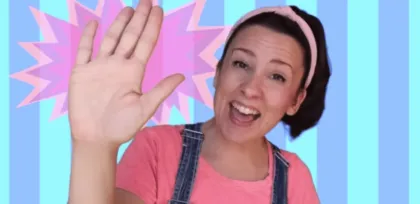
I think this is why the channel has become so recognizable. The pink headband, friendly voice, repeated songs, and direct teaching style all form a clear identity. Children know what kind of experience they are entering. Parents know what kind of tone to expect. That consistency is a major strength in a crowded children’s media space.
Where the Channel Is Most Useful
I see Ms Rachel as especially useful for families who want support with early words, imitation, gestures, nursery rhymes, simple concepts, and shared singing. It can be helpful during moments when a caregiver wants educational screen time that feels slower and more intentional than many alternatives. It can also be a source of ideas for play-based language practice.
The channel is less suited to being left on endlessly in the background. Its design invites interaction, and without that interaction, some of its value is lost. I think the best way to use it is intentionally: choose a video, sit with the child when possible, sing along, repeat key words, then use the same phrases later during real play. That turns the screen from a babysitter into a starting point.
The Reason It Connects With Families
What stays with me most about the Ms Rachel YouTube channel is its sincerity. It does not feel embarrassed to be gentle. It does not hide its educational purpose behind frantic entertainment. It believes that young children deserve patience, warmth, music, repetition, and direct encouragement. That belief shapes every part of the channel’s identity.
I understand why families respond to it. The channel offers something many parents are searching for: content that feels caring, clear, and useful. It gives toddlers songs to sing, words to try, gestures to copy, and friendly faces to follow. It gives caregivers a model for interaction. Most importantly, it treats early learning as a shared emotional experience, where the smallest sound, wave, or attempted word can feel like a real achievement.