
A Mind Under Renovation
I watched Inside Out 2 with the feeling that Pixar had returned to one of its most delicate ideas: turning invisible emotions into characters without making the inner life feel too simple. The first film made childhood feelings visible through Joy, Sadness, Anger, Fear, and Disgust. This sequel moves into a more unstable stage, where Riley is no longer only learning what she feels. She is beginning to wonder who she is supposed to become.
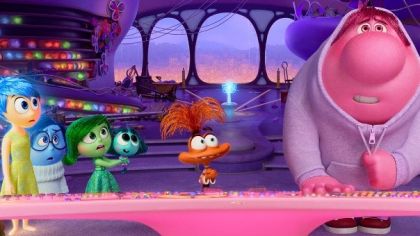
That shift gives the movie a more nervous energy. The headquarters inside Riley’s mind is no longer a colorful command room with familiar routines. It becomes a place under renovation, crowded with new alarms, new expectations, and new emotional voices. I liked that the film does not treat growing up as a clean upgrade. It feels more like a system update that arrives overnight, changes all the buttons, and refuses to explain the manual.
Riley Feels Older Before She Fully Understands It
Riley is still recognizable, but she carries herself differently now. She is more aware of how people see her, more sensitive to social signals, and more eager to become someone impressive. I liked how the film captures that awkward middle place where a child has not disappeared, but a teenager has begun to form. Riley is not suddenly mature. She is in transition, and transition is messy.
Her hockey ambitions give the story a useful external shape, but the real drama is internal. Riley wants to belong. She wants to be valued. She wants older girls to see her as capable. She wants her friends to remain close, but she also feels the pull of a larger social world. That tension felt honest to me. The movie understands that adolescence is not only about mood swings. It is about the frightening discovery that identity can feel like something you have to perform.
Anxiety Enters Like a Manager With Too Many Charts
Anxiety is the sequel’s smartest new emotional character. She does not arrive as a simple villain. She arrives as someone who believes she is helping. That is what makes her so effective. She is energetic, organized, persuasive, and convinced that disaster can be avoided if every possible outcome is controlled in advance.
I found Anxiety funny because she behaves like a frantic project manager inside Riley’s head. She has plans, projections, strategies, and endless concern. But I also found her painfully familiar. The film captures how anxiety can disguise itself as preparation. It says, “I am protecting you,” while quietly taking over every decision. That makes the conflict more interesting than a basic battle between good and bad feelings. Anxiety is wrong in how far she goes, but her motivation is understandable.
Joy Learns That Positivity Cannot Run Everything
Joy remains central, but Inside Out 2 gives her a more complicated challenge. In the first film, she had to understand the value of Sadness. Here, she has to confront the limits of forcing Riley into a positive self-image. I liked that the sequel does not let Joy become perfectly wise after one earlier lesson. Growth does not work that way. Even after learning something important, people can still repeat old habits in new forms.
Joy wants Riley to believe she is a good person, and that desire is tender. But the film gradually shows that identity cannot be built only from pleasant memories and flattering beliefs. Riley needs a self that can hold mistakes, jealousy, embarrassment, ambition, fear, and doubt. Joy’s struggle gives the movie emotional maturity. She is not asked to disappear. She is asked to make room.
Sadness Is Quietly Essential Again
Sadness does not need to dominate the story to matter. I liked how her presence continues to remind the film that uncomfortable emotions can be useful. Sadness notices pain without trying to decorate it. She accepts vulnerability more naturally than Joy does, which makes her valuable in a mind that is becoming more complex.
In Inside Out 2, Sadness feels like the emotional character most comfortable with imperfection. She does not panic when Riley feels low or uncertain. She understands that not every difficult feeling is a crisis to be solved immediately. That makes her quietly wise. The film’s world is louder this time, with more emotions competing for control, but Sadness still brings a softness that the story needs.
Embarrassment, Envy, and Ennui Add New Social Weather
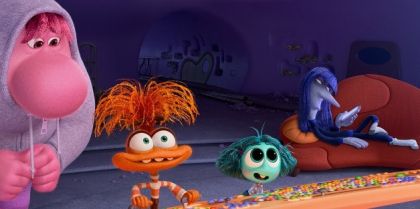
The new emotions work because they reflect the social complexity of adolescence. Embarrassment is large, gentle, and painfully relatable. He captures that feeling of wanting to vanish after a social misstep, when the body seems too visible and every small mistake feels enormous. I liked the choice to make him physically huge and emotionally shy. It turns a familiar teenage feeling into a perfect visual joke.
Envy adds another sharp little current. She is not only about wanting what others have. She is about comparison, admiration, insecurity, and the sudden belief that someone else has already figured out life better than you have. Ennui, meanwhile, brings a lazy, detached coolness that feels especially accurate. She represents the performance of not caring, which is often just another way of caring too much while pretending not to.
The Visual Design Makes the Mind Feel Busier
The aesthetics of Inside Out 2 are bright and inventive, but what I appreciated most is how the design reflects psychological change. Riley’s mind is no longer only a place of islands, memories, and command panels. It feels more layered, crowded, and unpredictable. New systems appear because Riley’s inner world is developing faster than the original emotions can manage.
I liked the visual metaphor of construction and reorganization. Puberty does not arrive politely. It changes the architecture. The film turns that idea into moving walls, new controls, altered pathways, and strange zones of memory and imagination. The world inside Riley’s head still has playful beauty, but it also feels less stable. That instability matches the story’s emotional subject perfectly.
The Hockey Camp Setting Gives the Inner Conflict a Sharp Edge
The hockey camp plot works because it places Riley under social pressure in a focused way. She is not only playing a sport. She is auditioning for a version of herself that she thinks might be more impressive. I liked how the film uses the camp to show the conflict between loyalty and ambition. Riley wants to stay connected to her friends, but she also wants to be accepted by older, cooler players.
This setting gives Anxiety plenty of room to operate. Every conversation becomes a possible test. Every choice can be interpreted as a step toward success or failure. Every small social signal becomes evidence. That felt accurate to me. In adolescence, ordinary situations can become emotionally loaded because the stakes seem attached to identity itself. The movie captures that pressure without making Riley seem foolish for feeling it.
The Humor Comes From Emotional Accuracy
Inside Out 2 is funny because it recognizes inner chaos so precisely. The jokes do not only come from colorful characters running around a control room. They come from the absurdity of how the mind reacts to pressure. A tiny comment can trigger a full emergency. A casual glance can become a case file. A possible future can multiply into dozens of imaginary disasters before anything has actually happened.
I enjoyed how the film turns mental habits into physical comedy. Anxiety operating too many controls, Ennui barely moving while changing the room’s mood, Embarrassment hiding in plain sight, and Joy trying to stay upbeat while everything goes wrong all create humor from recognition. I laughed because the exaggeration felt true. The movie makes the inside of a teenage mind look ridiculous, but never stupid.
The Main Characters Clash Because They All Want to Help
One of the film’s strengths is that most of the emotional characters believe they are serving Riley. Joy wants happiness. Anxiety wants protection. Sadness wants honesty. Anger wants fairness. Fear wants safety. Disgust wants social defense. Envy wants improvement. Embarrassment wants retreat from exposure. Ennui wants distance from intensity. None of these impulses are meaningless.
That makes the story richer. The problem is not that some emotions are unnecessary. The problem is imbalance. When Anxiety takes over, Riley’s life narrows around prevention and performance. When Joy tries to control Riley’s self-image too tightly, the truth gets edited. The film’s emotional intelligence comes from showing that a healthy mind needs many feelings, even the ones that are inconvenient.
The Sense of Self Is the Film’s Best Idea
The most compelling concept in Inside Out 2 is Riley’s sense of self. I loved how the movie visualizes identity as something built from memories, beliefs, and repeated emotional messages. It makes the abstract idea of self-image feel tangible. Riley’s mind is not only storing events. It is turning those events into statements about who she is.
That idea gives the sequel real depth. Adolescence often involves rewriting the story you tell yourself about yourself. Riley begins to form beliefs based on approval, comparison, and fear of rejection. The film shows how dangerous it can be when one anxious belief starts to dominate everything: I am not good enough. That line lands because it is simple, direct, and devastatingly common.
The Voice Performances Keep the Emotions Distinct
The voice performances give the emotional characters their texture. Joy remains bright and quick, but with more strain underneath. Anxiety has a rapid, breathless energy that makes her both funny and exhausting. Sadness keeps her slow, soft honesty. Anger, Fear, and Disgust continue to bring familiar comic rhythms, while the new emotions add fresh tonal colors.
I especially liked how Anxiety’s performance avoids making her purely annoying. She is intense because she is scared. She is controlling because she sees danger everywhere. That nuance matters. The film needs the audience to understand why Riley’s mind might listen to her. Anxiety sounds prepared, responsible, and urgent. That is exactly how she gains power.
The Movie Respects Teen Feelings Without Mocking Them
Inside Out 2 could have treated adolescence as a collection of jokes about moodiness, but it takes Riley seriously. It finds humor in her reactions, yet it does not dismiss them. Wanting to be liked, fearing exclusion, craving excellence, and worrying about the future may look dramatic from the outside, but they feel enormous from within. The movie respects that scale.
I appreciated that Riley’s mistakes are shown with compassion. She makes choices that hurt her friendships and distort her own values, but the film understands why. She is trying to manage fear with limited tools. She is trying to grow quickly enough to meet imagined expectations. That makes her painful moments more moving. The story does not shame her for struggling. It shows how struggle can reshape a person from the inside.
The Strongest Scenes Feel Like Emotional Weather Changing
My favorite scenes are the ones where Riley’s inner and outer worlds shift at the same time. A conversation at camp, a hockey decision, a moment of social pressure, or a sudden wave of panic becomes visible both on Riley’s face and inside headquarters. That dual structure remains the franchise’s great invention. It lets the audience see behavior and feeling together.
The sequel uses that device with more complexity than I expected. Riley is not just happy, sad, angry, or scared. She is often several things at once. She wants to impress someone while missing her friends. She wants to be honest while hiding her fear. She wants to succeed while losing touch with why she loved the game in the first place. The film captures that layered emotional weather with impressive clarity.
A Sequel About Making Room Inside Yourself
What I found most meaningful in Inside Out 2 is its refusal to choose one perfect emotion or one perfect version of Riley. The film’s deeper message is that identity has to be large enough to hold contradiction. Riley can be kind and selfish, brave and scared, talented and insecure, loyal and tempted by approval. None of those pieces alone defines her completely.
That is why the movie feels emotionally honest to me. Growing up is not only about becoming better. It is about becoming more complicated and learning not to reject the parts of yourself that are uncomfortable. Inside Out 2 turns that process into bright animation, clever comedy, and a story that understands how loud the inside of a person can become when the question changes from “What do I feel?” to “Who am I?”