
A Familiar Flight Rebuilt With Real Wind Under It
I watched How to Train Your Dragon (2025) with a strange mixture of affection and suspicion. The animated version already had such a strong emotional identity that a live-action reimagining seemed risky from the start. I did not want a polished copy that only repeated famous moments with heavier textures and more realistic scenery. I wanted the film to justify its own existence by making Berk, Hiccup, Toothless, and the bond between humans and dragons feel physically present in a new way.
What surprised me is how sincere the movie feels. It does not treat the original story as a puzzle to modernize beyond recognition. It approaches it like a legend being retold around a different fire. The structure is familiar, but the surfaces have changed: the rocks look colder, the village feels heavier, the dragons carry more weight, and Hiccup’s outsider status feels more exposed when placed among real bodies, real mud, and real Viking architecture.
Berk Feels Like a Place Built by Stubborn People
The island of Berk is one of the film’s greatest strengths. In animation, Berk had bold shapes and storybook ruggedness. Here, it feels rougher, wetter, and more physically demanding. I liked the sense that every building has had to argue with the weather before standing upright. Wooden beams, stone paths, smoky interiors, heavy doors, and cliffside views all make the village feel like a community shaped by constant pressure.
The aesthetics are grounded without becoming dull. Berk still has a mythic personality, but it also feels like a place where people work, train, eat, argue, repair damage, and prepare for danger as part of daily life. That texture helps the story. Hiccup’s difference becomes more visible when the world around him is so committed to strength, noise, tradition, and toughness. He does not simply look smaller than the others. He seems tuned to another rhythm entirely.
Hiccup’s Awkwardness Becomes the Film’s Quiet Engine
Mason Thames gives Hiccup a nervous intelligence that works well in live action. I liked that his Hiccup does not feel like a generic young hero waiting for confidence to arrive. He is observant, restless, insecure, and painfully aware that he does not match the version of Viking strength everyone around him respects. His humor feels defensive, as if he is trying to speak quickly enough to hide how often he feels unwanted.
What makes Hiccup compelling is not that he is weak. It is that his strengths are invisible in a culture that values louder skills. He notices patterns. He builds. He questions. He hesitates before accepting inherited fear as truth. In a village that treats dragons as enemies by default, his ability to pause becomes radical. I enjoyed watching the film make that pause meaningful. Hiccup’s courage begins not with domination, but with curiosity.
Toothless Is Still the Soul of the Story
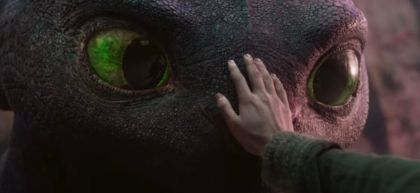
Toothless is the character the film absolutely needs to get right, and for me, he remains the emotional center. The design keeps his recognizable silhouette and feline-doglike expressiveness while giving him enough physical presence to belong in live-action environments. I liked that he feels powerful without losing playfulness. He can be mysterious, wary, and dangerous in one moment, then funny and oddly tender in the next.
The early scenes between Hiccup and Toothless are the most important parts of the movie because they show trust forming without easy language. The film understands that their bond should not be rushed. A glance, a step backward, a shared meal, a drawing in the dirt, or a hesitant reach can carry more emotion than a speech. I found those quiet exchanges more moving than the larger spectacle because they reveal the story’s central idea: understanding begins when fear loses its grip.
Astrid Brings Sharpness to the Training Ground
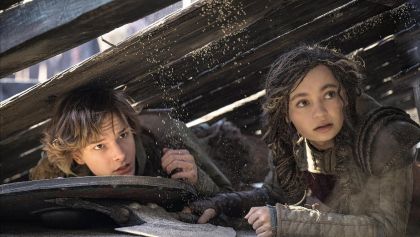
Nico Parker’s Astrid gives the film a strong counterweight to Hiccup. She is focused, disciplined, and serious about proving herself. I appreciated that she is not softened too quickly. Her skepticism toward Hiccup makes sense in the world she has been raised in. Berk rewards combat skill and loyalty to the tribe’s traditions, and Astrid has worked hard to succeed within those rules.
Her dynamic with Hiccup becomes interesting because she represents the respect he wants and the worldview he must challenge. She is not wrong to be cautious. She has been taught that dragons are a threat, and she has reasons to value order. What I liked is how the film lets her intelligence adapt. Once she sees evidence that the old story is incomplete, she is capable of changing. That makes her more than a romantic figure. She becomes part of the moral shift the film is building toward.
Stoick Carries Love Like a Heavy Shield
Gerard Butler returning as Stoick gives the film a useful sense of continuity, but the live-action format makes the character’s physical and emotional weight feel different. Stoick is enormous in presence, not only because he is strong, but because he carries the burden of leadership like armor he cannot remove. I found his scenes with Hiccup especially effective because they are full of love that has trouble finding the right shape.
Stoick wants to protect his people and prepare his son for a dangerous world. The problem is that he cannot imagine Hiccup’s difference as strength at first. That failure hurts because it comes from fear, not lack of affection. I liked how the movie lets their relationship remain complicated. Stoick is not simply an obstacle. He is a father whose expectations have been built by loss, duty, and a lifetime of conflict. His love is real, but it has been trained to speak in commands.
Gobber Adds Humor Without Breaking the Spell
Gobber brings a rough comic warmth to the village. Nick Frost gives him a practical, slightly chaotic energy that fits Berk’s workshop-and-training culture. I liked that Gobber can be funny without making the world feel less serious. He belongs to this place. His jokes feel like the kind of humor people develop when danger is normal and emotional honesty is not always easy.
He also helps bridge Hiccup’s two identities: inventor and Viking. Gobber understands tools, repairs, improvisation, and the odd usefulness of a mind that does not follow the obvious path. His presence makes Hiccup’s inventiveness feel rooted in the village rather than completely separate from it. That matters because the story is not about Hiccup rejecting Berk entirely. It is about Berk learning that survival may require a new kind of thinking.
The Dragons Feel Like Creatures With Their Own Logic
The dragon designs are one of the biggest tests for the film’s aesthetics. If they looked too realistic, they could lose the charm that made the original world so inviting. If they looked too cartoonish, the live-action setting would collapse around them. I think the movie finds a workable middle ground. The dragons have scale, texture, and animal presence, but many still keep the colorful personality of the animated designs.
I enjoyed how different species suggest different behaviors rather than functioning as interchangeable flying threats. The dragons feel like creatures with instincts, habits, fears, and personalities. That variety helps the film’s central argument. Once the dragons stop being a faceless danger and become living beings with patterns that can be understood, the old Viking worldview begins to crack. The visual design supports the emotional shift.
The Flying Scenes Turn Trust Into Motion
The flight sequences are where the movie earns its sense of wonder. I liked the physical feeling of wind, height, speed, and risk. In live action, flying with Toothless has a different texture. It feels less like a purely animated dream and more like a dangerous partnership between two bodies learning to move as one.
The best flight scenes are not only pretty. They are emotional. Hiccup and Toothless do not simply travel through the air; they communicate through balance, timing, and mutual dependence. Every successful turn feels like trust made visible. I appreciated that the film allows awe to build from cooperation. The sky becomes the place where Hiccup’s difference finally looks like freedom instead of failure.
The Score Carries Old Memory Into a New Shape
The music has a difficult job because the original score is so closely tied to the identity of this story. I listened for whether the film would lean on that memory too heavily or ignore it too much. What worked for me was the way familiar musical emotion returns as part of a larger live-action texture. The themes still lift the story, but the surrounding sound design adds more grit, air, and physical atmosphere.
The music gives Berk grandeur, the dragons mystery, and Hiccup’s journey a sense of aching possibility. I especially liked how the quieter moments are allowed to breathe. The score does not need to push every feeling to the front. Sometimes it simply supports the silence between Hiccup and Toothless, letting the audience sense the bond forming before the characters fully understand it themselves.
The Live-Action Format Changes the Emotional Temperature
The biggest difference in this version is not only visual realism. It is emotional temperature. Live action makes the village traditions feel heavier and the conflict with dragons more immediate. When people speak about fear, protection, and survival, the words land with a different weight. I felt the pressure on Hiccup more sharply because his awkwardness exists among real faces and physical spaces.
At the same time, live action removes some of the effortless elasticity of animation. Certain comic beats feel different, and some exaggerated designs have to work harder to fit the world. But the trade-off brings its own rewards. The bond between Hiccup and Toothless gains a tactile quality. The island feels colder. The training arena feels more dangerous. The final emotional turns feel like they happen inside a community that has truly been forced to change.
The Story Still Works Because It Is About Listening
What makes How to Train Your Dragon endure for me is not simply the dragons, the flights, or the Viking setting. It is the idea that fear can become tradition when nobody questions it. Hiccup’s gift is not brute force. His gift is attention. He watches closely enough to see that the enemy is not what everyone claims. That lesson still feels powerful in this 2025 version.
The film’s main conflict is built around inherited certainty. Berk believes it knows what dragons are. Stoick believes he knows what his son must become. Astrid believes strength looks a certain way. Hiccup believes, at first, that acceptance requires becoming someone else. The story becomes moving when each of those beliefs is tested. The live-action version may be familiar, but its emotional core remains strong because the act of listening still feels brave.
A Remake That Finds Its Best Moments in Sincerity
I found How to Train Your Dragon (2025) most effective when it stopped trying to prove that it was bigger and simply trusted the tenderness of the original story. Hiccup reaching toward Toothless, Astrid reconsidering what she has been taught, Stoick struggling to understand his son, and Berk slowly facing a new truth are the moments that give the movie its force.
The spectacle matters, and the flying scenes deliver the scale I wanted, but the reason I stayed engaged was simpler. I cared about a boy who feels wrong for his world and a dragon who has every reason not to trust him. Their bond turns the film from a fantasy adventure into a story about empathy as a form of courage. In this version, the wings are larger, the cliffs are rougher, and the village feels more solid, but the heart of the story still begins in the quiet space between fear and understanding.