
A Christmas Accident That Turns a House Into a Kingdom
I have always liked Home Alone because it begins with a fantasy that almost every child understands: what if the entire house belonged only to me? No adults, no siblings, no rules shouted from another room, no crowded family chaos pressing from every side. At first, Kevin McCallister’s situation feels like a wish granted by accident. He wakes up alone, realizes nobody is there to tell him what to do, and suddenly the family home becomes his private world.
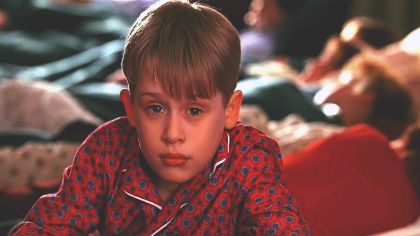
What makes the movie last beyond that simple premise is how quickly freedom changes shape. At first, Kevin enjoys the silence, snacks, television, and independence. Then the house begins to feel too large. The quiet becomes less funny. The empty rooms start to carry the weight of the family he thought he wanted to escape. That emotional turn gives Home Alone its warmth. It understands that children can crave independence and still need love with equal intensity.
Kevin McCallister Is Mischievous, Smart, and Deeply Lonely
Kevin works as a main character because he is not written as a perfect innocent. He is rude, dramatic, stubborn, and frustrated before the family leaves. I like that the film lets him be difficult. His anger makes sense because he feels overlooked in a crowded household where everyone seems too busy to hear him properly. He wants respect, space, and recognition, even if he expresses those needs in the messy way a child often does.
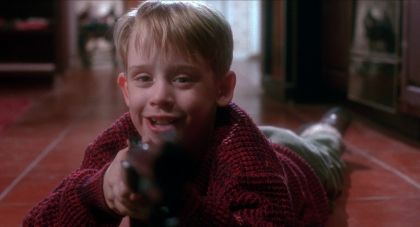
Once he is alone, Kevin becomes both funnier and more vulnerable. He performs adulthood with cereal, shopping bags, aftershave, and exaggerated confidence. I enjoy watching him imitate grown-up behavior because he only understands its surface. He can walk through a grocery store like a serious little man, but he is still scared by the basement, uncertain about strangers, and aching for his mother by night. That contrast makes him memorable. He is clever enough to protect his home, but young enough to need comfort.
The McCallister House Feels Like a Character
The house is one of the film’s strongest elements. It is warm, large, decorated, and full of spaces that can become funny, cozy, or threatening depending on Kevin’s mood. I like how familiar it feels after only a short time. The stairs, kitchen, bedrooms, basement, attic, front door, windows, and hallway all become part of the movie’s rhythm.
At first, the home is overcrowded and noisy. After the family leaves, the same rooms become a playground. Later, when danger approaches, the house turns into a fortress. That transformation is satisfying because the space is clear and readable. I always know where Kevin is, where the intruders are, and how each room can be used. The film turns domestic architecture into comic strategy. A staircase, a doorknob, a toy, and a patch of ice all become part of Kevin’s imagination.
The Aesthetics Make Christmas Feel Warm and Slightly Dangerous
Home Alone has one of my favorite holiday looks because it does not treat Christmas only as sparkle. The decorations are rich, bright, and cozy, but there is also a winter chill around the edges. The snow, dark streets, glowing windows, church scenes, and evening shadows create a world that feels festive and lonely at the same time.
The color palette is especially memorable. The McCallister home is full of reds, greens, golds, and warm lamps, while the outside world feels colder and bluer. That contrast mirrors Kevin’s emotional state. The house is safety, memory, and family, even when he thinks he is happy to have it to himself. The streets beyond it carry mystery and risk. The movie’s aesthetics make Christmas feel like both comfort and challenge.
Harry and Marv Are Threatening Because They Are Also Ridiculous
Harry and Marv work because they are just dangerous enough to create tension and just foolish enough to belong in a family comedy. I enjoy their partnership because it has a strange rhythm. Harry thinks he is the brains of the operation, while Marv has a clumsy confidence that constantly makes things worse. Together, they bring a comic threat that never becomes too heavy for the film’s tone.
Their presence also changes how I see Kevin. Before they arrive, he is a child enjoying accidental freedom. Once he understands that his home is being targeted, he becomes focused and inventive. The movie does not turn him into a superhero. It turns him into a child who knows his own house better than the adults trying to enter it. That gives the conflict its charm. Kevin wins through observation, planning, and the creative misuse of ordinary objects.
The Comedy Is Built on Timing, Pain, and Perfect Escalation
The slapstick in Home Alone remains famous because it is staged with remarkable clarity. The humor comes not only from the traps themselves, but from anticipation. I know something is waiting. Harry or Marv does not. The camera gives just enough information to let the joke build before impact. That rhythm makes the physical comedy feel almost musical.
I also like how each trap reflects Kevin’s childlike imagination. He does not design elegant security systems. He uses toys, ornaments, paint cans, hot surfaces, sticky materials, slippery steps, and household clutter. The setups feel like the ideas of a clever child who has watched too many movies and knows every corner of his home. The comedy escalates because Harry and Marv keep underestimating him, and their pride becomes part of the joke.
Catherine O’Hara Gives the Movie Its Emotional Spine
Kevin’s mother, Kate, is essential to why the film feels warm instead of merely silly. Her panic, guilt, and determination give the story a parent’s emotional perspective. I like that the movie does not let the family’s mistake feel casual. Kate knows something terrible has happened, and her urgency creates a counterweight to Kevin’s comic adventure at home.
Catherine O’Hara plays her with a mix of anxiety, exhaustion, anger, and fierce love. Her journey back to Kevin gives the film its heartbeat. While Kevin learns that being alone is not as perfect as he imagined, Kate is learning the horror of realizing that love did not prevent a serious mistake. Their separation creates the emotional tension that makes their eventual reunion matter.
Old Man Marley Gives Fear a Human Face
Old Man Marley is one of the film’s quietest but most meaningful pieces. At first, Kevin sees him through rumor and imagination. He becomes a scary neighborhood figure because children fill gaps in knowledge with dramatic stories. I liked how the movie uses Marley to show Kevin’s emotional growth. As Kevin becomes more independent, he also becomes more capable of questioning the fears he has accepted from others.
The church conversation between Kevin and Marley is one of the film’s most tender moments. It slows the story down and gives both characters loneliness to share. Marley is not a monster from neighborhood gossip. He is a person carrying family pain. Kevin listens, offers simple advice, and in doing so becomes more mature than he was at the start. That scene gives the movie emotional depth beyond the central comedy.
The Music Makes the Story Feel Like a Holiday Fable
John Williams’ score gives Home Alone a sense of magic that the plot alone could not create. The music carries wonder, mischief, fear, and tenderness without pushing too hard. I especially like how the score makes the house feel enchanted. Kevin’s ordinary surroundings become part of a Christmas fable, where a child’s fear and courage are both larger than life.
The music also helps balance the film’s tones. The story shifts from family chaos to comedy, loneliness, suspense, slapstick, and sentiment. The score ties those moods together. It gives the movie a bright holiday identity while allowing moments of quiet sadness to breathe. Without that music, the film would still be funny, but it would not feel nearly as timeless.
The Family Chaos Feels Loud Because It Is Honest
The opening family scenes are hectic, crowded, and almost overwhelming. Everyone is talking, packing, eating, arguing, and preparing for travel. I like how stressful those scenes feel because they establish why Kevin feels invisible. He is surrounded by relatives, yet he still feels alone before he is actually alone.
The film does not pretend the McCallisters are a perfect family. They snap at each other, misunderstand each other, and let frustration spread too quickly. That messiness makes the emotional arc more believable. Kevin’s wish for them to disappear comes from a real feeling, even if he does not understand its meaning. He wants the noise gone, but he does not yet know how much love was hidden inside that noise.
The Pacing Knows When to Play and When to Pause
Home Alone moves with excellent comic rhythm. The early chaos is fast, Kevin’s first solo day feels playful, the loneliness creeps in gradually, and the final home-defense sequence arrives after enough setup to feel earned. I appreciate that the movie does not rush immediately into traps. It spends time letting Kevin enjoy, fear, and understand his independence.
Those pauses are important. Watching Kevin shop, decorate, eat, talk to himself, and test his freedom gives the film texture. The story is not only about defending the house. It is about what solitude does to a child’s imagination. Sometimes it makes him bold. Sometimes it makes him scared. Sometimes it makes him finally appreciate the family he thought was only in the way.
Why the Movie Still Feels So Rewatchable
Home Alone remains rewatchable for me because it works on several levels at once. As a child’s fantasy, it offers independence, mischief, and victory over adults who underestimate him. As a holiday film, it offers warmth, snow, music, decorations, and family reunion. As a comedy, it delivers carefully staged physical gags. As a coming-of-age story, it shows Kevin learning that freedom without connection can become lonely very quickly.
The film’s charm comes from that balance. It is silly without being empty, sentimental without becoming lifeless, and festive without ignoring sadness. Kevin’s adventure is funny because it is exaggerated, but it feels lasting because the emotions are simple and true. He wants to be taken seriously. He wants to feel brave. He wants his home to be safe. Most of all, he wants the family noise back once he understands what silence really means.