A VR Game Where Movement Is the Whole Point
Gorilla Tag is one of those games that sounds almost too simple until I actually understand why people love it. The premise is direct: move like a gorilla, chase other players, avoid being tagged, and use your arms to launch yourself through maps. There are no complicated weapons, no huge story campaign, and no long tutorial wall. The game is built around movement, and that movement is what makes it special.
What makes Gorilla Tag stand out is how physical it feels. Instead of pressing a stick to walk normally, I use arm motion to push, climb, jump, swing, and scramble across the environment. The result feels awkward at first, then strangely natural, then genuinely addictive. Once the rhythm clicks, even moving from one tree to another can feel satisfying.
For players looking to download, install, and play a VR multiplayer game across supported platforms, Gorilla Tag offers a very clear hook. It is social, energetic, skill-based, funny, and easy to understand. The challenge is not learning a hundred systems. The challenge is learning how to move better than everyone chasing you.
The First Few Minutes Feel Completely Ridiculous
My first impression of Gorilla Tag was less graceful athlete and more confused monkey sliding into a wall. That is part of the charm. The movement system does not feel like traditional video game locomotion, so the first minutes are full of mistakes. I pushed too hard, missed ledges, bounced in the wrong direction, and watched more experienced players fly past me like they had discovered a different law of physics.
That early awkwardness is important because improvement becomes very visible. After a few sessions, I started understanding how to angle my arms, how to build speed, how to climb more efficiently, and how to recover from bad jumps. The game rewards practice in a way that feels physical rather than abstract.
Gorilla Tag is at its best when the player stops thinking about controls and starts thinking about momentum. Once movement becomes instinctive, the maps turn into playgrounds, and every chase becomes a test of rhythm, timing, and confidence.
The Tag Format Works Because Everyone Understands It
Tag is one of the simplest games in the world, and Gorilla Tag benefits from that universal clarity. I do not need a complicated explanation. Someone is chasing, someone is escaping, and contact changes the situation. That simplicity lets the VR movement become the star.
I like how the game turns a childhood playground idea into a full multiplayer VR experience. Running away feels tense because my body is involved. Chasing feels exciting because I need to read another player’s movement and choose the right route. A near miss can be hilarious because everyone knows exactly what almost happened.
The simplicity also makes the game easy to share with friends. A new player may not move well immediately, but they understand the goal instantly. That makes Gorilla Tag accessible even when the movement skill ceiling is surprisingly high.
Arm-Based Movement Creates a Unique Skill Curve
The movement in Gorilla Tag is the reason the game has lasted. It is not just a gimmick. It creates a skill curve that feels different from most multiplayer games. Better players do not only know the maps. They move with better angles, cleaner timing, smoother wall climbs, and smarter use of momentum.
I enjoy how expressive the movement becomes. Two players can cross the same area in completely different ways. One may climb directly, another may bounce between surfaces, another may use a route that looks impossible until I try to copy it. The best players make the maps feel larger because they reveal paths I did not notice.
This also means the game can be frustrating at first. Watching experienced players move effortlessly while I struggle can feel humbling. But that frustration is tied to improvement. Every better climb, faster turn, and cleaner escape feels earned.
Maps Feel Like VR Playgrounds
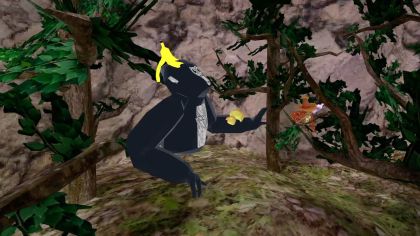
Gorilla Tag maps work because they are built around movement rather than decoration. Trees, walls, platforms, caves, branches, slopes, and vertical spaces all become tools. The environment is not only something to look at. It is something to push against, climb through, bounce from, and use during a chase.
I like maps that encourage different movement styles. Open areas support speed and quick reaction. Vertical spaces reward climbing skill. Tight routes create risky escapes. High platforms become both safe spots and dangerous traps if another player knows how to reach them faster.
The best map moments happen when I discover a new route. A branch that once looked decorative becomes a shortcut. A wall becomes a launch point. A corner becomes a hiding place for two seconds before panic returns. Gorilla Tag makes map knowledge feel physical.
Social Energy Is Half the Experience
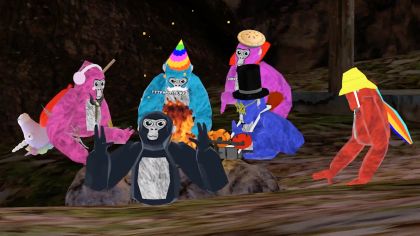
Gorilla Tag is not only a movement game. It is also a social space. Voice chat, laughter, shouting, teasing, coaching, and chaotic group energy are a major part of the appeal. A chase becomes much funnier when everyone can hear the panic and excitement in real time.
I enjoy how naturally social the game feels. Players often teach each other routes, show tricks, form groups, invent mini-games, or simply run around talking. The mechanics are simple enough that the community fills the space with personality.
Of course, social multiplayer can be unpredictable. A good lobby can make Gorilla Tag feel like the funniest VR playground available. A bad lobby can be noisy or annoying. The experience depends heavily on who is around, which is true for many open social games.
Physical Comfort and Space Matter a Lot
Because Gorilla Tag uses active arm movement, physical setup matters more than usual. I need enough room to move my arms safely, and I need to stay aware of nearby walls, furniture, people, pets, and anything else that should not be punched by accident. This is not a sit-back-and-relax VR game.
I like that the game feels active, but it can be tiring. Longer sessions can work up real energy, especially when climbing or escaping constantly. Players who enjoy physical VR will see this as a strength. Players who want a slower experience may need breaks.
Comfort also matters. VR movement can affect players differently, and Gorilla Tag’s fast motion may take adjustment. Starting with shorter sessions is a smart way to learn the movement without overdoing it.
Download, Install, and Play Across Supported Platforms
Players looking to download Gorilla Tag should use official platforms. The safest way to install the game is through trusted VR storefronts or official platform pages connected to supported headsets. This protects updates, account access, multiplayer features, cosmetics, and the correct version of the game.
Gorilla Tag has been widely known as an accessible VR title, but players should still check current platform availability, price details, headset compatibility, storage needs, online requirements, and comfort settings before installing. VR games depend heavily on hardware support, so the correct official version matters.
Players searching for a free version should be careful. If the game is available for free or through a specific platform model, that should be confirmed only through official sources. Random pages promising a full free install may be unsafe, incomplete, or misleading.
Unblocked Versions Cannot Capture Real VR Movement
Searches for Gorilla Tag unblocked may appear because popular multiplayer games often attract shortcut pages. This approach does not fit Gorilla Tag. The game depends on VR hardware, motion tracking, multiplayer servers, voice chat, headset support, and precise arm-based locomotion. A browser-style unblocked version cannot provide the real experience.
An unblocked page may be an imitation, a flat-screen copy, or an unsafe download using the title for attention. Even if it has monkeys and tag mechanics, it cannot recreate the feeling of physically pushing off surfaces in VR.
I would avoid unblocked shortcuts and use official platforms instead. Gorilla Tag is built around the body, and that experience needs proper VR tracking and stable online access.
Cheats and Mods Can Affect the Fairness of Lobbies
Gorilla Tag naturally attracts searches for cheats and mods because players may want custom cosmetics, altered movement, private server tools, map changes, or easier ways to move. I understand the curiosity because the game has a creative community and a very skill-based movement system.
Cheats are a serious problem in a multiplayer game like this. If someone uses unfair movement tools or advantages, it can ruin the basic tag experience for everyone else. The fun comes from learning movement honestly and outplaying others through practice.
Mods may be more acceptable in controlled or private environments if supported by community tools and platform rules, but unofficial files still require caution. They can affect stability, account safety, updates, or multiplayer access. For most players, the official install is the safest and cleanest way to play.
Why Gorilla Tag Became a VR Phenomenon
Gorilla Tag became popular because it does something VR is uniquely good at: it makes movement feel personal. Many games put the player inside a virtual world, but Gorilla Tag makes the act of moving through that world the entire game. That is why it is so easy to understand from a video and so different to actually play.
The game also creates great social clips. A funny chase, a wild escape, a failed jump, a sudden tag, or a player screaming while climbing badly can become entertaining immediately. It is simple, visual, and easy to share.
Most importantly, the skill ceiling keeps players returning. Learning routes, improving speed, mastering wall movement, and outsmarting chasers gives the game long-term appeal beyond the novelty of being a gorilla in VR.
Where Gorilla Tag Can Feel Frustrating
The biggest frustration in Gorilla Tag is the early learning curve. New players may feel slow, clumsy, and helpless against experienced players. The game does not hide skill gaps. A veteran player can move through the map in ways that make beginners feel stuck on the ground.
The social environment can also be inconsistent. Some lobbies are friendly and hilarious, while others may be too loud, chaotic, or unpleasant. Multiplayer voice chat always depends on the people present, so players may need to find the right groups or use available moderation tools.
Physical fatigue is another factor. Gorilla Tag can be tiring, especially during intense sessions. Players should take breaks, clear their play area, and avoid overextending their arms or shoulders.
Who Should Play Gorilla Tag
Gorilla Tag is a strong fit for players who enjoy VR movement, social multiplayer, physical games, skill-based chasing, and simple rules with high mastery. It is especially appealing if you want a VR game that feels different from normal controller-based movement.
I would recommend it to players who like active play and do not mind looking a little ridiculous while learning. The game is funniest when everyone accepts the chaos and keeps improving. It is also a great choice for friends who want a VR hangout that includes real gameplay rather than only chatting.
Players who prefer calm seated VR, solo campaigns, realistic visuals, or quiet structured missions may not connect with it as strongly. But for anyone who wants an energetic multiplayer playground built entirely around movement, Gorilla Tag remains one of the most distinctive VR games available.