A Samurai Open-World Adventure Built on Beauty, Honor, and Quiet Violence
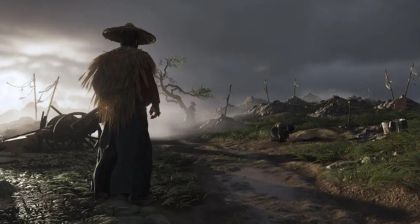
Ghost of Tsushima is one of those games that understands the power of a single image. A lone warrior standing in tall grass. Red leaves moving in the wind. A fox waiting near a shrine path. A duel beginning under a stormy sky. Before the game even asks me to fight, explore, or follow a quest, it makes me want to simply look at the world. That visual confidence is one of its strongest qualities.
At its core, Ghost of Tsushima is an open-world action adventure about Jin Sakai, a samurai forced to defend his homeland during a brutal invasion. The story is built around a moral tension that gives the game weight: should Jin remain loyal to the strict code he was raised with, or become something more feared, practical, and dishonorable in order to save people? That conflict gives the action more meaning than a simple revenge quest.
For players looking to download, install, and play a cinematic samurai game across supported platforms, Ghost of Tsushima offers a strong mix of sword combat, stealth, exploration, emotional storytelling, and breathtaking art direction. It is a game that can feel calm one minute and intense the next, which makes its world feel both beautiful and dangerous.
Tsushima Is the Game’s Most Powerful Feature
The island of Tsushima is not just a background. It is the emotional center of the game. Forests, beaches, fields, temples, villages, mountains, hot springs, shrines, and ruined settlements all help create a place that feels worth protecting. The game constantly reminds me that the land is beautiful, but also wounded.
I like how the world uses color and movement instead of clutter. Golden birds, wind direction, smoke columns, flowers, banners, and distant landmarks guide exploration in a way that feels more natural than staring at a screen full of icons. The guiding wind system is especially elegant because it keeps me inside the atmosphere rather than pulling my eyes toward a normal navigation marker.
The best open-world moments are often quiet. Riding through tall grass while leaves swirl around the horse can feel just as memorable as a major battle. Ghost of Tsushima knows that silence, space, and beauty can be as powerful as action.
Jin Sakai’s Conflict Gives the Story Its Weight
Jin is an effective protagonist because he is not simply trying to become stronger. He is trying to decide what kind of person he must become. His samurai training teaches honor, direct combat, discipline, and loyalty. The invasion forces him into tactics that his uncle and tradition would consider shameful. That inner conflict gives the story its strongest emotional pull.
I enjoy how the game shows Jin changing gradually. He does not transform because he wants to look cool. He changes because the world around him gives him fewer clean choices. Saving people may require methods that damage the identity he was raised to protect. That is a strong dramatic foundation for an action game.
The supporting characters also help because each one reflects a different part of the island’s pain. Some stories are about grief, loyalty, revenge, guilt, survival, or duty. These personal quests make the larger war feel more human.
Sword Combat Feels Clean, Stylish, and Precise
The combat in Ghost of Tsushima is one of its biggest strengths. Sword fights feel sharp and readable. I need to watch enemy types, change stances, time parries, dodge heavy attacks, and choose when to be aggressive. The game looks cinematic, but the mechanics still require attention.
I like how direct combat rewards patience. Mashing attacks rarely feels as satisfying as reading an opponent properly. A perfect parry, clean counter, or well-timed stance change can make Jin feel skilled without turning the fight into button chaos. The best encounters have a rhythm that feels almost like a dance.
Standoffs are especially stylish. Walking into a group and challenging enemies openly captures the samurai fantasy perfectly. They are dramatic, risky, and visually memorable. Even when stealth is available, sometimes it feels right to stand in the road and let the scene breathe before steel is drawn.
Stealth Changes the Tone Completely
Ghost of Tsushima becomes a different game when Jin moves through shadows. Sneaking into camps, using tools, distracting guards, freeing prisoners, and striking from hidden positions creates a more tactical rhythm. This is where the Ghost identity begins to separate from the samurai path.
I like that stealth is not only a mechanical option. It is tied to the story’s moral tension. Using fear, surprise, and deception may be effective, but it also changes how Jin is seen by others and by himself. That makes stealth feel more meaningful than a simple alternate route.
The tools support variety. Smoke, wind chimes, bows, blades, and other equipment allow different approaches. A player can be quiet and careful, fast and aggressive, or mix direct combat with hidden tactics depending on the situation.
Duels Are the Most Cinematic Battles
The one-on-one duels are some of the best moments in Ghost of Tsushima. They strip away distractions and focus everything on timing, posture, and atmosphere. The camera tightens, the environment frames the fight, and each strike feels important.
I enjoy how duels feel like playable movie scenes without losing control. A duel in falling leaves, rain, firelight, or moonlit grass can become unforgettable because the setting and mechanics work together. The game understands that a duel should feel personal, not just difficult.
These fights also test whether I truly understand the combat system. Good timing, patience, and reading the opponent matter more than rushing. When a duel ends after a close exchange, it feels earned in a way that fits the samurai theme perfectly.
Exploration Feels Better When It Is Not Rushed
Ghost of Tsushima is best enjoyed slowly. The island is filled with side activities, but many of them work because they support the mood. Following a fox to a shrine, composing a haiku, resting in a hot spring, climbing toward a mountain shrine, or finding a quiet bamboo challenge gives the world a peaceful rhythm between battles.
I like that not every activity needs to be loud. Some are reflective. Some are scenic. Some improve Jin’s abilities while also reinforcing the island’s culture and beauty. This makes side content feel more connected to the world than simple checklist filler.
That said, the open-world structure can still become familiar after many hours. Camps, collectibles, upgrades, and map activities follow recognizable patterns. The game’s art direction and atmosphere help a lot, but players who are tired of open-world repetition may still notice the formula underneath.
Presentation Makes Every Moment Feel Painted
Ghost of Tsushima’s visual style is one of its defining achievements. The game does not chase realism only. It uses bold color, strong silhouettes, weather, particles, lighting, and composition to create scenes that feel deliberately framed. Many moments look like moving paintings.
I appreciate how readable the world remains despite its beauty. Tall grass, blowing leaves, smoke, birds, and environmental cues all add atmosphere while helping guide attention. The game rarely feels visually messy. It knows where it wants me to look.
Photo mode also makes sense here because the game constantly creates beautiful compositions. Even players who normally ignore photo modes may stop to capture a sunset, duel, storm, or quiet shrine path. The world invites that kind of attention.
Download, Install, and Play Across Supported Platforms
Players looking to download Ghost of Tsushima should use official platforms. The safest way to install the game is through trusted console stores, PC storefronts, or official platform pages connected to supported devices. This protects updates, save files, edition content, performance settings, and the correct version of the game.
Before installing, I would check supported platforms, storage requirements, controller support, graphics options, language settings, edition details, and current update size. Ghost of Tsushima benefits from smooth performance and strong visual presentation, so using a proper official version matters.
Players searching for a free version should be careful. Ghost of Tsushima is a premium title, though it may appear through sales, subscription catalogs, bundles, or limited promotions depending on platform availability. Random pages promising a full free install may be unsafe, incomplete, or misleading.
Unblocked Versions Cannot Deliver the Real Island
Searches for Ghost of Tsushima unblocked may appear because popular games often attract shortcut pages. This game does not fit that format. It depends on a full client, cinematic assets, large environments, saving, combat systems, controller support, updates, and platform services.
An unblocked version would not represent the real experience. It may be an imitation, an unsafe page, or a basic browser game using the name for attention. It cannot provide the full island, story, sword combat, stealth systems, visual quality, or emotional atmosphere.
I would avoid unblocked shortcuts and use official platforms instead. Ghost of Tsushima is built around immersion, and that immersion needs stable performance, proper audio, and the complete game intact.
Cheats and Mods Can Change the Experience, but the First Run Should Stay Clean
Ghost of Tsushima naturally attracts searches for cheats and mods because players may want easier combat, unlocked gear, visual changes, reshade effects, custom difficulty tweaks, or quality-of-life adjustments. I understand the curiosity, especially for players who enjoy experimenting after finishing the main story.
Cheats can make exploration easier, but they may also weaken the satisfaction of progression. Jin’s growth feels better when new techniques, armor sets, charms, and tools are earned through play. If everything is unlocked instantly, some of the journey loses its shape.
Mods may be interesting on platforms that support them, especially for visual customization or small convenience changes. Still, unofficial files should be handled carefully because they may affect stability, saved data, updates, or device safety. For a first playthrough, the official install without shortcuts is the best way to experience the story and atmosphere.
Why Ghost of Tsushima Feels So Memorable
Ghost of Tsushima became memorable because it combines a familiar open-world structure with unusually strong presentation and theme. Many games offer camps to clear and upgrades to earn, but fewer make the act of riding through the world feel this poetic. The atmosphere gives ordinary activities more emotional weight.
The game also understands fantasy. It lets me feel like a samurai in a duel, a hidden Ghost in a camp, a traveler following the wind, and a protector carrying the burden of a changing identity. That variety keeps the experience from feeling like only one type of action game.
Most importantly, the game respects quiet. It allows pauses between conflict. It lets nature, music, and scenery speak. That restraint makes the intense moments stronger.
Where Ghost of Tsushima Can Feel Familiar
The biggest weakness of Ghost of Tsushima is that its open-world design can become predictable. Following markers, clearing enemy camps, collecting upgrades, and completing side activities may feel familiar to players who have spent years with similar action adventures.
Some side missions are excellent, while others follow more standard patterns. The strongest stories focus on character emotion and moral tension. The weaker ones can feel like typical open-world errands with beautiful scenery around them.
The game also depends heavily on whether the player enjoys its tone. If someone wants constant action, dense RPG systems, or a more complex stealth simulation, they may find parts of the experience too simple. Ghost of Tsushima is polished and atmospheric, but it is not trying to be the deepest system-driven game in the genre.
Who Should Play Ghost of Tsushima
Ghost of Tsushima is a strong fit for players who enjoy cinematic open-world adventures, samurai stories, sword combat, stealth, beautiful environments, emotional character arcs, and exploration that rewards patience. It is especially appealing if you like games that balance action with quiet atmosphere.
I would recommend it to players who want a stylish historical adventure with strong art direction and accessible combat depth. It works well for people who enjoy both direct sword fights and careful stealth approaches.
Players who dislike open-world structure, repeated activities, or slower scenic travel may not connect with it as strongly. But for anyone who wants a beautiful samurai journey about honor, sacrifice, and becoming a symbol, Ghost of Tsushima remains one of the most memorable action adventures available.