
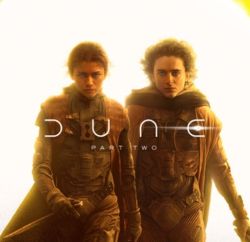
A Desert Epic That Feels Like a Prophecy Carved in Sand
I watched Dune 2 with the feeling that the first film had only opened a massive door, and this sequel finally walks through it with full confidence. The story no longer feels like an invitation to Arrakis. It feels like immersion. The heat, the dust, the religion, the politics, the fear, and the hunger for power all press closer this time. I did not feel as if I was simply watching a science fiction adventure. I felt trapped inside a world where every decision has historical weight.
What impressed me most is how the film turns scale into pressure. The desert is enormous, the armies are vast, and the visions stretch across generations, yet the emotional center remains painfully personal. Paul Atreides is not just learning how to survive. He is becoming a symbol, and the film understands how dangerous that transformation can be. I found Dune 2 gripping because it does not treat destiny as beautiful or simple. It treats destiny like a force that can swallow the person carrying it.
Arrakis Becomes the Film’s Harshest Character
The desert in Dune 2 is not background scenery. It feels alive, ancient, and completely indifferent to human ambition. I loved how the film makes Arrakis both terrifying and sacred. Every dune seems to hide history. Every stretch of open sand feels like a test. The planet shapes the people who live there, and the movie makes that relationship visible in every frame.
The Fremen do not move through the desert like visitors. They understand its rhythm, dangers, signs, and silences. Watching Paul enter that way of life gives the film some of its strongest scenes. He has to learn not only how to cross the desert, but how to respect it. The desert strips away comfort and exposes character. In this world, survival is never just physical. It is cultural, spiritual, and political.
Paul Atreides Is Most Compelling When He Fears Himself
Paul’s arc is the reason Dune 2 stayed in my mind. He begins the film carrying grief, anger, and uncertainty, but he also carries visions that make his future feel almost unbearable. I liked that the film does not present him as a clean heroic figure. His power grows, but so does the shadow around him.
Timothée Chalamet gives Paul a controlled intensity that works especially well in quieter scenes. His face often seems divided between youth and command, between hesitation and belief. I found him most interesting when he resists becoming what others want him to be. The tragedy is that resistance itself becomes harder as people begin to see him as more than human. The film makes his rise feel thrilling and deeply unsettling at the same time.
Chani Gives the Story Its Human Pulse
Chani is essential because she sees Paul before the myth fully consumes him. Through her, the film keeps questioning what others are eager to worship. I liked her practicality, her skepticism, and the way she refuses to surrender her judgment just because prophecy enters the room. She is not written as a romantic accessory. She is a person with her own people, beliefs, doubts, and boundaries.
Zendaya gives Chani a grounded emotional force. Her gaze often says what the politics around her tries to hide. She cares for Paul, but she also sees the danger in how quickly faith can be shaped into control. That tension gives their relationship real pain. Their bond is tender, but it is never isolated from the larger world. Love on Arrakis cannot escape history, and the film makes that painfully clear.
Lady Jessica Turns Motherhood Into Strategy
Lady Jessica’s role in Dune 2 fascinated me because she becomes both protector and manipulator. Her love for Paul is real, but it is tangled with ambition, fear, religious engineering, and survival instinct. I found her scenes quietly chilling because she understands the power of belief and knows how to move through it with precision.
Rebecca Ferguson plays Jessica like someone who has crossed an inner line and decided not to look back. Her calmness is more frightening than open rage would be. She speaks softly, but her choices echo through entire communities. The film uses her to show how myths are not born by accident. They are nurtured, repeated, adjusted, and placed into the minds of people who are desperate for meaning.
The Fremen Culture Gives the Film Its Moral Weight
One of the strongest aspects of Dune 2 is how seriously it treats Fremen society. Their customs, language, rituals, survival methods, and internal disagreements make the world feel layered. They are not a single crowd waiting for an outsider. They have their own divisions, convictions, humor, pride, and doubts.
I especially appreciated the contrast between belief and skepticism within the Fremen community. Some characters embrace prophecy with absolute faith. Others question it sharply. That tension makes the story richer. The film is not only about whether Paul can lead. It is about what leadership means when it is wrapped in spiritual expectation. Dune 2 understands that liberation, faith, and power can become dangerously entangled.
The Visual Style Feels Monumental Without Becoming Empty
The aesthetics of Dune 2 are immense, but they rarely feel decorative. The film’s beauty is severe. Arrakis is shaped by pale sand, burning light, deep shadows, and vast empty spaces. The Harkonnen world, by contrast, feels cold, oily, and almost inhuman. I liked how each environment expresses a philosophy. Nothing looks neutral.
The costume design also adds to the film’s power. Stillsuits look practical and ritualistic at once. Fremen clothing feels shaped by necessity. Imperial and Harkonnen designs suggest hierarchy, cruelty, and control. Every visual element seems to tell me who has adapted to the world and who wants to dominate it. That makes the film’s design feel intelligent rather than merely expensive.
The Sandworms Are Awe Rather Than Simple Spectacle
The sandworms could easily have become ordinary monster-show moments, but Dune 2 treats them with reverence. They are not just giant creatures. They are part of the planet’s spiritual and ecological identity. Their presence changes the emotional temperature of the film. When the sand begins to move, the scene becomes mythic.
The worm-riding sequence is one of the film’s most powerful achievements because it combines danger, discipline, sound, and scale. I felt the physical challenge of it, but also the symbolic meaning. Paul is not simply performing a daring act. He is entering a relationship with Arrakis that the Fremen understand deeply. The scene works because it feels earned through culture, not inserted only for spectacle.
Feyd-Rautha Brings a Different Kind of Threat
Feyd-Rautha adds a sharp new edge to the film. He feels dangerous not because he is chaotic, but because he is disciplined in cruelty. His presence gives the Harkonnen side a more personal face, one that is theatrical, brutal, and hungry for recognition. I found him disturbing because he seems to enjoy power as performance.
Austin Butler gives Feyd a cold physical confidence that contrasts strongly with Paul. Both characters are young men shaped for greatness by violent systems, but they reflect different paths. Paul fears what he may become. Feyd seems eager to become worse. That contrast gives their eventual opposition a mythic quality without losing its personal intensity.
The Sound Design Makes the Theater Feel Like a Ritual Space
The sound in Dune 2 is almost physical. The score, the chants, the silence, the machinery, the wind, and the deep desert vibrations all work together to create a sense of ritual. I did not just hear the film. I felt it in my body. That matters for a story so focused on faith, power, and collective emotion.
Hans Zimmer’s music does not simply underline scenes. It expands them. The vocals, percussion, and heavy textures make the world feel ancient and futuristic at the same time. I liked how the film uses quiet as carefully as volume. A pause before movement in the desert can feel as intense as a large battle. The soundscape gives Arrakis its own breathing pattern.
Political Intrigue Feels Personal, Not Abstract
Dune 2 is filled with political maneuvering, but I never felt detached from it. The conflict between houses, emperors, religious orders, and local resistance movements always returns to personal cost. Power here is not a chessboard in a clean room. It is hunger, grief, revenge, belief, and survival.
I liked that the movie refuses to make politics simple. Nearly every major force claims some form of necessity. The Bene Gesserit speak in long plans. The Harkonnens seek control. The Emperor protects his position. The Fremen fight for their future. Paul moves among all of them, and each step pulls him further away from ordinary humanity. That complexity makes the film feel mature and emotionally tense.
The Action Has Weight Because the Film Waits for It
The action scenes in Dune 2 work because the film does not treat them as constant decoration. It allows tension to build through silence, preparation, and atmosphere. When violence erupts, it feels consequential. The fights and battles are clear, forceful, and often frightening because the film has already established what is at stake.
I appreciated the restraint. The movie does not need nonstop movement to feel powerful. Some of its most intense moments are built from watching, waiting, and understanding that a choice cannot be undone. When the action arrives, it has the force of history catching up with the characters. That gives the spectacle emotional density.
The Film’s Power Comes From Its Uneasy Transformation
What makes Dune 2 so compelling to me is the way it turns a heroic rise into something far more troubling. Paul gains followers, skills, authority, and mythic presence, but each gain feels like a loss of another kind. He becomes larger in the eyes of others while becoming less free as a person. That contradiction gives the film its tragic force.
I left the story thinking less about victory than about transformation. Dune 2 is visually majestic, emotionally severe, and unusually patient for a modern blockbuster. It gives me desert battles, political schemes, strange rituals, enormous creatures, and unforgettable images, but its deepest interest is in the making of a legend. The frightening part is that legends do not belong only to the people who become them. They belong to everyone who needs them, uses them, and follows them into the unknown.