A Hero With Paws, a Badge, and Perfectly Serious Silliness
I came to Dog Man expecting fast jokes, bright animation, and the kind of chaotic energy that makes younger audiences lean forward before the story has even settled. What I found was a film that understands the goofy confidence of Dav Pilkey’s world. It does not try to make the premise look sensible. It embraces the oddness of a half-dog, half-man hero as if this is the most natural idea in the universe, and that honesty is part of its charm.
The movie works best when it treats absurdity with a straight face. Dog Man does not speak in a conventional way, yet he communicates clearly through movement, loyalty, expression, and instinct. I liked that the film does not overexplain him. He is a hero because he acts with full-hearted commitment, not because he delivers speeches. That gives the story a clean emotional line beneath all the noise, chases, gadgets, and comic disasters.
The Animation Feels Like a Comic Book That Escaped the Page
The first thing I noticed was the visual style. Dog Man has a bouncy, exaggerated look that feels connected to the graphic novels rather than polished into something too smooth. The characters have bold shapes, expressive faces, and elastic movement. The city feels like a playground for visual jokes, with buildings, streets, vehicles, labs, and offices arranged in ways that support constant motion.
I appreciated that the film does not chase realism. A realistic Dog Man would probably look strange in the wrong way. This version looks intentionally cartoonish, which allows the humor to move quickly. Facial reactions stretch, bodies snap into silly poses, and background details often carry small jokes of their own. The animation has a handmade comic rhythm, as if every scene remembers that the original appeal came from wild drawings, simple shapes, and fearless imagination.
Dog Man Is Funny Because He Is So Earnest
Dog Man himself is a surprisingly effective main character. He is ridiculous by design, but he never seems aware of how funny he is. That is important. If he behaved like a joke machine, the movie would become exhausting. Instead, he behaves like a loyal working hero who happens to have dog instincts at the worst and best possible moments.
I liked watching the film use his canine habits as both comedy and character. His attention shifts suddenly. His emotions are open. His enthusiasm is difficult to contain. Yet those same traits make him lovable. He is not cynical, calculated, or self-important. He wants to help, protect, chase, fetch, and please. That simplicity gives the movie its heart. Dog Man’s goodness is not complicated, and in a story this busy, that directness is refreshing.
Petey the Cat Steals Scenes With Irritated Intelligence
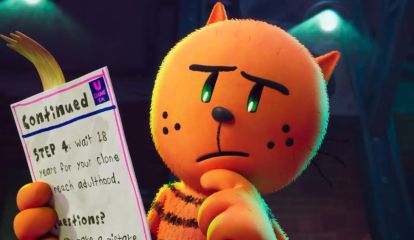
Petey is the character who gives the movie its sharper comic edge. I enjoyed him because he brings sarcasm, ego, and theatrical frustration into a world already full of nonsense. He sees himself as brilliant, stylish, and above everyone else, which makes his failures funnier. His confidence is huge, but the world keeps refusing to cooperate with his self-image.
What makes Petey more interesting than a simple antagonist is that his attitude has texture. He is not only there to cause trouble. He carries loneliness, pride, and a need to be recognized. The movie uses him for jokes, but it also lets small emotional cracks appear. I liked that contrast. Petey’s sharp tongue and dramatic plans are entertaining, but his insecurity gives the story more than surface-level conflict.
The Chief Adds Pressure, Noise, and Old-School Authority
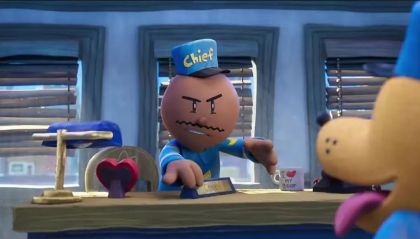
The Chief brings a familiar kind of animated comedy: loud instructions, panic under pressure, and the endless frustration of managing a hero who does not always follow normal rules. I found his scenes fun because he reacts to Dog Man with a mix of admiration, confusion, and total exhaustion. He wants results, but he also has to live with the consequences of Dog Man’s instincts.
This relationship gives the film a steady workplace-comedy rhythm. Dog Man may be the hero, but he is not an easy employee. His methods can be messy, his focus can wander, and his success often arrives through chaos rather than strategy. The Chief’s reactions help frame that chaos. He is the voice of order in a movie where order rarely survives for long.
The Humor Moves Like a Kid Telling a Story Too Fast
The comedy in Dog Man is rapid, playful, and proudly immature in the best sense. It often feels like a child explaining an adventure with no interest in slowing down: then this happened, then this exploded, then the cat had a plan, then the dog hero did something amazing, then everyone ran. That speed could become overwhelming, but it also matches the spirit of the books.
I liked the way the movie trusts simple jokes. Not every gag needs layers. Sometimes a funny face, a sudden movement, a badly timed invention, or a ridiculous misunderstanding is enough. The film also has a strong sense of visual timing. Many jokes land because the animation gives them just the right pause before the next burst of action. It is not subtle comedy, but it is energetic and sincere.
The Story Finds Feeling Inside the Chaos
Under the wild jokes, Dog Man has a story about loyalty, belonging, and what it means to be accepted as something unusual. That emotional thread matters because the premise could easily become nothing more than a string of gags. Instead, the movie gives Dog Man a gentle vulnerability. He is heroic, but he is also different from everyone around him.
I liked how the film treats his identity as both funny and meaningful. He is part dog, part man, and fully himself. The story does not need to make him normal. It asks the audience to enjoy his difference, then recognize the value inside it. That gives the movie a kind spirit. It tells young viewers that being unusual can be a strength, especially when paired with kindness and courage.
The Aesthetics Are Bright Without Feeling Empty
The color palette is loud, cheerful, and full of contrast. The city has a toy-like quality, which suits the film’s playful tone. I enjoyed how the environments feel designed for action: rooftops, laboratories, police spaces, streets, and villain hideouts all seem built to be crashed through, climbed over, or turned into comic set pieces.
At the same time, the movie does not feel visually hollow. There is personality in the details. Signs, machines, furniture, props, and background characters often look slightly exaggerated, as if the entire world has been filtered through a kid’s sketchbook. That choice gives the film warmth. It does not look like a generic animated city with Dog Man dropped into it. It looks like a world made specifically for this kind of absurd hero.
Action Scenes Work Best When They Stay Playful
The action in Dog Man is most enjoyable when it feels like physical comedy rather than serious spectacle. Dog Man runs, leaps, tumbles, and reacts with the full-body commitment of a character ruled by instinct. The movement is quick and readable, which keeps the scenes fun instead of confusing.
I especially liked when the action used Dog Man’s dog traits as problem-solving tools. His instincts become part of the adventure. He does not approach danger like a polished superhero. He responds with loyalty, speed, curiosity, and sudden enthusiasm. That makes the set pieces feel specific to him. The movie understands that Dog Man should not simply copy other animated heroes. His action style has to be messier, funnier, and more emotionally open.
The Film Respects Young Viewers’ Sense of Nonsense
One thing I appreciate about Dog Man is that it does not treat childish humor as lazy by default. The movie knows that nonsense can have structure. Kids often understand rhythm, escalation, and absurd contrast better than adults give them credit for. This film taps into that energy. It lets silly ideas build on one another until the world feels joyfully unstable.
That approach reminded me why Pilkey’s stories connect so strongly with young readers. They are not polished in a stiff way. They feel alive with doodle energy, classroom imagination, and rebellious laughter. The movie carries that spirit into animation. It gives children the pleasure of seeing a story that does not constantly ask them to sit still emotionally. It moves, jokes, crashes, and keeps inventing.
The Voice Performances Give Shape to the Madness
The voice cast helps keep the film from becoming pure noise. Petey needs dry irritation and wounded pride, and his performance gives him both. The Chief needs big reactions and impatient authority. Other characters add different comic textures, from nervous energy to exaggerated confidence. Together, they create a world where everyone sounds slightly larger than life.
I also liked that Dog Man’s limited speech does not make him feel empty. His personality comes through physical performance, sound, expression, and timing. In some ways, that makes him more memorable. He does not need clever lines to be understood. His emotional language is direct, and the film uses that directness well.
The Best Part Is Its Refusal to Be Too Polished
What kept me engaged in Dog Man was its refusal to become overly tidy. The movie has bright studio animation and a clear story, but it still preserves a scrappy, comic-book spirit. It feels like a child’s wild idea treated with full cinematic commitment. That combination gives it personality. The film is not trying to impress me with elegance. It is trying to make me laugh, surprise me, and remind me that imagination does not need permission to be strange.
I found that quality refreshing. Dog Man is loud, quick, silly, and sometimes completely ridiculous, but it also has genuine affection for its characters. It understands that a hero can be funny and sincere at the same time. It understands that a cat with a bad attitude can still be lonely. It understands that a world full of nonsense can still carry real feeling when the characters want something simple: connection, recognition, and a place where their oddness makes sense.