
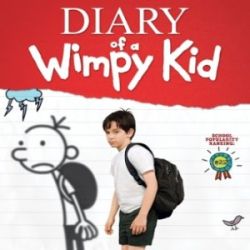
A Middle School Survival Story With a Crumpled Notebook Soul
I have always felt that Diary Of A Wimpy Kid works because it understands how enormous middle school can feel when seen through the eyes of someone who is not ready for it. Greg Heffley does not walk into school as a noble hero or a charming underdog with perfect instincts. He enters with schemes, complaints, insecurity, and a wildly inflated sense of how close he is to becoming popular. That is exactly what makes the story funny. Greg is not admirable in the usual way, but he is painfully recognizable.
What I enjoy most is the film’s ability to turn ordinary school life into a battlefield of social embarrassment. A hallway becomes a place of danger. A lunch table becomes a status symbol. A yearbook photo can feel like destiny. The smallest rumor can grow into a personal crisis before the next bell rings. The movie captures that specific age when everyone wants to be noticed, but nobody wants to be noticed for the wrong reason.
Greg Heffley Is Awful in a Very Human Way
Greg is the center of the movie, and the film wisely does not make him too polished. He is selfish, nervous, ambitious, and often convinced that he is smarter than everyone around him. I found him funny because he has the confidence of a mastermind and the emotional maturity of someone who still needs help understanding basic kindness.
His biggest flaw is that he sees friendship, popularity, and school life as systems he can manipulate. He wants shortcuts. He wants status without discomfort. He wants people to admire him before he has done anything worth admiring. That makes him frustrating, but also believable. I liked that the movie lets his bad choices create consequences without turning the story into a heavy lesson. Greg’s mistakes are comic, but they also reveal how insecure he really is.
Rowley Gives the Story Its Soft Center
Rowley Jefferson is the character who makes Greg’s world feel warmer. He is cheerful, loyal, sincere, and much less obsessed with looking cool. I liked him because he seems to enjoy life without constantly measuring himself against everyone else. That quality makes him seem childish to Greg, but it also makes him freer.
The friendship between Greg and Rowley is the emotional core of the movie. Greg often treats Rowley as part of his social strategy rather than as a person with his own feelings. That imbalance creates many of the story’s funniest and most uncomfortable moments. I found myself enjoying Rowley’s innocence while also worrying about how much Greg takes it for granted. The movie works because their friendship is silly, imperfect, and genuinely vulnerable underneath the jokes.
The School Feels Like a Social Maze
The school setting is one of the film’s strongest elements. It is not visually grand, but it feels accurate in the way that matters. Lockers, classrooms, gym activities, cafeteria politics, and crowded hallways all become part of a social maze Greg is desperate to master. I liked how the movie makes middle school seem both ordinary and absurdly intense.
Every student seems aware of rank, image, and reputation, even if nobody fully understands the rules. Greg believes there must be a formula for becoming popular, so he studies the school like a tiny social scientist with terrible judgment. That is where the comedy lands best for me. The school does not need exaggerated fantasy elements to feel dramatic. At that age, a bad nickname can feel permanent, and sitting in the wrong place can seem like a life-changing mistake.
The Humor Comes From Embarrassment That Feels Too Real
Diary Of A Wimpy Kid has a very specific comic style. It does not rely only on big gags. Much of the humor comes from social discomfort, awkward timing, and Greg’s complete inability to see how ridiculous he sounds. I laughed most when the movie let his narration clash with reality. In his own mind, Greg is strategic and sophisticated. On screen, he is usually making everything worse.
The embarrassment is effective because it feels familiar. Most people remember some version of middle school humiliation: a failed attempt to impress someone, a strange trend everyone followed, a friendship tension that seemed impossible to fix, or a public moment that lived too long in memory. The film exaggerates these experiences, but not so much that they lose their truth. It understands that comedy at this age often comes from taking small things far too seriously.
The Diary Format Gives the Movie Its Personality
The diary concept is essential because it gives Greg control over how the story is framed. He writes as if he is documenting the rise of a future legend, but the actual events keep proving that he is just a confused kid trying to survive school. I like that tension between self-image and reality. It gives the film a voice that feels distinct from a standard family comedy.
The visual connection to the notebook style also helps. The simple drawings and diary-like attitude make the story feel personal, as if I am reading thoughts Greg probably should not say out loud. That private perspective makes him funnier and more flawed. His version of events is not always fair, but it is always revealing. The movie understands that a diary is not just a record of what happened. It is a record of how someone wants to see himself.
The Aesthetics Are Plain in a Useful Way
The film’s visual style is not flashy, and I think that works in its favor. Diary Of A Wimpy Kid should not look too magical or too stylish. Its world is made of beige school walls, family houses, sidewalks, buses, backpacks, and awkward social spaces. That ordinary look makes the comedy feel grounded. Greg is not trapped in a fantasy world. He is trapped in a normal one, which is often worse for a kid who wants to feel important.
I also like how the plainness allows small details to become funny. A costume, a school poster, a cafeteria seat, or a badly timed expression can stand out because the world around it feels so familiar. The movie does not need visual luxury. Its aesthetic is built around the ordinary discomfort of growing up in places that were not designed to make anyone feel cool.
The Family Scenes Add Pressure From Every Side
Greg’s family gives the movie another layer of comedy. His parents mean well, but they do not always understand the social stakes that feel urgent to him. His brother Rodrick brings a different kind of pressure, acting like an older sibling who has already learned how to exploit Greg’s weaknesses. Manny, meanwhile, adds the chaos of being the youngest child who somehow escapes consequences with ease.
I enjoyed how the family scenes show that Greg cannot fully control his image anywhere. School is embarrassing, but home is not exactly safe from humiliation either. Parents can say the wrong thing, siblings can expose secrets, and family expectations can collide with Greg’s desperate need to appear impressive. This makes his world feel boxed in from all directions, which is perfect for the story’s anxious comedy.
Popularity Looks Ridiculous When Seen Up Close
One of the smartest parts of the movie is how it treats popularity as both desirable and absurd. Greg wants it badly, but the film keeps showing how unstable and silly the whole system is. The things students value can be random, temporary, and deeply unfair. Someone can gain attention for a strange reason, lose it just as quickly, or become defined by one embarrassing event.
I liked that the movie does not pretend popularity is meaningless. For a middle school student, it can feel very real. But it also shows that chasing it too hard makes Greg less happy and less kind. His obsession with rank blinds him to the friendship he already has. That gives the humor a sharper edge. Greg’s problem is not that he wants to be liked. It is that he keeps confusing being liked with being important.
The Main Characters Work Because They Clash
The character dynamic is simple but effective. Greg wants to move upward. Rowley wants to enjoy himself. Rodrick wants to torment Greg. The parents want Greg to become more responsible. Teachers want order. Other students want entertainment, status, or distance from social disaster. These clashing desires keep the story moving even when the events are small.
I especially liked how Greg and Rowley reflect two different approaches to growing up. Greg tries to rush into a cooler version of himself, while Rowley remains comfortable with childish joy. The movie does not present Rowley as foolish for that. In many ways, he is healthier than Greg. He knows what he likes. He does not constantly perform for invisible judges. That contrast gives their friendship real shape.
The Film Understands the Pain of Being Almost Grown
What makes Diary Of A Wimpy Kid stay interesting to me is that beneath the jokes, it captures the discomfort of being between stages. Greg is no longer a small child, but he is nowhere near as mature as he thinks. He wants independence, respect, and admiration, but he still misunderstands loyalty, honesty, and empathy. That gap is where the story lives.
The movie does not need grand drama to explore that. It uses school projects, social plans, embarrassing rumors, family arguments, and friendship mistakes. Through those everyday situations, it shows how growing up often happens through awkward correction rather than sudden wisdom. Greg learns slowly, unevenly, and usually after causing unnecessary trouble. That feels right for him. It also makes the film more honest than a cleaner version of this story would have been.
Why the Awkwardness Feels So Entertaining
I think Diary Of A Wimpy Kid succeeds because it embraces discomfort instead of trying to make childhood look charming all the time. Greg’s world is funny because it is full of bad plans, fragile confidence, social panic, and dramatic overreactions to ordinary problems. The movie lets those moments breathe. It understands that middle school is not only a place where kids learn math and grammar. It is a place where they test personalities, damage friendships, rebuild confidence, and discover how hard it is to become someone worth liking.
For me, the film’s appeal lies in that honest awkwardness. Greg is not the best friend, the best student, or the best son, but he is an entertaining guide through a stage of life that many people remember with a mix of horror and affection. His diary turns embarrassment into comedy, and the movie turns that comedy into a lively portrait of a kid who wants to be exceptional before he has figured out how to be decent.