
A Beautiful Nightmare Built From Grief and Fire
I watched Demon Slayer with the feeling that it understands something very simple and very powerful: a story does not need to be complicated to feel enormous. At its center is Tanjiro Kamado, a kind boy whose family is destroyed and whose sister Nezuko becomes a demon. From that starting point, the anime builds a world of sword forms, mountain training, terrifying enemies, tragic backstories, and breathtaking visual spectacle. Yet the emotional core remains clear. Tanjiro keeps moving because love gives him direction.
What I like most about Demon Slayer is the way it balances beauty and pain. The series can be visually gorgeous, filled with glowing water, burning skies, falling snow, flower patterns, moonlit forests, and elegant sword techniques. At the same time, it never lets the world feel safe for long. The beauty is often surrounded by loss. That contrast gives the anime its special texture. It feels like a painted scroll that has been touched by smoke.
Tanjiro Kamado Makes Kindness Feel Like Discipline
Tanjiro is one of the reasons the series works so well for me. He is gentle, but not weak. His kindness is not a passive trait or a soft decoration. It is something he practices with the same seriousness as sword training. He can feel sympathy for enemies without forgetting the danger they create. That balance makes him more interesting than a hero who is only pure or only angry.
I like how Tanjiro’s compassion often becomes a source of strength. He notices small details. He listens. He smells emotional shifts, fear, wounds, and hidden truth. His sensitivity is practical, not ornamental. In battle, he is fierce because he protects what remains of his family and honors what was taken from others. His heart is warm, but his resolve is sharp. That combination gives him a heroic identity that feels emotionally grounded.
Nezuko Is More Than the Sister in the Box
Nezuko could have been only a symbol of Tanjiro’s motivation, but the series gives her a strong presence even when she speaks very little. I like how her silence makes her physical expression more important. A glance, a defensive stance, a sudden burst of strength, or a childlike moment of affection can say a lot about who she still is beneath the demon transformation.
Her relationship with Tanjiro gives the anime its deepest tenderness. He refuses to treat her as lost, and she continues to protect humans despite the hunger inside her. That shared resistance is moving. The world keeps trying to categorize her as one thing, but Nezuko exists in the painful space between identities. She is sister, survivor, demon, child, protector, and mystery all at once.
Zenitsu Turns Fear Into Unexpected Brilliance
Zenitsu can be loud, frantic, and exhausting, but I found myself appreciating him more as the series developed. His fear is not fake. He is genuinely terrified of danger, pain, rejection, and his own inadequacy. That makes his moments of brilliance more satisfying. When his Thunder Breathing emerges, the contrast between panic and precision becomes almost comic and heroic at the same time.
What I like about Zenitsu is that the show does not require him to become traditionally brave overnight. He remains anxious, dramatic, and emotionally messy. Yet there is loyalty under all that noise. He wants to be better than his fear, even if he often fails at first. His growth feels uneven, which makes it believable. Courage, for Zenitsu, is not the absence of terror. It is movement despite trembling.
Inosuke Brings Wild Comedy and Hidden Fragility
Inosuke is chaotic in the best way. He enters the story like a creature raised by pure instinct, all aggression, competition, and strange confidence. His boar mask, rough speech, and constant need to challenge everyone could make him one-note, but the series gradually reveals something softer underneath. I liked discovering that his wildness hides confusion, loneliness, and a lack of normal human connection.
His friendship with Tanjiro and Zenitsu gives the group a fun, uneven rhythm. Tanjiro brings empathy. Zenitsu brings panic. Inosuke brings reckless momentum. Together, they feel like three mismatched boys surviving a world far beyond their emotional maturity. Inosuke’s best moments are often funny, but they also show him learning how to care without knowing the right words for it.
The Animation Turns Sword Forms Into Living Art
Ufotable’s animation is one of the main reasons Demon Slayer became such a phenomenon. The action has a painterly quality that makes every breathing style feel distinct. Water Breathing flows like illustrated waves. Flame Breathing burns with ceremonial intensity. Thunder Breathing cuts through the screen with sudden force. The visuals do not only show movement. They turn technique into emotion.
I love how the anime uses traditional patterns, color, lighting, and digital effects without losing clarity. Even when scenes become intense, the best battles remain readable. The camera moves dramatically, but the emotional line stays visible. I understand who is desperate, who is afraid, who is adapting, and who is reaching a breaking point. That is what makes the spectacle memorable. It is beautiful because it is attached to feeling.
The Demons Are Frightening Because They Used to Be Human
The demons in this series are not only monsters. Many of them carry memories of human weakness, sorrow, envy, loneliness, or obsession. I think this is one of Demon Slayer’s strongest storytelling choices. Tanjiro often sees the person underneath the horror, and that creates a strange sadness around even some of the most dangerous opponents.
This does not erase the harm they cause, but it complicates the emotional experience. A battle may end with relief, but also with pity. The series often asks me to consider how pain twists people when it is fed by power and despair. That gives the enemies more texture than simple evil. Their backstories can be heartbreaking, especially when the anime reveals the small human desire that became corrupted.
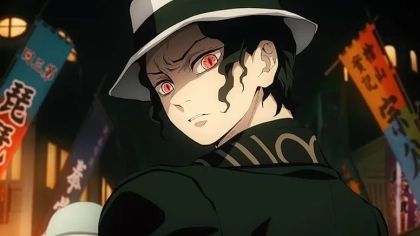
Muzan Kibutsuji Feels Like Elegance Without a Soul
Muzan is effective because he is calm, beautiful, and deeply cold. He does not need to shout to seem dangerous. His presence carries control, vanity, and absolute disregard for anyone beneath him. I like how the series frames him as the source of a sickness spreading through generations. He is not only an enemy. He is the center of a whole system of fear.
What makes Muzan unsettling is his lack of true attachment. Many demons are defined by painful longing, but Muzan seems defined by self-preservation and domination. He wants to continue, control, and remain untouched. That makes him a strong opposite to Tanjiro, whose entire journey is shaped by love and memory. Muzan avoids humanity; Tanjiro carries it into every fight.
The Hashira Make the World Feel Larger
The Hashira are a major reason the series gains scale. Each one has a striking design, distinct breathing style, and personal emotional history. I liked how they first appear almost unreachable, like legends inside the organization, but later become more human as the story spends time with them. Their strength is impressive, but their wounds are what make them memorable.
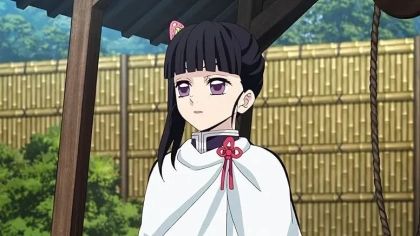
Rengoku brings radiant conviction. Tengen brings flamboyant confidence and hidden seriousness. Muichiro carries misty detachment shaped by loss. Mitsuri brings warmth and insecurity. Shinobu’s calm hides something sharp. Giyu’s silence carries grief. Sanemi and Obanai bring harsher edges. Gyomei feels monumental and sorrowful. Together, they make the Demon Slayer Corps feel like a world built from sacrifice.
Mugen Train Hits So Hard Because It Understands Ideals
The Mugen Train arc stands out because it combines dream imagery, intense action, and one of the series’ most emotionally powerful figures. Rengoku’s presence gives the story a heroic brightness that feels almost old-fashioned in the best way. He believes in duty with his whole body. He does not make goodness look easy, but he makes it look chosen.
I found this arc moving because it shows how ideals can be passed from one person to another. Tanjiro, Zenitsu, and Inosuke are still growing, but Rengoku gives them an example of what mature courage looks like. His strength is not only physical. It is moral clarity. He knows what he stands for, and that certainty leaves a mark on everyone around him.
The Entertainment District Arc Glows With Danger
The Entertainment District arc has one of the most striking visual atmospheres in the series. The lights, rooftops, narrow streets, glamorous surfaces, and hidden threat create a setting that feels alive and unstable. I liked how the beauty of the district becomes part of the tension. Everything shines, but danger moves underneath the shine.
Tengen Uzui brings a very different energy from Rengoku. He is flashy, theatrical, and confident, but the arc gradually reveals his seriousness and loyalty. The battle against Daki and Gyutaro works because it is both spectacular and emotionally bitter. Their sibling bond becomes a dark mirror of Tanjiro and Nezuko’s relationship, showing how love can survive in damaged form while being twisted by resentment and cruelty.
The Swordsmith Village Arc Gives Craft Its Own Heroism
The Swordsmith Village arc interested me because it shifts attention toward the people who make the weapons. Demon Slayer often focuses on fighters, but this arc reminds me that every battle depends on unseen labor. The swordsmiths may not always stand at the front line, but their work carries the hopes of the Corps.
I liked the way this arc gives more space to Mitsuri and Muichiro. Mitsuri’s warmth and emotional openness make her fighting style feel joyful, while Muichiro’s misty calm hides a painful past. Their development adds new emotional colors to the series. The arc also shows Tanjiro continuing to grow not only through training, but through observing the strength of others.
The Hashira Training Arc Feels Like the Calm Before Collapse
The Hashira Training arc has a different rhythm because it is built around preparation. I liked seeing the Corps trying to sharpen itself before the great confrontation ahead. Training sequences can sometimes feel like a pause, but here they carry tension because everyone knows something terrible is approaching.
This arc also lets the audience spend more time with the Hashira as people rather than distant icons. Their methods reveal personality. Their expectations reveal history. Their interactions with Tanjiro and the younger fighters create small moments of humor, frustration, and respect. It feels like the story gathering breath before plunging into its most dangerous space.
The Infinity Castle Turns Architecture Into Panic
The Infinity Castle is one of the most visually exciting concepts in Demon Slayer. Its shifting rooms, impossible stairways, floating platforms, and endless interior space make it feel like a nightmare designed by geometry itself. I like how the setting removes any sense of normal ground. Characters are not only facing enemies. They are trapped inside a place that refuses stability.
This location fits the story’s climactic energy. The Corps is pulled into the enemy’s domain, separated, disoriented, and forced into decisive confrontations. The castle looks elegant and terrifying at once. Its beauty feels hostile. Every sliding wall or impossible drop reminds me that the heroes have entered a world shaped by the demons’ advantage.
The Music Gives the Series a Ceremonial Pulse
The music in Demon Slayer adds enormous emotional force. Yuki Kajiura and Go Shiina’s score gives the anime a blend of sorrow, grandeur, and intensity that fits the story perfectly. I like how the music can make a quiet memory feel sacred, then turn a battle into something almost ritualistic.
The opening and ending songs also help define each arc’s mood. LiSA’s Gurenge became strongly tied to the early identity of the series, while later songs bring their own emotional colors. The music matters because Demon Slayer is a story about memory and resolve. Its best tracks feel like voices rising from grief and pushing the characters forward.
The Series Uses Family as Its Deepest Motivation
Family is everywhere in Demon Slayer. Tanjiro’s devotion to Nezuko is the obvious center, but the theme repeats through many characters. Some siblings protect each other. Some wound each other. Some families are lost, remembered, or longed for. Even the Corps begins to feel like a chosen family built from shared danger and grief.
I think this is why the series connects so strongly. The battles are exciting, but the emotional question is often simple: what remains after someone loses the people they love? Tanjiro’s answer is to protect, remember, and keep his heart open. Other characters answer differently. Some close themselves off. Some turn pain into rage. Some cling to power. Demon Slayer keeps returning to love as both wound and guide.
The Visual Symbolism Makes Every Fighter Feel Distinct
I appreciate how carefully the series designs its characters. Hair color, haori patterns, sword guards, breathing effects, scars, masks, and posture all help make each fighter recognizable. Tanjiro’s checkered haori, Nezuko’s bamboo muzzle, Zenitsu’s yellow pattern, Inosuke’s boar mask, and the Hashira designs all create instant visual identity.
This matters because Demon Slayer is a large ensemble story. The design helps viewers remember not only who characters are, but what emotional atmosphere they carry. Rengoku feels like flame before he moves. Giyu feels like water and silence. Shinobu feels delicate and dangerous. Mitsuri feels bright and warm. The visual language is so strong that character identity often arrives before dialogue.
The Best Battles Are Emotional Arguments
The strongest fights in Demon Slayer are not only tests of speed or technique. They are emotional arguments between different ways of living. Tanjiro’s compassion meets cruelty. Rengoku’s conviction meets emptiness. Tengen’s chosen life meets sibling bitterness. Muichiro’s recovered memory meets cold arrogance. These clashes matter because the series gives each side emotional meaning.
I like when a battle reveals a character’s philosophy. A breathing form is not just a move. It is discipline, inheritance, memory, and personality. A demon art is not just a power. It often reflects obsession, trauma, or desire. That is why the fights stay memorable. They are not only about who wins. They are about what each character carries into the moment.
Why the Anime Feels So Instantly Iconic
Demon Slayer became huge because it combines accessible storytelling with extraordinary execution. The plot is easy to understand, but the feeling is intense. The animation is beautiful. The music is powerful. The characters are emotionally clear. The enemies often have tragic shadows. The world is frightening, but the hero’s heart remains warm.
What stays with me is the contrast between softness and violence, beauty and grief, comedy and horror, family and loneliness. Tanjiro’s journey works because he is not trying to become the strongest person for pride. He is trying to save what can still be saved. Around him, the world burns, freezes, twists, and collapses into impossible architecture, yet his kindness keeps cutting a path forward. That is the soul of Demon Slayer: a boy carrying love through darkness, one breath at a time.