30 Jul
Sophia Bennett
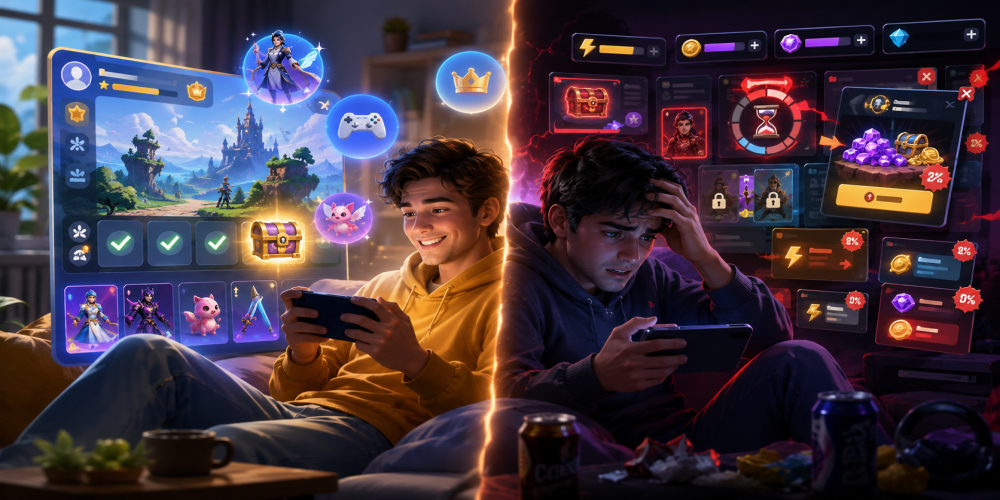
Free-to-play games often begin with the same promise: download the game, start playing, and decide later whether you want to spend money. On paper, that sounds simple and fair. In practice, two games using the same business model can produce completely different emotions.
One game may feel generous even after dozens of hours. Progress remains satisfying, purchases are easy to understand, and free players can participate without constantly being reminded that they have not paid. Another game may feel tiring within a few sessions, despite polished visuals and enjoyable core mechanics. It fills the screen with timers, currencies, limited offers, daily tasks, upgrade walls, and rewards that somehow create more work instead of more freedom.
The difference is not whether a game sells cosmetics, characters, passes, or convenience. Free-to-play development requires revenue, servers cost money, and ongoing updates need to be funded. The real difference is how monetization interacts with the player’s time, attention, expectations, and sense of control.
A fair free-to-play game makes spending feel optional. An exhausting one makes not spending feel like a problem that the game deliberately created.
Free-to-Play Is a Design Structure, Not Just a Price
The phrase free-to-play describes the entry cost, but it does not explain the full experience. Once a player enters the game, almost every system may be connected to monetization.
Progression speed, character access, inventory space, energy, crafting time, matchmaking, event participation, cosmetics, social status, and even the number of menus a player sees can all be shaped by the business model.
This means monetization is not a separate shop attached to an otherwise complete game. It often influences how the entire game is paced.
A traditional paid game usually earns most of its revenue before the player begins. A free-to-play game must continue earning after installation. It therefore needs reasons for players to return, remain engaged, form habits, and eventually spend.
That does not automatically make the model manipulative. A well-designed free game can use ongoing updates, optional purchases, and seasonal content without making the player feel trapped. Problems begin when the game prioritizes repeated engagement metrics over the quality of each session.
The Central Question: Does the Game Respect Your Time?
The strongest indicator of fairness is not the price of an individual item. It is whether the game respects the time invested by players who do not spend money.
A fair game allows meaningful progress during normal play. A short session can produce something useful, while a longer session remains enjoyable instead of becoming inefficient after a hidden limit is reached.
An exhausting game often uses time as a pressure point. It may slow progression, introduce waiting periods, limit rewards, or require repeated low-value tasks. The goal is not always to make the game more interesting. Sometimes the inconvenience exists mainly to make a paid shortcut attractive.
Signs a Game Respects Player Time
- Progress is visible after most sessions;
- Previously earned items remain useful;
- Daily tasks can be completed through normal play;
- Events provide enough time for ordinary schedules;
- Returning players can catch up without excessive grinding;
- Menus explain rewards and requirements clearly;
- Missing one day does not destroy weeks of progress.
Signs Time Is Being Used as Pressure
- Rewards become dramatically worse after a daily limit;
- Progress depends on repeated waiting timers;
- Several separate systems demand daily attention;
- Events require near-perfect attendance;
- Old equipment becomes obsolete immediately;
- Tasks are intentionally slow unless a booster is purchased;
- Skipping a session causes a meaningful penalty.
Fair Games Sell Desire, Exhausting Games Sell Relief
One of the clearest differences between healthy and aggressive monetization is the emotion behind a purchase.
A fair game sells something the player wants. This might be an attractive outfit, a favorite character, a themed animation, an expansion, or a convenient pass filled with understandable rewards.
An exhausting game sells relief from frustration. It creates a problem and then offers a paid solution.
The problem might be limited storage, extremely slow crafting, weak energy regeneration, poor drop rates, excessive repetition, or an inconvenient interface. The purchase feels less like a reward and more like removing a barrier.
Purchases Based on Desire
- A cosmetic outfit for a favorite character;
- A celebratory animation;
- A themed mount or vehicle appearance;
- A clearly priced expansion;
- A pass with visible rewards and reasonable completion requirements.
Purchases Based on Relief
- Paying to avoid an intentionally long timer;
- Buying storage because the default limit is unusably small;
- Purchasing energy to continue normal gameplay;
- Buying upgrade materials after progress is artificially slowed;
- Paying to remove advertisements that interrupt every activity.
The first category supports enjoyment. The second monetizes irritation.
Why Energy Systems Can Feel So Restrictive
Energy systems limit how many activities a player can complete before waiting or paying. They are common in mobile RPGs, collection games, simulation titles, and games with repeatable resource stages.
Energy can serve a legitimate purpose. It may prevent players from exhausting all content immediately, reduce unhealthy grinding, and keep progression balanced across a long update cycle.
However, an energy system becomes frustrating when it blocks the core reason people opened the game.
Imagine a game built around tactical battles. The player wants to experiment with a new team, but every meaningful stage consumes energy. After several attempts, the resource is empty. The player can technically remain in the game, but the activities that matter no longer provide rewards.
At that point, the game has not encouraged a healthy break. It has interrupted curiosity.
When Energy Feels Fair
- It regenerates at a reasonable speed;
- Players receive additional energy through normal play;
- Important story content does not consume large amounts;
- Failed attempts return some or all of the cost;
- Several useful activities remain available without energy;
- Events do not require more energy than the system provides.
When Energy Feels Exhausting
- Every valuable activity uses the same limited resource;
- Failed stages consume the full cost;
- Regeneration is intentionally slow;
- Several events compete for energy at the same time;
- Paid refills become progressively more expensive;
- Players must log in at inconvenient times to avoid wasting regeneration.
The Difference Between Progression and Chores
Progression feels satisfying when actions produce meaningful improvement. Chores feel repetitive because the action exists mainly to maintain eligibility for future rewards.
Daily quests are a good example. A small group of flexible daily tasks can give players direction and provide useful resources. Problems appear when every subsystem adds its own checklist.
A player may need to complete ordinary daily missions, guild tasks, event objectives, pass challenges, friendship activities, resource farming, login rewards, and limited-time shops. None of these tasks is individually difficult, but together they create a schedule.
The player stops asking, “What would be fun today?” and starts asking, “What must I finish before reset?”
That emotional change is one of the main reasons a free-to-play game begins to feel like unpaid work.
Healthy Daily Design
- Most objectives complete during normal play;
- Players can choose between several activities;
- The daily routine takes a reasonable amount of time;
- Missing a day has a small impact;
- Weekly tasks absorb unfinished daily progress;
- Rewards support long-term goals.
Unhealthy Daily Design
- Tasks require unrelated modes the player dislikes;
- Every objective must be completed for the main reward;
- Several menus contain separate claim buttons;
- The routine grows longer with every update;
- Players lose streak bonuses after one missed day;
- Daily tasks provide resources needed for basic progression.
Why Too Many Currencies Make Games Mentally Tiring
Multiple currencies can help organize a complex game. Gold may handle ordinary upgrades, premium currency may purchase cosmetics, and event tokens may prevent temporary rewards from disrupting the main economy.
The problem begins when the game introduces a separate currency for nearly every action.
A player may encounter coins, gems, tickets, shards, crystals, keys, medals, tokens, vouchers, points, dust, and several types of energy. Some can be converted into others, but only through specific shops or weekly limits.
This creates cognitive friction. Before making a simple upgrade, the player must remember where the required material comes from, whether it expires, which shop accepts it, and whether spending now will block a future purchase.
Currency complexity can also hide real prices. An item may cost premium gems, but the store only sells gem bundles that do not match the required amount. The player is left with extra currency, encouraging another purchase later.
A Clear Currency System
- Each currency has one obvious purpose;
- Exchange rates are simple;
- Prices are visible before entering the shop;
- Premium currency can be purchased in useful amounts;
- Temporary currencies clearly display expiration dates;
- Unused event currency has a predictable conversion.
A Confusing Currency System
- Several currencies purchase similar items;
- Conversion requires multiple steps;
- Premium prices are difficult to translate into real money;
- Event tokens disappear without compensation;
- Different stores rotate on different schedules;
- Bundles always leave an awkward remaining balance.
Random Rewards and the Importance of a Safety Net
Random reward systems can create excitement. Opening a pack, summoning a character, or receiving an unexpected rare item produces a strong emotional response.
The fairness of these systems depends heavily on transparency and protection against extreme bad luck.
A fair system clearly explains probabilities, guarantees progress toward a chosen reward, and ensures that repeated unsuccessful attempts eventually produce something valuable.
An exhausting system relies on uncertainty without meaningful protection. Players may spend large amounts of currency and receive duplicate or irrelevant items with no reliable path toward what they wanted.
Features That Make Random Systems Fairer
- Visible drop probabilities;
- A guaranteed reward after a fixed number of attempts;
- Progress that carries between similar banners;
- A way to select or target the desired item;
- Useful compensation for duplicates;
- Free currency earned at a predictable rate;
- Reasonable rerun schedules.
Features That Increase Frustration
- Hidden or unclear probabilities;
- No maximum number of attempts;
- Guarantee progress that disappears when the banner ends;
- Several unwanted items sharing the highest rarity;
- Duplicates providing almost no value;
- Characters requiring many copies to function properly;
- Rapid banners that create constant pressure.
Why Duplicate Systems Can Change the Entire Experience
Receiving a duplicate can be acceptable when it provides a useful bonus without making the original version feel incomplete.
Problems arise when a character, weapon, or unit is technically available after one acquisition but requires several duplicates to unlock essential abilities.
The game may advertise the first copy as success, yet the character’s strongest mechanic, energy efficiency, team role, or quality-of-life feature remains locked behind additional copies.
This creates a hidden cost. Players are not simply acquiring a character. They are acquiring the least complete version of that character.
A fair duplicate system adds optional strength. An aggressive one withholds basic functionality.
Battle Passes: Clear Value or Another Deadline?
Battle passes are popular because they create predictable revenue and give players a structured reward path. They can be one of the fairest forms of monetization when designed well.
The player sees the price, reward list, duration, and progression requirements before purchasing. There is less uncertainty than in a random reward system.
However, a pass can still become exhausting if completion demands constant play.
A Fair Battle Pass
- Normal gameplay provides most progression;
- There is enough time to finish without daily attendance;
- Weekly tasks can be completed retroactively;
- The premium track contains cosmetic or bonus value;
- Players can preview every reward;
- Late buyers receive previously earned progress.
An Exhausting Battle Pass
- Missing several days makes completion unlikely;
- Tasks force unpopular modes;
- Progress is capped each week;
- The most desirable reward is placed at the final level;
- Players can only finish by purchasing levels;
- Several passes run simultaneously.
A battle pass should reward engagement, not convert entertainment into attendance.
FOMO and the Fear of Missing Out
Limited-time content creates excitement because it gives the community something new to discuss and experience together. Seasonal events can make a game feel alive.
Fear of missing out becomes unhealthy when temporary availability is used constantly rather than occasionally.
A player may face limited banners, rotating shops, daily discounts, event-exclusive items, seasonal passes, expiring currency, and login streaks at the same time. Each system communicates the same message: act now or lose access.
Even when the player does not want every reward, repeated deadlines create background stress. The game begins to occupy mental space outside the actual play session.
Healthy Limited-Time Content
- Events return regularly;
- Important story content remains available;
- Cosmetics may reappear later;
- Deadlines are clearly displayed;
- Completion requirements allow missed days;
- Essential gameplay items are not permanently exclusive.
Aggressive FOMO
- Characters disappear for unpredictable periods;
- Powerful equipment is permanently missable;
- Events contain important story chapters that are later removed;
- Rewards require daily participation;
- Several deadlines overlap;
- The game hides rerun information to encourage immediate spending.
Why Fair Games Let Players Leave
A surprising sign of a healthy live-service game is that it allows players to stop playing.
Fair games understand that people have other interests, responsibilities, and releases to enjoy. Returning after several weeks should not feel like entering a ruined account.
Exhausting games often make breaks feel expensive. The player loses login rewards, event items, pass progress, guild status, energy efficiency, and access to limited resources.
This creates retention through anxiety rather than enjoyment.
Good Returning-Player Design
- Catch-up rewards;
- Archived story events;
- Flexible progression systems;
- Older characters remaining useful;
- Clear summaries of new features;
- Automatic return of unused resources;
- No punishment for inactive accounts.
Power Creep and the Value of Previous Investments
Power creep occurs when newer characters or equipment become stronger than older options. Some degree of progression is natural in a game receiving years of updates.
The problem is not that a new character is useful. The problem is when previous investments lose value too quickly.
Players may spend weeks building a team, only for the next update to introduce enemies designed around a new mechanic. Their existing characters still function, but the game increasingly places them at a disadvantage.
This creates an exhausting cycle:
- Acquire a new character;
- Farm levels and materials;
- Build equipment;
- Enjoy the character briefly;
- Encounter content favoring the next release;
- Begin the process again.
Fair Ways to Manage Power Creep
- Buff older characters;
- Add new equipment that supports previous teams;
- Create several viable strategies;
- Avoid designing every event around the newest release;
- Allow universal resources to remain useful;
- Keep older content relevant without making it mandatory.
Pay-to-Win Is More Complicated Than It Sounds
Pay-to-win usually describes games where spending creates a direct competitive advantage. The concept is easy to understand in competitive multiplayer but less obvious in cooperative or single-player-focused games.
A player may argue that paid power does not matter because there is no direct competition. However, monetized power can still affect game design.
If the game sells stronger characters, faster upgrades, or premium equipment, developers may balance future challenges around players who use those advantages. Free players then experience slower progress or greater difficulty.
Competitive fairness also includes indirect systems such as matchmaking, rankings, event leaderboards, guild contribution, and reward speed.
Questions to Ask About Paid Power
- Can spending increase combat statistics?
- Can paying reduce progression time dramatically?
- Are ranked rewards affected by purchased strength?
- Can free players realistically obtain the same tools?
- Does new content assume access to premium units?
- Are matchmaking systems separated by account strength?
Cosmetics Are Not Automatically Harmless
Cosmetic monetization is often presented as the ideal solution because it does not directly change statistics. In many cases, it is fair and sustainable.
However, cosmetics can still be sold aggressively.
A game may use limited availability, rotating stores, social pressure, expensive bundles, random cosmetic boxes, or intentionally plain default designs.
Cosmetics become especially influential in social games where identity and status are central. A player may not gain power from an outfit, but they may feel excluded from the visual culture of the community.
Fair Cosmetic Design
- Direct purchase options;
- Clear prices;
- Permanent availability or regular returns;
- Strong free customization choices;
- No gameplay advantages;
- Bundles that offer real discounts rather than artificial urgency.
Why Interface Design Matters
A game can feel exhausting before the player enters a match. Interface design plays a major role in how monetization is experienced.
Some games open with one clean menu and a small notification area. Others present several pop-ups, event banners, daily claims, shop reminders, pass progress bars, and promotional offers.
Every red notification dot creates a small unfinished task. When there are dozens of them, the interface begins to feel like a list of obligations.
Respectful Interface Choices
- Promotions can be dismissed permanently;
- Rewards have a claim-all button;
- Notifications only appear for useful information;
- Store pages are separate from core gameplay menus;
- Prices are visible without extra clicks;
- Players can disable promotional messages.
Exhausting Interface Choices
- Offers appear after every activity;
- Closing one pop-up opens another;
- Rewards must be claimed from several menus;
- Important gameplay settings are mixed with store buttons;
- Red notification markers return constantly;
- Limited offers use large countdown timers.
Social Systems Can Create Hidden Pressure
Guilds, clans, friend lists, and cooperative activities can make free-to-play games more enjoyable. Social relationships are one of the strongest reasons players remain engaged over time.
They can also turn optional tasks into obligations.
A player may feel responsible for contributing daily points, joining scheduled events, maintaining a rank, or avoiding removal from the group. The game no longer needs to pressure the player directly because the community does it indirectly.
Healthy Social Systems
- Flexible contribution requirements;
- Rewards based on group participation rather than perfect attendance;
- Several event times;
- No major penalty for inactive members;
- Tools for casual and competitive groups;
- Clear expectations before joining.
Advertisements and Interruption-Based Monetization
Advertising can support games that do not rely heavily on purchases. Optional rewarded ads can be a reasonable exchange when the player chooses when to view them.
Forced advertisements feel different because they interrupt the activity rather than support it.
The most exhausting ad systems place videos after every level, delay the close button, disguise download prompts, or show several offers before returning to gameplay.
Fair Rewarded Ads
- Completely optional;
- Clearly explained reward;
- Reasonable daily limit;
- No misleading close buttons;
- No interruption during active gameplay;
- Players can purchase an ad-free option.
Why Some Grinds Feel Satisfying
Grinding is not automatically bad. Many players enjoy repeating activities when the action itself is fun and the reward path is meaningful.
A satisfying grind provides several forms of progress at once. A player may gain character experience, currency, equipment, skill improvement, and social interaction during the same activity.
An exhausting grind provides only one narrow resource and asks the player to repeat the least interesting content.
A Satisfying Grind
- The activity remains mechanically enjoyable;
- Several rewards improve at once;
- Players can choose between multiple sources;
- Progress is predictable;
- Difficulty can increase with skill;
- There is a clear finish line.
An Exhausting Grind
- The same stage must be repeated hundreds of times;
- Rewards depend heavily on random drops;
- Auto-play becomes the preferred solution;
- Progress is interrupted by energy limits;
- Materials are used immediately by another upgrade wall;
- The finish line moves with every update.
Auto-Play Can Reveal a Design Problem
Auto-play is useful for accessibility, convenience, and repeated farming. It allows players to complete routine tasks while focusing on other activities.
However, auto-play can also expose a contradiction. If the optimal way to progress is to avoid actively playing, the game may be asking for too much repetition.
A healthy game uses automation to reduce previously completed chores. An unhealthy one designs large portions of progression around leaving the game running.
How Fair Games Communicate Value
Transparency reduces frustration. Players are more comfortable spending when they understand exactly what they receive.
A fair store displays:
- The complete contents of a bundle;
- The real price or an easy conversion;
- The duration of any offer;
- Whether the item may return;
- The probability of random rewards;
- The difference between cosmetic and gameplay effects;
- Any requirements for using the purchase.
Confusing value calculations create distrust. A bundle containing several currencies, boosters, and materials may look impressive while offering less practical value than a direct purchase.
The Importance of a Useful Free Track
Free players are not simply potential customers who have not converted yet. They create matchmaking populations, community discussion, social connections, user-generated content, and visibility.
A strong free experience benefits the entire game.
Fair games provide enough characters, equipment, cosmetics, and progression to make free participation feel complete. Paying expands choice or saves some time, but it does not repair a deliberately incomplete experience.
How to Evaluate a Free-to-Play Game Before Investing Time
The real cost of a free game is not visible on the download page. It appears after the player has invested time, formed habits, and developed attachment to an account.
Before committing, examine the game’s systems.
Questions Worth Asking
- Can the main content be enjoyed without spending?
- How long does daily maintenance take?
- Do limited rewards return?
- Are random reward probabilities visible?
- Is there a reliable guarantee system?
- Do older characters remain useful?
- Can returning players catch up?
- Are purchases based on desire or relief?
- Does the game respect missed days?
- Can you play longer when you are having fun?
Warning Signs During the First Week
- The game introduces several currencies immediately;
- Progress slows dramatically after the tutorial;
- Inventory space becomes a problem almost at once;
- Pop-up offers appear after every achievement;
- Daily tasks take longer each day;
- Important rewards require strict login streaks;
- The game repeatedly offers paid solutions to new inconveniences;
- New characters are clearly stronger than launch characters;
- Event deadlines overlap before systems are fully explained;
- You feel guilty for closing the game.
Signs a Free-to-Play Game Is Probably Fair
- The core mechanics remain enjoyable without rewards;
- Prices and probabilities are clear;
- Free players can build strong teams over time;
- Missing an event does not permanently damage the account;
- The game offers direct purchases alongside random systems;
- Older content remains relevant;
- Daily tasks are short and flexible;
- Returning-player support is generous;
- Purchases feel celebratory rather than necessary;
- The game is comfortable to leave and return to later.
How Players Can Avoid Burnout
Even a relatively fair game can become exhausting when personal goals expand beyond available time.
Set a Personal Completion Limit
Not every event, character, cosmetic, or achievement needs to be completed. Choose the parts that actually improve your experience.
Ignore Inefficient Rewards
A final event milestone may require several hours for a small amount of currency. Finishing the checklist is not always worth the time.
Stop Protecting Login Streaks
A streak is only valuable while it supports enjoyment. Missing one day can reveal whether the system has gained too much control over your schedule.
Calculate Real Spending
Premium currency hides real prices. Convert purchases into ordinary money before deciding whether they provide reasonable value.
Avoid Spending After Frustration
Do not purchase immediately after a failed random reward, lost match, expired timer, or difficult stage. These moments are designed to make relief feel unusually valuable.
Take Breaks Before Quitting Permanently
Some games become enjoyable again after several weeks away. A healthy title will make returning easy. An unhealthy one may reveal itself through the amount of anxiety created by the break.
Why Developers Use These Systems
Free-to-play studios monitor retention, session length, conversion, average spending, event participation, and many other measurements. These numbers help teams understand whether the game can fund future development.
The danger appears when measurable engagement becomes more important than player satisfaction.
A system may increase daily logins while making each session less enjoyable. Another may increase purchases by creating frustration. The short-term data looks positive, but long-term trust declines.
Fair monetization treats player goodwill as a resource worth protecting. Aggressive monetization extracts as much value as possible before the player leaves.
Why Trust Is the Most Important Currency
Players accept monetization more easily when they trust the developer. Trust is built through clear communication, stable rules, reasonable compensation, and consistent treatment of previous purchases.
Trust is damaged when:
- Probabilities change without clear notice;
- Purchased items lose value immediately;
- Events become more demanding over time;
- Promised rewards are reduced;
- Technical problems consume limited resources;
- Compensation feels inadequate;
- New systems invalidate old progression.
A trusted developer can sell expensive cosmetics without creating resentment. An untrusted one can make even a small purchase feel risky.
A Fair Game Can Still Be Profitable
Fair monetization does not mean removing every paid system. It means creating enough value that players choose to support the game voluntarily.
A profitable and respectful model may combine:
- Direct cosmetic sales;
- A reasonable battle pass;
- Optional expansions;
- Transparent random rewards with guarantees;
- Convenience purchases that do not solve artificial problems;
- Regular free updates;
- Strong returning-player systems.
Players often spend more comfortably when they expect the game to remain enjoyable without the purchase. The transaction feels like support or personalization rather than a fee for removing pain.
The Real Difference Between Fair and Exhausting
A fair free-to-play game creates a positive cycle:
- The player enjoys the core activity;
- Normal play produces useful progress;
- Updates add variety;
- Optional purchases provide clear value;
- The player feels comfortable returning;
- Trust increases over time.
An exhausting game creates a pressure cycle:
- The player enjoys the initial mechanics;
- Progress gradually slows;
- Daily obligations increase;
- Limited offers create urgency;
- Paid shortcuts become more attractive;
- The player continues through habit rather than enjoyment.
The difference is control. In a fair game, the player decides when to play, what to pursue, and whether to spend. In an exhausting game, the systems increasingly make those decisions for them.
What Players Should Remember
Free-to-play does not mean free from cost. The player may pay with money, time, attention, routine, social obligation, or emotional energy.
The healthiest games are honest about that exchange. They provide enjoyable core mechanics, useful free progression, clear pricing, reasonable limits, and enough flexibility for players to step away.
The most tiring games disguise pressure as content. They offer more tasks, more currencies, more events, and more rewards, but gradually reduce the amount of genuine choice.
A good test is simple: after finishing a session, do you feel satisfied with what you played, or relieved that the checklist is finally empty?
When a free-to-play game feels fair, spending can become a positive decision. When it feels exhausting, spending usually purchases temporary relief before the next barrier appears.
The best free games understand that long-term engagement cannot be built only from timers, streaks, and fear of missing out. It grows from trust, enjoyable play, meaningful progress, and the confidence that closing the game today will not make tomorrow worse.