12 Jul
Michael Reed
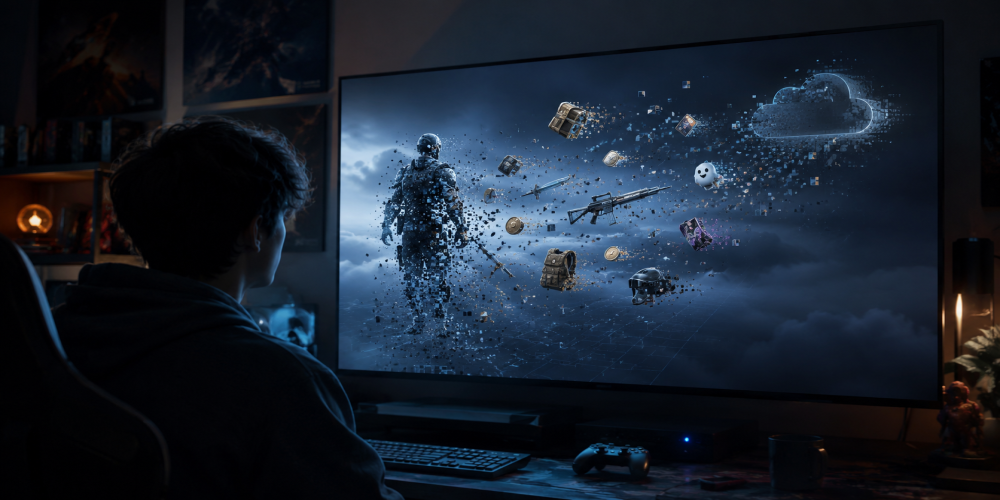
Online games encourage players to build collections that can feel deeply personal. A rare outfit may represent years of participation. A limited character might have required months of saved currency. A decorated home, vehicle collection, guild inventory, or carefully developed account can become a record of friendships, victories, events, and changing tastes.
Then the shutdown announcement arrives.
The developer explains that servers will close on a specific date. New purchases may be disabled. Premium currency might remain spendable for a few weeks. Players are invited to enjoy one final event, take screenshots, or transfer selected rewards into another game.
Once the servers go offline, many of those digital possessions disappear with them. Skins can no longer be equipped, characters cannot be loaded, and currencies become numbers in an inaccessible database. Even players who spent significant amounts of money may receive no refund.
This outcome can feel surprising because digital stores use the language of ownership. Players buy bundles, unlock items, collect rewards, and build inventories. Legally and technically, however, many online-game items are not owned in the same way as physical objects. They are usually licensed account features that only function while the publisher continues operating the game.
You Usually Buy Access, Not Permanent Ownership
When a player purchases a physical controller, book, or collectible figure, the object remains in their possession even if the manufacturer closes. Digital game items work differently.
Most online games describe virtual items as licensed content. The player receives permission to access and use the item under the game’s rules. The publisher normally retains control over the game, servers, account system, economy, and underlying data.
This distinction is often explained in the end-user license agreement, terms of service, or virtual-currency policy. These documents may state that:
- Virtual items have no real-world monetary value;
- Items cannot be exchanged for cash;
- The publisher may modify or remove content;
- Accounts can be suspended or terminated;
- The service may be discontinued;
- Access depends on active servers and supported software;
- Purchases grant a limited license rather than ownership of game files.
Few players read every page of legal language before buying a costume. The store interface feels much more direct: select an item, pay, and see it inside the account. That experience creates a strong sense of ownership even when the contract describes something narrower.
Why Online Items Depend on Servers
Many digital items are not stored as complete usable products on the player’s device. The local game client may contain the visual model, animation, or sound, but the server decides whether the account is allowed to use it.
When the player logs in, the game may check:
- Which characters belong to the account;
- Which cosmetics have been unlocked;
- How much currency is available;
- Which quests have been completed;
- What equipment is stored in the inventory;
- Whether a subscription remains active;
- Which event rewards were claimed;
- Whether the account has been suspended.
If the authentication and inventory servers disappear, the client can no longer confirm these permissions. The cosmetic files may still exist somewhere in the installation, but the game has no supported method for loading the account that owns them.
This is why a small server shutdown can make an enormous downloaded game unusable. The problem is not always that every game file vanished. The systems connecting those files to the player’s identity stopped responding.
What Usually Happens Before a Shutdown
Publishers generally announce a closure several weeks or months in advance. The exact process varies, but shutdown plans often follow a recognizable pattern.
- The publisher announces the end of service;
- The game is removed from digital stores;
- New account creation may be disabled;
- Real-money purchases are stopped;
- Subscriptions stop renewing;
- Remaining premium currency can still be spent;
- A final event or increased reward period begins;
- Customer support is reduced;
- Servers close on the announced date;
- Account data may later be deleted or archived.
Some companies disable purchases immediately to prevent customers from paying for items shortly before closure. Others keep stores active for part of the shutdown period, which can create criticism when the remaining lifespan is short.
What Happens to Purchased Skins?
Cosmetic skins usually remain usable until the servers close. After that, their future depends on whether the game receives an offline mode or account-transfer system.
In a fully online title with no offline support, skins become inaccessible. Players generally cannot export them as independent files, move them into another game, or continue using them through the original client.
A publisher may choose to preserve selected cosmetics by:
- Transferring them to a sequel;
- Providing replacement items in another game;
- Creating an offline wardrobe viewer;
- Releasing character models for personal use;
- Offering downloadable account records;
- Including legacy cosmetics in a future title.
These measures are voluntary unless local law, store policy, or a specific contractual promise creates additional obligations.
What Happens to Premium Currency?
Premium currency is especially vulnerable because it usually exists only inside the game’s economy. Players may have purchased gems, coins, credits, tokens, or points with real money, but the terms often describe them as non-refundable virtual units.
During a shutdown, publishers may take one of several approaches.
Allow Players to Spend It
The most common option is to leave the store open without accepting new payments. Players can use their existing balance before the servers close.
Convert It Into Another Currency
If the company operates another related game, it may convert part of the remaining balance into currency for that title. Conversion rates may be limited, capped, or restricted by region.
Offer Refunds
Refunds are less common and may apply only to recently purchased, unused currency. Payment platform rules and consumer law can influence eligibility.
Let It Expire
In many cases, unused currency simply becomes inaccessible after shutdown. The balance may still exist in an archived account database, but it no longer has a functioning game in which to be spent.
Why Unused Currency Is Not Always Refunded
From the player’s perspective, unused premium currency can look like money sitting in an account. Publishers often treat it differently.
The purchase may legally be described as immediate access to virtual credits rather than a stored cash deposit. Once the credits are delivered, the transaction is considered complete, even if the player never spends them.
Refund policies may also depend on:
- Where the player lives;
- How long ago the purchase was made;
- Whether the currency was partially used;
- Which platform processed the payment;
- Whether the purchase involved a subscription;
- The game’s published shutdown policy;
- Local consumer-protection requirements.
Players should still contact the payment platform and publisher when a recent purchase becomes unusable shortly after a shutdown announcement. A refusal is possible, but eligibility cannot always be determined from the game’s general terms alone.
What Happens to Characters and Equipment?
Characters, weapons, pets, mounts, and equipment are normally stored as account entitlements or database entries. When the service ends, the account can no longer retrieve or use them.
This applies whether the item was:
- Purchased directly;
- Received from a random reward system;
- Earned through months of play;
- Crafted using collected materials;
- Awarded through a tournament;
- Unlocked through a battle pass;
- Available only during a limited event.
The emotional value can vary enormously, but the technical dependency is similar. A free sword and a character obtained after hundreds of paid attempts may both be represented by small database records that only matter while the server recognizes them.
What Happens to Save Data?
Online save data can include character progress, inventories, achievements, quest history, social connections, rankings, and purchase records.
After a shutdown, the publisher may:
- Delete the data after a retention period;
- Keep an internal archive;
- Anonymize it for analytics;
- Allow players to download a limited record;
- Transfer selected data into another service;
- Preserve account history without preserving gameplay access.
A downloadable account file does not necessarily make the game playable. It may only contain purchase history, character statistics, or a list of unlocked items.
Players interested in preservation should save screenshots and videos before closure. Waiting until the final hours can be risky because servers may become unstable as many former players return.
Can the Game Be Converted Into an Offline Version?
Sometimes. An offline mode can preserve story missions, local matches, customization, or AI-based activities. However, converting an online game is not as simple as switching off multiplayer.
The developer may need to replace server-dependent systems such as:
- Account authentication;
- Inventory verification;
- Matchmaking;
- Cloud saves;
- Enemy spawning;
- Economy calculations;
- Quest progression;
- Random rewards;
- Anti-cheat checks;
- Social features;
- World-state updates.
A game that looks like a traditional action title may still rely on servers for nearly every important decision. Rebuilding those systems locally can require months of engineering and testing.
Why Publishers Do Not Always Make Offline Modes
Players often ask why a company cannot simply release one final patch. The reasons are usually financial, technical, contractual, or organizational.
The Team May No Longer Exist
Developers may have moved to other projects, left the company, or been affected by layoffs. The remaining staff may not understand every part of the old service.
Server Logic May Not Exist in the Client
Important gameplay systems may run entirely on private server software that was never designed for consumer devices.
Licensed Content May Expire
Music, brands, athletes, actors, characters, or other licensed material may prevent continued distribution.
Security Risks May Remain
Removing authentication and anti-cheat systems could expose code or create vulnerabilities.
The Project May Not Be Profitable
A company closing a game because of low revenue may be unwilling to fund a major preservation update that generates little or no income.
Platform Certification Costs Time
Console patches require testing and approval. A final offline build may need to be certified across several platforms.
Can Players Host Their Own Servers?
Community servers are one of the strongest ways to preserve an online game. They allow players to continue hosting matches or maintaining persistent worlds after official support ends.
This only works when the publisher provides server software, documentation, or enough technical access for the community to build compatible alternatives.
Official community-server support may include:
- A dedicated server application;
- Local network play;
- Server configuration files;
- Modding tools;
- Account import options;
- Documentation for matchmaking and authentication;
- Permission to run non-commercial servers.
Without official support, fans may attempt to reverse-engineer the game. That process can be technically difficult and may create legal disputes involving copyright, access controls, trademarks, or leaked server code.
Do NFTs or Blockchain Items Survive a Shutdown?
Blockchain-based game items can preserve a token record after a game closes. The blockchain may still show that a wallet controls a particular token.
That does not guarantee the item remains useful.
The visual artwork, game functionality, statistics, animation, marketplace, and integration may depend on servers operated by the developer. If those systems disappear, the player may retain a token that no longer has a functioning game attached to it.
Blockchain ownership can preserve:
- A transaction record;
- A token identifier;
- Wallet control;
- Transferability on supported networks;
- Metadata, when that metadata remains hosted.
It does not automatically preserve:
- The original game;
- Access to the character inside that game;
- Hosted artwork;
- A stable market value;
- Compatibility with another title;
- Developer support.
Owning the token and preserving the experience are separate problems.
Can Digital Items Transfer to a Sequel?
Publishers sometimes transfer cosmetics, account levels, currencies, or loyalty rewards into a sequel. This can reduce frustration and encourage players to adopt the new release.
Full transfers are uncommon because the sequel may use a different engine, character model, economy, licensing structure, or balance system.
A transfer program may include:
- Equivalent versions of selected skins;
- A commemorative badge;
- Currency based on previous spending;
- Early access to characters;
- Titles showing account age;
- Exclusive legacy cosmetics;
- Imported friends lists;
- Founder rewards.
These programs rarely preserve every item exactly. A collection containing thousands of objects may be reduced to a few recognition rewards.
What Happens to Battle Pass Purchases?
If a game closes during an active battle pass, the outcome depends on the shutdown timing and publisher policy.
Possible responses include:
- Refunding recent pass purchases;
- Automatically unlocking remaining rewards;
- Increasing progression speed;
- Extending the season until closure;
- Providing equivalent currency;
- Ending the pass without compensation.
Players should check whether the pass was purchased directly with money or with premium currency. Refund systems may treat those transactions differently.
What Happens to Subscriptions?
Recurring subscriptions are usually stopped before the shutdown date. Remaining time may continue until closure, be refunded, or be converted into another benefit.
Players should verify that automatic renewal has actually been disabled. Do not assume the announcement alone guarantees cancellation across every platform.
Check:
- The game account page;
- The console subscription menu;
- The mobile app store;
- The payment provider;
- Email confirmation of cancellation;
- The date of the final charge.
Keeping screenshots or receipts can help if a payment is processed after the announced cancellation period.
Are Players Entitled to Compensation?
There is no universal answer. Consumer rights vary by country, purchase type, platform, contract terms, and the amount of notice provided.
A player may have a stronger refund argument when:
- The item was purchased shortly before shutdown;
- The publisher continued selling content without clear warning;
- A promised access period was not delivered;
- The product became unusable immediately;
- A subscription renewed after cancellation;
- The store’s refund policy covers the situation;
- Local law provides rights beyond the game’s terms.
A player may have a weaker claim when the item was used for years, the closure was announced far in advance, or the terms clearly allowed service termination.
This is general information rather than legal advice. Players facing a significant financial loss should review local consumer-protection guidance or obtain professional advice.
Why the Word “Purchase” Creates Confusion
Digital storefronts often use familiar retail language. Buttons say Buy, Purchase, Own, Unlock, or Add to Collection.
The transaction feels similar to buying a physical product, yet the legal terms may describe a temporary, revocable, non-transferable license.
This gap between interface language and contractual language contributes to player frustration. People naturally expect something described as purchased to remain available.
Clearer store labels could distinguish between:
- Permanent downloadable content;
- Server-dependent account access;
- Consumable virtual currency;
- Time-limited subscriptions;
- Items usable only while the service operates.
Why Rarity Does Not Guarantee Preservation
Limited items can become highly meaningful because few players own them. Their rarity may come from a difficult challenge, early event, expensive bundle, or brief promotional window.
When the game closes, rarity provides no technical protection. The rarest item and the most common starter outfit can become inaccessible at the same moment.
This reveals an important difference between scarcity and durability. A digital item can be extremely scarce while remaining completely dependent on one company’s servers.
The Emotional Value of Digital Collections
It is easy to dismiss virtual items because they have no physical form. That ignores how people assign meaning.
A digital collection may represent:
- Time spent with friends;
- A difficult competitive achievement;
- Participation in an early community;
- A gift from another player;
- A memorial connected to someone who stopped playing;
- Personal creativity;
- Years of gradual progress;
- A particular period of life.
Losing access can therefore feel similar to losing photographs, journals, or souvenirs. The item’s code may be replaceable, but its context is not.
Why Shutdowns Can Feel Like Losing a Place
Online games are not only collections of mechanics. They can function as social locations.
Players remember guild halls, city squares, racing hubs, private islands, favorite maps, and ordinary places where friends gathered. When the servers close, the loss includes the inability to revisit those spaces.
This is why final-day events can become emotional. Players gather in familiar locations, wear old cosmetics, recreate screenshots, and say goodbye to people they may never meet elsewhere.
What Players Should Do After a Shutdown Announcement
Once a closure is confirmed, players should not wait until the last day to organize their account.
Stop or Review New Spending
Check how much time remains and whether purchases will provide meaningful use before closure.
Spend Remaining Currency Carefully
Use balances that will otherwise expire, but avoid buying extra currency unless the remaining value is clear.
Download Purchase Records
Save receipts, transaction histories, and subscription details.
Capture the Account
Take screenshots or videos of characters, inventories, homes, statistics, achievements, and social spaces.
Exchange Contact Information
Move important friendships to another platform before in-game communication disappears.
Check Transfer Programs
Claim any rewards offered in sequels or related games.
Cancel Subscriptions
Confirm cancellation through the actual payment platform.
Review Refund Options
Recent purchases may qualify under platform rules or local law.
How to Preserve Your Digital Memories
Even when the functional item cannot be saved, its history can be documented.
Useful Things to Capture
- Character-selection screens;
- Rare cosmetics;
- Inventory pages;
- Guild rosters;
- Achievement lists;
- Player statistics;
- Custom homes or creations;
- Favorite locations;
- Messages from friends;
- Final gameplay sessions.
Use local storage rather than relying only on the console or game’s cloud service. Organize files by game and date so they remain understandable later.
Can Screenshots Replace the Items?
No. A screenshot cannot reproduce the ability to equip, trade, customize, or play with an item. It can still preserve visual evidence and personal meaning.
The goal is not to pretend nothing was lost. It is to retain part of the experience that would otherwise disappear completely.
What Happens to User-Created Content?
Custom levels, houses, tracks, outfits, maps, and other user-generated content may disappear with the service unless export tools exist.
This content can be especially vulnerable because it may depend on:
- Cloud storage;
- Game-specific editors;
- Licensed assets;
- Online sharing systems;
- Server-side scripts;
- Account permissions;
- Workshop databases.
Developers can support preservation by allowing local exports, downloadable project files, or offline editor access.
What Happens to Competitive Achievements?
Leaderboards and rankings usually become inaccessible when servers close. Platform-level achievements may remain visible, but in-game seasonal records often disappear.
Players should capture:
- Highest rank;
- Tournament placements;
- Match history;
- Rare titles;
- Profile badges;
- Guild achievements;
- Seasonal statistics.
Competitive accomplishments can be difficult to verify later if no public archive remains.
Why Game Preservation Groups Care About Online Titles
Traditional game preservation can involve storing a disc, cartridge, installation file, manual, and compatible hardware. Online games add server software, databases, authentication systems, and live content schedules.
Preserving them may require:
- Client builds;
- Server code;
- Database structures;
- Patch history;
- Event scripts;
- Documentation;
- Network protocols;
- Community records;
- Legal permission to operate archived versions.
Without those elements, future researchers may be able to view videos of the game but not experience how its systems actually worked.
Why Private Servers Are Not Perfect Replacements
Community projects can preserve gameplay, but they may not recreate the original service exactly.
Differences can include:
- Missing events;
- Incorrect item behavior;
- Different progression rates;
- Incomplete quests;
- Smaller populations;
- Altered balance;
- No transfer of original accounts;
- Security or stability concerns.
A private server may preserve an important version of the game without preserving every player’s personal history.
Could Laws Require Offline Modes?
Players and preservation advocates have increasingly questioned whether publishers should be required to leave games in a functional state after support ends.
Possible proposals include:
- Mandatory offline modes where technically feasible;
- Release of dedicated server software;
- Clear minimum support periods;
- Refund rights for recent purchases;
- Store warnings for server-dependent products;
- Preservation exemptions for museums and archives;
- Required notice before shutdown.
Any regulation would need to address security, licensing, intellectual property, technical feasibility, and the cost of maintaining old software.
Why “Forever” Is Difficult for Live Services
No online game can guarantee endless operation. Technology changes, platforms close, licenses expire, security requirements evolve, and player populations decline.
The issue is not whether every service must run forever. The more practical question is what responsibilities publishers have when ending a product that contained paid, server-dependent goods.
Possible standards could include:
- Reasonable advance notice;
- Immediate suspension of risky purchases;
- Protection of remaining subscription value;
- Clear currency-expiration policies;
- Exportable account records;
- Offline functionality where practical;
- Support for community hosting;
- Honest store descriptions from launch.
How to Evaluate Digital Purchases Before Buying
Players cannot predict every shutdown, but they can consider how dependent a purchase is on the service.
Questions to Ask
- Can the game be played offline?
- Is the item stored locally or tied to an account?
- Can it transfer to another platform?
- Does the publisher have a shutdown policy?
- How old and active is the game?
- Is the item directly purchased or randomly obtained?
- Would I still value the purchase if the game closed next year?
- Am I paying for long-term ownership or short-term enjoyment?
A digital purchase can still be worthwhile even when it is temporary. Movie tickets, concerts, subscriptions, and holidays are temporary experiences too. The important difference is understanding what is being purchased.
Temporary Does Not Automatically Mean Worthless
An item does not need to last forever to provide value. A cosmetic used for hundreds of hours with friends may feel worthwhile even after the game closes.
The problem arises when expectations do not match reality. A player who understood the item as temporary access may evaluate the purchase differently from someone who believed it would remain permanently owned.
Transparent communication allows people to make that decision honestly.
Warning Signs That a Game May Be Approaching Closure
No single sign guarantees a shutdown, but several changes can suggest that support is weakening.
- Updates become smaller or less frequent;
- Roadmaps disappear;
- Community managers stop communicating;
- Regional servers are consolidated;
- Matchmaking times increase significantly;
- Major creators and competitive organizations leave;
- Customer support becomes slower;
- Development teams are reassigned;
- Rerun events replace new content repeatedly;
- Monetization becomes unusually aggressive;
- The game is removed from some stores;
- Official social accounts become inactive.
These signs should encourage caution, not panic. Some games continue operating for years with smaller teams and slower schedules.
What Publishers Can Do Better
A responsible shutdown can preserve trust even when the closure itself is disappointing.
Provide Long Notice
Players need enough time to finish goals, spend currency, save memories, and contact friends.
Stop Taking Money Early
Real-money purchases should end well before the service becomes unusable.
Unlock Content
Final updates can reduce grind, open limited cosmetics, and let players experience content they missed.
Protect Recent Purchases
Refunds or transfers can prevent customers from paying for items with almost no usable lifespan.
Release Offline Tools
Even a limited offline gallery, campaign mode, or local server can preserve part of the game.
Export Account Records
Players should be able to download inventories, achievements, and major statistics.
Communicate Honestly
Clear explanations are better than vague statements that avoid responsibility.
What an Ideal End-of-Service Plan Might Look Like
- Announce closure six months in advance;
- Stop real-money purchases immediately;
- Cancel subscriptions and refund unused time;
- Allow premium currency to be spent freely;
- Increase rewards and reduce progression barriers;
- Release an account-export tool;
- Provide an offline client or community server package where possible;
- Archive important game materials;
- Host a final event celebrating the community;
- Keep support available for a reasonable period after closure.
Not every game can meet every step, but treating preservation as part of product planning would improve outcomes significantly.
The Difference Between Account Value and Market Value
Players may describe an account as being worth hundreds or thousands because of spending, rarity, or time invested. That does not mean the publisher recognizes the account as a financial asset.
Many games prohibit account sales and deny that virtual items have monetary value. Third-party marketplaces may assign prices, but those prices depend on continued access to the service.
When the game closes, external market value can collapse immediately because there is no longer a functioning place to use the account.
Can Insurance or Chargebacks Protect Players?
Ordinary purchases of virtual items are rarely covered by insurance. Payment disputes or chargebacks may be possible in limited cases, particularly for unauthorized transactions or products that immediately failed to provide promised access.
Chargebacks should not be used casually. They can lead to account restrictions, payment-platform disputes, or rejection when the purchase was delivered and used as described.
Players should begin with the publisher and platform’s official refund process.
Why Physical Editions Do Not Always Solve the Problem
A disc can preserve installation data, but it cannot preserve servers that provide essential functionality.
A physical online game may still require:
- Account authentication;
- A launch-day patch;
- Downloaded content;
- Active matchmaking;
- Server-generated missions;
- Cloud inventory access;
- Always-online verification.
Physical ownership improves preservation only when the disc contains enough functional code to operate independently.
Why Single-Player Games Can Also Be Affected
A game may look like a solo experience while still requiring online servers for saves, rewards, progression, or authentication.
Potentially vulnerable features include:
- Cloud-only campaigns;
- Online profile checks;
- Rotating single-player missions;
- Server-controlled item drops;
- Companion applications;
- Downloadable episodes;
- Account-bound cosmetics;
- Mandatory anti-cheat services.
Players should not assume that the absence of multiplayer guarantees long-term access.
A Practical Shutdown Checklist for Players
- Read the official shutdown announcement carefully;
- Record the final purchase and server dates;
- Stop automatic subscription renewals;
- Download receipts and account information;
- Spend expiring currency;
- Claim transfer or loyalty rewards;
- Save screenshots and videos;
- Export user-created content when possible;
- Move friendships to another communication platform;
- Request refunds for eligible recent purchases;
- Check whether community servers are planned;
- Back up local files without violating platform rules;
- Visit favorite locations before closure;
- Confirm that final account data has been saved.
What Players Are Really Buying
Online-game purchases usually provide a combination of access, experience, expression, and participation. They may not provide permanent ownership in the traditional sense.
A skin allows the player to express identity while the game exists. A battle pass gives structure to one season. A character expands the available strategies. A guild decoration contributes to a shared space.
These benefits can be real even when temporary. The difficulty is that digital stores rarely emphasize the temporary part.
The Most Important Question Before Spending
Before purchasing an online item, ask whether the price feels reasonable for access that may eventually end.
This does not mean assuming the game will close tomorrow. It means treating the purchase like participation in a service rather than acquiring an indestructible object.
A player comfortable with that exchange can spend with clearer expectations. A player seeking permanent ownership may prefer offline games, downloadable expansions, physical collectibles, or products with strong preservation support.
When the Servers Finally Go Dark
After shutdown, the item may continue to exist as code, artwork, or a database record. What disappears is the supported relationship between that item and the player’s account.
The costume can no longer be equipped. The character cannot enter a match. The currency cannot be spent. The house cannot be visited. The leaderboard cannot confirm an achievement.
Legally, the publisher may have ended a licensed service according to its terms. Emotionally, the player may feel that a collection was taken away. Both perspectives can exist at the same time.
The best protection is a combination of clearer consumer expectations, better publisher shutdown plans, stronger preservation options, and more careful spending decisions.
Digital items are not meaningless simply because they are temporary. They can represent creativity, friendship, achievement, and years of memories. That value is exactly why online games should plan for their endings as carefully as they plan their launches.