
14 Jul
Sophia Bennett
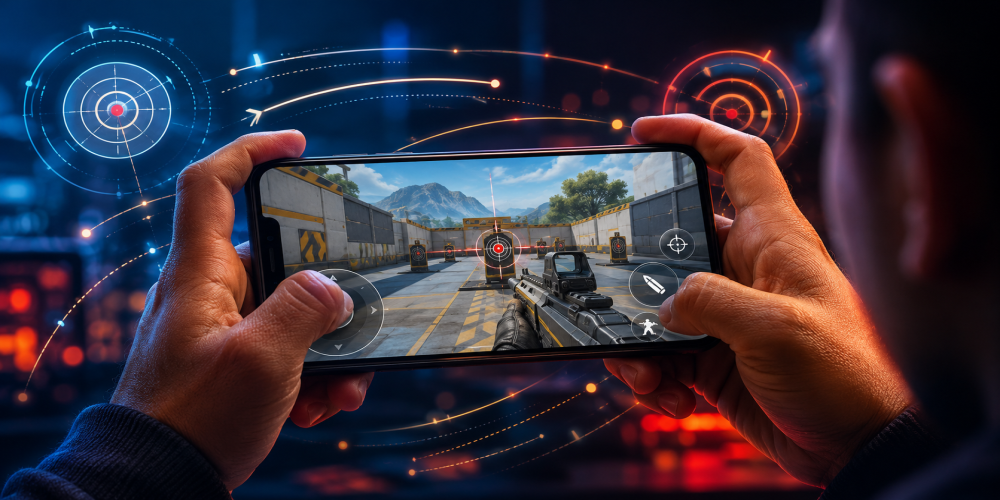
Improving aim in mobile shooters is not only about having fast fingers or expensive equipment. Accuracy comes from a mix of control, patience, settings, practice, and understanding how each match flows. Many players focus only on reaction speed, but strong aim often begins before the first opponent appears on screen. Your camera sensitivity, hand position, movement habits, and ability to stay calm all shape how consistently you land accurate shots. Mobile shooters can feel chaotic because the screen is small, controls are compact, and every second matters. Still, with the right approach, aiming becomes less random and more reliable. This guide looks at practical ways to improve your accuracy, whether you play battle royale games, tactical shooters, arena shooters, or fast mobile action games.
Finding the Right Sensitivity for Your Hands
Sensitivity settings can completely change how aiming feels in mobile shooters. If your sensitivity is too high, your crosshair may jump past the target before you can adjust. If it is too low, turning around or tracking moving enemies may feel slow and uncomfortable. The best sensitivity is not the one used by a popular streamer. It is the one that matches your fingers, screen size, grip style, and reaction habits.
A good way to test sensitivity is to enter a training area and aim at fixed objects from different distances. Try moving your crosshair from one object to another without overcorrecting. If you constantly move too far, reduce sensitivity slightly. If you struggle to reach targets quickly, increase it little by little. Small changes are better than dramatic adjustments because your muscle memory needs consistency.
Building Muscle Memory Through Repetition
Muscle memory is one of the most important parts of accurate aiming. In mobile shooters, your fingers must learn how far to swipe, how long to hold, and how quickly to correct small mistakes. This does not happen instantly. It develops through repeated actions done with the same control layout and similar settings. Constantly changing buttons or sensitivity can slow your progress because your hands never fully adapt.
Practice does not need to be exhausting. Ten focused minutes in a training mode can be more useful than an hour of careless matches. Work on simple drills such as tracking moving targets, switching between objects, and controlling recoil patterns. The goal is to make aiming feel natural, so your fingers respond without too much thinking during real fights.
Using Crosshair Placement Before the Fight Starts
Many players aim only after they see an opponent, but better players prepare their crosshair before contact happens. Crosshair placement means keeping your aim where an enemy is likely to appear. Instead of looking at the ground or random walls, keep your crosshair around chest or head level while moving through buildings, corners, or open areas.
This habit reduces the amount of adjustment needed when a fight begins. If your crosshair is already close to the target, you only need a small correction. That saves time and improves accuracy. In mobile shooters, even a small delay can change the result of a duel. Good crosshair placement also helps you stay mentally ready because you are always expecting possible movement from another player.
Controlling Movement While Aiming
Movement can protect you, but uncontrolled movement can ruin your aim. Many mobile players swipe, jump, crouch, and move in every direction at once, then wonder why their shots miss. Fast movement is useful only when it has purpose. If your character is moving too aggressively while your aim is unstable, your accuracy will suffer.
Try learning how to aim while making smaller movement adjustments. Instead of dragging your movement joystick wildly, use short side steps and controlled repositioning. In close-range fights, movement helps you avoid predictable patterns. In mid-range fights, staying too active may make recoil harder to manage. The best players know when to move quickly and when to slow down for cleaner aim.
Understanding Recoil and Weapon Behavior
Every weapon in a mobile shooter has its own rhythm. Some weapons rise upward after several shots, while others move sideways or become harder to control during longer fire. Improving aim means learning how your favorite weapons behave instead of treating them all the same. A weapon that feels powerful may still perform poorly if you cannot control it.
Spend time testing weapons in practice mode. Fire at a wall without correcting your aim and watch the pattern. Then repeat while gently pulling your aim in the opposite direction. This teaches you how much correction is needed. Short bursts are often more accurate than holding the fire button for too long, especially at medium or long distances. Better recoil control turns average aim into consistent pressure.
Improving Accuracy With a Better Control Layout
Your control layout should help your fingers react quickly without covering important parts of the screen. Default controls can work, but they are not always ideal for every player. Some players perform better with three-finger or four-finger layouts because they can aim, move, fire, and adjust the camera at the same time. Others prefer a simpler setup that feels cleaner and less stressful.
The key is comfort and consistency. Buttons should be large enough to press easily but not so large that they block your view. Important actions like firing, aiming, crouching, jumping, and reloading should be placed where your fingers can reach them naturally. After changing your layout, practice before entering serious matches. A strong layout should feel smooth, not confusing.
Training Your Eyes to Read the Screen Faster
Aim is not only about fingers. Your eyes guide every movement you make. In mobile shooters, the screen can be crowded with buttons, effects, maps, teammates, items, and movement. If your eyes do not quickly recognize threats, your aim will always feel late. Better visual awareness helps you react earlier and aim with more confidence.
Train yourself to scan common danger areas instead of staring at one part of the screen. Watch doorways, rooftops, windows, hills, corners, and open lanes where opponents may appear. Use sound indicators, minimap signals, and movement clues when available. The earlier you notice a target, the more time you have to place your crosshair correctly and control the fight.
Practicing Close-Range Aim Without Panic
Close-range fights are often messy in mobile shooters. Opponents move quickly, camera angles change fast, and players can panic easily. The first step to improving close-range aim is staying calm enough to track the opponent instead of randomly swiping across the screen. Panic creates large movements, and large movements usually reduce accuracy.
Practice following moving targets smoothly at short distances. Focus on keeping your crosshair connected to the opponent’s body while moving around them. In close combat, hip fire may sometimes feel faster than aiming down sights, depending on the game and weapon. Learn when each option works best. Good close-range aim is not just speed. It is controlled tracking under pressure.
Mastering Mid-Range and Long-Range Accuracy
Mid-range and long-range fights require patience. Many players miss because they fire too early, drag the screen too quickly, or ignore weapon stability. At longer distances, small mistakes become more visible. A tiny overcorrection can move your aim far away from the target. This is why slower, cleaner control often works better than frantic movement.
Use burst firing when the weapon becomes unstable. Let your aim reset between short sequences instead of forcing every shot through heavy recoil. If the opponent is moving sideways, aim slightly ahead of their path when the game requires prediction. Also, avoid standing in the open for too long. Accuracy improves when you combine careful aiming with smart cover usage.
Making Practice Matches More Useful
Regular matches can teach you a lot, but only if you pay attention to what went wrong. Many players lose a duel and instantly blame lag, teammates, or weapons. Sometimes those factors matter, but improvement starts with honest review. Ask yourself whether your crosshair was too low, your sensitivity felt unstable, or your movement made aiming harder.
After each match, choose one aiming habit to improve. Maybe you want to keep your crosshair higher. Maybe you want to use shorter bursts. Maybe you want to stop changing sensitivity every day. Focused practice builds progress faster than random grinding. Even casual matches become valuable when you enter them with a specific goal.
Using Aim Assist Without Depending on It Completely
Many mobile shooters include aim assist to make touch controls more manageable. Aim assist can help with tracking and small corrections, but relying on it too much can limit your growth. It works best when your own crosshair placement and movement are already strong. If your aim is far from the target, aim assist will not solve every mistake.
Use aim assist as support, not as the main skill. Practice manual tracking, recoil control, and target switching even when assistance is active. This helps you stay accurate in situations where aim assist feels weaker, such as long-range fights, crowded areas, or fast movement battles. Strong players combine system help with personal control.
Keeping Your Device and Screen Ready
Your device setup can affect aiming more than you might expect. A dirty screen, low frame rate, uncomfortable grip, or unstable internet connection can make accuracy feel worse. Before playing seriously, clean your screen, close unnecessary background apps, and make sure your device is not overheating. Smooth performance makes finger movement feel more predictable.
Screen size also matters. On smaller phones, button placement needs extra care because space is limited. On larger devices, wider swipes may feel easier, but buttons may need to be moved closer to your fingers. Some players use finger sleeves for smoother movement, while others prefer direct contact. The best setup is the one that feels stable across many matches.
Improving Aim Through Smarter Positioning
Good positioning makes aiming easier. If you always fight from bad angles, even strong aim will feel inconsistent. Try to choose positions that give you cover, visibility, and enough space to react. Standing in the open forces you to aim perfectly under pressure, while using cover gives you time to adjust and reset.
High ground, corners, windows, and objects can help you control fights. When you know where opponents may come from, your crosshair placement becomes easier. Positioning also reduces the need for sudden camera movement. Instead of spinning around in panic, you can focus on one or two likely directions. Smart positioning turns aim into a planned action rather than a desperate reaction.
Creating a Simple Daily Aim Routine
A daily aim routine can help you improve without making the game feel like homework. Start with a few minutes of sensitivity warm-up by aiming between fixed points. Then practice tracking moving targets. After that, test recoil control with your favorite weapons. Finish with a few real matches where you focus on one specific aiming habit.
The routine does not need to be long. Consistency matters more than length. A short session every day builds better results than rare long sessions filled with frustration. Keep your settings stable, review your mistakes, and avoid chasing perfect aim overnight. Over time, your fingers, eyes, and decision-making begin working together, making mobile shooter accuracy feel much more natural.