14 Jul
Sophia Bennett
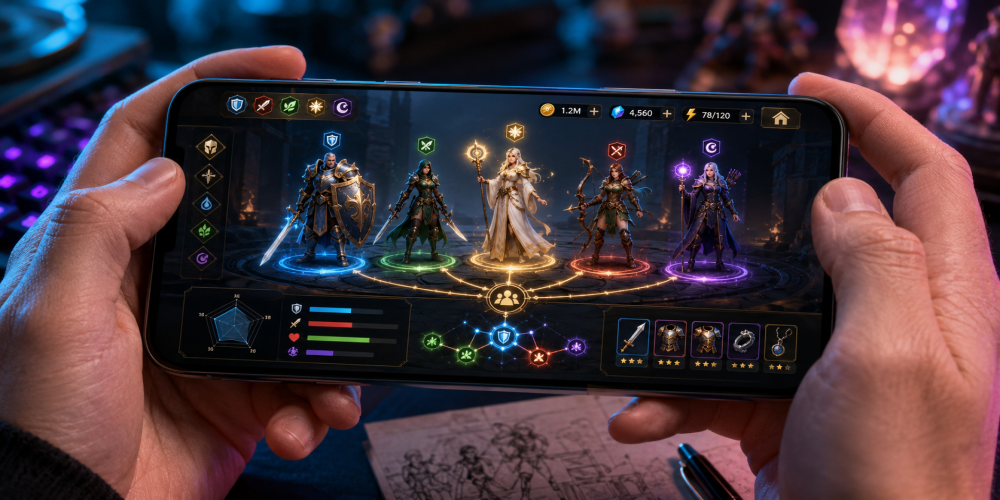
Building a winning team in mobile RPG games is not only about collecting the rarest characters or choosing the heroes with the biggest numbers on the screen. A strong team works because every unit has a purpose, every role supports the others, and every upgrade moves the whole squad toward better performance. Mobile RPGs often tempt players with flashy characters, limited banners, colorful skills, and huge damage previews, but real success usually comes from balance. A well-built team can survive difficult stages, handle boss fights, clear daily content faster, and perform better in arena modes. Whether the game uses turn-based combat, auto-battle systems, tactical grids, or real-time skill timing, the same core idea remains: the best team is not just powerful, it is organized.
Understanding Team Roles Before Choosing Characters
The first step in building a strong mobile RPG team is understanding what each character is meant to do. Most RPG teams are built around roles such as damage dealer, tank, healer, support, debuffer, buffer, controller, or specialist. A team made only of damage characters may look exciting at first, but it often fails when enemies survive long enough to punish weak defense. A team made only of defensive characters may survive, but battles can take too long or end in failure because there is not enough pressure.
Before investing resources, look at what your team needs most. If your squad falls quickly, you may need a tank, healer, shield provider, or defense buffer. If battles last forever, you may need stronger damage or better damage support. If enemies keep controlling your team, you may need cleansing, resistance, or crowd control protection. Winning begins with knowing the job of every slot.
Choosing a Main Damage Dealer Carefully
Most successful mobile RPG teams are built around one or two main damage dealers. This character is responsible for clearing enemies, pressuring bosses, or finishing important targets. The best damage dealer is not always the rarest character. Sometimes a more accessible unit becomes stronger because they are easier to upgrade, easier to awaken, or better supported by available equipment.
When choosing your main damage dealer, check more than raw attack numbers. Look at skill scaling, cooldowns, area damage, single-target damage, critical potential, energy cost, and compatibility with your supports. A character with powerful attacks but poor uptime may feel inconsistent. A character with moderate damage but frequent skills can be more reliable. Your main damage dealer should match the type of content you play most often, whether that is campaign stages, raids, boss battles, dungeons, or PvP.
Using Tanks to Control Pressure
A tank is more than a character with high health. A useful tank controls enemy pressure and gives the rest of the team enough time to perform. Some tanks protect allies through shields, taunts, damage reduction, defense buffs, or barrier effects. Others survive through self-healing, counterattacks, or strong resistance. The best tank for your team depends on what kind of danger you face most often.
In many mobile RPGs, newer players ignore tanks because damage feels more exciting. That can work during early stages, but harder content usually rewards survival. A tank helps keep fragile characters alive, especially healers and damage dealers. In tactical RPGs, the tank may hold the front line. In auto-battle RPGs, the tank may absorb enemy focus. In turn-based games, the tank may control timing with defensive skills. A strong front line often decides whether your team has enough time to win.
Adding Healers and Shielders for Stability
Healing and shielding are key parts of long-term success in many mobile RPG games. A healer restores lost health, while a shielder prevents damage before it lands. Some games favor one more than the other. If enemies deal heavy burst damage, shields may be more useful because healing cannot help a character who is already defeated. If battles involve steady damage over time, healing may provide better value.
The strongest support characters often do more than restore health. They may cleanse negative effects, revive allies, improve defense, boost attack, increase speed, or provide energy. When choosing a healer or shielder, think about the full kit rather than only one skill. A support who heals less but brings powerful buffs may improve your entire team more than a pure healer with no extra utility. Stability allows your damage dealers to work without constant danger.
Building Around Buffs and Debuffs
Buffs and debuffs can transform an average team into a powerful one. Buffs improve your own characters through effects such as attack increase, defense increase, speed boost, critical rate, damage resistance, or energy recovery. Debuffs weaken enemies through defense reduction, poison, burn, slow, silence, stun, vulnerability, or reduced healing. These effects often matter as much as direct damage.
Many players underestimate debuffers because their contribution is not always visible at first glance. A defense reduction effect can make your main damage dealer hit much harder. A speed reduction can give your team more turns. A silence can prevent an enemy from using a dangerous ability. In boss fights, debuffs can shorten battles and reduce risk. In PvP, the right control effect can change the entire match. A winning team usually has at least one character who improves team output or weakens enemy defenses.
Creating Synergy Instead of Random Power
Synergy means characters work better together than they do alone. A team with synergy feels smooth because abilities connect naturally. For example, one character may apply a burn effect, while another deals bonus damage to burning enemies. One support may increase critical chance, while the main damage dealer relies on critical attacks. One tank may group enemies together, while a mage deals area damage to clustered targets.
Randomly combining strong characters can still produce results, but synergy makes the team more consistent. Read skill descriptions carefully and look for effects that interact. Pay attention to elements, factions, classes, combo bonuses, formation bonuses, and passive abilities. Some mobile RPGs reward teams built around a single element, while others favor mixed squads. The more your characters support each other, the less you need to rely on raw stats alone.
Balancing Single-Target and Area Damage
Damage type matters because different game modes require different solutions. Area damage is excellent for clearing waves, farming stages, and handling groups of enemies. Single-target damage is better for bosses, elite enemies, raids, and arena matches where one dangerous opponent must be removed quickly. A team with only area damage may struggle against powerful bosses. A team with only single-target damage may clear regular stages slowly.
A balanced mobile RPG team often includes both options. Your main damage dealer may focus on single-target pressure, while a second attacker or support handles groups. Some characters can do both, but they may not be the best at either job. Think about the content you want to clear. If you are stuck on campaign waves, area damage may help. If your raid score is low, single-target damage and defense reduction may matter more.
Paying Attention to Speed and Turn Order
In many mobile RPGs, speed controls the rhythm of battle. A fast support can apply buffs before your damage dealer attacks. A fast debuffer can weaken enemies before your team spends major skills. A slow healer may act too late to save allies. Even in games that do not use classic turns, skill timing and cooldown rotation still matter.
Building the right turn order can make your team feel much stronger without changing characters. A common structure is support first, debuffer second, damage dealer third, and healer or tank depending on the situation. Some teams want the tank to act early to apply protection. Others want the controller to act first to stop enemies. If your game allows speed tuning through gear, runes, artifacts, or upgrades, use it carefully. Correct timing often creates more value than simply raising attack numbers.
Using Positioning and Formation Wisely
Positioning can be just as important as character choice. Many mobile RPGs use formations where front-line characters take more damage, back-line characters stay safer, and middle positions receive mixed pressure. Placing a fragile mage in the wrong slot can cause quick failure. Putting a tank too far back may waste their defensive purpose.
Read how enemy targeting works. Some enemies attack the front row, while others target the lowest-health character, back row, nearest unit, or highest attack character. Adjust your formation based on the stage. A healer may need protection behind a tank. A ranged attacker may need distance. A support with aura effects may need a central position. Winning teams often change formation depending on the challenge instead of using the same setup everywhere.
Managing Resources Without Wasting Upgrades
Mobile RPGs usually have limited resources: gold, experience items, upgrade stones, gear materials, shards, stamina, skill books, and rare currency. A common mistake is spreading upgrades across too many characters too early. This creates a wide roster of weak units instead of one strong team capable of clearing content efficiently.
Focus your best resources on the core team first. Prioritize your main damage dealer, tank, and primary support. Upgrade skills that directly affect performance, such as main damage skills, healing abilities, shields, or important debuffs. Avoid maxing every new character immediately just because they look exciting. Test them first, compare their role, and decide whether they truly improve your team. Smart resource management helps free-to-play and low-spend players compete more effectively.
Choosing Gear That Matches the Character
Gear should support a character’s role. A damage dealer may need attack, critical rate, critical damage, speed, or elemental bonuses. A tank may need health, defense, resistance, damage reduction, or block chance. A healer may scale with attack, health, or healing bonus depending on the game. Equipping random high-rarity items is not always the best choice if the stats do not match the character’s needs.
Look at skill descriptions to understand scaling. If a healer’s recovery depends on maximum health, health gear may be better than attack gear. If a debuffer needs accuracy to land effects, accuracy may matter more than extra damage. If a tank already survives well, speed or resistance could be more useful than more defense. Gear is where team building becomes detailed. Correct stats can make an average character perform like a premium one.
Testing Teams in Different Game Modes
A team that dominates story mode may not perform well in arena battles, raids, towers, or timed dungeons. Each mode rewards different strengths. Campaign stages often need wave clear and survival. Boss fights need single-target damage, debuffs, and sustain. PvP needs speed, control, burst damage, or counterplay. Farming stages need efficiency and consistency.
Do not judge a team only by one result. Test your squad in multiple modes and notice where it struggles. If the team loses in PvP before acting, speed may be the issue. If it fails bosses, you may need stronger single-target damage or defense reduction. If it cannot clear waves, add area attacks. Successful players build a main team first, then gradually create specialized teams for different challenges.
Reading Skill Descriptions Instead of Trusting Rarity
Rarity can be helpful, but it does not guarantee perfect performance. Some lower-rarity characters become excellent because their skills are simple, efficient, and easy to upgrade. Some rare characters require specific teammates or expensive investment before they become powerful. Reading skill descriptions carefully prevents poor decisions based only on character art or ranking lists.
Check cooldowns, passive effects, scaling, upgrade bonuses, trigger conditions, and team interactions. A character who looks weak at level one may become valuable after unlocking a passive skill. Another character may appear strong but depend on a condition that rarely happens. Understanding skill details helps you build with intention. Team building becomes much easier when you know what every character actually contributes.
Adapting Your Team as the Game Changes
Mobile RPGs often change through updates, new characters, balance adjustments, seasonal events, and new game modes. A team that feels perfect today may need changes later. This does not mean you should rebuild everything after every update. It means you should stay flexible and avoid becoming too attached to one setup when the game starts asking for different solutions.
Keep a few backup characters leveled enough to test. Save some resources for future upgrades. Watch how new content challenges your current team. If enemies start using more control effects, build cleanse or resistance. If new bosses punish healing, try shields or damage reduction. If timed stages become important, improve speed and area damage. Strong team builders do not only create one team. They learn how to adjust without wasting progress.