06 Jul
Michael Reed
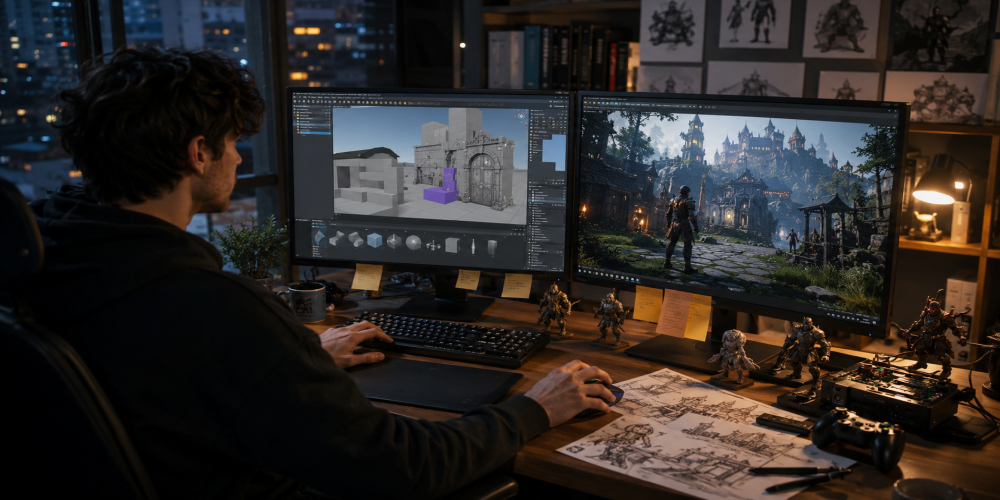
Some of the most influential games did not begin with a formal pitch, a large studio, or a carefully researched market opportunity. They began with players changing games they already loved.
A mod creator might alter a map, introduce a new rule set, redesign enemy behavior, or combine familiar systems in an unusual way. At first, the project may be rough, technically unstable, and understandable only to a small community. Yet it can offer something professional releases have not recognized: a genuinely new reason to play.
When enough people download the project, invite friends, create videos, and organize communities around it, the mod stops looking like a minor adjustment. It begins functioning like a separate game that happens to use someone else’s technology.
The path from free modification to commercial release is rarely simple. Developers must rebuild borrowed assets, secure legal permission, improve performance, design onboarding, operate servers, and decide which parts of the original community experience should remain. Still, successful mods provide one advantage most new games never receive: evidence that real players already care about the idea.
What Is a Video Game Mod?
A mod is a player-created modification that changes an existing game. It can be as small as a visual replacement or as ambitious as a new campaign with original mechanics, characters, environments, and progression.
Mods are possible when developers provide official tools, expose accessible files, or build games in ways that communities can understand and alter. Some projects use formal software development kits. Others rely on community-made editors and technical experimentation.
Common Types of Mods
- New maps and missions;
- Alternative multiplayer modes;
- Interface improvements;
- Visual and audio replacements;
- Balance changes;
- New characters and equipment;
- Total conversions;
- Community patches;
- Randomizers and challenge modes.
A total conversion is especially important in the journey toward a standalone release. It uses the original engine as a foundation but replaces enough content that the result begins to develop its own identity.
Why Mods Are Such Powerful Design Experiments
Traditional game development is expensive. A studio may spend years building technology and content before learning whether players enjoy the central idea.
Modders work differently. They begin with a functioning game and focus directly on the experiment.
Instead of building movement, networking, rendering, physics, menus, and input systems from the beginning, they can ask a narrower question:
What happens if players use these existing mechanics under completely different rules?
This makes modding an efficient laboratory for game design. A creator can develop a prototype, release it quickly, observe how people behave, and adjust the concept through frequent updates.
Mods Begin With Friction Players Already Understand
Many important mods emerge when players notice an experience that the original game does not provide.
They may want:
- A more tactical version of the combat;
- A cooperative survival mode;
- Short competitive rounds;
- A persistent economy;
- More realistic movement;
- Stronger role specialization;
- A social mode built around improvisation;
- A different level of difficulty.
Because mod creators are also players, they often understand the problem from direct experience. They are not inventing a theoretical audience. They are building something they personally want to use.
The Existing Game Provides a Shared Language
A mod does not need to teach every basic interaction. Early users already understand the original game’s controls, weapons, camera, and movement.
This allows a community project to introduce unusual rules without overwhelming players with entirely unfamiliar systems.
A new standalone game must explain both its core mechanics and its unique idea. A mod can initially focus almost entirely on the unique idea.
Community Feedback Arrives Immediately
Mod development often happens in public. Players discuss each update, report bugs, create servers, suggest features, and develop strategies.
This feedback can be more detailed than traditional market research because it comes from people actively using the project.
Communities Reveal:
- Which mechanics create repeat play;
- Where new users become confused;
- Which maps support the best matches;
- How players behave outside the intended design;
- Which technical problems matter most;
- Whether the concept can support long-term competition;
- Which features divide the audience.
The mod becomes a living prototype shaped by thousands of real sessions.
Players Often Discover the Real Game Before the Creator Does
Creators may design a mode around one activity and later discover that the audience is fascinated by something else.
Players might spend more time trading than fighting, creating custom social rules, competing for faster completion times, or using movement systems in unexpected ways.
These behaviors can reveal the strongest part of the concept. Successful developers observe what the community enjoys rather than protecting the original plan at all costs.
When Does a Mod Start Feeling Like a Separate Game?
There is no precise threshold. The transition usually happens gradually.
A mod begins to resemble an independent game when it develops:
- Distinct rules;
- Original maps or campaigns;
- A recognizable community;
- Dedicated servers;
- Its own progression structure;
- Unique visual identity;
- Regular updates;
- A name more important than the original game’s title.
At this point, players may discuss the mod without mentioning its source. The original game has become technology underneath a separate experience.
Popular Mods Provide Proof of Demand
One of the greatest risks in game development is building something nobody wants. A successful mod reduces that uncertainty.
Download numbers, active servers, community forums, streaming audiences, and repeated play demonstrate that the idea has demand.
This evidence can help a small team:
- Attract a publisher;
- Raise investment;
- Recruit experienced developers;
- Negotiate with an engine owner;
- Build an audience before launch;
- Test possible business models.
A popular mod is not a guarantee of commercial success, but it is more persuasive than a presentation filled with theoretical audience estimates.
The Community Becomes an Early Marketing Network
Mods usually spread through recommendations rather than traditional advertising. Players share installation guides, invite friends, operate servers, and create videos explaining the project.
By the time a standalone version is announced, the concept may already have:
- Dedicated content creators;
- Competitive communities;
- Volunteer moderators;
- Fan wikis;
- Strategy guides;
- Recognizable terminology;
- A large wish-list audience.
This provides the future game with a valuable launch foundation.
Why a Successful Mod Cannot Simply Be Sold
A mod may contain code, textures, animations, sounds, characters, and environments belonging to the original game’s developer or other creators.
Charging money for the existing project can therefore create legal and licensing problems.
To become a commercial game, the team usually needs to replace or formally license everything it does not own.
This May Require:
- Original character models;
- New environments;
- New music and sound effects;
- Rewritten code;
- A new user interface;
- Original branding;
- Different narrative material;
- Licensed or newly developed technology.
The project must preserve the experience while removing dependencies on someone else’s intellectual property.
The Original Developer Can Determine the Project’s Future
Some studios actively support mod communities. They release tools, allow non-commercial projects, hire creators, or help promising mods become official products.
Others impose stricter limits because of security, licensing, brand control, or commercial concerns.
A mod’s future may depend on whether the original rights holder:
- Allows continued distribution;
- Offers a commercial license;
- Purchases the project;
- Hires the development team;
- Requests changes;
- Requires the mod to stop using protected material.
Creators benefit from understanding these rules early rather than waiting until the project becomes too large to redesign easily.
Some Modders Join Established Studios
A successful project demonstrates skills that are difficult to show through a traditional résumé. The creator has already designed systems, handled feedback, released updates, and maintained a user community.
Studios may recruit modders for roles involving:
- Level design;
- Gameplay programming;
- Systems design;
- Community development;
- Technical art;
- Live operations;
- Quality assurance.
In some cases, the creator joins the company behind the original game and helps develop an official version of the idea.
Other Teams Build a New Studio
Not every creator wants to work inside a larger company. A mod team may form an independent studio and rebuild its idea using a commercial engine.
This route provides more creative control but introduces responsibilities that did not exist during hobby development.
A New Studio Must Handle:
- Business registration;
- Contracts;
- Payroll;
- Production planning;
- Platform certification;
- Marketing;
- Customer support;
- Data protection;
- Server costs;
- Long-term maintenance.
Making a compelling mod and operating a sustainable studio are very different challenges.
Rebuilding the Technology Is Often the Hardest Step
The mod may work because the original game already solves thousands of technical problems. A standalone version must either license that technology or recreate the required systems.
Even familiar features demand significant work:
- Movement and collision;
- Animation blending;
- Networking;
- Matchmaking;
- Save systems;
- Input support;
- Audio behavior;
- Server administration;
- Accessibility;
- Anti-cheat protection.
The creative idea might be proven, but converting it into a stable commercial product can still take years.
A Standalone Release Needs Better Onboarding
Mod communities are often patient with complexity. Early players may read installation instructions, join a forum, study community guides, and tolerate rough menus.
A commercial audience expects a smoother introduction.
The standalone game may need:
- A tutorial;
- Clear matchmaking options;
- Better settings menus;
- Controller support;
- Accessible explanations;
- Improved error messages;
- Automatic updates;
- Simpler server discovery.
The original mod could rely on community knowledge. A major release must teach itself.
Roughness Can Be Part of a Mod’s Charm
Community projects often feel unpredictable. Strange interactions, unusual physics, and improvised rules can create memorable experiences.
Commercial development naturally removes many technical problems. It may also remove some of the personality players loved.
A team must decide which imperfections are genuine flaws and which contribute to the experience.
Scaling the Audience Changes Player Behavior
A small community can regulate itself through reputation. Regular players recognize each other, server administrators enforce local rules, and disruptive users quickly become known.
A major release attracts a much larger and less connected audience. Informal moderation stops being sufficient.
The game may need:
- Automated matchmaking;
- Reporting tools;
- Behavior penalties;
- Account security;
- Chat filters;
- Regional servers;
- Professional customer support.
Growth changes more than server capacity. It changes the social character of the game.
Player-Run Servers Can Conflict With Commercial Control
Mods often depend on community servers with custom rules, maps, and moderation. Commercial releases may prefer centralized matchmaking for consistency and security.
Removing community hosting can disappoint the audience that helped create the project’s success.
A balanced approach might provide:
- Official matchmaking;
- Dedicated server tools;
- Private lobbies;
- Custom rule settings;
- Mod support;
- Server browsers.
The challenge is preserving community freedom without creating an unmanageable technical environment.
The Business Model Can Redefine the Game
A free mod does not need to generate revenue. A standalone game must pay its developers, operate services, and fund future updates.
Possible business models include:
- A one-time purchase;
- Early access;
- Optional expansions;
- Cosmetic sales;
- A seasonal pass;
- Free-to-play access;
- Subscription inclusion.
The wrong model can damage the qualities that made the mod popular. Aggressive progression systems or constant store prompts may make the commercial version feel less generous than the community project.
Early Access Fits Mod-Born Games Naturally
Early access allows a game to continue the public development style established during its mod period.
Players receive a functioning but incomplete product, provide feedback, and watch it evolve through updates.
This approach can help fund development while preserving community involvement. It also creates risks when the roadmap is unclear or progress slows.
A Strong Early Access Transition Needs:
- A stable playable foundation;
- A clear explanation of unfinished systems;
- Realistic update plans;
- Transparent communication;
- Protection of player progress;
- A price matching the current state.
Mods Can Create Entire Genres
Some modifications do more than become successful games. They establish design patterns that many later releases adopt.
A new mode may introduce a different relationship between survival, teamwork, progression, or competition. Once its popularity becomes visible, other developers begin exploring similar ideas.
The original mod may inspire:
- Standalone competitors;
- Official modes in major franchises;
- New terminology;
- Esports formats;
- Changes in monetization;
- New streaming trends.
Player experimentation can therefore influence the direction of the wider industry.
Why Large Studios Sometimes Miss These Ideas
Major studios manage large budgets and significant risk. Unusual concepts can be difficult to approve when market demand is uncertain.
A modder does not need approval from several departments to test a strange rule. They can build it because it sounds interesting.
This freedom allows community creators to explore ideas that may initially look too narrow, confusing, or unpredictable for commercial production.
Once the mod proves that players understand and enjoy the concept, the perceived risk changes.
Mods Reveal Demand Before the Market Has a Name
Players may want a particular experience without knowing how to describe it. A successful mod gives that desire a visible form.
Before the project appears, surveys may not reveal much because people cannot request a genre they have never experienced.
After the mod becomes popular, the audience can clearly say:
- We want more games with this structure;
- We enjoy this match length;
- We like this balance of cooperation and competition;
- We want progression that works this way;
- We want official support for this kind of play.
Streamers Can Accelerate the Transition
A mod can remain small for months and then expand rapidly after creators begin streaming it.
Unscripted community projects often produce surprising moments that work well in video. Viewers can immediately understand why the experience is entertaining.
Streaming provides:
- Free exposure;
- Visible proof of audience interest;
- Rapid community growth;
- Feedback from many playstyles;
- Potential contact with publishers;
- Pressure to improve server capacity.
Sudden popularity can be valuable and overwhelming at the same time.
Viral Success Creates Technical Problems
A project built for a small group may not support tens of thousands of players.
Rapid growth can cause:
- Server overload;
- Installation confusion;
- Security issues;
- Cheating;
- Impersonation;
- Fake downloads;
- Community moderation problems;
- Unrealistic expectations.
The creator may need to become a full-time developer and community manager almost overnight.
Cheating Becomes a Larger Concern
A small mod community may manage cheating through private servers and local administrators. A commercial competitive game needs stronger systems.
It may require:
- Server-authoritative calculations;
- Account penalties;
- Detection software;
- Replay review;
- Reporting tools;
- Regular security updates.
These systems add cost and can affect privacy, performance, and mod compatibility.
Community Expectations Can Limit Reinvention
The existing audience helped prove the idea, but that audience may resist changes needed for a wider release.
Veterans may dislike:
- Simplified mechanics;
- Shorter matches;
- New progression systems;
- Rebalanced equipment;
- Automated matchmaking;
- Visual redesigns;
- Commercial pricing.
New players may need exactly those changes to understand and enjoy the game.
The Team Must Decide Who the Game Is For
A standalone version can preserve the original experience closely or reinterpret it for a broader audience.
Neither direction is automatically correct.
A faithful version protects community identity but may retain inaccessible systems. A broader version can achieve greater commercial success while alienating early supporters.
The strongest projects identify the central experience that cannot be compromised and remain flexible about everything surrounding it.
Not Every Popular Mod Should Become a Full Game
Some ideas work because they are attached to a familiar game. Their appeal may depend on existing characters, physics, or community expectations.
Rebuilding the concept independently can reveal that the mod lacks enough depth for a commercial product.
Warning Signs Include:
- Players enjoy it only briefly;
- The idea depends heavily on original assets;
- There is little room for progression;
- The community is large but not willing to pay;
- The experience requires a population the team cannot maintain;
- The novelty disappears after several sessions.
A successful free project and a sustainable commercial release are not the same thing.
Some Mods Work Better as Inspiration
A studio may choose not to commercialize the exact project. Instead, the team can use what it learned to build something new.
This approach allows creators to keep the strongest principles while replacing restrictive elements.
The final game may have a different setting, art style, progression system, or structure while preserving the original insight.
Why Mod Documentation Matters
Community knowledge can disappear when development moves to a new engine or platform. Design decisions that evolved informally may never have been written down.
Teams benefit from documenting:
- Core rules;
- Popular community strategies;
- Server settings;
- Known technical limitations;
- Reasons behind balance changes;
- Important cultural traditions;
- Features players created for themselves.
This helps the standalone version preserve more than surface-level mechanics.
Volunteer Work Creates Ownership Questions
Mods may include contributions from many people: programmers, artists, translators, map designers, server administrators, and testers.
When the project becomes commercial, the team must determine who owns which contributions and whether permission exists to include them.
Informal collaboration is manageable for a hobby project. Commercial distribution requires clear agreements.
Creators Should Clarify:
- Who owns the mod’s name;
- Who owns original assets;
- Whether contributions can be sold;
- How revenue will be shared;
- Whether volunteers become employees or contractors;
- Which materials must be replaced.
Credit Is Part of a Fair Transition
A standalone game may be associated publicly with one lead creator even when a large community contributed to its success.
Fair recognition can include:
- Detailed credits;
- Founder acknowledgments;
- Community contributor programs;
- Compensation for commercial asset use;
- Historical documentation;
- Legacy cosmetic rewards.
The community should not become invisible once the project receives professional funding.
Publishers Bring Resources and New Pressures
A publisher can provide financing, marketing, localization, quality assurance, platform access, and legal support.
It may also influence deadlines, monetization, target platforms, and feature priorities.
The mod team gains the ability to build more, but it may lose some freedom.
A Productive Partnership Requires:
- Shared understanding of the core experience;
- Realistic production goals;
- Clear ownership terms;
- Protection of community trust;
- A sustainable launch plan;
- Agreement about future updates.
Console Releases Require Additional Work
A PC mod may depend on keyboard controls, community installers, and flexible hardware. A console version must meet platform requirements and function through a standardized interface.
The team may need to add:
- Controller navigation;
- Performance modes;
- Platform achievements;
- Certification-compliant error handling;
- Parental controls;
- Save management;
- Cross-platform account systems.
These features are essential for a major release but invisible in the original design idea.
Accessibility Must Expand With the Audience
Community mods are often built for experienced users. Commercial games are expected to support a wider range of needs.
Accessibility improvements may include:
- Remappable controls;
- Subtitle customization;
- Visual contrast settings;
- Reduced motion;
- Color alternatives;
- Difficulty adjustments;
- Audio cues;
- Input assistance.
These systems require planning but can make the original idea available to many more people.
Localization Changes Community Reach
A mod may spread through one language community. A commercial release can introduce it to a global audience through professional translation.
Localization is more than replacing words. Interface size, cultural references, voice work, tutorials, and community moderation may all need adjustment.
Why the Original Mod May Remain Important
Even after a standalone release, some players continue using the original mod. They may prefer its mechanics, community servers, lower system requirements, or historical importance.
The commercial team must decide whether to:
- Continue supporting the mod;
- Leave it available without updates;
- Remove it because of licensing concerns;
- Allow community maintenance;
- Offer migration tools.
Keeping the original available can preserve trust, but it may divide the audience.
Standalone Success Can Inspire New Mods
The relationship between mods and commercial games is circular. A mod becomes a full release, then players modify the new game and create additional ideas.
Official mod support can extend this cycle and help the next generation of creators.
Useful Modding Support Includes:
- Editors;
- Documentation;
- Workshop integration;
- Dedicated servers;
- Custom scripting;
- Clear commercial-use rules;
- Safe installation tools.
Why Mod-Friendly Games Often Live Longer
Mods generate new content after official development slows. They can repair problems, improve compatibility, add campaigns, and create new multiplayer formats.
A strong modding community helps a game remain culturally relevant for years.
It also provides a training ground for future professional developers.
Modding Is an Informal Game-Development Education
Creators learn by working with real systems and real audiences.
They gain experience in:
- Level design;
- Scripting;
- Asset creation;
- Testing;
- Optimization;
- Community management;
- Version control;
- Release planning.
Unlike isolated prototypes, mods must coexist with an existing game and survive unpredictable player behavior.
The Best Mod Ideas Usually Have a Clear Core
Successful projects are often easy to describe even when they are difficult to build.
The central idea gives players a reason to invite others and explains why the experience differs from the original game.
A Strong Core Concept Usually:
- Creates a distinct player goal;
- Produces interesting stories naturally;
- Works repeatedly rather than once;
- Can be understood quickly;
- Supports variation;
- Encourages community participation.
How Player Ideas Grow Into Major Releases
The journey commonly follows several stages.
- A player identifies an experience missing from an existing game;
- A small prototype is created using available tools;
- Early users test and share it;
- A community forms around the strongest mechanics;
- The creator updates the project through feedback;
- Popularity demonstrates commercial demand;
- A studio forms or an established developer becomes involved;
- Borrowed technology and assets are replaced or licensed;
- The experience is redesigned for a broader audience;
- The standalone version launches with professional support.
Not every project follows this order, and many stop at an earlier stage. A mod does not need to become commercial to be successful.
What Can Go Wrong During the Transition?
- The new version loses the original simplicity;
- Development costs become too high;
- Legal ownership is unclear;
- The community rejects monetization;
- A publisher changes the core design;
- The project launches before it is ready;
- The audience moves to a competing game;
- The team struggles with business responsibilities;
- The original popularity proves temporary.
Proven demand reduces risk, but it does not remove production challenges.
What Successful Transitions Preserve
The strongest standalone games do not copy every detail of the original mod. They preserve the reason players cared.
That reason might be:
- The tension between cooperation and betrayal;
- The freedom of player-run servers;
- A particular movement system;
- Short competitive rounds;
- Unpredictable survival stories;
- Creative building;
- Meaningful strategic roles.
Graphics, menus, and progression can change. The central emotional experience must remain recognizable.
Why Communities Deserve Recognition
A mod’s audience is not only a group of customers waiting for a product. Players test unfinished builds, host infrastructure, create documentation, welcome newcomers, and demonstrate the idea’s potential.
Without them, many projects would never reach commercial attention.
Respecting that contribution means communicating honestly, preserving community features where possible, and avoiding the assumption that professional funding replaces the people who built the early culture.
What Major Studios Can Learn From Modders
Mods demonstrate the value of releasing tools and allowing players to experiment.
A studio cannot predict every possible use of its systems. The community may discover formats that internal teams never considered.
Mod support can produce:
- Longer product lifespans;
- New employees;
- Popular community content;
- Evidence for future projects;
- Stronger player loyalty;
- Entirely new commercial opportunities.
Why Player Creativity Remains Important
Modern games are expensive and carefully planned, but innovation does not always come from the largest budgets. It often begins when someone asks a playful question and has enough tools to test it.
A mod creator can ignore conventional genre boundaries, use familiar technology in unfamiliar ways, and release an idea before it has a polished business case.
The audience then decides whether the experiment deserves to grow.
This makes modding one of the few areas where players can influence not only how a game is played but what future games become.
From Community Experiment to Commercial Game
The path from mod to full release combines creativity, community testing, legal restructuring, technical rebuilding, and business development.
The mod proves that the central idea works. The standalone project must prove that the idea can support a reliable, accessible, and sustainable product.
That transition is difficult because the qualities that make mods exciting—speed, freedom, rough experimentation, and community ownership—can conflict with commercial expectations.
When teams manage the transition well, they do more than release a polished version of a popular project. They show that players are not only consumers of game design. They are also inventors, testers, organizers, and creators capable of identifying the next major form of play before the wider industry recognizes it.