30 Jul
Sophia Bennett
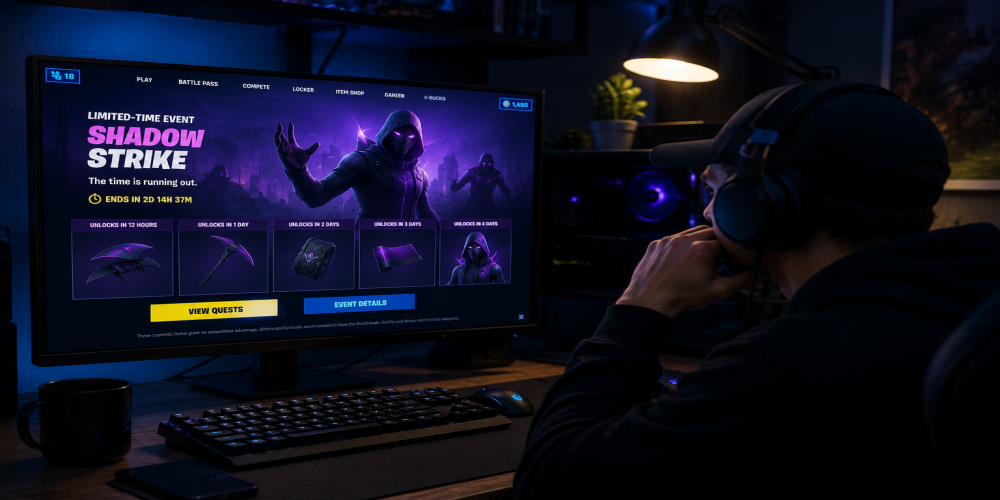
A new seasonal event arrives with a special map, a temporary story chapter, several exclusive cosmetics, and a countdown showing exactly how long everything will remain available. Players have three weeks to complete the challenges, earn the main reward, and decide whether to purchase a matching bundle before it leaves the store.
At first, the event feels exciting. The game looks different, friends return, social media fills with screenshots, and ordinary matches suddenly have new objectives. As the final days approach, however, the mood can change. Players begin calculating how many challenges remain, whether they have enough currency, and how many evenings they must spend playing before the rewards disappear.
This is the central tension behind limited-time events. They can make online games feel active, communal, and unpredictable. They can also turn entertainment into a deadline.
Developers use these events because permanent content does not create the same urgency. A mission that can be completed at any time is easy to postpone. A costume available for only seven days demands an immediate decision. The player may not know when it will return—or whether it will return at all.
What Is FOMO in Gaming?
FOMO means fear of missing out. In games, it describes the discomfort players feel when they might lose access to an experience, reward, item, or social moment.
The fear does not need to be intense. It can appear as a small thought:
- I should log in before the event ends;
- Everyone else will have this cosmetic;
- I may regret skipping this character;
- This story chapter might never return;
- I have already completed most of the pass;
- I should buy the bundle before the timer reaches zero.
The game creates urgency by limiting availability. Instead of asking whether the player wants something in general, it asks whether they want it before the opportunity disappears.
Why Permanent Content Is Easy to Ignore
Permanent content creates freedom. Players can complete it next week, next month, or after finishing another game. That flexibility is positive, but it reduces urgency.
A player may genuinely want to begin a new quest, yet continue postponing it because there is no cost to waiting. Every permanent activity competes with work, school, family, other games, and ordinary tiredness.
Limited-time content changes the decision. Waiting now has a consequence. The opportunity may vanish.
This makes temporary events effective at converting intention into immediate action. Players who have not logged in for weeks may return because a collaboration, anniversary, or seasonal reward has a clear final date.
Limited-Time Events Create a Reason to Return
Live-service games need regular activity. A large active population supports matchmaking, guilds, social interaction, streaming visibility, and in-game purchases.
Permanent content alone may not bring inactive players back. An event provides a fresh entry point and a simple message: something new is happening now.
Events Can Increase:
- Daily active users;
- Returning-player numbers;
- Average session length;
- Social media discussion;
- Matchmaking population;
- Store visits;
- Battle pass progress;
- Group and guild participation.
A successful event can briefly make an older game feel newly released.
Why Games Need Regular Activity
An online game with a shrinking population becomes less enjoyable. Matchmaking takes longer, skill ranges become wider, guilds become quieter, and cooperative activities become harder to organize.
Events concentrate attention. Instead of players spreading their activity evenly across several months, a limited event encourages them to return during the same period.
This creates fuller queues and a stronger sense of community. Even players who do not care about the rewards may benefit from the temporary population increase.
Events Make a Static World Feel Alive
Without updates, a game world can begin to feel frozen. The same menus, maps, enemies, and rewards appear every day.
Seasonal events create visible change. A city gains winter decorations, a racing game receives themed tracks, or a fantasy world introduces a festival with new characters and music.
Temporary presentation can be more practical than permanent redesign. Developers can create a distinct mood without needing to support every version of the environment forever.
Common Seasonal Changes Include:
- Decorated social hubs;
- Temporary weather;
- New background music;
- Event-specific dialogue;
- Alternative map layouts;
- Special enemies and challenges;
- Themed menus and loading screens.
These details help the game reflect real-world seasons and community traditions.
Shared Deadlines Create Shared Experiences
When everyone receives permanent content at different times, players discuss it at different times. Limited events bring the community together around one schedule.
Players compare progress, organize groups, share solutions, and display rewards while the event is active. This creates a social moment that resembles the launch of a smaller game inside the existing one.
The shared deadline can be genuinely enjoyable. A final weekend may feel energetic because many people are completing the same objectives together.
The problem appears when participation stops feeling optional.
Why Exclusive Rewards Are So Effective
A temporary mission may attract attention, but exclusive rewards give players a reason to finish it.
These rewards often include:
- Character outfits;
- Weapon appearances;
- Vehicles or mounts;
- Profile badges;
- Titles;
- Emotes;
- Decorations;
- Event characters;
- Special equipment.
Exclusivity adds social meaning. The reward does not merely look different. It proves that the player participated during a specific period.
Digital Items Can Become Souvenirs
An event item can function like a souvenir. It reminds the player of a season, collaboration, tournament, or period spent with friends.
Older cosmetics may gain emotional value because they represent account history. A simple badge can communicate that the player was present before a major update or community change.
This historical value explains why players care about items that provide no statistical advantage.
Scarcity Makes Rewards Feel More Valuable
Scarcity changes perception. An item that is always available may be attractive, but it can be purchased later. An item leaving tomorrow feels more important because the decision cannot be postponed safely.
Games create scarcity through:
- Short availability windows;
- Seasonal stores;
- One-time collaborations;
- Ranked rewards;
- Limited event currencies;
- Exclusive login calendars;
- Final battle pass tiers;
- Rotating character banners.
The practical usefulness of the item may not change. Its perceived value rises because access is restricted.
The Deadline Changes the Purchasing Question
Without a timer, a player asks, “Is this worth buying?”
With a timer, the question becomes, “Will I regret not buying this before it disappears?”
That second question is harder to answer calmly. It focuses attention on possible future regret rather than current value.
The player may purchase an item not because they are certain they want it, but because they want to remove the uncertainty.
Countdown Timers Make Time Visible
A deadline written in small text can be ignored. A large timer constantly shows that the opportunity is shrinking.
Countdowns may appear:
- On the main menu;
- Inside the store;
- Above an event banner;
- Beside unfinished challenges;
- In push notifications;
- On social media promotions;
- During the final days of a season.
The timer turns passing time into visible loss. Every hour that disappears reduces the remaining opportunity.
Loss Aversion Makes Missing Feel Personal
People often react more strongly to losing something than to gaining something of similar value. Games use this tendency when they frame unclaimed rewards as losses.
A player who never saw an event cosmetic might not care about it. A player who sees it on the final tier of a nearly completed pass may feel that it is already partly earned.
Missing the reward then feels less like skipping a purchase and more like losing progress.
Loss-Focused Design Can Include:
- Crossed-out expired rewards;
- Warnings about unclaimed items;
- Streak resets;
- Progress bars near completion;
- Messages stating that rewards will disappear;
- Premium currency that expires with the event.
The Endowment Effect and “Almost Owned” Items
Players can begin feeling ownership before an item enters their inventory.
A reward shown at level 50 of a battle pass may feel connected to the player after they reach level 43. They have invested time, completed challenges, and repeatedly looked at the item.
The final seven levels can feel like finishing a purchase already in progress.
This perceived ownership makes abandoning the event emotionally harder, even though the player has not technically received the reward.
Sunk Cost Keeps Players Participating
Past investment can influence future decisions. A player who has completed most of an event may continue even after the activities stop being enjoyable because quitting would make earlier effort feel wasted.
The thought process may sound like this:
- I have already completed 18 challenges;
- I only need four more rewards;
- I purchased the pass, so I should finish it;
- I cannot waste all the time I already spent;
- The event ends soon, so I should keep going.
The earlier time cannot be recovered either way, but it increases the pressure to continue.
Why Event Progress Often Accelerates Near the End
Some games offer double experience, easier challenges, or catch-up bonuses during an event’s final days.
This helps busy players finish, but it also creates a final surge in activity. People who ignored the event may return when completion suddenly appears possible.
The final period combines hope and urgency: progress is faster, but time is shorter.
Battle Passes Depend on Limited Time
A battle pass is valuable partly because it expires. Without an end date, players could complete it whenever convenient, reducing the need for regular participation.
The seasonal deadline encourages repeated play and supports predictable update cycles.
A Typical Battle Pass Combines:
- A visible progression path;
- Free and premium rewards;
- Daily or weekly objectives;
- A final exclusive item;
- A fixed season length;
- Optional paid level skips.
The level skips are especially important. The game creates a deadline and then sells a solution to players who fall behind.
Why Paid Level Skips Can Feel Uncomfortable
A pass may be reasonably designed at the beginning of the season. A player who joins late, travels, becomes busy, or plays other games may no longer have enough time to finish.
At that point, buying levels can feel like the only way to protect the value of the original purchase.
The player is not simply paying for convenience. They may be paying to avoid losing rewards from a pass they already bought.
Limited Events Support Predictable Content Calendars
Developers need a structure for planning updates. Seasons and events provide clear production cycles.
A team can prepare:
- One major seasonal theme;
- Several weekly challenges;
- A rotating shop schedule;
- A limited story chapter;
- A set of cosmetics;
- A final community event.
After the season ends, the structure resets with new content. This rhythm is easier to market and measure than adding unrelated permanent missions without a shared theme.
Events Make Marketing Easier
A permanent update can be promoted once. A limited event can be promoted repeatedly because the deadline creates several marketing moments.
Typical Promotional Stages
- Teaser announcement;
- Full event reveal;
- Launch trailer;
- Mid-event reminder;
- Final-week warning;
- Last-day countdown;
- Reward showcase after completion.
Every stage gives creators, social accounts, and community managers something timely to discuss.
Collaborations Often Have Real Licensing Limits
Not every limited item is temporary only because of psychological design. Crossovers with films, musicians, sports brands, or other games may be controlled by contracts.
A license may permit the content to be sold only during a specific window. Extending or repeating the event can require new negotiations.
This means a collaboration may genuinely have uncertain return timing.
However, the existence of a licensing limit does not prevent the publisher from communicating clearly about possible future availability.
Why Rotating Shops Are So Common
A rotating shop displays only part of the available catalog at one time. Items leave and return according to a schedule that may be predictable or hidden.
This design has several benefits for the publisher:
- It reduces visual overload;
- It gives old items renewed attention;
- It creates reasons to check the store regularly;
- It prevents players from delaying every purchase indefinitely;
- It makes each rotation feel like a small event.
A permanent catalog allows players to compare everything calmly. Rotation narrows attention and adds uncertainty about future availability.
Daily Shop Checks Become a Habit
If the store changes every day, players have a reason to open the game even when they do not plan to play.
The routine can become:
- Launch the game;
- Check the store;
- Collect a daily reward;
- Review event progress;
- Play one match;
- Remain for a longer session.
The store rotation is therefore both a sales tool and a retention tool.
Random Availability Increases Uncertainty
When players know exactly when an item will return, they can wait without much anxiety. Unpredictable rotations make waiting harder.
A cosmetic could return next week or remain absent for a year. The current appearance may feel like the safest opportunity.
Clear schedules reduce FOMO. Hidden schedules strengthen it.
Limited Characters Add Gameplay Pressure
Cosmetic scarcity affects appearance. Limited characters, weapons, or equipment can affect performance.
The pressure becomes stronger when temporary items:
- Provide unique abilities;
- Complete a powerful team;
- Receive bonuses in the current event;
- Are difficult to replace;
- Return on an unknown schedule;
- Require duplicates for full functionality.
Players may feel that skipping the release will reduce their ability to handle future content.
Why New Content Often Favors New Characters
An event may be designed around the abilities of a newly released character. The environment, enemies, or scoring bonuses make that character unusually effective.
This creates a demonstration of value. Players can see exactly how useful the new release would be.
The character may remain useful afterward, but the strongest incentive exists while both the event and sales window are active.
Event Currency Creates a Separate Economy
Limited events frequently introduce special tokens that can be spent only in an event shop.
This currency helps developers control rewards without disrupting the permanent economy. It also gives players a clear reason to repeat event activities.
Problems arise when:
- The currency expires without warning;
- Prices require near-perfect participation;
- Unused currency receives no conversion;
- Several event currencies exist simultaneously;
- Players cannot estimate how much farming is required.
Why Event Currency Often Expires
Allowing currency to carry into future events can let experienced players purchase everything immediately. Expiration resets the economy and ensures that each event requires new participation.
From a design perspective, this keeps events active. From the player’s perspective, it can make unfinished currency feel wasted.
A fairer system may convert unused tokens into ordinary resources after the event.
Limited Events Help Control Progression Speed
Permanent reward sources can be farmed indefinitely unless strict limits exist. Temporary events allow developers to distribute valuable resources without changing the long-term economy permanently.
The event can provide generous rewards for two weeks and then disappear.
This creates a controlled burst of progression and encourages players to return during the chosen period.
Events Can Test New Ideas
Temporary content gives developers a lower-risk environment for experimentation.
A new mode, map rule, movement mechanic, or scoring system can appear during an event. If players enjoy it, the feature may return permanently. If it causes problems, it can disappear at the scheduled end.
Events Can Test:
- Alternative team sizes;
- Unusual maps;
- New rule sets;
- Temporary abilities;
- Different progression speeds;
- Experimental social features;
- Changes to matchmaking.
Players may accept unusual design more easily when it is presented as a temporary celebration rather than a permanent replacement.
Temporary Content Reduces Long-Term Maintenance
Every permanent feature must continue working after future updates. Developers need to test it against new characters, systems, platforms, and balance changes.
Temporary content can be removed before it creates years of technical obligations.
This does not mean the content is cheap to make. It means the maintenance window is limited.
Why Events Reuse Familiar Activities
Many events ask players to repeat ordinary matches with a new progression bar. This is less expensive than building an entirely new mode.
The event may add:
- A themed reward track;
- Special objectives;
- Temporary currency;
- Decorated menus;
- Bonus experience;
- A short narrative introduction.
The underlying gameplay remains familiar, but the reward structure makes it feel temporarily different.
When an Event Feels Like Content and When It Feels Like Chores
A strong event changes how the game feels. It may offer a new location, unusual rules, meaningful story scenes, or creative challenges.
A weak event simply adds a checklist to existing activities.
A Meaningful Event Usually Provides:
- A distinct theme;
- New interactions;
- Flexible objectives;
- Useful rewards;
- Enough time for ordinary schedules;
- Progress through normal play.
An Exhausting Event Often Includes:
- Repetitive tasks;
- Strict daily limits;
- Several overlapping currencies;
- Large penalties for missed days;
- Objectives tied to unpopular modes;
- A reward placed behind excessive repetition.
Overlapping Events Multiply Pressure
One limited event may be manageable. Several simultaneous events create competition for the player’s time.
A live-service game may run:
- A seasonal pass;
- A weekend tournament;
- A collaboration;
- A guild event;
- A login calendar;
- A rotating character release;
- A limited store discount.
Each system has its own deadline. Together, they create a schedule rather than a choice.
Live-Service Games Compete With One Another
Players rarely maintain only one limited-time calendar. Different games launch seasonal events during the same holidays and weekends.
This competition encourages developers to make rewards more urgent. A flexible event may lose attention to another game offering a rare exclusive item.
The result is an industry-wide race for player time.
FOMO Can Turn Leisure Into Scheduling
When events become central to progression, players begin organizing free time around reset dates and expiration windows.
They may plan:
- Which challenges to complete each evening;
- How much currency must be earned daily;
- Which game has the earliest deadline;
- Whether a weekend must be reserved for grinding;
- How many pass levels remain.
This planning can be satisfying for goal-oriented players. It becomes unhealthy when the schedule produces anxiety or interferes with ordinary responsibilities.
Why Missing One Event Can Feel Like Falling Behind
Cosmetic rewards are usually optional. Progression rewards can create a stronger problem.
If an event provides unique equipment, rare upgrade materials, or a powerful character, skipping it may affect future performance.
The player is not simply missing a souvenir. They may believe the account will become permanently weaker.
Catch-up systems, reruns, and alternative reward sources reduce this pressure.
Why Story Content Should Not Disappear
Temporary story chapters can make a world feel active, but removing them creates confusion for future players.
A character may appear, change the world, and disappear before a returning player sees the explanation. Later missions may refer to events no longer accessible.
Important narrative content should ideally remain available through:
- An event archive;
- Replayable chapters;
- A story summary;
- Permanent quest access;
- A separate historical menu;
- Optional downloadable episodes.
Temporary bonuses can expire without taking essential story context with them.
Reruns Reduce FOMO Without Removing Excitement
An event can remain special even when players know it will return.
Regular reruns allow new and returning players to participate later while preserving seasonal identity.
A Good Rerun System Provides:
- An approximate return schedule;
- Previous rewards alongside new ones;
- Alternative ways to earn missed items;
- Clear communication about exclusivity;
- Progress preservation where practical.
Uncertainty creates stronger short-term urgency. Predictability builds more long-term trust.
Why Companies Sometimes Avoid Confirming Reruns
If players know an item will return in three months, some will delay purchasing it. Uncertain availability increases immediate sales.
Licensing and scheduling can also make future plans genuinely unclear.
The fairest communication distinguishes between items that are contractually one-time and items that may rotate back later.
“Exclusive” Can Mean Several Different Things
Exclusive language is often ambiguous.
An item may be:
- Exclusive to one event period;
- Exclusive to a platform;
- Exclusive to a paid bundle;
- Exclusive for one year;
- Unavailable through ordinary play but able to return in a shop;
- A permanent one-time reward.
Players should not need to guess which meaning applies.
The Social Value of Rare Items
In social games, cosmetics communicate identity, history, taste, and status. A rare item can attract attention even without gameplay value.
Players may want an item because:
- Friends are using it;
- A favorite creator recommends it;
- It proves early participation;
- It matches a team or guild theme;
- It is connected to a favorite franchise;
- It may become rare later.
The item’s value is partly created by the community surrounding it.
Influencers Amplify Event Urgency
Creators produce guides, reaction videos, reward showcases, and countdown reminders. This can make an event feel culturally important even to players who were initially uninterested.
Watching others celebrate a reward increases the sense that everyone is participating.
Social media also compresses attention. Players repeatedly see the most impressive cosmetics and rarest rewards rather than ordinary experiences.
Community Goals Can Be a Positive Form of Urgency
Not all limited pressure is individual. Community events may ask the entire player base to complete a shared number of matches, collect resources, or unlock a global reward.
These events can create cooperation and shared celebration.
Healthy Community Goals Usually Have:
- Realistic targets;
- Progress visible to everyone;
- Rewards for broad participation;
- No punishment for smaller contributions;
- Clear rules;
- Protection against artificial progress manipulation.
Competitive Events Need Deadlines
Tournaments and ranked seasons require defined periods. Without an end date, standings would never finalize and rewards could not be distributed consistently.
Limited competitive events are therefore structurally necessary in many cases.
The FOMO problem appears when important participation rewards are restricted too severely or when competitive deadlines overlap constantly.
Why Holiday Events Return Every Year
Annual events combine familiarity and novelty. Players remember the previous version and anticipate new rewards.
Developers can reuse parts of the event while adding:
- New cosmetics;
- Additional story scenes;
- Updated challenges;
- A redesigned hub;
- Returning legacy rewards.
This creates a tradition inside the game.
Annual Events Can Preserve Account History
Players who participate across several years build a collection showing long-term involvement. A 2023 badge and a 2026 outfit become markers of different periods.
This can strengthen attachment to the account and make leaving the game emotionally harder.
FOMO Can Increase Spending Without Changing Prices
A product does not need to become cheaper to generate more sales. Restricting the purchase window can increase conversion.
The player may buy sooner because:
- The item may not return;
- The discount expires;
- The bundle leaves with the event;
- Bonus currency is temporarily included;
- The character is useful in the current mode;
- Friends are purchasing it.
Urgency changes timing and reduces the opportunity for extended comparison.
Why Bundles Appear During Events
Event bundles group cosmetics, currency, and progression resources into one purchase. The total may look more valuable than buying each item separately.
Bundles also make price evaluation harder. A player may want one costume but need to purchase several unrelated items to obtain it.
Before Buying an Event Bundle, Ask:
- Which items do I genuinely want?
- Can they be purchased separately?
- What is the real-money price?
- Will the items return?
- Does the bundle contain currency I would not otherwise buy?
- Am I reacting to the timer rather than the contents?
Discounts Can Be Real and Still Use FOMO
A temporary sale can offer genuine savings. The deadline still encourages a faster decision.
The correct question is not whether the discount exists. It is whether the player wanted the item before seeing the countdown.
Buying something unnecessary at 30% off still costs more than skipping it.
How Limited Events Affect New Players
A new player entering during a major event can feel overwhelmed. They are learning the base game while trying to understand temporary currencies, challenges, stores, and deadlines.
They may also see experienced players using rewards that are no longer obtainable.
New-Player-Friendly Events Include:
- Simple introductory missions;
- Low entry requirements;
- Clear explanations;
- Alternative reward paths;
- Enough time to learn the game;
- Legacy rewards returning periodically.
How Events Affect Returning Players
Returning players may reinstall a game because of a collaboration or anniversary. Once inside, they can face several changed systems and unfinished progression tracks.
A good returning-player experience summarizes:
- What changed;
- How the event works;
- Which rewards are realistic;
- What previous equipment remains useful;
- Which activities deserve priority.
Without this support, the returning player may leave again after seeing too many deadlines.
Why Children May Be Especially Sensitive to FOMO
Younger players may find it harder to evaluate digital scarcity, real-money prices, and uncertain return schedules.
They may also have limited control over when they can play or spend. A strict event can create conflict when school, bedtime, or family rules prevent participation.
Games with young audiences should use generous event windows, clear prices, and predictable reruns.
When FOMO Becomes Manipulative
Urgency is not automatically manipulation. A seasonal festival needs a season, and a tournament needs an end date.
The design becomes more concerning when it intentionally increases anxiety or hides important information.
Warning Signs Include:
- Unclear return schedules;
- Very short purchasing windows;
- Paid rewards lost after one missed day;
- Essential power restricted to temporary events;
- Several overlapping deadlines;
- Countdown warnings repeated constantly;
- Progress systems designed to be completed only through daily attendance;
- Level skips sold after intentionally slow progress;
- Story chapters removed permanently.
When Limited Events Feel Fair
Temporary events can remain exciting without controlling the player’s schedule.
Fair Event Design Includes:
- Enough time for ordinary players;
- Progress through normal gameplay;
- Several grace days;
- Clear requirements from the beginning;
- Predictable reruns;
- Cosmetic rather than essential rewards;
- Permanent access to important stories;
- Useful conversion for leftover currency;
- No severe punishment for missed days.
The event creates an opportunity, not an obligation.
How Long Should an Event Last?
There is no perfect length. A weekend competition and a major story event serve different purposes.
The appropriate duration depends on:
- Total required playtime;
- Difficulty;
- Whether tasks are daily;
- Target audience;
- Holiday schedules;
- Whether the content will return;
- How many other events are active.
A useful principle is that the event window should be much longer than the minimum time required to complete it.
Grace Days Matter
An event requiring 14 days of tasks should not necessarily last exactly 14 days. A longer window allows for illness, travel, work, school, and simple lack of interest on some days.
Grace days reduce anxiety without removing the shared seasonal structure.
Flexible Objectives Reduce Burnout
Events feel better when players can progress through activities they already enjoy.
Instead of requiring one specific mode, a challenge can offer several paths:
- Complete matches;
- Earn objective points;
- Play cooperatively;
- Finish story missions;
- Explore the event area.
Choice preserves player agency.
Why Daily Caps Can Feel Restrictive
Daily progression limits prevent players from finishing an event immediately. They also force participation across several days.
This supports retention but removes flexibility. A player with free time on Saturday cannot compensate fully for a busy week.
Weekly or cumulative caps provide a healthier alternative because unused progress can be earned later.
Catch-Up Systems Make Events More Accessible
A strong catch-up system allows late or returning players to complete missed objectives.
Examples Include:
- Previous weekly challenges remaining active;
- Increased progress near the end;
- Bonus experience for late starters;
- Event missions becoming available together;
- Free recovery tokens;
- Several optional challenge paths.
Catch-up systems preserve urgency without demanding perfect attendance.
Archives Can Preserve Event Content
A game can keep seasonal rewards limited while archiving story missions and unique gameplay.
An archive might allow players to:
- Replay old chapters;
- View past cinematics;
- Read event summaries;
- Practice removed modes privately;
- Earn standard rewards without exclusive cosmetics.
This protects narrative continuity while preserving some seasonal identity.
How Players Can Reduce FOMO
Decide What You Care About Before Opening the Event Menu
Choose whether your priority is the story, one cosmetic, social play, or complete collection. Do not let the reward track define the goal automatically.
Calculate the Required Time
Divide the remaining points by average progress per session. The final reward may require more time than it is worth.
Convert Premium Currency Into Real Money
Virtual currencies make prices less intuitive. Calculate the actual cost before buying.
Ignore Items You Would Not Use
Rarity does not make an unwanted cosmetic useful.
Allow One Event to Pass
Missing an event can break the belief that every reward must be collected. The account remains functional.
Disable Promotional Notifications
Without constant reminders, the decision to return becomes more intentional.
Avoid Buying During the Final Hour
Last-minute urgency reduces careful evaluation. Decide earlier or accept that the item can be skipped.
A Simple Event Value Test
Before committing to a limited event, ask:
- Would I play this activity without the rewards?
- Which reward do I genuinely want?
- How much time will it require?
- What else could I do with that time?
- Will the reward return?
- Does it affect gameplay or only collection?
- Am I continuing because it is fun or because I already started?
- Would I spend money without the countdown?
Warning Signs That an Event Is Controlling Your Schedule
- You log in despite not wanting to play;
- You delay sleep to finish challenges;
- You feel anxious about missing a day;
- You maintain several games only for events;
- You purchase progress to protect earlier effort;
- You organize weekends around virtual deadlines;
- You feel relief rather than satisfaction after completion;
- You worry about event progress while doing unrelated activities.
Developers Can Use Urgency Without Damaging Trust
Players generally understand that online games need events, updates, and revenue. Frustration grows when the rules appear designed to hide value or punish absence.
Trust improves when developers:
- Publish accurate event schedules;
- Explain whether rewards can return;
- Protect purchased items;
- Include grace periods;
- Archive meaningful story content;
- Avoid selling essential power through short windows;
- Convert leftover currency fairly;
- Respond clearly to technical problems.
Compensation Matters When Events Fail
Server outages, bugs, incorrect challenge tracking, and unavailable rewards can consume a large portion of a limited event.
A fair response may include:
- Extending the deadline;
- Restoring lost progress;
- Providing event currency;
- Unlocking affected rewards;
- Refunding purchases;
- Explaining the problem transparently.
A fixed deadline is only fair when the service remains reliably available.
Why Players Still Enjoy Limited Events
Despite the pressure, temporary events can produce some of the best moments in online games.
They can create:
- Fresh reasons to play with friends;
- Memorable seasonal environments;
- Community celebrations;
- Experimental modes;
- Creative cosmetics;
- A feeling that the world is changing;
- Shared stories tied to a specific time.
The goal is not to remove every deadline. It is to prevent deadlines from becoming the main source of motivation.
The Difference Between Excitement and Obligation
A healthy event produces thoughts such as:
- I am curious about the new mode;
- My friends are playing tonight;
- I like the seasonal atmosphere;
- The reward would be fun to earn.
An exhausting event produces different thoughts:
- I cannot miss another day;
- I already paid, so I must finish;
- I do not enjoy this mode, but the reward expires;
- I should buy levels before the timer ends.
Both events may generate similar activity numbers. The emotional experience is completely different.
Why FOMO Works So Well
FOMO combines several psychological forces:
- Scarcity increases perceived value;
- Deadlines encourage immediate action;
- Loss aversion makes missing feel painful;
- Visible progress creates partial ownership;
- Sunk cost encourages continued participation;
- Social proof makes events feel important;
- Uncertain reruns increase urgency;
- Exclusive items create status.
Each mechanism is modest on its own. Combined, they can turn one optional cosmetic into a powerful reason to log in, play longer, and spend sooner.
Why So Many Games Use Limited-Time Events
Limited events solve several business and design problems at once. They bring inactive players back, concentrate the community, support matchmaking, create marketing moments, refresh old environments, test experimental ideas, and generate sales through urgency.
They also fit the production rhythm of live-service games. Every season creates a beginning, a progression period, and an ending before the next update arrives.
The model becomes harmful when developers rely on pressure more than enjoyment. Constant countdowns, disappearing story chapters, expensive catch-up options, and essential temporary rewards can make players feel that taking a break is dangerous.
The fairest games use limited events as celebrations. They provide generous schedules, flexible progress, predictable reruns, and permanent access to important content. Players return because the event is interesting, not because missing it would damage the account.
Temporary content will remain a central part of online gaming because it creates energy that permanent catalogs rarely match. The important distinction is whether the timer adds excitement or replaces choice.
A good event makes players want to be present. An aggressive one makes them afraid to be absent.