
07 Jul
Michael Reed
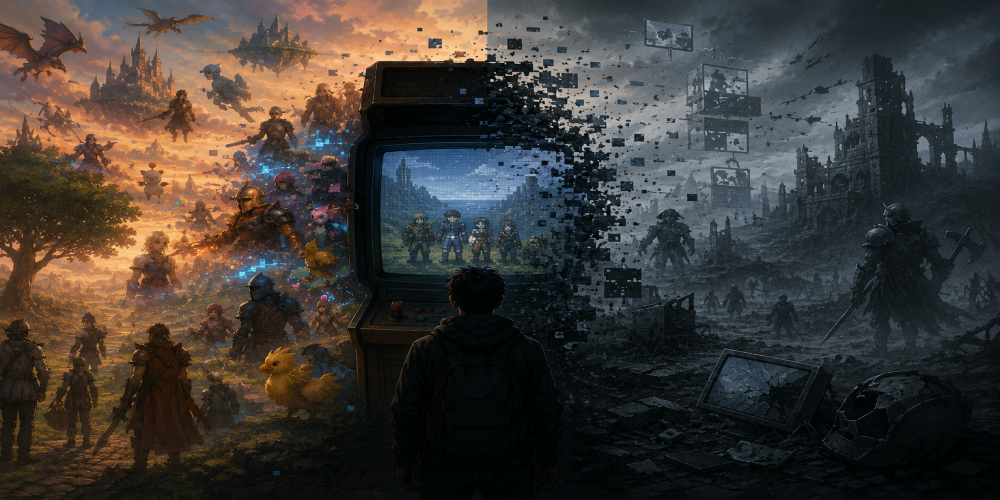
Old online games rarely disappear because every copy of the software suddenly stops existing. The client may still be installed on thousands of computers. Physical discs may remain on shelves, screenshots may survive online, and former players may remember every map, weapon, quest, and social hub.
What usually disappears is the service surrounding the game.
Authentication servers stop recognizing accounts. Matchmaking no longer creates sessions. Character databases become unavailable. Shops, guild systems, inventories, seasonal events, and shared worlds stop updating. A game that once felt like a large virtual place can become an error message overnight.
This creates a difficult preservation problem. Saving a traditional offline game may require a working copy, compatible hardware, and perhaps an emulator. Preserving an online title can require the client, server code, databases, network protocols, account systems, live-event scripts, and enough people to reconstruct how everything interacted.
Some online games can be saved through official offline modes or community servers. Others survive only through videos, screenshots, documentation, and player memories. The difference usually depends on how the game was built, what the publisher is willing to release, and how much technical work the community can complete before important data disappears.
Why Online Games Are More Fragile Than Offline Games
An offline game contains most of what it needs to function on the player’s device. Once installed, it can often continue working without contacting the original developer.
An online game divides its systems between the player’s device and remote servers. The client may handle graphics, sound, controls, and parts of the interface, while the server manages the world, accounts, inventories, matches, or progression.
When the server side disappears, the client may no longer know how to operate.
Server-Dependent Features May Include
- Account authentication;
- Character and inventory data;
- Matchmaking;
- Persistent worlds;
- Guilds and social lists;
- Leaderboards;
- Cloud saves;
- Item ownership;
- Quests and events;
- Economy calculations;
- Anti-cheat checks;
- Downloadable content validation.
A game may look simple from the player’s perspective while depending on dozens of connected services behind the scenes.
The Client Is Only Half the Game
Players often assume that preserving the downloadable client should be enough. After all, the maps, textures, models, music, and animations appear to be stored locally.
The client usually contains presentation and interaction systems, but it may not contain the authoritative rules that decide what happens.
The server may determine:
- Whether an attack hits;
- How enemies behave;
- Which item drops;
- Whether a player owns a character;
- How much experience is awarded;
- Where other players are located;
- Which event is active;
- Whether an account is allowed to connect.
Without those decisions, the local software may launch but remain trapped at a login screen.
Why Publishers Shut Online Games Down
Online games close for many reasons, and low player numbers are only one of them.
Operating Costs Become Too High
Servers, customer support, security, moderation, analytics, payment systems, and technical maintenance all cost money. A shrinking audience may no longer generate enough revenue to support them.
The Development Team Moves On
Studios may reassign employees to a sequel or new project. Over time, fewer people understand the old code well enough to maintain it safely.
Licenses Expire
Music, sports leagues, cars, actors, brands, films, or other licensed content may only be approved for a limited period.
Technology Becomes Obsolete
Old server software may depend on unsupported operating systems, databases, security tools, or networking libraries.
Security Risks Increase
Abandoned services can become targets for cheating, data theft, or exploitation. Maintaining them may require expensive updates.
The Publisher Changes Strategy
A company may close an older title to focus attention on a sequel, subscription platform, or newer live-service game.
Platform Support Ends
Console networks, mobile operating systems, and third-party services may stop supporting the technology the game requires.
Low Player Numbers Do Not Always Mean Zero Players
A shutdown can affect a small but dedicated community. From a business perspective, a few hundred active players may not justify ongoing expenses. From the community’s perspective, those players may represent years of friendships, tournaments, guild history, and creative work.
This creates tension between commercial sustainability and cultural preservation.
A publisher may reasonably decide that it cannot operate the game forever. Players may reasonably argue that the company should provide a way for the remaining community to continue independently.
What Usually Happens During a Shutdown
The end-of-service process often follows a predictable sequence.
- The publisher announces the shutdown;
- The game is removed from digital stores;
- New purchases are disabled;
- Subscriptions stop renewing;
- Players are given a final period to continue playing;
- Special events or increased rewards may begin;
- Servers close on the announced date;
- Account data may later be deleted or archived.
After closure, the client may still be downloadable for a time, but it cannot connect successfully.
Why Some Games Receive Offline Modes
An offline mode allows part of the game to continue without official servers. It may preserve a campaign, local matches, customization, or bot-supported multiplayer.
This is the ideal outcome for many players, but it requires development work.
An Offline Conversion May Need to Replace
- Login systems;
- Server-controlled progression;
- Cloud inventories;
- Matchmaking;
- Event scheduling;
- Online enemy behavior;
- Remote databases;
- Economy checks;
- Anti-cheat tools;
- Always-online authentication.
If these systems were never designed to run locally, the studio may need to rebuild major parts of the game.
Why “Just Add an Offline Patch” Is Not Always Simple
From outside the studio, an offline patch can sound like a small switch. In practice, it may resemble a partial remake.
The developers might need to:
- Remove account authentication;
- Create local save files;
- Move server calculations into the client;
- Replace real players with bots;
- Redesign progression and rewards;
- Remove licensed or unavailable content;
- Test every platform again;
- Pass console certification;
- Resolve new security and stability issues.
A game already losing money may not receive the budget required for this work.
Community Servers as a Preservation Solution
Community-hosted servers allow players to continue running the game after official support ends. They can preserve multiplayer, social spaces, custom rules, and sometimes complete persistent worlds.
The best-case scenario occurs when the publisher officially releases dedicated server software and documentation.
Official Server Support Can Include
- A downloadable server application;
- Configuration tools;
- Local network support;
- Modding documentation;
- Authentication alternatives;
- Database import tools;
- Permission for non-commercial hosting.
This shifts maintenance from the company to the community.
Reverse-Engineered Private Servers
When official tools are unavailable, fans sometimes reverse-engineer the game’s network communication and rebuild compatible servers.
This process can involve:
- Capturing network traffic;
- Studying old client behavior;
- Recreating login responses;
- Building account databases;
- Reproducing combat rules;
- Restoring quests and events;
- Testing incomplete server functions.
Reverse-engineered servers can preserve important experiences, but they may not match the original game perfectly.
Why Private Servers Can Be Legally Complicated
Community preservation projects may raise questions involving copyright, trademarks, access controls, leaked code, commercial use, and account data.
A project is more likely to face opposition when it:
- Uses stolen server code;
- Charges money;
- Distributes copyrighted client files;
- Competes with an active official service;
- Uses the original branding as though it were official;
- Bypasses technical protections;
- Includes unauthorized licensed content.
Projects that require users to supply their own legally obtained client and operate non-commercially may present fewer concerns, but legal rules vary by jurisdiction.
Emulation Alone Is Not Enough
Emulators reproduce old hardware or operating environments. They are extremely useful for preserving offline console games.
For an online title, emulating the original device only solves part of the problem. The game may still attempt to contact servers that no longer exist.
Full preservation may require both:
- Hardware or platform emulation;
- Server emulation or replacement.
Without the second part, the game may boot correctly but fail at authentication.
Local Area Network Support Can Extend a Game’s Life
Games with LAN support are easier to preserve because players can host matches without relying on central matchmaking.
Even if the official browser disappears, communities can use direct connections, virtual LAN tools, or private networks.
LAN support can preserve:
- Local multiplayer;
- Tournaments;
- Cooperative missions;
- Custom maps;
- Modded rules;
- Small community events.
Removing LAN support in favor of mandatory central servers makes a game more convenient during its commercial life but more fragile afterward.
Dedicated Servers Versus Peer-to-Peer Play
Dedicated servers run matches on separate machines. Peer-to-peer systems allow players’ devices to communicate more directly.
Peer-to-peer games may be easier to preserve if matchmaking can be replaced with direct connections. However, they may still depend on central account services.
| Dedicated Servers | Peer-to-Peer |
|---|---|
| Consistent match authority | Less central infrastructure required |
| Better control over cheating | Can support direct connections |
| May be expensive to operate | May expose host advantages |
| Harder to preserve without server software | Still vulnerable if authentication disappears |
Persistent Worlds Are Especially Difficult to Save
Massively multiplayer games contain more than combat and maps. Their worlds may include economies, guilds, houses, mail, auctions, quests, social history, and millions of character records.
Preserving the client does not preserve this living state.
A complete archive would need:
- Character databases;
- Inventories;
- Guild records;
- World-state data;
- Quest progress;
- Player-created structures;
- Market history;
- Event schedules;
- Moderation records;
- Server configuration.
Even with all of that data, recreating the original population and social atmosphere may be impossible.
An Online Game Is Also Its Community
Preserving software does not automatically preserve the experience.
A competitive game with 20 players feels different from one with 200,000. A social world without familiar guilds may function technically but feel empty. A restored event without the original community excitement may become a museum exhibit rather than a living game.
This does not make preservation pointless. It means preservation has several levels.
Different Forms of Preservation
- Preserving the client;
- Preserving playable mechanics;
- Preserving original server behavior;
- Preserving account histories;
- Preserving social records;
- Preserving cultural context;
- Preserving player memories.
Archiving Events and Temporary Content
Live-service games frequently remove events, quests, maps, and seasonal storylines even before the full game closes.
A player who joins several years later may never see large parts of the original experience.
Preservation efforts can record temporary content through:
- Gameplay videos;
- Dialogue transcripts;
- Patch archives;
- Event calendars;
- Quest databases;
- Map captures;
- Developer interviews;
- Player screenshots;
- Community wikis.
These records cannot replace playable content, but they prevent it from disappearing without evidence.
Why Patch Preservation Matters
Online games change continuously. The launch version may be completely different from the final build.
Balance updates can change weapons, maps, movement, characters, economies, and visual design. Preserving only the final client erases earlier versions.
A Complete Patch Archive Might Include
- Client installers;
- Patch notes;
- Asset changes;
- Balance data;
- Removed maps;
- Old interfaces;
- Seasonal content;
- Server rule changes.
This allows future researchers to study how the game evolved rather than treating it as one fixed product.
Digital Stores Can Remove Access Before Servers Close
A game may disappear from sale because of licensing, platform changes, or publisher decisions while existing servers remain active.
Delisting affects preservation because new players cannot legally obtain the client. Existing owners may retain downloads, but future access becomes uncertain.
Physical copies can help when the disc contains a functional build. They are less useful when the game requires large downloads or online activation.
Why Physical Discs Do Not Guarantee Preservation
A disc may contain only part of the game. It can require:
- A launch patch;
- Downloaded maps;
- Account verification;
- Server authentication;
- Additional episodes;
- Online installation files;
- Current platform firmware.
If those services disappear, the disc may become little more than an installer for an incomplete client.
Mobile Games Are Particularly Vulnerable
Mobile games often depend heavily on online services and changing operating systems.
Even when fans preserve the installation file, the game may stop working because:
- The login server is offline;
- The app requires a newer API;
- The operating system blocks old software;
- Required assets were downloaded remotely;
- The game checks store ownership;
- Device architecture has changed;
- Certificates have expired.
Mobile preservation may require old devices, emulators, archived files, and replacement servers.
Browser Games and the Loss of Old Web Technology
Many older online games were built with browser technologies that modern browsers no longer support.
Even when the original website remains archived, the game may not run because plugins, scripts, or server connections are missing.
Preservation projects can sometimes recreate these environments through specialized emulators or archived browsers, but online components remain a separate challenge.
What Happens to Player Accounts?
When a game closes, account data may be deleted, anonymized, transferred, or stored temporarily.
Players often lose access to:
- Character names;
- Inventories;
- Match history;
- Guild records;
- Achievements;
- Friends lists;
- Purchased items;
- User-created content;
- Messages and social history.
An archived client without account data preserves the game’s structure but not each player’s personal journey.
Could Account Export Tools Help?
Yes. Publishers could allow players to download a personal archive before shutdown.
An export might include:
- Character statistics;
- Inventory lists;
- Unlocked cosmetics;
- Achievements;
- Purchase history;
- Guild information;
- Favorite screenshots;
- Custom creations;
- Profile data.
This would not keep the game playable, but it would preserve a meaningful record of participation.
User-Created Content Is at High Risk
Games with custom maps, houses, levels, tracks, or mods can contain years of player creativity.
If this content is stored only on company servers, it may disappear completely.
Better Preservation Options Include
- Local project exports;
- Downloadable map files;
- Offline editors;
- Community archives;
- Open file formats;
- Migration tools;
- Read-only public galleries.
Without export tools, screenshots may become the only remaining evidence.
Can Source Code Save a Game?
Releasing source code can greatly improve preservation, but it is not a complete solution.
The source may depend on:
- Licensed technology;
- Private server systems;
- Third-party libraries;
- Development tools;
- Internal assets;
- Proprietary databases;
- Security-sensitive code.
A company may be legally unable to release everything, even if it supports preservation.
Partial releases, documentation, and dedicated server tools can still be valuable.
Why Companies Fear Releasing Server Code
Publishers may worry that server software could expose:
- Security vulnerabilities;
- Anti-cheat methods;
- Reusable technology from newer games;
- Player data structures;
- Licensed code;
- Internal development practices;
- Commercial secrets.
They may also fear unofficial servers using the brand in ways the company cannot control.
Escrow as a Preservation Idea
One proposed solution is to place server code, documentation, or essential assets into a trusted archive while the game is active.
The material would remain private unless specific conditions were met, such as permanent shutdown or company dissolution.
Escrow could help when:
- The original team no longer exists;
- Documentation would otherwise be lost;
- Server infrastructure becomes inaccessible;
- A museum receives legal permission to preserve the game;
- A publisher wants to protect secrets during active operation.
This would require clear legal agreements and long-term institutional support.
Museums and Libraries Face Technical Barriers
Traditional archives can store physical media, documents, and hardware. Online games require active systems.
An institution may need:
- Servers;
- Network isolation;
- Database maintenance;
- Emulators;
- Old operating systems;
- Special legal permissions;
- Cybersecurity controls;
- Staff who understand the software.
Preserving a live game can resemble maintaining a historical machine rather than storing a book.
Documentation Is Still Valuable When Playability Is Lost
Some games cannot be fully restored. In those cases, detailed records remain important.
Useful Historical Materials Include
- Full gameplay recordings;
- Developer commentary;
- Design documents;
- Patch notes;
- Community forums;
- Player interviews;
- Tournament footage;
- Maps and item databases;
- Music and sound archives;
- Promotional materials.
These sources help future players and researchers understand what the game was and why it mattered.
Competitive Games Need Match Archives
Esports and competitive online games create cultural history through tournaments, rivalries, strategies, and balance changes.
Preserving only the final client would miss much of that story.
Important records include:
- Tournament broadcasts;
- Replay files;
- Player statistics;
- Team rosters;
- Patch-specific strategies;
- Ranked ladders;
- Commentary and analysis;
- Community-created guides.
Replay Files May Stop Working
Replays often store player inputs or match data rather than complete video. They depend on the exact game version to reconstruct the match.
After patches or shutdown, old replays may become unreadable.
Important matches should therefore be converted into ordinary video as well as preserved in their original replay format.
Why Fan Wikis Matter
Community wikis record details that official sites may remove after closure.
They can preserve:
- Quest text;
- Character biographies;
- Item statistics;
- Event history;
- Patch changes;
- Maps;
- Dialogue;
- Player strategies;
- Unused or removed content.
A well-maintained wiki can become one of the most complete surviving records of a vanished game.
The Risk of Depending on One Community Platform
Forums, chat servers, social networks, and video platforms can also close or remove content.
Preservation groups should avoid keeping every record in one place.
Safer Community Archiving Includes
- Local backups;
- Multiple hosting services;
- Downloadable wiki dumps;
- Archived forum exports;
- Open file formats;
- Clear metadata;
- Redundant storage.
Legal Exemptions for Preservation
Libraries, archives, researchers, and preservation groups may seek legal exemptions that allow them to bypass obsolete authentication or access controls under limited conditions.
Such exemptions can help preserve abandoned software, but they may include restrictions involving public access, commercial use, and remote distribution.
Legal permission to study or preserve a game does not always permit operating a public replacement service.
Should Publishers Be Required to Leave Games Playable?
Some players argue that a sold game should remain functional after official support ends. Possible requirements could include an offline mode, dedicated server release, or removal of mandatory authentication.
Supporters believe this would:
- Protect consumer purchases;
- Reduce cultural loss;
- Encourage better technical planning;
- Allow communities to continue independently;
- Prevent fully purchased games from becoming unusable.
Opponents raise concerns about cost, security, licensing, feasibility, and the difficulty of defining what counts as functional.
Not Every Game Can Be Preserved in the Same Way
A competitive shooter, social MMO, card game, browser world, and mobile RPG have different preservation needs.
| Game Type | Possible Preservation Approach |
|---|---|
| Competitive shooter | Dedicated servers and direct matchmaking |
| MMO | Server emulation and database reconstruction |
| Cooperative action game | Offline mode with bots or local hosting |
| Card game | Local collections and AI opponents |
| Social world | Community servers and user-content exports |
| Mobile RPG | Offline story build and local account data |
Designing Games for Eventual Shutdown
Preservation becomes easier when planned from the beginning.
Preservation-Friendly Design Choices
- Separate account services from core gameplay;
- Support local saves;
- Include LAN or direct connections;
- Develop dedicated server tools;
- Use exportable user-content formats;
- Document server protocols;
- Archive every major patch;
- Build an emergency offline mode;
- Avoid unnecessary online checks;
- Create an end-of-service plan before launch.
These decisions may also improve reliability during temporary outages.
Why Publishers Rarely Plan for the End
Launch deadlines, growth targets, monetization, and content roadmaps usually receive more attention than long-term preservation.
Shutdown planning can feel distant when a team is focused on building an audience. By the time closure becomes likely, the original developers may be gone and the architecture may be too difficult to change.
Preservation works best as a design requirement rather than an emergency project.
The Cost of Keeping Legacy Servers Alive
Players sometimes assume that an old game can remain online cheaply because it receives no new content.
Even a quiet server may require:
- Hosting fees;
- Security patches;
- Database backups;
- Customer support;
- Moderation;
- Payment compliance;
- Platform updates;
- Monitoring;
- Legal administration;
- Emergency engineering.
The cost per remaining player can increase as the population decreases.
Server Consolidation as a Temporary Solution
Before shutting down, publishers may merge regions or reduce the number of servers.
This can:
- Lower costs;
- Improve matchmaking;
- Bring separated communities together;
- Extend the game’s lifespan.
It can also create latency, name conflicts, overcrowding, and loss of regional identity.
Open-Sourcing Is Helpful but Rare
An open-source release allows the community to maintain, study, and adapt the software.
It is rare because commercial games often contain third-party technology, copyrighted assets, and confidential tools.
A publisher might instead release:
- Only the dedicated server;
- Networking documentation;
- Modding APIs;
- A stripped-down engine;
- Older source code without licensed assets;
- Tools for local hosting.
Preserving the Economy and Progression
Restoring basic gameplay is easier than recreating a balanced economy.
An online game’s progression may depend on:
- Daily limits;
- Event rotations;
- Player trading;
- Auction prices;
- Item scarcity;
- Population size;
- Seasonal resets;
- Premium currency.
A private server must decide whether to reproduce the original grind, accelerate progression, or redesign the economy entirely.
Preservation Can Change the Game
A preserved version may remove monetization, unlock all content, increase rewards, or replace unavailable features.
This can make the game more accessible but less historically accurate.
Two preservation goals may conflict:
- Recreate the original experience;
- Create the most playable modern version.
Ideally, projects should document changes clearly and preserve original configurations when possible.
Can Artificial Intelligence Replace Missing Players?
Bots can preserve certain modes by filling teams or simulating opponents. They are useful for shooters, racing games, strategy titles, and cooperative missions.
They cannot fully replace:
- Human creativity;
- Social conversation;
- Emergent community behavior;
- Player economies;
- Guild politics;
- Unpredictable competitive strategies.
Bots can preserve mechanics without preserving the full social experience.
Why Some Games Return Years Later
A closed game may be revived by its original publisher, a new company, or a licensed partner.
Revival becomes easier when:
- Source code survives;
- Server tools are documented;
- The brand remains valuable;
- A dedicated community exists;
- Licensing can be renewed;
- Old account data is recoverable;
- Modern platforms can support the software.
Revived games may still differ from their original versions because systems, economies, and content often need modernization.
What Players Can Do Before a Game Closes
Save Screenshots and Videos
Record characters, maps, events, inventories, homes, and favorite social spaces.
Export User Content
Download maps, levels, photos, or project files when tools allow it.
Preserve Patch Information
Save patch notes, guides, and event schedules.
Move Community Contacts Elsewhere
Exchange contact information with friends and guild members.
Support Legitimate Preservation Projects
Contribute documentation, testing, translations, or hosting where legally appropriate.
Keep Legal Copies
Preserve installers and physical media you are entitled to keep.
What Players Should Avoid
- Downloading suspicious leaked server files;
- Sharing personal account databases;
- Paying unverified private-server operators;
- Assuming every fan project is secure;
- Distributing copyrighted clients without permission;
- Waiting until the final hour to save memories;
- Believing unofficial servers will automatically preserve accounts.
How to Judge a Private Server
Players considering a community server should examine:
- Who operates it;
- Whether it charges money;
- How account passwords are handled;
- Whether original game credentials are requested;
- How data is stored;
- Whether the project documents its legal position;
- How active development is;
- Whether backups exist;
- How moderation works.
Never reuse the password from the original game account.
Why Old Games Matter
Online games are part of cultural history. They reflect the technology, business models, social habits, art styles, and communities of their era.
They can document:
- The rise of esports;
- Early virtual economies;
- Online friendships;
- Changing monetization systems;
- Community-created culture;
- Important design innovations;
- The development of persistent worlds.
Losing them means losing evidence of how people played and interacted online.
Preservation Does Not Mean Running Every Server Forever
No company can be expected to operate every online game indefinitely. Preservation means creating a path for software, history, and community records to survive after commercial support ends.
That path might be:
- An offline patch;
- A dedicated server release;
- Local multiplayer;
- Community-hosting permission;
- A museum build;
- Source-code escrow;
- Account exports;
- Comprehensive documentation.
An Ideal End-of-Service Preservation Plan
- Announce closure well in advance;
- Stop new purchases;
- Archive every client version and patch;
- Export player account summaries;
- Release offline functionality where feasible;
- Provide dedicated server tools;
- Document network protocols;
- Allow user-created content exports;
- Support museums and researchers;
- Clarify permission for non-commercial community servers;
- Preserve official websites and patch notes;
- Host a final community event.
The Difference Between Preservation and Piracy
Preservation aims to prevent cultural and technical loss. Piracy generally involves unauthorized distribution or access.
The distinction can become complicated when a game is abandoned, but the copyright remains active.
Responsible preservation focuses on:
- Lawfully obtained software;
- Non-commercial use;
- Documentation;
- Institutional research;
- Official tools where possible;
- Respect for personal data;
- Clear separation from active services.
Why Some Games May Never Be Fully Recovered
A title may be impossible to reconstruct completely when:
- Server code was deleted;
- No documentation survives;
- The client downloaded assets dynamically;
- Important data was encrypted;
- Licenses prevent redistribution;
- The original hardware is unavailable;
- Account databases were destroyed;
- No community recordings exist;
- The game depended on human populations at scale.
In those cases, preservation may be limited to partial builds and historical records.
Partial Preservation Is Still Worthwhile
Saving one map, one event recording, one server build, or one community archive may seem incomplete. It can still provide valuable information that would otherwise vanish.
Preservation is rarely perfect. The goal is to retain as much evidence and functionality as reasonably possible.
The Future of Online Game Preservation
Future preservation will likely depend on cooperation between developers, platforms, lawmakers, archives, researchers, and players.
Useful developments could include:
- Standardized end-of-service requirements;
- Server software release frameworks;
- Better digital deposit systems for museums;
- Account export standards;
- Open documentation formats;
- Improved legal exemptions;
- Preservation-friendly game architecture;
- Clear store warnings about server dependency.
What Makes an Online Game Truly Preserved?
There is no single answer.
A game may be considered preserved if its basic mechanics remain playable. Historians may require original versions and documentation. Former players may care most about saved characters and social spaces. Developers may focus on protecting the code and design history.
A strong preservation project aims to retain several layers:
- The software;
- The server behavior;
- The original rules;
- The changing patch history;
- The player-created content;
- The community story;
- The personal memories connected to it.
Why Old Online Games Disappear So Easily
Online games disappear because they are services built from connected systems rather than isolated products. Their survival depends on servers, databases, licenses, security, development teams, and active business support.
When those connections are removed, the downloadable client may no longer be enough.
Preservation is possible, but it works best when planned early. Offline modes, dedicated servers, export tools, patch archives, and clear legal permissions are much easier to build while the original developers still understand the project.
Communities can reconstruct remarkable amounts of lost functionality, but they should not be expected to solve every problem after a publisher has discarded the infrastructure.
The question is not whether every online game must operate forever. It is whether games should be designed to leave something usable behind.
Without preservation planning, years of art, code, competition, friendships, and player creativity can vanish behind a disconnected login screen. With the right tools and cooperation, an old online game can continue as an offline experience, a community-hosted world, a research archive, or at least a well-documented part of gaming history.