
30 Jul
Olivia Hayes
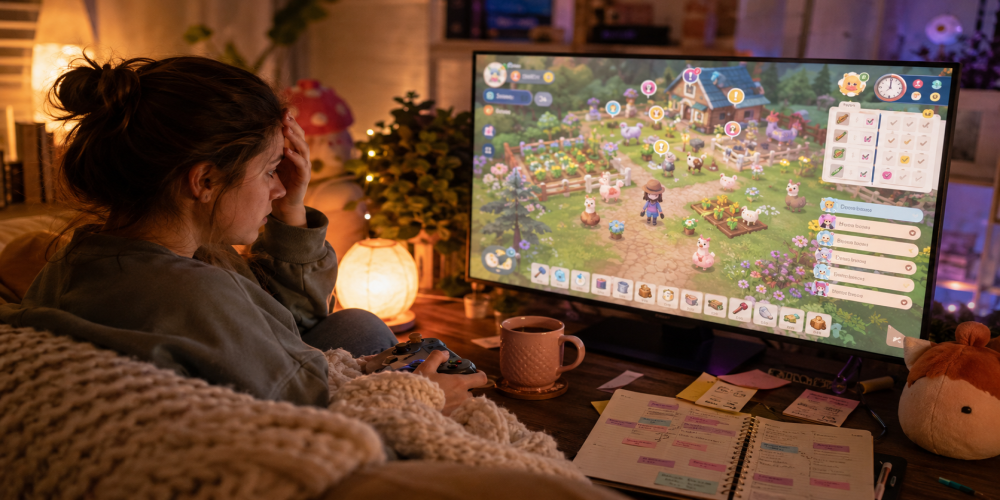
Cozy games are usually associated with gentle music, friendly characters, colorful gardens, quiet villages, and simple routines. They rarely demand lightning-fast reactions, perfect aim, or mastery of complicated combat systems. Instead, they offer farming, decorating, fishing, cooking, collecting, crafting, and building relationships at a comfortable pace.
Yet a game filled with smiling animals and warm autumn colors can still make a player surprisingly tense. Crops need watering before the day ends. A rare visitor leaves tomorrow. The shop closes in ten minutes. A seasonal fish will disappear for another year. The house is unfinished, the storage box is full, and somehow every villager expects a birthday gift.
The stress often does not come from traditional failure. It comes from responsibility, limited time, unfinished goals, and the feeling that a supposedly relaxing experience should be played efficiently.
Cozy games can provide genuine comfort, but the genre is not automatically free from pressure. Their peaceful presentation may hide demanding systems, while players can create personal expectations that make even flexible mechanics feel like obligations.
What Makes a Game Feel Cozy?
Cozy is not one specific genre. It is a description of the emotional experience a game tries to create.
Common cozy-game features include:
- Warm or colorful visual design;
- Gentle music and environmental sounds;
- Friendly communities;
- Low penalties for mistakes;
- Creative customization;
- Farming, cooking, fishing, or crafting;
- Simple routines;
- Personal progression;
- Safe spaces that improve over time.
A cozy game may contain exploration, puzzles, business management, platforming, or even light combat. What matters is that the overall experience feels approachable and emotionally safe.
However, emotional safety does not always mean mechanical relaxation. A soft visual style can exist alongside strict schedules, complicated economies, and large completion lists.
Relaxing Presentation Can Hide Demanding Systems
Players often expect a game with cute characters and calming music to be easygoing. When its systems become demanding, the contrast can feel especially noticeable.
A dark survival game clearly communicates that resources will be scarce. A cheerful farming game may introduce the same scarcity through limited energy, seasonal crops, shop schedules, and expensive upgrades.
The player is still managing:
- Time;
- Money;
- Inventory space;
- Energy;
- Relationships;
- Production chains;
- Seasonal availability;
- Daily opportunities.
The difference is that these pressures arrive with acoustic guitar music and a friendly shopkeeper.
Why In-Game Clocks Create Pressure
Many cozy games divide progress into days. The player wakes up, completes activities, and returns home before the day ends.
This structure gives the world rhythm. Shops open at specific hours, characters follow schedules, and different activities feel connected to morning, afternoon, or evening.
The same clock can make every action feel like a calculation.
Before leaving the farm, a player may need to:
- Water crops;
- Feed animals;
- Collect products;
- Process materials;
- Visit a shop;
- Deliver a quest item;
- Speak to a favorite character;
- Reach a fishing location before sunset.
A day intended to feel peaceful becomes a race through a personal checklist.
Fast In-Game Days Encourage Optimization
When days pass quickly, players begin planning efficient routes. They may organize tools by slot, memorize character locations, and avoid activities that consume too much time.
Optimization can be satisfying. It creates mastery and allows experienced players to accomplish more.
It can also reduce spontaneity. Instead of exploring a forest because it looks interesting, the player avoids it because the shop will close soon. Instead of speaking to a villager for fun, they rush through the interaction to reach the mine before evening.
The clock gradually changes the question from “What would I enjoy doing?” to “What is the most efficient use of this day?”
Energy Systems Turn Activities Into Choices
Energy or stamina limits how much work can be completed before resting. This prevents the player from doing everything at once and gives upgrades practical value.
It also creates constant trade-offs.
Using energy to clear land may leave too little for mining. Fishing may delay planting. A large field creates more income but requires more daily watering.
These decisions are meaningful, but they can feel stressful when recovery options are limited or when the player believes every day must be maximized.
Energy Feels More Relaxed When:
- It recovers easily;
- Food is affordable;
- Important actions consume little energy;
- The game allows flexible pacing;
- Unused days do not create penalties;
- Automation becomes available gradually.
Energy Feels More Restrictive When:
- Basic chores consume most of the bar;
- Recovery items are expensive;
- Failed actions waste energy;
- Large projects require repeated waiting;
- Seasonal deadlines demand rapid progress.
Daily Chores Can Become Virtual Housework
Repetition is part of the appeal of many cozy games. Watering plants, feeding animals, and collecting products can create a soothing routine.
The routine stops feeling soothing when it becomes mandatory.
A small garden may be pleasant. A large farm with dozens of crops, several barns, processing machines, and unfinished requests can require most of the in-game day to maintain.
At that point, expansion creates more labor rather than more freedom.
Common Cozy-Game Chores Include:
- Watering crops;
- Feeding animals;
- Refilling machines;
- Collecting crafted products;
- Cleaning buildings;
- Checking shops;
- Sending gifts;
- Completing daily requests.
None of these activities is difficult by itself. Their combined repetition can create fatigue.
Success Can Make the Routine More Complicated
Progress in cozy games often unlocks larger homes, more land, additional animals, new machines, and expanded businesses.
These rewards look like improvements, but they also increase the number of systems requiring attention.
A player may begin with one small field and end with:
- Several crop areas;
- Multiple animal buildings;
- Fruit trees;
- Storage rooms;
- Crafting stations;
- A shop or restaurant;
- Dozens of active quests.
The game rewards growth by giving the player more to manage. Without automation or simplified routines, prosperity can become exhausting.
Seasonal Content Creates Fear of Missing Opportunities
Seasons make cozy worlds feel alive. They change landscapes, crops, festivals, weather, fish, insects, and character behavior.
They also restrict availability.
A player may discover that a specific crop grows only in spring, a fish appears only during rainy summer evenings, or an important item is sold during one annual festival.
Missing the opportunity may mean waiting an entire in-game year.
This creates pressure to research schedules and plan ahead, especially for players pursuing collections or upgrades.
Collection Systems Encourage Completion Anxiety
Cozy games often contain museums, catalogs, recipe books, fish lists, crop records, furniture collections, and achievement pages.
These systems provide long-term goals and reward exploration. They also display absence very clearly.
An empty slot creates an unfinished task. A page showing 79 of 80 items can become more emotionally powerful than the 79 successful discoveries.
Players may stop enjoying ordinary activities because every session becomes a search for the missing entry.
Completion Pressure Can Come From:
- Museum donations;
- Rare fish and insects;
- Cooking recipes;
- Furniture catalogs;
- Character events;
- Hidden achievements;
- Seasonal crops;
- Crafting collections.
Perfectionism Changes the Way Cozy Games Feel
Many cozy games allow enormous freedom. The player can place furniture, design gardens, arrange paths, and build a personal space.
Freedom can be relaxing when experimentation feels safe. It can become stressful when the player believes the result must be perfect.
A farm layout may be functional but not visually impressive. A house may feel unfinished compared with screenshots online. The player may repeatedly move objects rather than enjoying the space.
Perfectionism creates an invisible standard that the game itself may never require.
Social Media Raises the Visual Standard
Players frequently share highly organized farms, elaborate homes, custom outfits, and carefully planned towns.
These images are inspiring, but they usually show finished results rather than the hours of rearranging required to create them.
Comparing an early save with a polished design can make normal progress feel inadequate.
The player may begin thinking:
- My farm is too messy;
- My house does not have a clear theme;
- I placed buildings in the wrong locations;
- I should restart before investing more time;
- Everyone else understands the design tools better.
A personal creative space becomes a public performance.
Too Much Freedom Can Create Decision Fatigue
Cozy games often avoid telling players exactly what to do. That freedom is valuable, but unlimited choice can become tiring.
A player may need to choose between:
- Expanding the farm;
- Improving the house;
- Building relationships;
- Completing quests;
- Exploring;
- Fishing;
- Decorating;
- Saving money;
- Buying upgrades.
When every option seems useful, choosing one means delaying the others. The player may spend more time organizing goals than playing.
Quest Logs Can Become Overwhelming
Quests provide direction and introduce new systems. Problems arise when the journal grows faster than tasks can be completed.
A long list of requests can create the feeling that everyone in the village is waiting for help.
Even when quests have no deadline, their presence can feel like an obligation. Players may assume that relaxing activities are unproductive while unfinished requests remain.
Quest Pressure Increases When:
- Requests expire;
- Rewards are unique;
- Required items are seasonal;
- Several characters ask for help simultaneously;
- Objectives require rare random materials;
- The journal does not separate urgent and optional tasks.
Character Relationships Can Feel Like Maintenance
Friendship and romance systems are central to many cozy games. Regular conversations and gifts gradually unlock new scenes.
These systems can provide warm, memorable stories. They can also make relationships feel transactional.
The player may track birthdays, preferred gifts, daily conversation limits, and friendship decay. Instead of visiting a character out of curiosity, they deliver the mathematically best item to increase a meter.
The relationship becomes another resource system.
Friendship Decay Creates Emotional Pressure
Some games reduce relationship progress when characters are ignored. This encourages consistent social interaction and makes the community feel responsive.
It also punishes players for focusing on other activities.
A person may feel responsible for maintaining several fictional relationships at once. The mechanic can be especially uncomfortable when the game’s peaceful atmosphere encourages emotional attachment to the characters.
Friendship systems generally feel more relaxed when progress remains permanent.
Gift Systems Reward Research Over Natural Interaction
Finding out what a character likes can be part of discovery. Yet the most efficient approach is often to consult a guide and repeatedly provide the highest-value gift.
This creates a conflict between natural play and optimized progress.
The player can:
- Experiment and risk wasting rare items;
- Use a guide and remove surprise;
- Ignore the system and progress slowly;
- Turn gifting into a daily route.
A mechanic designed to make characters feel personal can become a delivery schedule.
Randomness Can Make Peaceful Activities Frustrating
Fishing, mining, foraging, and item discovery often rely on random outcomes.
Randomness keeps repeated activities unpredictable. It becomes frustrating when a rare result is required for completion or appears only under narrow conditions.
A player might spend several in-game days searching for:
- A rare fish;
- A specific mineral;
- A low-probability recipe;
- A special furniture item;
- A weather-dependent resource;
- A particular character event.
The activity itself may be calm, but repeated failure creates tension.
Fishing Minigames Are Not Relaxing for Everyone
Fishing is almost a symbol of cozy gaming, yet it frequently includes timing challenges, moving targets, stamina management, and rare conditions.
Players with limited reaction speed or difficulty using precise controls may find fishing more demanding than the rest of the game.
Accessibility settings, alternative controls, and progressive upgrades can help the activity match the game’s relaxed tone.
Resource Scarcity Encourages Hoarding
Crafting systems teach players that almost every object may become useful later.
A common shell might be required for a future upgrade. A rare flower may be needed for a character request. Selling the wrong material can delay progress.
Players begin storing everything.
This creates several problems:
- Storage fills quickly;
- Items become difficult to organize;
- Selling feels risky;
- Crafting requires constant inventory checks;
- Finding one specific material becomes tedious.
A game about collecting charming objects can become an inventory-management simulator with very small boxes.
Limited Storage Creates Artificial Urgency
Storage limits can make upgrades meaningful and encourage organization. Extremely small limits interrupt exploration.
The player may return home repeatedly, discard useful items, or spend scarce money on inventory space instead of more exciting improvements.
This stress feels especially unnecessary when the game does not explain which objects are safe to sell.
Money Management Can Feel Surprisingly Harsh
Cozy games often use simple economies, but early progress may require careful budgeting.
The player needs money for:
- Seeds;
- Tools;
- Buildings;
- Animals;
- Furniture;
- Storage;
- Food;
- Transport;
- Quest items.
Buying one upgrade delays several others. A poor crop choice or expensive decoration can leave the player unable to afford something important.
There may be no traditional defeat, but financial inefficiency still feels like failure.
Profit Optimization Can Replace Creative Play
Players quickly discover which crops, recipes, products, or animals produce the best returns.
Once that information is known, less profitable choices can feel incorrect.
A player who likes growing flowers may replace them with a high-value crop because the house upgrade is expensive. A varied farm becomes a production machine.
The economy quietly encourages the player to prioritize profit over personal taste.
Automation Can Solve Stress and Create New Pressure
Sprinklers, feeders, workers, and processing upgrades reduce daily labor. They are often among the most satisfying rewards in a cozy game.
Automation also creates a new optimization layer. Players begin arranging machines for maximum coverage, calculating output, and redesigning spaces around efficiency.
The chores become easier, but the planning becomes more complex.
Real-Time Games Can Feel Like Appointments
Some cozy games follow the real-world clock. Shops open during particular hours, events occur on specific dates, and construction may require real waiting.
This creates a world that feels persistent and alive. It can also conflict with the player’s schedule.
Someone who works late may rarely see morning characters. A festival may occur during a busy weekend. A shop may close before the player has time to open the game.
Real-time design can make relaxation depend on availability outside the player’s control.
Daily Login Rewards Add Another Obligation
Modern cozy games may include daily rewards, rotating shops, seasonal passes, and limited challenges.
These systems encourage regular return visits, but they can make taking a break feel costly.
A player may log in only to:
- Collect a daily item;
- Preserve a streak;
- Check a rotating store;
- Complete an expiring request;
- Harvest a time-sensitive resource.
The session begins because of maintenance rather than desire.
Limited-Time Events Clash With Flexible Play
Cozy games usually promise personal pacing. Limited-time events introduce an external schedule.
An exclusive outfit or furniture set may be available for only two weeks. Completing it may require daily tasks or repeated event activities.
The player can no longer progress entirely on their own terms.
Limited Events Feel More Relaxed When:
- They return regularly;
- Progress is quick;
- Several days can be missed;
- Rewards are cosmetic;
- Old items remain available later;
- Activities are varied.
Multiplayer Can Introduce Social Comparison
Sharing a cozy world with friends can make farming, building, and exploration more enjoyable.
Multiplayer also introduces differences in progress and playstyle.
One player may want to decorate slowly. Another may optimize production and complete every upgrade quickly. A third may collect shared resources without discussing how they should be used.
Stress can appear through:
- Unequal contribution;
- Different schedules;
- Competition over resources;
- Pressure to keep up;
- Disagreement about design;
- Unclear ownership of shared items.
Even Cooperative Play Can Become Competitive
Games do not need formal rankings for players to compare themselves.
Friends may compare:
- House size;
- Collection completion;
- Rare items;
- Character relationships;
- Farm income;
- Decorating skill;
- Time needed to complete objectives.
Friendly comparison can motivate. Constant comparison can make a personal game feel like a performance review.
Customization Can Become Expensive
Decoration is often positioned as a low-pressure activity, but desirable furniture and clothing may require substantial money, rare materials, or premium currency.
The player sees many creative options but cannot access them easily.
This creates a gap between imagination and available resources. Instead of decorating freely, the player spends hours farming money for one table.
Microtransactions Can Add FOMO to Cozy Spaces
A free-to-play cozy game may sell furniture, outfits, pets, or seasonal decorations.
Cosmetic monetization does not directly affect power, but it can influence creative expression. A limited furniture set may be exactly what the player needs for a planned room.
The pressure increases when:
- Items rotate unpredictably;
- Bundles contain unwanted extras;
- Seasonal collections disappear;
- Premium currency hides the real price;
- Free alternatives look intentionally plain.
The Pressure to Play the “Right” Way
Cozy games often have no single correct approach, yet communities quickly develop recommended methods.
Guides explain:
- The most profitable crop;
- The best daily route;
- The fastest relationship strategy;
- The ideal farm layout;
- The correct upgrade order;
- The easiest completion path.
This information is useful, but it can make alternative choices feel inefficient.
A player may stop experimenting because they already know the optimal answer.
Guides Can Reduce Stress and Remove Discovery
Using a guide prevents missed events and wasted resources. It also turns the game into a list of instructions.
Players can become dependent on external information because they fear making an irreversible mistake.
The result is a strange trade-off:
- Playing without a guide creates uncertainty;
- Playing with a guide creates obligation;
- Trying to remember everything creates mental load;
- Checking information constantly interrupts immersion.
Restarting Can Become a Habit
Players may restart cozy games after deciding that the first days were inefficient, a farm layout was poorly planned, or an early choice was wrong.
A fresh save feels clean and full of possibility. Repeated restarting prevents the player from reaching the relaxed middle stage where automation and resources reduce pressure.
Common restart reasons include:
- An imperfect layout;
- Missed seasonal items;
- Regretted character choices;
- Wasted money;
- Long breaks that make the save feel unfamiliar;
- Comparison with more efficient players.
Irreversible Choices Increase Anxiety
Permanent decisions can make the world feel meaningful. They also make experimentation risky.
Players may worry about:
- Choosing the wrong farm type;
- Marrying the wrong character;
- Placing a building badly;
- Selling a unique item;
- Selecting the wrong upgrade;
- Missing an event response.
Respec options, movable buildings, replayable scenes, and clear warnings reduce this stress.
Save Systems Can Make Short Sessions Difficult
A cozy game may only save when the player sleeps or completes an entire day. Someone with ten free minutes cannot safely stop in the middle.
This encourages longer sessions than intended. A player begins one day, notices the clock, and realizes they must finish every remaining chore before quitting.
Flexible manual saving supports the genre’s promise of comfortable pacing.
Long Tutorials Can Feel Like Work
Cozy games often contain many interconnected systems, and developers need to explain them. Tutorials can stretch across several in-game days.
The player may spend hours following instructions before gaining freedom.
Gentle pacing is not always the same as relaxed pacing. A slow introduction can feel restrictive when the player already understands the genre.
Slow Movement Can Become Frustrating
Deliberate movement supports a calm atmosphere, but repeated travel across large maps can consume much of the day.
Players may need to walk between:
- The farm;
- The village;
- The shop;
- The mine;
- The beach;
- Character homes;
- Event locations.
Fast travel, mounts, shortcuts, and longer days can reduce the feeling that every trip is stealing time from another activity.
Difficulty Is Not Limited to Combat
A game can contain no combat and still be difficult.
Its challenge may come from:
- Planning;
- Memory;
- Resource allocation;
- Time management;
- Precision minigames;
- Economic optimization;
- Collection requirements;
- Social scheduling.
The absence of hostile enemies does not remove every form of pressure.
Why Players Blame Themselves for Feeling Stressed
Because cozy games are marketed as relaxing, players may feel that stress is a personal failure.
They may think:
- I am taking this too seriously;
- I should stop caring about efficiency;
- Everyone else finds this calming;
- I must be playing incorrectly.
The experience is shaped by both personal habits and game design. A player may be perfectionistic, but the game may also use strict timers, missable content, and expensive progression.
Feeling pressure does not mean the player has misunderstood the genre.
Different Players Find Different Systems Relaxing
One person may love organizing storage boxes. Another finds inventory sorting exhausting. Some players enjoy efficient schedules, while others want unlimited time to decorate.
Relaxation is subjective.
A cozy game may work well for players who enjoy:
- Routine;
- Planning;
- Visible progress;
- Collection;
- Repetition;
- Creative control.
The same systems may feel stressful to players seeking spontaneity and low responsibility.
Why Routine Can Be Comforting
Repetition is not inherently negative. Predictable tasks can reduce uncertainty and create a feeling of control.
Watering plants, checking animals, and visiting familiar characters may become a calming ritual.
Routine feels comforting when:
- The player chooses it;
- Missing a task has little consequence;
- The activity is short;
- Progress remains visible;
- The routine can change when desired.
It becomes stressful when the player maintains it to prevent loss.
How Developers Can Make Cozy Games Less Stressful
Offer Adjustable Day Length
Players should be able to slow or pause time without losing progress.
Reduce Missable Content
Seasonal items and events can return regularly or remain available through alternative methods.
Protect Relationship Progress
Friendship should not collapse because the player focused on another activity.
Provide Flexible Saving
Players should be able to stop whenever real life requires it.
Add Strong Accessibility Options
Fishing, timing challenges, movement, and interface text should offer adjustable support.
Introduce Automation Earlier
Expansion should eventually reduce chores rather than multiplying them forever.
Explain Consequences Clearly
Permanent decisions need warnings, while ordinary choices should be easy to reverse.
Make Storage Generous
Collecting is more enjoyable when players are not constantly deciding what to discard.
Difficulty Settings Can Apply Beyond Enemies
Cozy games can offer custom settings for:
- Day length;
- Energy consumption;
- Item prices;
- Relationship growth;
- Fishing difficulty;
- Crop failure;
- Quest deadlines;
- Inventory size.
These options allow players to create the type of relaxation they actually want.
How Players Can Make Cozy Games Feel Calmer
Choose One Goal Per Session
Decide to decorate, mine, fish, or complete one quest. Do not attempt to progress every system at once.
Let Some Tasks Wait
An unfinished quest is not an emergency unless the game clearly marks a deadline.
Grow Fewer Crops
A smaller farm can produce enough money without consuming the entire morning.
Ignore Maximum Profit
Grow what looks appealing, use inefficient decorations, and allow empty space.
Avoid Checking Guides Constantly
Use them only for information that would otherwise create genuine frustration.
Accept Missed Items
Most seasonal opportunities return. A save does not need to be perfect during its first year.
Stop When the Routine Feels Like Work
A break is more useful than completing another virtual checklist while irritated.
Separating Personal Goals From Game Requirements
Many stressful objectives are self-imposed.
The game may require only a small income, while the player wants the most efficient farm. The story may continue without a complete museum, yet the player treats every empty slot as urgent.
It helps to separate three categories:
- Required goals;
- Useful optional goals;
- Personal completion goals.
Only the first category needs immediate attention.
The “Good Enough” Farm Is Often More Enjoyable
A slightly disorganized farm can still produce resources. A mismatched room can still feel personal. A missed birthday does not erase a relationship.
Accepting imperfection allows the game to remain a place for experimentation rather than a project that must satisfy an invisible standard.
Why Taking a Break Can Feel Difficult
Returning to a complex save after several weeks can be confusing. Players forget current goals, crop plans, storage systems, and character schedules.
This encourages continued play even when interest is declining.
Games can support breaks through:
- Quest summaries;
- Recent activity logs;
- Clear map markers;
- Flexible seasonal systems;
- No relationship decay;
- Returning-player reminders.
A Cozy Game Does Not Need to Be Productive
Players may feel that every session should produce upgrades, money, or collection progress.
Yet some of the genre’s best moments come from activities with no measurable reward:
- Walking through a decorated town;
- Listening to rain;
- Rearranging one room;
- Speaking to a favorite character;
- Watching animals move around the farm;
- Taking screenshots;
- Exploring without an objective.
Unproductive play can still be meaningful.
What a Truly Relaxing Cozy Game Respects
A genuinely low-pressure experience respects that players have different schedules, abilities, and definitions of fun.
It allows:
- Slow progress;
- Long breaks;
- Imperfect choices;
- Flexible routines;
- Creative experimentation;
- Missed opportunities;
- Different playstyles;
- Easy recovery from mistakes.
The game provides structure without turning that structure into punishment.
When Cozy Systems Work Well
Timers, routines, collections, and economies are not automatically harmful. They can create satisfying rhythm and long-term purpose.
These systems work best when the player remains in control.
A clock can make a village feel alive without making every second precious. A seasonal event can create anticipation without demanding perfect attendance. A collection can encourage exploration without hiding essential rewards behind rare random outcomes.
The goal is not to remove every challenge. It is to make challenge compatible with comfort.
Why Cozy Games Can Still Become Stressful
Cozy games become stressful when gentle presentation is combined with strict schedules, expanding chores, limited resources, missable events, and large completion lists.
Players add another layer of pressure through optimization, perfectionism, comparison, and the belief that every day must be used efficiently.
The result is a game that looks peaceful but feels demanding. Crops, friendships, shops, collections, and seasonal opportunities all compete for attention.
A healthier approach treats cozy games as spaces rather than assignments. Not every crop must be planted. Not every character must receive the ideal gift. Not every museum slot must be filled during the first year.
The most relaxing cozy game is not necessarily the one with the fewest systems. It is the one that allows those systems to wait.
Comfort comes from knowing that the world will still welcome the player after a missed day, an inefficient decision, an unfinished room, or a long break.