30 Jul
Sophia Bennett
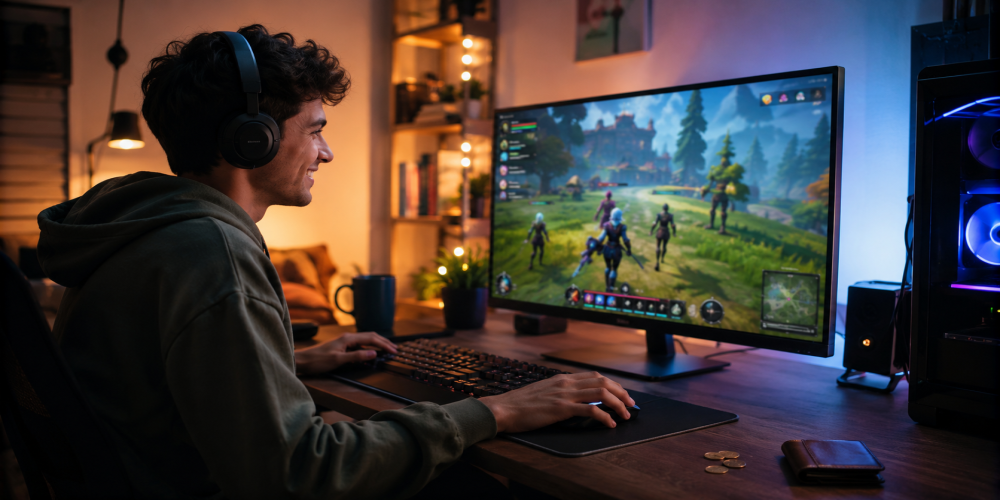
Many online games advertise themselves as free, but downloading the client is only the beginning of the financial question. Once inside, players may encounter premium currencies, character bundles, cosmetic stores, battle passes, subscriptions, boosters, inventory upgrades, random rewards, and limited offers.
The game may technically allow someone to play forever without spending anything. That does not automatically mean the free experience is enjoyable. A player can have access to every important mode and still feel constantly reminded that progress would be faster, customization would be better, and daily routines would be shorter after making a purchase.
At the same time, many people genuinely enjoy online games for hundreds or thousands of hours without paying. They build competitive accounts, complete difficult content, collect favorite characters, join active communities, and experience regular updates without turning the game into a recurring expense.
The difference depends on the game’s design, the player’s expectations, and what “enjoyment” actually means. Someone focused on competition may care about access to strong equipment. A social player may care more about cosmetics. A collector may find every limited item difficult to ignore, while another player can happily use the default outfit for years.
Free-to-Play Does Not Mean Everything Is Free
Free-to-play usually means the core game can be installed and accessed without an initial purchase. The developer then earns revenue through optional transactions.
These transactions may include:
- Cosmetic outfits;
- Characters or classes;
- Weapons and equipment;
- Battle passes;
- Premium currencies;
- Experience boosters;
- Inventory expansion;
- Subscriptions;
- Random reward systems;
- Paid event access.
A free player therefore receives access under certain limits. The important issue is whether those limits preserve the game’s main appeal or weaken it until payment feels necessary.
The Core Question Is What the Game Sells
Not every monetized feature affects enjoyment equally.
A game that sells character outfits can remain mechanically complete for free players. A game that sells stronger equipment, extra energy, faster upgrades, or access to essential characters creates a different experience.
Monetization Usually Falls Into Three Categories
- Expression, such as cosmetics and animations;
- Convenience, such as storage and progression boosts;
- Power, such as stronger units, equipment, or competitive advantages.
Expression-based purchases are usually easiest to ignore. Convenience becomes more complicated because the free experience may be intentionally slow. Paid power creates the strongest fairness concerns, especially in ranked multiplayer.
Cosmetic Stores Can Support a Fair Free Experience
Cosmetic monetization allows developers to earn money without directly changing combat statistics. Players who care about appearance can support the game, while others continue using default or earnable options.
This model works best when free players still receive meaningful customization.
A Fair Cosmetic System Includes:
- Strong default character designs;
- Free cosmetics earned through play;
- Direct and understandable prices;
- No gameplay bonuses attached to outfits;
- Predictable return schedules;
- Enough customization to create a personal identity.
Cosmetics become harder to ignore when visual expression is one of the game’s main attractions. In a social world, fashion game, or character-collection title, appearance may feel almost as important as gameplay power.
Cosmetics Can Still Create Social Pressure
An outfit may not improve statistics, but it can influence how players feel inside the community.
Premium cosmetics often receive more detailed effects, animations, colors, and themes than free alternatives. Players may compare collections in lobbies, guild spaces, photo modes, and social media posts.
A free player may begin to feel visually excluded even while having access to every major activity.
This pressure is strongest when:
- Default options look intentionally plain;
- Most event rewards require payment;
- Popular creators constantly showcase premium items;
- Rare cosmetics become status symbols;
- Free customization changes very slowly;
- Friends coordinate paid outfits or themes.
A player who does not care about digital fashion may ignore the entire system. A player who treats customization as the main reward may find the free experience much less satisfying.
Convenience Purchases Reveal How the Free Game Is Designed
Convenience purchases are often presented as harmless because they do not directly increase combat strength. They save time, expand storage, automate chores, or reduce waiting.
The key question is whether the inconvenience exists naturally or was created mainly to encourage spending.
Paying for an optional character slot in a complex strategy game may be reasonable. Paying for basic inventory space because the free limit interrupts every mission feels more aggressive.
Common Convenience Purchases Include:
- Inventory slots;
- Faster crafting;
- Additional energy;
- Experience boosts;
- Extra daily attempts;
- Automatic resource collection;
- Expanded storage;
- More character presets.
A free experience remains enjoyable when these purchases save time without repairing a deliberately frustrating system.
Can a Game Be Free Without Respecting Your Time?
Money is not the only cost. Free players often pay with time.
A paying player may unlock a character immediately, while a free player completes daily tasks for several weeks. Both eventually access the same content, but the routes are very different.
This can still be fair when the free route is enjoyable and predictable. It becomes exhausting when progress depends on repetitive low-value activities.
A Reasonable Free Progression Path Has:
- Clear requirements;
- Several ways to earn resources;
- Visible progress after normal sessions;
- Useful rewards during the journey;
- A realistic completion period;
- No requirement to play every day;
- No sudden extra cost near the end.
An Exhausting Free Progression Path Has:
- Heavy repetition;
- Strict daily limits;
- Random resource drops;
- Several overlapping currencies;
- Progress that resets or expires;
- Constant offers to skip the grind;
- New upgrade walls after every milestone.
The Free Player Often Becomes Part of the Content
Free players provide value to online games even when they never make a purchase.
They contribute to:
- Matchmaking populations;
- Guild activity;
- Community discussion;
- User-generated content;
- Streaming audiences;
- Social referrals;
- Competitive variety;
- Long-term visibility.
A healthy free-to-play game understands this relationship. Free users are not simply incomplete customers. They are part of the community that makes the service valuable.
Competitive Games Need Strong Free Access
A competitive game depends on population and fairness. If payment creates a major advantage, free players become opponents for customers rather than equal participants.
This can damage trust quickly.
A strong competitive model usually allows free users to access:
- Every important mode;
- Viable characters or equipment;
- Competitive progression;
- Matchmaking based on skill;
- Balance updates;
- Core communication features.
Paid cosmetics, optional passes, and non-essential extras can fund the game without deciding matches.
What Does Pay-to-Win Actually Mean?
Pay-to-win is often used broadly, but different systems create different levels of advantage.
A game may be considered pay-to-win when spending allows players to acquire stronger statistics or competitive options more easily than free users.
The advantage may be direct, such as purchasing a powerful weapon. It may also be indirect, such as paying for faster upgrades and reaching stronger equipment months earlier.
Questions That Reveal Paid Advantage
- Can money increase combat statistics?
- Can paying unlock stronger characters immediately?
- Can free players realistically obtain the same items?
- Does spending reduce months of progression?
- Are competitive rewards tied to account power?
- Does the game balance new content around premium options?
- Can money provide more attempts at ranked activities?
Free players may still enjoy a game with paid power, but their goals may need to remain casual rather than competitive.
Time-to-Win Can Be Almost as Important as Pay-to-Win
Some games argue that every powerful item can be earned for free. Technically, that may be true. The required time can still make the system unequal.
If a paying player gains an important character today while a free player needs four months, both have theoretical access but not equal practical access.
During those months, the paying player may receive:
- Higher rankings;
- Better event rewards;
- Faster account growth;
- Access to stronger teams;
- More efficient farming;
- An easier path to the next release.
The advantage can compound over time.
Random Reward Systems Change the Free Experience
Character and item collection games often use random draws. Free players receive a limited amount of currency and must decide where to spend it.
This can be exciting when the system offers clear probabilities and reliable guarantees. It becomes frustrating when one unlucky period erases months of saving.
A More Free-Player-Friendly System Includes:
- Visible probabilities;
- A guaranteed reward after a fixed number of attempts;
- Progress that carries between similar offers;
- Useful rewards for duplicates;
- Predictable free currency;
- Regular reruns;
- A way to target desired items.
Without these protections, free players may feel that careful planning still depends too heavily on chance.
Saving Currency Can Become Its Own Game
Players who avoid spending often manage premium currency with extraordinary care. They study update schedules, calculate guarantees, skip attractive offers, and wait for characters that provide the most value.
This can be strategically satisfying. It gives long-term planning real importance.
It can also reduce enjoyment. A player may skip several favorite characters because a future release appears stronger. Instead of experimenting, they protect every resource.
The game becomes less about using interesting content and more about avoiding a bad decision.
Limited Characters Create Strong Pressure
Temporary character availability is especially powerful because it combines gameplay value with scarcity.
A free player may have enough currency for only one release every few months. Several desirable characters can appear during that period.
The player must consider:
- Personal preference;
- Team compatibility;
- Expected future strength;
- Unknown rerun timing;
- Upcoming characters;
- Available guarantee progress.
This creates meaningful decisions, but constant scarcity can make every release feel like an exam.
Battle Passes Are Designed to Look Efficient
Battle passes usually provide more rewards per dollar than direct shop purchases. They encourage regular play and make spending feel practical rather than impulsive.
A free player can often use the basic reward track, but the most attractive items remain on the premium side.
A Battle Pass Is Easier to Ignore When:
- The free track offers useful rewards;
- Premium items are cosmetic;
- Progress comes through ordinary play;
- The final reward is not essential;
- The pass returns or offers alternatives;
- Unfinished progress does not affect the account.
It becomes harder to ignore when the pass contains upgrade materials or exclusive characters required for efficient progression.
Subscriptions Can Create a Two-Tier Experience
Monthly memberships often provide premium currency, daily resources, faster progression, or special rewards.
Each individual benefit may look modest. Together, they can make the subscribed version feel like the intended way to play.
Free players may receive:
- Less energy;
- Fewer upgrade resources;
- Slower crafting;
- Smaller storage;
- Reduced event currency;
- Fewer customization options.
The game remains accessible, but the free account experiences more friction in almost every system.
Advertising Can Be the Price of Free Access
Some online games rely on advertisements instead of, or alongside, direct purchases.
Optional rewarded ads can provide a fair exchange. The player chooses to watch a short advertisement for extra currency or another attempt.
Forced advertisements interrupt play and make the free version feel intentionally unpleasant.
Rewarded Ads Feel Fairer When:
- They are completely optional;
- The reward is clearly displayed;
- There is a reasonable daily limit;
- The close button is easy to find;
- They do not interrupt active gameplay;
- An affordable ad-free option exists.
Why Free Players Often Feel Behind
Online games display the progress of other players constantly. A free user sees premium outfits, advanced characters, upgraded equipment, expensive homes, and completed event collections.
It may be impossible to know which progress came from money, time, experience, luck, or early participation.
The comparison can create the impression that the free account is always incomplete.
This feeling is strongest in games where:
- Power is visually obvious;
- Leaderboards reward spending;
- High-level groups require specific characters;
- New content favors recent purchases;
- Paid cosmetics dominate social spaces;
- Catch-up systems are weak.
Starting Late Can Be More Expensive Than Starting Early
Long-running games accumulate characters, systems, currencies, and events. A new player enters years of content at once.
Early players received resources gradually through updates and anniversaries. New players may face a large gap between the starting account and current expectations.
A strong game offers catch-up systems such as:
- Beginner reward tracks;
- Free character selections;
- Accelerated early progression;
- Returning legacy events;
- Affordable starter bundles that remain optional;
- Guides explaining which systems matter.
Without these tools, payment can feel like the only realistic way to join the current community.
Free Players May Need More Knowledge
Spending can correct mistakes. A free player often cannot afford them.
Using rare currency on a weak upgrade, temporary item, or unsuitable character may delay progress for weeks.
This encourages free users to research:
- Character rankings;
- Future updates;
- Currency efficiency;
- Upgrade priorities;
- Event schedules;
- Team combinations;
- Resource traps.
Knowledge becomes a substitute for money. That can reward planning, but it can also make casual play difficult.
Tier Lists Can Reduce Experimentation
Free players frequently follow community rankings because they cannot build every option.
This can protect limited resources, yet it narrows the experience. Players may ignore a favorite character because experts consider it inefficient.
A well-balanced game allows free users to succeed with many strategies rather than requiring one narrow set of premium choices.
Community Support Can Make Free Play Easier
Guides, wikis, videos, and experienced players help free users avoid common mistakes.
Communities can explain:
- Which currencies should be saved;
- Which upgrades provide lasting value;
- How to complete events efficiently;
- Which free characters work well together;
- When limited offers usually return;
- Which paid bundles can be safely ignored.
A helpful community can transform an intimidating economy into a manageable system.
Social Features Can Reduce the Need to Spend
Online games are not only progression systems. Friends, guilds, cooperative missions, and community events can provide enjoyment regardless of account value.
A free player may remain engaged because they enjoy:
- Playing with friends;
- Helping a guild;
- Learning difficult encounters;
- Creating custom strategies;
- Participating in social events;
- Building a reputation.
These experiences are harder to monetize directly and can become the strongest reason to keep playing.
Guilds Can Also Increase Spending Pressure
Social systems are not always protective. Competitive guilds may expect specific characters, equipment levels, or daily contribution.
A player may spend because they do not want to disappoint others or lose a place in the group.
Healthy Guilds Usually:
- State expectations clearly;
- Separate casual and competitive groups;
- Accept free players;
- Do not shame members for skipping purchases;
- Allow breaks;
- Reward cooperation rather than account value alone.
Can Free Players Reach the Highest Rank?
In skill-focused games with cosmetic monetization, yes. A free account can often reach the highest competitive levels through practice and teamwork.
In games where account strength depends on purchased characters or equipment, the answer becomes less certain.
A free player may reach high ranks through:
- Exceptional skill;
- Careful resource management;
- Long-term participation;
- Strong team coordination;
- Using efficient free options.
However, requiring extraordinary effort to overcome paid advantages does not make the underlying system equally fair.
Competitive Success Is Not the Only Form of Enjoyment
A player does not need the highest rank, every character, or a complete collection to enjoy an online game.
Possible goals include:
- Improving personal skill;
- Completing the main story;
- Playing casually with friends;
- Building one strong team;
- Collecting only favorite items;
- Exploring new updates;
- Participating in community activities.
Free play becomes easier when success is defined personally rather than by the store or collection menu.
Completionism Is Expensive by Design
Free-to-play games often allow free access to the core experience while making complete ownership extremely costly.
Trying to collect every character, outfit, weapon, decoration, and seasonal item can require a large budget.
This is not an accidental side effect. The game needs a group of highly engaged customers willing to purchase far beyond the needs of ordinary play.
Free players usually need to accept selective ownership.
A Sustainable Free-Player Mindset Is:
- I do not need every release;
- I will choose a few favorites;
- Missing one event will not ruin the account;
- Rarity does not create personal value;
- I can enjoy the game without completing the store.
FOMO Is the Greatest Challenge for Many Free Players
Limited availability turns optional items into urgent decisions.
A free player may not have enough currency now, but the character or cosmetic leaves soon. The store may offer a paid shortcut while the countdown becomes more visible.
Common FOMO tools include:
- Limited character banners;
- Rotating shops;
- Seasonal battle passes;
- Exclusive collaborations;
- Daily login streaks;
- Expiring event currency;
- Last-day discount messages.
The simplest defense is accepting that an account can remain enjoyable while missing content.
Why Missing One Event Can Be Useful
Players sometimes maintain perfect participation because they have never tested what happens after missing something.
Skipping one event can reveal that:
- The core game still works;
- Friends continue playing with you;
- The reward was not essential;
- Similar items appear later;
- The pressure fades quickly;
- Taking a break improves enjoyment.
Breaking the expectation of complete attendance can make future decisions easier.
Daily Tasks Can Turn Free Play Into Work
Free players often depend on daily rewards for premium currency and progression materials. Missing tasks may slow the account.
The routine can include:
- Login rewards;
- Daily missions;
- Energy spending;
- Guild contributions;
- Rotating shops;
- Event challenges;
- Free random draws.
Each task may be short. Together, they can create an obligation that continues even after the player stops enjoying the game.
Efficiency Is Not the Same as Fun
Free users are often encouraged to maximize every resource. They log in at exact reset times, avoid wasting energy, and complete every profitable event.
This approach produces account value, but it can make the game exhausting.
A less efficient player who skips chores and plays only enjoyable modes may receive fewer rewards but have a better experience.
Energy Systems Limit Free Sessions
Energy prevents players from farming unlimited resources. Paying can often restore it.
This creates a direct boundary around free playtime.
Energy systems feel reasonable when:
- Core multiplayer remains unlimited;
- Story content costs little or no energy;
- Failed attempts return the cost;
- Natural regeneration is generous;
- Free refills are common;
- Several activities remain available.
They feel restrictive when every useful activity consumes the same slow resource.
Can Waiting Be Part of the Experience?
Some games use timers to create anticipation and long-term pacing. Construction, crafting, research, or character recovery may take real time.
Waiting is not always harmful. It can prevent overwhelming sessions and give progression a clear rhythm.
The problem appears when the timer is deliberately uncomfortable and every screen offers payment to remove it.
Free Players Usually Need Patience
Paid accounts often compress time. Free accounts experience the intended progression over weeks or months.
Patience can make free play satisfying when goals remain stable. The player slowly builds a collection and appreciates each major unlock.
Patience becomes difficult when new content arrives faster than free users can finish old goals.
Power Creep Can Undermine Free Progress
Free players invest limited resources carefully. If newer releases quickly replace older ones, those investments lose value.
A healthy game protects long-term progression by:
- Keeping older characters viable;
- Providing balance updates;
- Adding new equipment for old teams;
- Offering several successful strategies;
- Avoiding content designed only for the newest release;
- Providing upgrade refunds after major changes.
Constant replacement makes free play feel like chasing a finish line that keeps moving.
How Returning Players Are Treated Matters
A game that respects breaks is easier to enjoy without spending. Returning players should not feel permanently behind.
Useful systems include:
- Comeback rewards;
- Accelerated progression;
- Story archives;
- Free upgrade materials;
- Simple explanations of new systems;
- Flexible event schedules.
Weak return support can make spending feel necessary after only a few months away.
How to Evaluate a Game Before Investing Time
A free download can still require hundreds of hours. It is worth examining the economy early.
Ask These Questions
- Can free players access every important mode?
- Does spending provide competitive power?
- How long does it take to unlock a new character?
- Are probabilities and guarantees visible?
- Do limited items return?
- How long do daily tasks take?
- Can old characters remain useful?
- Are free cosmetics available?
- Does the game support returning players?
- Can I ignore the store without constant frustration?
Warning Signs During the First Week
- Progress slows sharply after the tutorial;
- Several currencies appear immediately;
- Basic storage becomes unusable;
- Important rewards require perfect attendance;
- The game sells solutions to every inconvenience;
- New players are pushed toward expensive starter packs;
- Random rewards lack a clear guarantee;
- Free characters are presented as temporary placeholders;
- Every menu contains a limited offer;
- The game repeatedly interrupts play with shop prompts.
Signs a Game Supports Free Players Well
- Core gameplay remains unrestricted;
- Progress is steady and understandable;
- Older free options remain competitive;
- Purchases focus on expression;
- Limited items return regularly;
- Daily tasks are optional or flexible;
- Random systems include protection against bad luck;
- Free customization is meaningful;
- Returning players receive catch-up support;
- Developers communicate changes clearly.
Set a Personal Definition of Enough
A free account becomes difficult to enjoy when the player constantly measures it against everything available.
Define what would make the game satisfying:
- One strong competitive team;
- Several favorite characters;
- Access to the full story;
- A comfortable rank;
- A small cosmetic collection;
- Regular sessions with friends.
Once that goal is clear, many store offers become irrelevant.
Choose Favorites Instead of Chasing Every Release
Free players rarely have enough resources for everything. Selective investment protects both currency and attention.
Before using premium resources, consider:
- Do I like this character or item?
- Will I use it for several months?
- Does it fit my existing account?
- Am I reacting only to rarity?
- Would I still want it without the countdown?
- Can I guarantee the reward?
Use a Budget Even When the Budget Is Zero
A zero-spending rule is easier to maintain when it is deliberate rather than constantly renegotiated.
Decide in advance whether you will:
- Never spend;
- Buy only permanent expansions;
- Use a small monthly limit;
- Purchase only direct cosmetics;
- Avoid random reward spending;
- Support the game once after a certain amount of play.
Clear rules prevent every limited offer from becoming a new debate.
Spending a Little Does Not Guarantee a Better Experience
A small purchase can remove friction or provide a favorite cosmetic. It can also create a new habit.
After the first transaction, premium currency may feel more normal. The player may begin evaluating bundles, discounts, and passes more frequently.
The question shifts from whether to spend to how much to spend.
This does not make every purchase harmful. It means the first transaction can change the relationship with the store.
Free Play Should Not Become a Test of Endurance
Some players treat remaining free as a competitive achievement. They accept repetitive routines and frustration because spending would feel like losing.
There is no prize for suffering through a game’s economy.
If the free experience stops being enjoyable, the available choices include:
- Changing personal goals;
- Reducing daily tasks;
- Taking a break;
- Moving to a fairer game;
- Making a carefully planned purchase;
- Stopping completely.
The best option is the one that protects enjoyment and personal finances.
Your Time Has a Value Too
A free player may spend ten hours farming a resource that costs a small amount in the store. That does not automatically make payment the better choice.
The activity may be enjoyable, provide other rewards, or fit naturally into normal play.
However, when the task feels miserable, compare the saved money with the required time. The game may be using repetition to make the paid shortcut appear attractive.
When Paying Can Be Reasonable
Spending is not automatically a failure. A player may want to support a game that has provided years of entertainment or purchase a permanent item they genuinely value.
A reasonable transaction is usually:
- Affordable within a personal entertainment budget;
- Clear about what it provides;
- Chosen without urgency;
- Direct rather than random;
- Useful for a long period;
- Not required to repair frustration.
The purchase should add enjoyment, not remove pressure the game intentionally created.
When Spending Is More Likely to Cause Regret
- Immediately after an unlucky random draw;
- During the final minutes of an offer;
- After losing a competitive match;
- To maintain a streak;
- To keep up with friends;
- To finish an event that is no longer enjoyable;
- When the real-money price is unclear;
- When the purchase depends on further spending.
How to Stay Free-to-Play Without Burning Out
Ignore Daily Tasks That Offer Poor Value
Not every resource is worth the required time.
Disable Promotional Notifications
Open the game when you want to play rather than when a store timer requests attention.
Stop Protecting Perfect Attendance
Missing one login reward should not control the day.
Keep One Main Goal
Choose a team, rank, story chapter, or collection target instead of progressing every system.
Avoid Comparing Accounts
Other players may have spent money, played for years, or received unusual luck.
Take Regular Breaks
A fair game will still provide a path forward after returning.
Leave When the Game Stops Respecting You
Previous time invested does not create an obligation to continue.
The Best Free Games Make Spending Feel Optional
In a well-designed online game, free players can experience the central mechanics, participate in the community, and progress toward meaningful goals.
The store remains visible, but it does not dominate every decision. Purchases offer style, variety, or clearly defined convenience. They do not repair an intentionally incomplete experience.
A free player may progress more slowly and own fewer cosmetic items, yet the basic quality of play remains strong.
A Practical Free-Player Checklist
- Play because the core activity is enjoyable;
- Choose a limited number of collection goals;
- Save premium currency for guaranteed value;
- Avoid purchases driven by countdowns;
- Track how much time daily routines require;
- Ignore rankings built around account spending;
- Join communities that welcome free players;
- Take breaks without protecting streaks;
- Reevaluate when progression becomes repetitive;
- Remember that missing content does not make an account worthless.
Can You Really Enjoy Online Games Without Spending Money?
Yes, but only when the game’s core experience remains satisfying without payment and the player can accept selective participation.
Free users usually cannot own every cosmetic, unlock every character immediately, or complete every limited collection. They may need more patience, stronger planning, and a willingness to ignore store pressure.
The most enjoyable free experience comes from games that respect time, protect competitive fairness, provide clear progression, and let players return after breaks. It also depends on setting personal goals rather than allowing the shop to define success.
You do not need every item to enjoy an online world. You need engaging mechanics, meaningful progress, fair access, and people worth playing with.
When those elements are available for free, spending becomes a personal choice. When they are deliberately weakened until payment provides relief, the download may be free while the enjoyable version is not.