A Psychological Horror Game Built Around Childhood Fear
Bad Parenting is the kind of horror game that does not need a massive world or endless monsters to feel disturbing. The title alone creates discomfort because it points toward something personal: childhood, family, fear, authority, and the kind of memories that can feel wrong even before anything supernatural appears. This is not a game that sounds interested in simple jump scares only. It feels like a psychological horror experience built around a home that should be safe, but clearly is not.
What makes Bad Parenting interesting is the emotional angle. Horror games often use abandoned buildings, dark forests, or strange creatures, but family horror can feel sharper because it is closer to ordinary life. A room, a toy, a hallway, a bedtime routine, or a parent’s voice can become frightening when the atmosphere changes. That kind of fear is quieter, but it can stay with the player longer.
For players looking to download, install, and play a short horror experience across supported platforms, Bad Parenting offers a focused concept with strong atmosphere. It is best approached as a mood-driven story rather than a huge action game. The appeal comes from tension, symbolism, strange domestic spaces, and the feeling that something in the house is deeply broken.
The First Minutes Feel Uncomfortable Because the Setting Is Familiar
Bad Parenting works because the home setting is instantly understandable. A house should be a place of comfort, but horror becomes stronger when familiar spaces stop feeling safe. A bedroom can feel too quiet. A hallway can feel too long. A living room can feel staged rather than warm. The game uses that discomfort well by turning everyday surroundings into emotional pressure.
I like horror games that make me nervous before anything obvious happens. Bad Parenting has the kind of premise where a simple object can feel loaded with meaning. A drawing, a toy, a closed door, or a family routine can suggest more than it explains. That gives the player room to imagine what is wrong, and imagination often creates stronger fear than a direct reveal.
The opening atmosphere matters a lot in a game like this. It needs to make the player feel small, watched, and uncertain. Bad Parenting’s strongest hook is the sense that the horror is not outside the house trying to get in. It may already be part of the household.
Psychological Horror Works Better Than Loud Chaos Here
Bad Parenting feels most effective when it leans into psychological horror. Loud moments can create quick reactions, but the deeper tension comes from confusion, memory, and emotional unease. I want to question what is real, what is remembered, and what the child character understands compared with what the player suspects.
This kind of horror benefits from restraint. A shadow at the edge of a room can be more frightening than a constant chase. A strange sound behind a door can create more tension than a screen full of effects. Bad Parenting has the kind of concept that works best when it lets silence and implication do some of the work.
The game’s title suggests guilt, neglect, control, and fear. Those ideas are already heavy, so the horror does not need to be excessive every second. It needs to be precise. The best moments are the ones where I feel uncomfortable because I understand the emotional meaning behind the scene, not only because something surprising happened.
The Child’s Perspective Makes Everything Feel Larger
A horror game from a child’s perspective can be especially unsettling because the world becomes bigger, stranger, and harder to interpret. Adults become powerful figures. Rooms feel larger. Rules seem confusing. Ordinary household objects can feel threatening simply because the player sees them through someone vulnerable.
I like when games use perspective as part of the storytelling. If Bad Parenting makes the player feel physically and emotionally small, the fear becomes more personal. The house is not just a map. It is a place controlled by people and forces the child does not fully understand.
This perspective also supports mystery. A child may not have the language to explain what is happening, so the player has to read the environment carefully. That can make small details very important. Notes, sounds, family photos, toys, and room layouts can all become clues to a larger emotional truth.
Atmosphere Matters More Than Complex Mechanics
Bad Parenting does not need complicated systems to be effective. In fact, a simpler structure may help the game. Walking, inspecting objects, solving light puzzles, avoiding danger, and following strange events can be enough if the atmosphere is strong. Psychological horror often depends more on pacing than mechanical depth.
I enjoy horror games that know when to slow down. If every minute is filled with obvious danger, the player becomes used to it. Bad Parenting is more interesting when it lets dread build gradually. A quiet room, a repeated sound, or a small change in the environment can make the player uneasy without forcing constant action.
Light puzzle elements can also work well. Finding objects, unlocking rooms, following clues, or connecting memories gives the player something to do while staying immersed in the story. The key is making those tasks feel connected to the theme rather than random obstacles.
Visual Style Can Make the Horror Feel Like a Memory
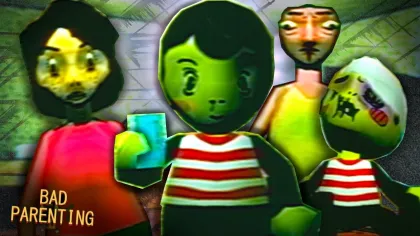
The visual style of Bad Parenting is important because this kind of horror benefits from a slightly unreal feeling. A house can look ordinary, but lighting, proportions, textures, and color can make it feel like a memory that has been damaged. That is a powerful approach for a game about childhood fear.
I like when horror environments look familiar but distorted. A room does not need to be filled with obvious scary objects. It can feel wrong through spacing, shadows, stillness, or the way important items are placed. The player should feel that the home has emotional meaning, not only visual design.
Character presentation also matters. Parental figures, family members, or strange presences can become more frightening when they are shown with restraint. Sometimes not fully understanding a figure makes it more effective. Bad Parenting can use that uncertainty to make the player feel trapped inside someone else’s memory.
Sound Design Carries Much of the Fear
Sound is essential in a game like Bad Parenting. A quiet house is never truly silent. Footsteps, distant voices, doors, floorboards, breathing, television noise, clock ticks, and muffled sounds from another room can all create pressure. The player listens because the game teaches that sound may mean something is changing.
I enjoy horror where audio tells part of the story. A voice behind a door can reveal mood before the player sees anything. A repeated sound can become a warning. A sudden silence can feel worse than noise. Bad Parenting has the kind of setting where sound can make the home feel alive in a very uncomfortable way.
Headphones would likely make the experience stronger because the game depends on small details. Psychological horror often works best when the player feels surrounded by the space, and good audio can create that feeling better than visuals alone.
Download, Install, and Play Across Supported Platforms
Players looking to download Bad Parenting should use official platforms whenever possible. The safest way to install the game is through trusted digital storefronts or official platform pages connected to supported devices. This helps protect files, updates, saved progress, and the correct version of the game.
Before installing, I would check supported platforms, system requirements, storage needs, language options, controller support, and current version details. Horror games often depend on stable performance, proper audio, and correct visual settings, so a clean official install matters.
Players searching for a free version should be careful. If a demo, trial, free release, or promotional option is available, it should be confirmed only through official sources. Random pages promising a full free install may be unsafe, incomplete, or misleading.
Unblocked Versions Are Not the Right Way to Experience the Mood
Searches for Bad Parenting unblocked may appear because short horror games often attract browser-style shortcut pages. I would avoid that route. A psychological horror game depends on pacing, sound, lighting, saving, and the intended presentation. A random unblocked version may not preserve any of that properly.
Unofficial pages can be incomplete, outdated, unsafe, or unrelated to the real game. They may also include intrusive ads or poor performance, which can ruin the atmosphere. For horror built around tension and mood, technical stability is not a small detail. It is part of the experience.
I would use official platforms instead. Bad Parenting is best played in a quiet setting with proper audio, stable controls, and the complete version intact.
Cheats and Mods Can Weaken the First Playthrough
Bad Parenting naturally attracts searches for cheats and mods because players may want unlocked scenes, easier progression, visual changes, or access to hidden content. I understand the curiosity, especially if the game includes secrets or multiple interpretations.
For a first playthrough, though, cheats are not ideal. The game’s tension depends on uncertainty. If I reveal too much too early or skip the slow buildup, the emotional impact becomes weaker. Psychological horror works best when the player experiences confusion and discovery in the intended order.
Mods may be interesting later if the community creates visual changes, translations, or quality-of-life options, but unofficial files should be handled carefully. They may affect stability, saved data, updates, or device safety. The official install is the safest starting point.
Why the Theme Feels Stronger Than Simple Monster Horror
Bad Parenting stands out because its fear is tied to family and childhood rather than only external danger. That makes the experience more intimate. A monster in a hallway can be frightening, but a home that feels emotionally unsafe can be disturbing in a different way.
I like horror games that use symbolism. A strange figure may represent fear. A locked room may represent memory. A repeated routine may represent control. A toy may become a reminder of something lost or misunderstood. When these ideas work together, the game becomes more than a sequence of scares.
This is why Bad Parenting has strong potential as a story-focused horror title. It can use simple scenes to suggest deeper pain, and that kind of storytelling often stays with players longer than louder horror moments.
Where Bad Parenting Can Feel Limited
The biggest limitation of Bad Parenting may be its narrow focus. Players who want long campaigns, deep combat, large maps, or complex progression systems may find it too small. This type of game works best as a concentrated experience, not as an endless sandbox.
The heavy theme may also be uncomfortable for some players. Family-based horror can hit harder than fantasy horror because the subject matter feels closer to real life. That emotional discomfort is part of the design, but it may not suit every mood.
Replay value also depends on secrets, alternate scenes, interpretation, or atmosphere. If the game has only one short route and few hidden details, some players may not return after finishing it. The strongest version gives players reasons to revisit and notice details they missed.
Who Should Play Bad Parenting
Bad Parenting is a strong fit for players who enjoy psychological horror, short story-driven games, domestic horror, symbolic environments, and unsettling atmosphere. It is especially appealing if you prefer tension, interpretation, and emotional discomfort over constant action.
I would recommend it to players who like horror games that feel personal and strange. If you enjoy exploring a small space, reading environmental clues, listening carefully, and slowly understanding what the story is really about, Bad Parenting has a strong hook.
Players who want fast combat, huge open worlds, or lighthearted scares may not connect with it as strongly. But for anyone who wants a focused horror game about childhood fear and a home that feels wrong, Bad Parenting offers a memorable premise.