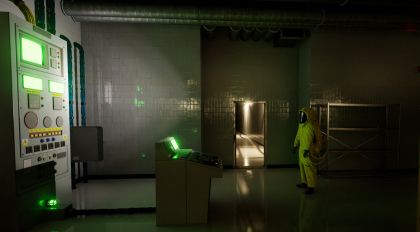
A Co-Op Horror Game Built From Yellow Walls and Bad Decisions
Backrooms: Escape Together takes one of the internet’s most recognizable horror ideas and turns it into a shared survival experience. The setup is simple, but it works: I am trapped in a strange maze-like space that looks familiar in the worst possible way. The walls are dull yellow, the lights buzz above me, the rooms stretch farther than they should, and every empty hallway feels like it is waiting for someone to make a mistake.
What makes the game interesting is the word together. The Backrooms are already uncomfortable when explored alone, but co-op changes the entire mood. Instead of only managing my own fear, I have to deal with teammates, voice chat, lost directions, panic, bad calls, and the terrible moment when someone says they heard something nearby. The horror becomes social. It is not just about what the game does to me. It is about how my group reacts when the map stops making sense.
I like horror games that create tension through space, sound, and uncertainty rather than constant noise. Backrooms: Escape Together understands that emptiness can be more effective than spectacle. A long hallway, a flickering room, or an identical corner can become frightening simply because I am no longer sure where I am or whether I have been there before.
The Backrooms Setting Still Works Because It Feels Wrong
The Backrooms concept is powerful because it turns ordinary architecture into something hostile. These spaces do not look like a haunted castle or a monster cave. They look like forgotten office rooms, cheap carpet, fluorescent lighting, service corridors, empty storage zones, and places that should exist only between useful locations. That is what makes them unsettling.
Backrooms: Escape Together uses this discomfort well. The environments feel familiar enough to understand, but wrong enough to disturb. The repeated textures and similar rooms make navigation difficult in a natural way. I often felt like I was moving forward and going nowhere at the same time. That feeling is essential to the experience.
The strongest moments happen when the game makes me doubt my own memory. Did we already pass this door? Was that light always flickering? Did someone close that path, or did we turn the wrong way? The map does not need to be visually dramatic every second because the confusion itself becomes the threat.
Co-Op Turns Fear Into Group Comedy and Panic
Playing Backrooms: Escape Together with other people changes everything. A solo horror game can be quiet and personal, but co-op horror creates a different kind of tension. My teammates can help me solve problems, but they can also make everything worse. Someone runs ahead. Someone misreads a clue. Someone forgets the route. Someone panics at the wrong time. Suddenly, the group dynamic becomes part of the challenge.
I found that the game is at its best when communication matters. Calling out landmarks, tracking directions, sharing discoveries, and warning others about danger all make the experience more engaging. The Backrooms are confusing by design, so a good team needs to stay organized. Of course, staying organized is much harder when everyone is nervous.
There is also a funny side to the fear. Co-op horror often creates moments where terror turns into laughter because the group reacts so badly. A teammate screams and runs the wrong way. Another person insists they know the route, then leads everyone into a dead end. These moments make Backrooms: Escape Together memorable because the stories come from the players as much as from the game.
Atmosphere Matters More Than Expensive Spectacle
Backrooms: Escape Together does not need huge set pieces to create mood. Its atmosphere comes from uncomfortable lighting, repetitive architecture, distant sounds, and the constant sense that the building is not designed for humans anymore. The visual style is not about beauty. It is about wrongness.
I like how the game uses plain environments to build tension. A yellow room can become disturbing if I have been walking through similar rooms for several minutes and still cannot find a safe exit. A normal corridor can feel threatening when I hear something but cannot see it. This is horror created through expectation.
The sound design is especially important. Buzzing lights, echoing steps, distant movement, and sudden audio cues can make even an empty area feel active. In a game like this, silence is not really silence. It is space for imagination to make things worse.
Exploration Feels Like a Test of Memory
The main gameplay loop is built around exploration, survival, and escape. I move through strange levels, search for useful information, solve environmental problems, avoid threats, and try to stay connected with the group. The challenge is not only finding the next objective. It is understanding the space well enough to avoid getting lost.
Navigation feels deliberately uncomfortable. The Backrooms are designed to blur direction. Similar walls, repeated room shapes, and unclear paths make it easy to lose confidence. This can be frustrating, but it also fits the theme. The game wants me to feel trapped inside a place that does not behave like a normal building.
I enjoyed the moments where the group slowly built a mental map together. We would choose landmarks, remember odd details, and decide which areas felt safe enough to revisit. That kind of shared navigation gives the game more depth than simply walking through dark hallways.
Entities Work Best When They Stay Unpredictable
The creatures or hostile presences in Backrooms: Escape Together are most effective when they are not overused. The Backrooms setting thrives on anticipation. If danger appears constantly, it can become routine. If it appears rarely but meaningfully, every sound becomes suspicious.
I like when horror games force me to listen and interpret rather than instantly react to obvious threats. Backrooms: Escape Together benefits from that approach. When the group suspects something is nearby, the energy changes immediately. Everyone lowers their voice, slows down, or starts arguing about where to go.
The entities are not only obstacles. They shape behavior. They make players move differently, communicate differently, and sometimes abandon careful plans in favor of survival. That is where the game’s tension becomes strongest.
Puzzles and Objectives Give the Fear a Direction
A Backrooms game cannot rely only on wandering. It needs objectives to give exploration purpose, and Backrooms: Escape Together uses puzzles and escape goals to keep the group moving. Searching for items, activating systems, reading clues, or figuring out environmental patterns gives the player a reason to enter unsafe spaces.
I appreciate when the puzzles feel connected to the environment rather than pasted on top of it. The best objectives make me look more closely at the strange rooms and ask how the space works. A code, a door, a machine, a note, or a repeated symbol can become the next thread to follow.
The challenge is balance. If puzzles are too simple, they become busywork. If they are too unclear, they can slow the fear into irritation. Backrooms: Escape Together works best when the puzzle design supports the tension without stopping the group for too long.
Download, Install, and Play Across Supported Platforms
Players looking to download Backrooms: Escape Together should use official platforms whenever possible. Co-op horror games depend on stable matchmaking, updates, voice communication, saved progress, and proper game files, so the safest way to install the game is through trusted storefronts tied to supported platforms.
Backrooms: Escape Together is not the kind of experience I would look for through random free download pages. If free demos, trials, or special access options are available, they should be checked through official sources. Unofficial installers can be unsafe, outdated, or incomplete, and that is especially risky for a multiplayer game.
Before installing, I would check platform requirements, online features, co-op limits, storage space, and whether friends are playing on compatible platforms. This game is much stronger with a group, so making sure everyone can play together matters more than usual.
Unblocked Versions Miss the Point of the Game
Searches for Backrooms: Escape Together unblocked are understandable because many players associate Backrooms games with quick browser access. However, this specific style of co-op horror depends on proper multiplayer systems, performance, and communication. A random unblocked version would not deliver the same experience.
Unblocked pages can be unreliable. They may offer imitation content, poor performance, intrusive ads, or suspicious prompts. Even if a page looks convenient, it may not include the real co-op systems or current version. For a game where atmosphere and teamwork matter, unstable access can damage the entire mood.
I would avoid unblocked shortcuts and play through official platforms instead. The real value of Backrooms: Escape Together comes from shared exploration, tension, and communication, and those elements need a stable version to work properly.
Cheats and Mods Can Break the Fear if Used Carelessly
Like many horror games, Backrooms: Escape Together attracts searches for cheats and mods. I understand the curiosity. Players may want custom maps, visual changes, easier exploration, or unusual lobby settings. Mods can sometimes extend replay value in horror games, especially when they add new spaces or community-made challenges.
Cheats are more complicated because they can damage the core tension. If players remove danger, reveal every route, or make objectives too easy, the Backrooms stop feeling threatening. The game works because I do not feel fully in control. Taking away that uncertainty reduces the reason to play.
Mods should also be handled carefully. Unofficial files can affect stability, multiplayer compatibility, updates, or device safety. If a group wants to experiment, everyone should understand the risks and use trusted sources. For a first playthrough, I would stay with the official install and experience the intended atmosphere.
Why Voice Chat Makes the Game Better
Backrooms: Escape Together is much stronger when played with voice communication. Typing can work, but voice chat captures panic, hesitation, and confusion in a way text cannot. Hearing a teammate suddenly stop mid-sentence or whisper that something is nearby creates immediate tension.
Communication also supports navigation. Players can call out rooms, directions, sounds, and clues quickly. This helps the group stay together and react faster when something changes. In a maze-like horror game, clear communication can be the difference between a controlled plan and complete chaos.
At the same time, voice chat makes fear contagious. If one player panics, everyone feels it. That shared emotional reaction is one of the game’s biggest strengths. Backrooms: Escape Together is not only about what appears on screen. It is about how the group handles the pressure together.
Where the Experience Can Feel Repetitive
The main risk for Backrooms: Escape Together is repetition. The Backrooms concept depends on similar spaces, but too much similarity can become tiring if the game does not introduce enough variation. Repeated rooms are scary when they create confusion. They become less effective if they start to feel like empty padding.
Objective design also needs variety. If every level asks the group to search for similar items or solve similar puzzles, the tension may fade over time. Horror games need rhythm, and that means mixing quiet exploration, sudden danger, puzzle solving, and visual surprises carefully.
The game’s enjoyment can also depend heavily on the group. With the right teammates, it can be tense and funny. With players who do not communicate or who rush ahead without thinking, the experience may feel less satisfying.
Who Should Play Backrooms: Escape Together
Backrooms: Escape Together is a strong fit for players who enjoy co-op horror, liminal spaces, maze exploration, and games built around atmosphere rather than constant action. It is especially appealing if you like horror that makes ordinary places feel disturbing.
I would recommend it to friend groups who want a tense multiplayer experience that creates memorable stories. It works best when players are willing to communicate, explore carefully, and accept that confusion is part of the design.
Players who prefer fast combat, clear maps, or constant guidance may find the experience frustrating. Backrooms: Escape Together is at its best when I allow myself to feel lost, listen closely, and let the strange emptiness of the environment do its work.