
A Slingshot Puzzle Game That Made Destruction Feel Clever
Angry Birds is one of those games that became famous because its central idea is instantly understandable. There are birds, there are pigs, there are unstable structures, and there is a slingshot. Pull back, aim, release, and watch the whole scene react. It sounds almost too simple, but that simplicity is exactly why the game works. Within seconds, I understand the goal. Within minutes, I start caring about angle, timing, bird abilities, and how one small adjustment can change everything.
What makes Angry Birds so memorable is the way it turns destruction into a puzzle. I am not only throwing birds at random. I am studying wood, glass, stone, distance, weight, weak points, and chain reactions. A perfect shot feels satisfying because it looks chaotic, but it was actually planned. The best levels make me feel like a tiny engineer with a very dramatic anger problem.
For players looking to download, install, and play a classic mobile puzzle game across supported platforms, Angry Birds remains one of the most recognizable names in casual gaming. It is easy to start, fun in short sessions, and surprisingly rewarding when a level finally collapses exactly the way I hoped.
The First Shot Explains Everything
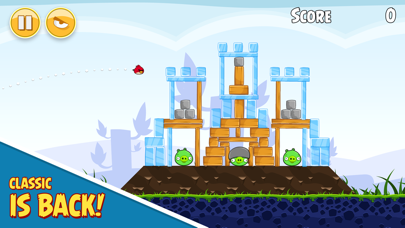
Angry Birds has one of the clearest openings in mobile game history. I see the pigs hiding inside a structure, I see the birds waiting near the slingshot, and I immediately understand what the game wants. There is no need for a long explanation. The level itself teaches the rule: aim well, use the birds wisely, and clear the pigs before the bird supply runs out.
I like how physical the aiming feels. Pulling the slingshot back creates a direct connection between my finger and the result. The arc is readable, the release is immediate, and the impact gives instant feedback. If the shot fails, I usually understand why. I aimed too high, too low, too weakly, or at the wrong material.
This instant clarity is one of the reasons Angry Birds became so popular. Anyone can understand the basic action, but mastering level solutions takes observation and patience. That balance between simple controls and thoughtful challenge is the heart of the game.
Physics Make Every Level Feel Alive
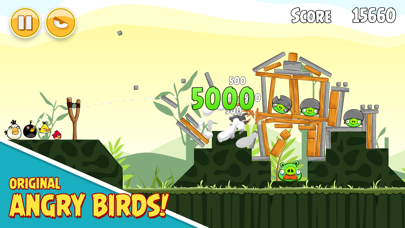
The physics system is what gives Angry Birds its charm. Structures do not simply disappear when hit. They wobble, crack, tilt, slide, collapse, and sometimes fail in hilarious slow motion. A level can go from calm to complete disaster because one plank moves at the right angle.
I enjoy how every material behaves differently. Glass is fragile, wood is flexible, stone is heavy, and each type of block changes the best strategy. A bird that is perfect for breaking glass may struggle against stone. A structure that looks solid may have one weak joint that brings everything down if hit correctly.
The best moments happen when a shot creates a chain reaction. One beam falls, then another piece shifts, then a pig rolls away, then the whole tower finally gives up. Angry Birds makes physics feel playful, readable, and funny.
Each Bird Adds a New Kind of Strategy
The birds are more than colorful projectiles. Each one changes how I think about the level. The basic red bird teaches aiming. The blue bird splits into smaller birds, which makes glass-heavy structures more interesting. The yellow bird accelerates forward, making timing and direct hits more important. The black bird explodes, which changes how I approach dense structures. Other birds add even more variety depending on the version.
I like that bird order matters. I cannot always use my favorite bird whenever I want. The game gives a specific lineup, and the puzzle is built around that sequence. This forces me to plan ahead. If I waste a powerful bird too early, the level may become impossible to finish efficiently.
This is where Angry Birds becomes more strategic than it first appears. The game is not only about aiming. It is about choosing targets based on the bird available, predicting how the structure will respond, and saving the right ability for the right moment.
The Pigs Are Simple, but They Give the Game Personality
The pigs are not complex villains, but they are perfect for this kind of game. Their goofy expressions, smug faces, and silly hiding spots make every level feel like a little cartoon conflict. They are easy to understand and fun to knock out of their unstable forts.
I enjoy how the pigs add humor to failure and success. Sometimes one pig survives in the most annoying corner after the entire structure collapses. Sometimes a tiny block taps a pig at the last second and saves the run. These small moments make the levels feel more alive.
The game’s personality comes from that simple rivalry. Birds versus pigs is not a deep story, but it is memorable, visually clear, and instantly marketable. That clarity helped Angry Birds become much more than just another puzzle app.
Level Design Rewards Curiosity
Angry Birds works best when level design encourages experimentation. A structure may look impossible at first, but there is usually a weak point. Maybe the base is unstable. Maybe the top is too heavy. Maybe a bird ability should hit after impact, not before. Maybe the best shot is not the most obvious one.
I like how the game makes trial and error enjoyable. Restarting a level is quick, so experimenting does not feel painful. I can test a new angle, adjust slightly, and immediately see what changes. That fast loop is essential for casual puzzle design.
Getting three stars adds another layer. Clearing a level is one thing. Clearing it efficiently with fewer birds and more damage is another. This gives completion-focused players a reason to replay and refine solutions.
Short Sessions Are Where Angry Birds Shines
Angry Birds is perfect for short play sessions. A level can take less than a minute, but the desire to improve a score can stretch that minute into many attempts. This makes the game ideal for mobile play because it fits naturally into small breaks.
I appreciate that the game does not require a huge commitment every time I open it. I can play one level, solve a few puzzles, or keep trying a difficult stage until it finally works. The structure is flexible, which is one reason the game feels so easy to return to.
At the same time, the level-based format supports longer sessions too. Once I start moving through stages, unlocking new areas, and chasing better scores, it becomes very easy to keep playing longer than planned.
Download, Install, and Play Across Supported Platforms
Players looking to download Angry Birds should use official platforms. The safest way to install the game is through trusted app stores or verified platform pages connected to supported devices. This helps protect updates, device safety, purchases, and the correct version of the game.
Because the Angry Birds brand includes multiple versions, spin-offs, and updated releases, it is important to check the exact title before installing. Some players may want the classic slingshot puzzle style, while others may find newer variations with different systems, events, or monetization.
Players searching for a free version should be careful. Some Angry Birds games may be free to play, while others may be premium, unavailable in certain regions, or offered through special releases. Random pages promising a full free install may be unsafe, incomplete, or misleading. Official access is the best choice.
Unblocked Versions Can Be Risky and Inconsistent
Searches for Angry Birds unblocked are common because many players remember the game as something quick and browser-friendly. I understand the appeal. The simple physics puzzle format feels perfect for fast access. However, unofficial unblocked pages can vary heavily in quality and safety.
An unblocked version may be outdated, incomplete, filled with intrusive ads, or not the real game at all. It may also lack proper saving, smooth physics, or the correct level structure. For a game where timing and physics matter, a poorly preserved version can make the experience frustrating.
I would use official platforms whenever possible. Angry Birds is best when the controls feel responsive, the physics behave properly, and progress is saved through a trusted version.
Cheats and Mods Can Reduce the Puzzle Satisfaction
Angry Birds naturally attracts searches for cheats and mods because players may want unlimited power-ups, unlocked levels, easier three-star scores, or custom stages. I understand the temptation, especially when one stubborn pig keeps surviving after a nearly perfect shot.
Still, cheats can weaken the main appeal. The fun comes from figuring out the angle, understanding the structure, and finally watching the solution work. If every level is skipped or every power-up is unlimited, the puzzle loses much of its charm.
Mods may be interesting for players who already know the game well, especially if they add custom levels or visual changes. But unofficial files should be handled carefully because they may affect stability, saved progress, updates, or device safety. For a first playthrough, the official install is the better option.
Why Angry Birds Became a Mobile Icon
Angry Birds became iconic because it combined simple controls, funny characters, readable physics, and short-session design at exactly the right time. It was easy to show to someone else. One shot was enough to explain the game. One good collapse was enough to make the player smile.
The character design also helped a lot. The birds and pigs were simple enough to recognize instantly, which made them perfect for merchandise, cartoons, spin-offs, and brand expansion. The game did not only play well. It looked memorable.
Most importantly, Angry Birds understood mobile attention. It gave players quick satisfaction without removing challenge. That formula made it one of the defining casual games of its era.
Where Angry Birds Can Feel Repetitive
The biggest weakness of Angry Birds is repetition. The basic loop remains the same across many levels: aim, launch, collapse, repeat. New birds, materials, layouts, and mechanics help, but players who want constant novelty may eventually feel the formula wearing thin.
Some versions can also feel affected by power-ups, ads, or monetization depending on the release. The cleanest experience is usually the one where the puzzle design remains the focus rather than extra prompts or shortcuts.
Another limitation is that the game is not deep in a traditional story or progression sense. It is a puzzle game built around stages and scores. That is a strength for casual play, but players looking for a large narrative adventure may want something else.
Who Should Play Angry Birds
Angry Birds is a strong fit for players who enjoy physics puzzles, casual mobile games, quick levels, funny characters, and satisfying chain reactions. It is especially appealing if you like games that are easy to learn but still require precision and planning for high scores.
I would recommend it to casual players, puzzle fans, families, and anyone who wants a game that can be played in short bursts. It also works well for players who enjoy improving scores and finding cleaner solutions to familiar levels.
Players who want deep story, competitive multiplayer, realistic graphics, or complex RPG progression may not connect with it as strongly. But for anyone who wants a classic slingshot puzzle game with charm, humor, and clever physics, Angry Birds remains one of the most important mobile games ever made.